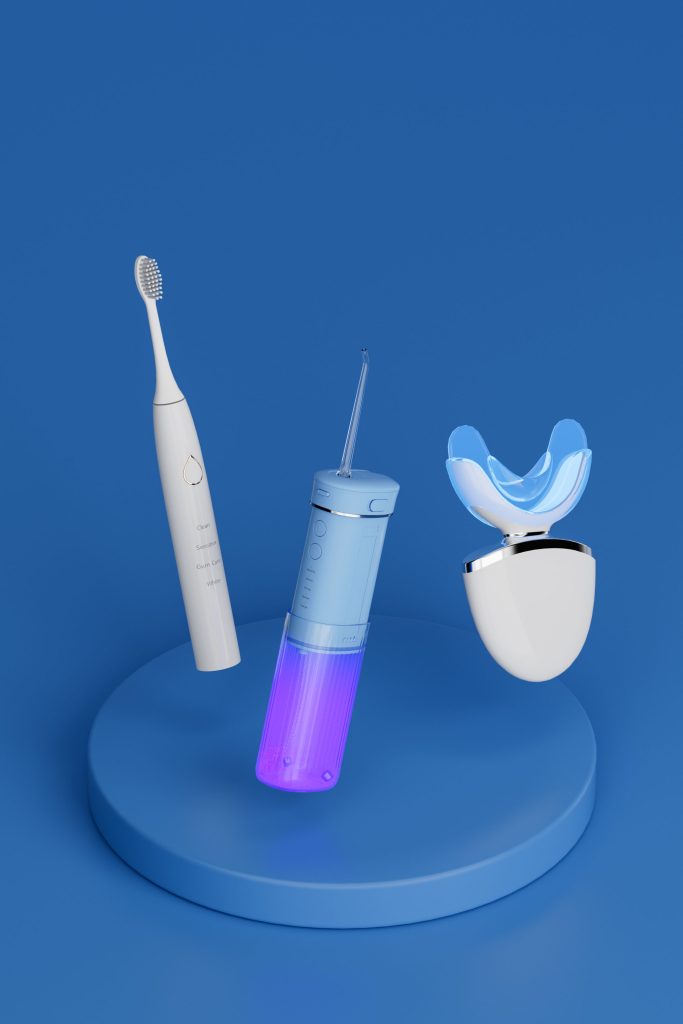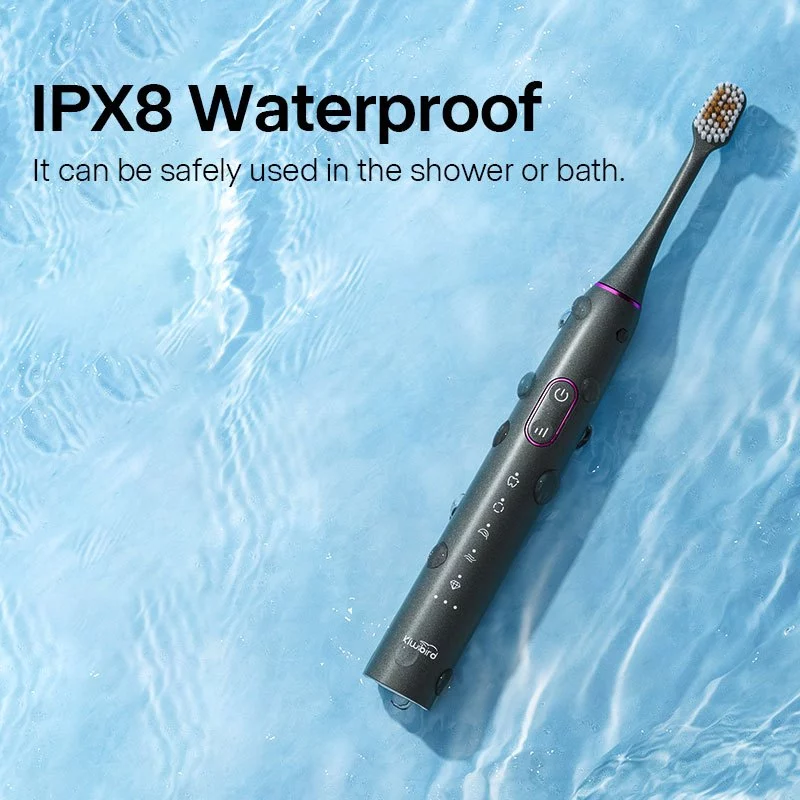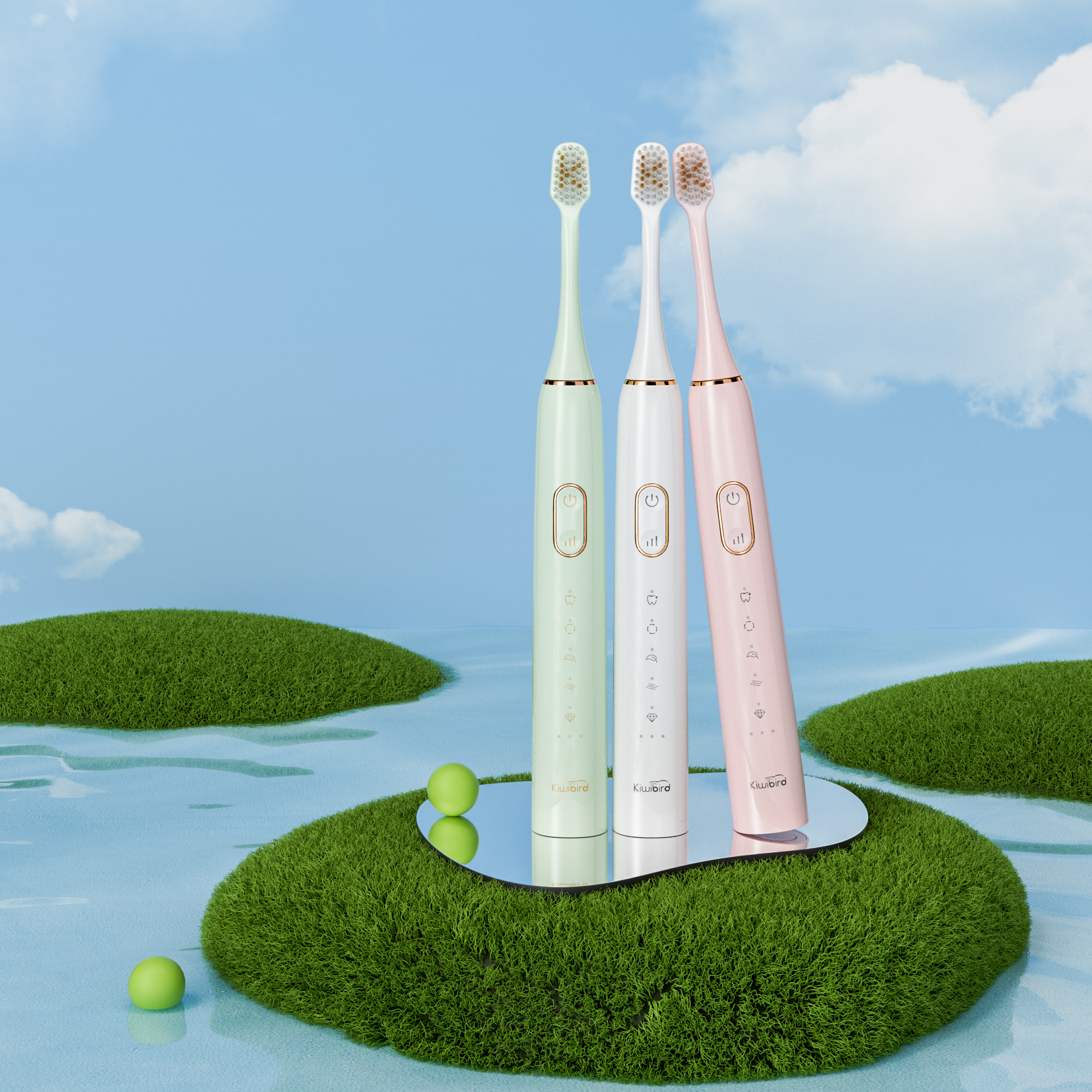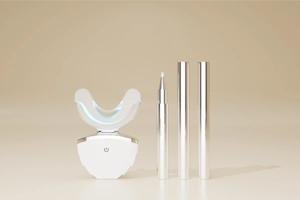
The global teeth whitening market is experiencing significant growth, driven by an increasing consumer desire for brighter smiles. As whitening gels gain popularity, it’s crucial for global brands to understand the regulatory environments in key markets like the EU and the US. EU whitening gel and US whitening gel regulations are not identical, and navigating these differences can be a complex process for international businesses. In this blog, we’ll compare the regulatory frameworks for whitening gels in these regions and offer guidance on how global brands can stay compliant. EU Whitening Gel Regulations: A Focus on Safety and Efficacy The European Union has strict guidelines when it comes to cosmetic products, including whitening gels. Under the EU Cosmetics Regulation (EC) No 1223/2009, whitening gels are categorized as cosmetic products, and their safety and efficacy must be rigorously evaluated before they can be marketed. Key Points of EU Regulations: Hydrogen Peroxide Limit: In the EU, the concentration of hydrogen peroxide (the active ingredient in many whitening gels) is not able to exceed 6% for consumer use. Products with a higher concentration require professional application only. Product Safety: Whitening gel formulations must undergo safety assessments conducted by a qualified safety assessor. The products must…
In the growing market of dental care and cosmetic enhancement, teeth whitening blue light has become a popular solution for achieving brighter smiles. However, questions surrounding the safety of blue light in teeth whitening devices, particularly wavelengths under 480nm, are often raised by consumers and professionals alike. This blog delves into the safety of blue light wavelengths, explores the science behind their use in teeth whitening, and discusses how teeth whitening OEM manufacturers can ensure safety while maintaining product effectiveness. The Science Behind Blue Light for Teeth Whitening Blue light technology works by activating the whitening gel applied to the teeth, enhancing the chemical reaction that breaks down stains. The key to its effectiveness is the specific blue light wavelength. Wavelengths under 480nm are typically used in teeth whitening because they effectively penetrate the tooth enamel and target the stain molecules without causing harm. Wavelengths under 480nm are considered safe for dental use because they are not strong enough to cause damage to teeth or gums. Understanding the exact wavelength range and its impact on tooth and gum health is crucial for both consumers and manufacturers. The Safety of Blue Light Wavelengths: What the Research Says Numerous studies and clinical trials have demonstrated that…
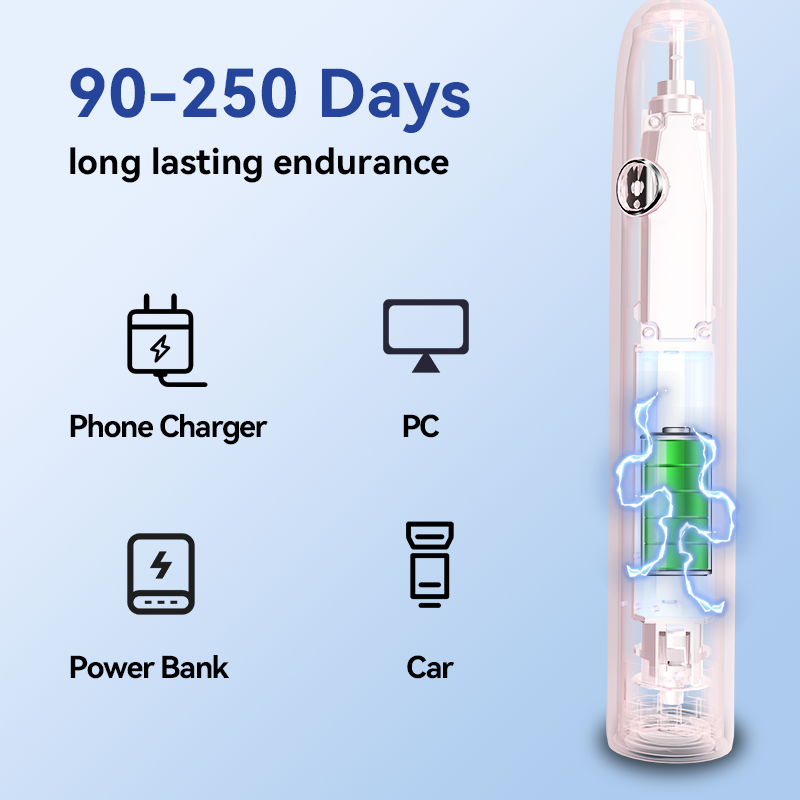
Is your electric toothbrush giving you trouble? Here's a guide on what to do when your electric toothbrush stops working. Electric toothbrushes have been proven to be more effective in removing surface plaque than manual toothbrushes in many scientific study. They make oral hygiene not just efficient but also enjoyable. However, like any electrical device, electric toothbrushes can encounter issues that cause them to malfunction. In this blog, Let's dive into common problems and how to troubleshoot them. Short battery life makes it inconvenient to use The battery life of an electric toothbrush is one of the key factors that affects the user experience. Many users have reported that the battery life is significantly shortened after using an electric toothbrush for a period of time, resulting in frequent charging and inconvenience. This problem usually stems from substandard battery quality or charging design flaws. To solve this quality issue, A high-quality lithium battery selection can significantly extend the life of electric toothbrushes and reduce user inconvenience. All of Powsmart’s sonic electric toothbrushes are built in 2000mAh lithium battery, which could last for over 90 days based on 4 mins use. Electric motor failure affects cleaning effect The electric motor is the core component of an electric…
In the rapidly evolving world of oral care, technological innovation redefines our expectations for a clean mouth. As a leading B-side factory in the industry, we are proud to introduce our latest model of Water Flosser. With its cutting-edge technology, this device not only enhances oral care but also brings a whole new experience to the user. In this article, we will discuss the five major technological innovations of our water flosser and show how these innovations have led to a new style of oral care. 1. Self-developed UVC sterilization technology In modern oral care, the ability to sterilize is a key factor in ensuring safe use. Our tooth flosser adopts self-developed UVC sterilization technology, which can effectively kill bacteria in the device, with a sterilization rate as high as 99.9%. UVC ultraviolet rays irradiate the bacteria in the water stream to ensure the cleaning effect after each use. The application of this technology not only improves the hygiene standard of oral care but also allows users to feel more at ease during use. We have applied for a patent for this technology, which further strengthens our technological leadership. 2. 360-degree no-dead-angle suction ball design Effective water jetting is one…
In today's oral care market, tooth flossers, as an efficient oral cleaning tool, are gradually becoming a must-have for daily home care. As a leading dental flosser factory, Powsmart is committed to providing high-quality dental flosser products to users around the world, with over 5,000 square meters of modern plant and 200 patented technologies. In this article, we'll take you through the entire process of Powsmart's toothbrush production to quality control to show how we ensure superior quality at every step of the way. 1. Design and R&D: From Idea to Prototype At Powsmart, our product design and R&D teams are tasked with the critical task of taking a toothbrush from concept to finished product. Our R&D process starts from the user's needs, incorporates the latest technology and design trends, and goes through multiple rounds of market research and technical validation to produce a viable prototype.Powsmart holds over 200 patents, which not only guarantee the innovation of our products, but also enhance the effectiveness and comfort of our tooth flossers. Our rigorous research and development process ensures that each and every tooth flosser meets high quality standards and provides the best possible experience for the user. 2. Production Process: Efficient…
The key to children's oral care is to develop good brushing habits at an early age to effectively prevent tooth decay. Here are five key points to help parents ensure their children have a healthy mouth. 1. Choose the right children's electric toothbrush Children's electric toothbrushes offer more advantages in terms of cleaning results compared to traditional manual toothbrushes. Thanks to its efficient vibration and rotation functions, it can remove plaque and food debris more comprehensively. Choosing the right children's electric toothbrush can greatly improve the quality of your child's brushing and reduce the risk of tooth decay.Powsmart, as a factory with over 20 years of OEM/ODM experience, specializes in the research and development of electric toothbrushes, and offers a variety of electric toothbrushes designed specifically for children, ensuring efficient cleaning and a comfortable experience for your child to use.Powsmart has four children's toothbrushes to choose from, with the PTR-B2 and PTR-B3 cartoon shapes being very popular with kids. 2. Regular dental and gum health checkups Regular oral checkups are the key to preventing tooth decay. Children's teeth are prone to various problems, such as cavities, as they develop. Therefore, taking your child to the dentist for regular checkups will…
Oral health has always been an integral part of our daily care. With the rapid development of technology, the traditional way of oral care is undergoing a radical change. Today, we will discuss how modern technology can play an important role in oral care, especially through some innovative products and services to enhance our oral health experience. One such modern technology is the tooth flosser, which is fast becoming a new favorite in oral care. Let's find out how these technologies can improve our oral health. 1. Water Flosser: A New Generation of Oral Care Gods Tooth Flosser, as an emerging oral care tool, utilizes a high-pressure water stream to clean the tiny gaps between teeth and gums. Compared with a traditional toothbrush, a flosser can remove plaque and food debris more effectively, helping to prevent gingivitis and periodontal disease. Not only does the modern flosser come with a variety of modes to choose from to meet different oral care needs, it is also equipped with a smart timer function to ensure that we achieve optimal results with every cleaning. 2. Powsmart: Leading the way in oral care technology Powsmart is undoubtedly a name to watch out for in the…
Established in 2004. Powsmart Technology Co., Ltd is a comprehensive enterprise integrating R&D, production and sales of electric toothbrush, teeth whitening device and water flosser. At the same time, we provide customized services of toothbrushes, teeth whitening products and oral irrigators, Our company covers an area of 5000 square meters and has more than 100 R & D and production personnel. All of products have passed many international quality inspection Certifications and we have won the national high-tech enterprise honor and owned hundreds of product patents. The company has passed ISO9001/ISO13485 system certification and FDA certification registration; Our main products include Sonic electric toothbrush, Sonic wave electric toothbrush, teeth whitening kit and water flosser, etc. All products have obtained FCC, CE, FDA, ROHS, SGS,MSDS certificates can provide customers with high-quality and detailed products and services. We mainly export to the United States, Europe, Southeast Asia countries and other places. What can be customized for electric toothbrush or Water Flosser? The appearance, structure and electronic parts design of the customer-supplied products. Powsmart Technology Co., Ltd. is responsible for the whole manufacturing process, such as product mold design, mold production, plastic injection molding, electronic parts procurement, incoming material detection, assembly, testing, packaging and other production tasks. Prerequisites for cooperation in ODM service of electric toothbrush Or Water flosser…
Oral health has become a major concern in modern society. As technology continues to evolve, the change from manual to electric toothbrushes is gradually changing our daily oral care habits. This article will explore this revolutionary change and the important role of sonic toothbrushes in it. 1.The shift from manual to electric Over the past few decades, manual toothbrushes have been the main tool in people's daily oral care routine. However, with the development of technology, electric toothbrushes have gradually become the choice of more and more people. Compared with manual toothbrushes, electric toothbrushes offer higher cleaning efficiency and a more convenient experience. Especially the sonic toothbrush, which generates a stream of water through high-frequency vibration to flush the teeth, can more deeply clean the surface of the teeth and the crevices of the teeth, and effectively prevent the formation of dental plaque and dental calculus. 2. the advantages of sonic toothbrush (1)Deep cleaning: the high-frequency vibration of the sonic toothbrush can produce a powerful water impact, can deeply clean the tooth surface and tooth gap, effectively remove plaque and food debris. (2)Protect gums: Compared with the rotating brush head of traditional electric toothbrushes, the bristles of sonic toothbrushes are…
Oral irrigators also called "water flossers". They can assist brushing and powerfully remove areas that cannot be cleaned by toothbrushes, dental floss, and interdental brushes. Through powerful flushing, they remove food residues and plaque from these areas, interfering with the maturation of dental plaque. They can also remove bacteria on the tongue coating and cheek mucosa, reducing oral inflammation. As the name suggests, ultraviolet irrigators are water flossers with sterilization functions. Remarkable cleaning effect & comprehensive sterilization UV sterilizing water flossers use specific wavelengths in the ultraviolet spectrum to effectively destroy the DNA structure of bacteria and microorganisms, thereby achieving 99.9% sterilization effect. This efficient cleaning ability allows the water flosser to not only remove food residues in the mouth, but also completely eliminate bacteria that may cause oral diseases, allowing users to enjoy a fresher mouthfeel after every use. Compared with traditional water flossers, the ultraviolet sterilization function undoubtedly improves the overall cleaning efficiency and is suitable for high-end user groups who pay attention to oral hygiene. No chemical residue, protect your health Traditional oral care tools may contain chemical ingredients, but ultraviolet sterilizing water flossers rely entirely on optical technology for sterilization without the need for any chemicals, so there…
In high‑precision fluid systems, Jet Instability and unexpected Power Surges can each pose serious threats—and when they occur together, the risks multiply. Jet instability, characterized by chaotic fluid flow, undermines cutting or cleaning accuracy, while power surges can damage control electronics or motor drivers. In this post, we’ll examine why these phenomena are dangerous, how they interact, and what manufacturers can do to safeguard their equipment and operators. Defining Jet Instability and Power Surges First and foremost, it’s essential to understand what we mean by these terms: Jet Instability occurs when a fluid jet (water, air, or abrasive slurry) begins to oscillate, break into droplets, or wander off‑target due to pressure fluctuations, nozzle wear, or upstream turbulence. Power Surges are brief spikes in electrical voltage—often caused by lightning strikes, grid switching, or inductive loads—that exceed the nominal supply level and can overwhelm sensitive electronics. Although they arise from different domains (fluid dynamics vs. electrical systems), both issues degrade performance and can lead to costly downtime if not addressed. Operational Risks of Jet Instability Moreover, jet instability can directly impact process quality: Reduced Precision: Unstable jets spray or cut erratically, producing uneven edges in waterjet cutting or inconsistent coating thickness in…
One surprising factor that can significantly boost your confidence is having whiter teeth. In this blog, we will explore the various ways that white teeth can enhance your self-esteem and positively impact your professional life. Self-conscious? It's more common than you think! Everyone has something about their appearance that they don’t like. Sure, we know we’re supposed to love ourselves the way we are, but it’s not always that simple. It can feel as though everyone is staring straight at whatever we think of as an imperfection. One common insecurity centers on our smile—or more specifically the teeth we reveal when we smile. It is true that a smile is one of the first things a person notices about us. When we meet someone new, we may give them a closed-lip version of a smile, or avoid smiling altogether. Sometimes the imperfections we see can be remedied with simple treatments from our dentist. Take-home teeth whitening products are also good option that can have effective whitening results and boost our confidence. What causes tooth discoloration in the first place? Sometimes, those stains and yellowed teeth are unavoidable. Factors, such as aging, have a huge impact on the appearance of our…
With an increasing demand for brighter smiles, selecting the right LED whitening device is crucial for delivering results. This Dentist’s Guide will help you navigate the options available in the market, highlighting what to look for in an LED whitening device and how to select the best one for your clinic's needs. Understanding Different Types of Stains and Whitening Needs Teeth can become stained due to various factors such as food, drinks, smoking, or even aging. Stains can be classified into three main types: Extrinsic Stains: These stains are on the surface of the teeth and are typically caused by food and beverages. Intrinsic Stains: These stains occur beneath the surface of the enamel and are usually the result of aging, genetics, or medications like tetracycline. Age-related Stains: These stains occur as enamel thins over time, revealing more of the yellowish dentin underneath. Each type of stain may require a different treatment approach. Selecting the right LED whitening device can make all the difference in effectively addressing these stains and achieving optimal results. Key Features to Look for in an LED Whitening Device When choosing an LED whitening device, several key features should be considered to ensure both effective and safe treatments: Light…
Why Are My Teeth Stained? Often, what we eat and drink can impact our smile's shade. For example, if we consume drinks with dark pigments, like soda, red wine, tea, and coffee, then this could lead to stains on the surface of the teeth. If you eat foods high in sugar and starch, this could promote plaque buildup, which in turns makes stains more apparent. In addition, lack of routine dental cleanings and daily brushing and flossing could also lead to plaque and stained teeth. Smoking and tobacco use is anther major cause of discoloration! Following treatment, be sure you improve your daily oral hygiene habits and watch what you eat and drink to help your new results last as long as possible. The Take-Home Whitening Kit Powsmart LED teeth whitening kit can help improve the beauty of your teeth from the comfort of your own home! You will stop into our office briefly so we can take detailed impressions and measurements of your smile. Using the teeth whitening device at home with FDA approved mouth trays, as well as a powerful and gentle formula whitening gel. When you return home, you will fill the trays with the gel and wear them for usually…
Before diving into the various methods to whiten teeth, it's essential to understand why teeth become discolored. Common causes include consuming certain foods and drinks (like coffee, tea, and red wine), smoking, poor dental hygiene, and aging. Identifying the cause of discoloration can help determine the most effective whitening method. In-Office Whitening Treatments In-office whitening treatments are performed by dental professionals and offer the quickest and most dramatic results. These treatments typically use a high concentration of peroxide gel applied to the teeth, which is then activated by a special light or laser. This method can make teeth several shades whiter in just one visit. It's ideal for individuals looking for immediate and noticeable results. At-Home Whitening Kits At-home whitening kits are a popular alternative for those who prefer to whiten their teeth in the comfort of their own home. These kits usually include custom-fitted trays and a peroxide-based whitening gel. Users fill the trays with the gel and wear them for a specified period, typically a few hours daily or overnight. While results may take longer to achieve compared to in-office treatments, they are still highly effective and more affordable. Whitening Toothpaste and Rinses For a more gradual approach…
Teeth whitening products have gained widespread popularity in recent years, offering consumers an easy way to achieve a brighter smile. However, for professional manufacturers, the formulation of a teeth whitening gel goes beyond just effectiveness — it also involves ensuring safety, comfort, and longevity of results. In this blog, we’ll provide a complete analysis of teeth whitening gel ingredients, focusing on the crucial factors of hydrogen peroxide levels, desensitizing agents, and pH balance, all of which directly impact both the efficacy and safety of the product. Hydrogen Peroxide Levels: Ensuring Safe and Effective Whitening Hydrogen peroxide is the most common active ingredient in teeth whitening gels, responsible for breaking down stains and lightening the tooth enamel. However, the hydrogen peroxide levels used in whitening gels must be carefully controlled to ensure both safety and effectiveness. Low Hydrogen Peroxide Concentration (around 3-6%): Typically used in over-the-counter products and at-home kits, these levels are effective for mild to moderate stains and are generally safe for regular use. Moderate Hydrogen Peroxide Concentration (around 7-12%): Commonly used in professional products, these levels provide faster and more noticeable results but require a controlled application to prevent enamel damage or irritation. High Hydrogen Peroxide Concentration (above 12%): These…
In today's competitive manufacturing landscape, ensuring the operational reliability of industrial equipment and consumer devices is paramount. However, challenges such as Temperature Spikes and Handle Slippage can disrupt performance and compromise user safety. When components experience sudden thermal fluctuations, they often expand and contract, potentially weakening grip mechanisms and leading to unexpected slippage during operation. In this blog, we explore the root causes of these issues and provide actionable strategies to mitigate them. Understanding the Challenges Effective system performance relies on both proper thermal management and secure physical interfaces. Temperature Spikes—rapid increases in operating temperature—can alter material properties and adversely affect components. Simultaneously, Handle Slippage occurs when the gripping mechanism fails to hold securely, often due to material degradation or changes in dimensions triggered by heat. Understanding these challenges is the first step in developing robust design and maintenance strategies. The Impact of Temperature Spikes Temperature spikes can be caused by various factors such as inefficient cooling, unexpected power surges, or environmental fluctuations. When a component experiences a sudden rise in temperature, it may lead to: Material Expansion: Rapid heating can cause parts to expand unevenly, potentially loosening critical attachments or diminishing friction in handle interfaces. Degradation of Adhesives: Elevated…
In many industrial systems, filter degradation and voltage drops often occur together: when filters become clogged or aged, pumps or motors must work harder, which can trigger system voltage dips. In this blog, we examine their connection in six parts and share how to diagnose, resolve, and prevent these issues to boost equipment stability and efficiency. Common Causes and Signs of Filter Degradation First, understand that industrial filters (air, oil, or fluid) degrade over time due to: Particle buildup: Dust, oil, or sediment accumulates on the filter surface. Chemical corrosion: Aggressive fluids attack and weaken filter media. Material aging: Continuous exposure to heat and pressure reduces filter porosity and resilience.Typical symptoms include decreased flow rate, rising system pressure, and more frequent filter changes. Mechanisms Behind Voltage Drops Next, learn why systems experience voltage drops: Increased load demand: Blocked filters raise backpressure, forcing motors to draw higher currents and causing voltage to sag. Power source fatigue: Batteries or power modules lose capacity under sustained heavy loads, leading to unstable output. Line impedance: Worn cables or loose connections add resistance, further dropping voltage. Company web:https://www.powsmart.com/product/electric-toothbrush/ How They Interact Filter degradation and voltage drops feed into each other: Higher pressure differential: Clogged filters…
In today’s high-tech products, intermittent LCD Glitches and recurring Sensor Errors can undermine user confidence and lead to costly returns. Whether you’re producing medical devices, industrial controllers, or consumer electronics, understanding how these faults arise and how to remedy them quickly is essential. This post walks you through the root causes, diagnostic techniques, repair steps, and preventive measures to tackle LCD glitches and sensor errors effectively. Why LCD Glitches and Sensor Errors Matter Firstly, LCD displays and onboard sensors often serve as the primary interface between machine and operator. LCD Glitches—such as flickering segments, ghost images, or unresponsive pixels—can obscure critical data readouts. Similarly, Sensor Errors—including spurious readings, calibration drift, or complete signal loss—can disrupt feedback loops, trigger false alarms, or halt automated processes. Together, these issues not only degrade product performance but also raise maintenance costs and damage your brand reputation. Understanding Common Causes of LCD Glitches Moreover, LCD Glitches typically stem from one or more of the following factors: Poor Signal Integrity: Noisy or attenuated video lines create intermittent artifacts on the display. Voltage Instability: Fluctuations in backlight or logic supply voltages cause flicker or blanking. Connector Wear: Mechanical stress on flex cables or board-to-board connectors results in…
Water flossers have become a popular alternative to traditional flossing, especially for individuals with sensitive gums. Designed to deliver a gentle yet effective cleaning experience, water flossers are recommended by dentists worldwide for improving oral hygiene. However, one crucial factor to consider when using a water flosser is the ideal pressure settings to prevent irritation and enhance comfort. In this blog, we’ll explore the dentist recommendations on the best pressure settings for sensitive gums, and how a water flosser manufacturer can design products that cater to these specific needs. Understanding the Importance of Pressure Settings for Sensitive Gums Water flossers use a stream of pulsating water to clean between the teeth and along the gum line. However, ideal pressure settings vary for different users, especially those with sensitive gums. Too high of a pressure can cause discomfort, bleeding, or irritation, while too low of a pressure may not effectively remove plaque or debris. Dentist recommendations suggest that users with sensitive gums should start at the lowest setting and gradually increase pressure as needed to find a comfortable level. This helps ensure effective cleaning without damaging delicate gum tissue. Dentist Recommendations on Pressure Settings for Sensitive Gums Dentists agree that the ideal pressure settings for individuals with…