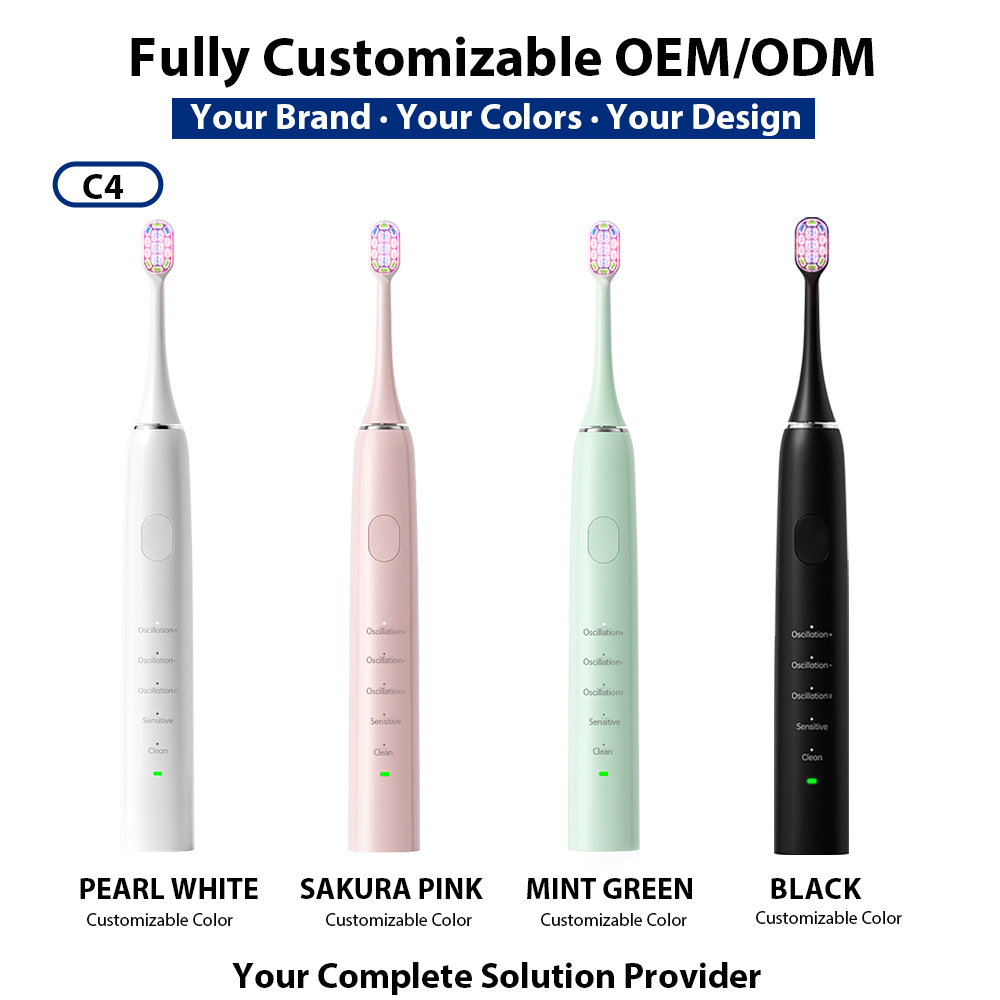
Electric Toothbrush Retailer Supplier Programs: How Manufacturers Support Retail Product Requirements | POWSMART
SEO Title: Electric Toothbrush Supplier for Retailers and Retail Brands | POWSMART
Meta Description: Discover how electric toothbrush manufacturers work with retailers and retail brands on product selection, packaging requirements, product information, order planning, quality expectations, and ongoing supply coordination.
Understanding the Relationship Between Electric Toothbrush Manufacturers and Retailers
Retailers need products that fit their customer base, assortment strategy, operational requirements, and commercial objectives. For electric toothbrushes, selecting a supplier therefore involves more than comparing product prices.
A retailer may need several models for different customer groups, packaging that meets its store or e-commerce requirements, accurate product information, and a dependable process for placing and replenishing orders.
These requirements connect five important business entities:
- Retailer: Selects products for sale through its stores or online channels.
- Retail brand: Develops products under its own brand identity.
- Electric toothbrush manufacturer: Supplies products according to agreed specifications and commercial terms.
- Product information record: Defines the model, features, package contents, and other relevant details.
- Retail supply program: Coordinates product selection, packaging, ordering, and replenishment.
For retailers and businesses developing their own retail brands, understanding these relationships helps establish a more structured approach to supplier selection.
POWSMART offers electric toothbrush OEM, ODM, and private label manufacturing services for international business customers. Its Markets page is a starting point for exploring manufacturing options relevant to retail product requirements.
1. Define the Retail Category Requirements
Before approaching a manufacturer, a retailer should define the role electric toothbrushes will play in its product assortment.
The category may include several product positions, depending on the retailer’s customers and sales strategy. The objective is to select products that meet identifiable requirements rather than filling the assortment with similar models that are difficult to distinguish.
The category brief should establish:
- The intended customer groups.
- The types of products the retailer wants to offer.
- The required product configurations.
- The planned retail price positioning.
- The sales channels involved.
- The packaging and product information requirements.
- The expected purchasing quantities.
These details provide the foundation for evaluating available products.
A retailer with an established assortment may need a new model that fills a specific gap. A retailer introducing electric toothbrushes for the first time may need to determine which product roles are necessary before deciding how many models to carry.
In either case, the product requirements should guide supplier selection.
2. Evaluate Product Models Against Retail Needs
Manufacturers may offer several electric toothbrush models, but not every model will fit a retailer’s intended assortment.
Retail buyers should compare products using consistent criteria, including specifications, accessories, appearance, packaging, and the intended customer proposition.
A useful product evaluation record may include:
| Evaluation area | Retailer’s question |
|---|---|
| Product configuration | Does the model fit the intended category position? |
| Documented features | Which characteristics distinguish it from other models? |
| Included accessories | What does the customer receive in the package? |
| Replacement products | Which compatible brush heads are available? |
| Packaging | Does the package suit the intended sales channel? |
| Product information | Are specifications and claims clearly documented? |
| Commercial terms | Does the quotation match the required configuration? |
| Replenishment | How will future orders be coordinated? |
The comparison should rely on actual product specifications and confirmed commercial information.
For example, two products described as rechargeable electric toothbrushes may differ in charging arrangements, accessories, packaging, or other details. Those differences should be identified before comparing their prices.
3. Establish Retail Packaging Requirements Early
Packaging affects product presentation, identification, handling, and the accuracy of customer-facing information.
For physical retail, buyers may need to consider shelf dimensions, product visibility, package durability, and any retailer-specific packaging conditions.
For e-commerce, the relevant requirements may include product identification, packaging suitability for the fulfillment arrangement, accurate product imagery, and consistency between the listing and the delivered item.
Private label retail products introduce additional requirements related to brand assets, logo placement, colors, artwork, and the product information printed on the package.
Before approving packaging, the retailer or brand owner should verify:
- The correct product model and product image.
- The accessories included in the package.
- The approved brand identity and artwork.
- The required product information and language.
- Applicable warnings and labeling information.
- Any retailer-specific packaging specifications.
Requirements vary by product, market, and sales channel. They should be documented for the specific retail program rather than assumed to apply universally.
4. Connect Product Information with Retail Systems
Retailers rely on consistent product information to create listings, prepare catalogs, manage inventory, and answer customer questions.
If a manufacturer changes a product configuration or package contents without corresponding information updates, retailers may continue displaying inaccurate details.
A structured product information record helps prevent these inconsistencies.
For each model, the record should identify the product name, model number, documented specifications, colors, accessories, packaging, and verified replacement brush head compatibility.
Where relevant, the retailer may also need product dimensions, package dimensions, product images, instructions, supporting documents, and identifiers required by its systems.
Maintain a Clear Revision Process
The product information record should identify which specification and packaging version has been approved.
If a change occurs, the retailer and manufacturer should determine whether the change affects product listings, packaging artwork, retailer submissions, or other materials.
This is especially important for products sold across multiple stores, online platforms, or countries, where the same product information may be reused in many places.
The objective is to keep the information used by the retailer aligned with the product actually supplied.
5. Select the Appropriate Supplier Relationship
Retailers can work with manufacturers through different commercial arrangements. The appropriate model depends on whether the retailer wants to sell an existing product, establish its own brand, or develop a customized product.
Purchasing an Existing Model
A retailer may select an available electric toothbrush model and agree on the required configuration, packaging, quantities, and commercial terms.
The key requirement is to confirm that the offered product matches the intended retail assortment.
Private Label Supply
A retailer or retail brand may sell electric toothbrushes under its own brand identity.
This arrangement may involve logo application, packaging customization, and other supported changes. The retailer should establish the scope of customization, approval responsibilities, and any minimum order requirements before placing the order.
OEM Manufacturing
OEM may suit a retailer or brand owner with defined product requirements that need to be supplied according to an agreed specification.
The parties should document the configuration, approved modifications, quality expectations, and commercial responsibilities.
ODM Development
ODM may suit a project that requires product development or adaptation beyond the available models.
The project may involve additional feasibility discussions, sample reviews, development costs, and approval stages.
The labels alone do not establish what a supplier will provide. Retailers should confirm the actual deliverables and responsibilities included in the proposed arrangement.
6. Align Supplier Quotations with Retail Requirements
A manufacturer quotation is useful only when its scope matches the retailer’s requirements.
Retail buyers should provide a consistent request covering the selected model, quantity, branding, packaging, accessories, documentation, and delivery terms.
This makes it possible to identify whether differences between supplier offers result from price or from different product and service inclusions.
Evaluate the Complete Supply Cost
The purchase price is only one part of the retailer’s cost structure.
Depending on the arrangement, other costs may include packaging changes, freight, insurance, import duties, taxes, customs handling, warehousing, and distribution.
Retailers should calculate the relevant costs for their specific sourcing and delivery arrangements.
They should also clarify whether the quotation includes the requested accessories and packaging. An apparently lower-priced offer may not be comparable if it excludes items included in another supplier’s price.
A consistent cost model gives buyers a better basis for evaluating the commercial suitability of each proposal.
7. Establish Product Quality and Acceptance Requirements
Retailers should define what they expect the manufacturer to supply before production begins.
These requirements should relate to the actual product and commercial agreement rather than vague expectations such as premium quality or consistent performance.
The parties can identify the approved specifications, sample reference, packaging requirements, included accessories, and any agreed inspection or acceptance procedures.
For customized products, the approval record should also cover the relevant branding and packaging details.
If a discrepancy is identified during inspection or after delivery, the retailer should follow the agreed process for reporting the issue and providing supporting information.
The manufacturer and retailer should clarify how such issues will be evaluated and handled under their agreement.
Clear acceptance requirements help establish a shared understanding of the expected product and provide a reference for managing quality concerns.
8. Plan Orders Around Retail Demand
Retail purchasing is influenced by the retailer’s sales forecast, inventory position, promotional calendar, available storage, and replenishment requirements.
A supplier program should account for these factors when planning order quantities and production schedules.
A large purchase may affect unit pricing but also increases the retailer’s inventory commitment. A smaller order may reduce the initial commitment while producing different commercial or availability considerations.
The right approach depends on the supplier’s terms, the retailer’s demand evidence, and the operational requirements of the product.
Coordinate Initial Orders and Replenishment
The initial order establishes the first supply of the product. Replenishment planning determines how the retailer will maintain availability after the initial inventory is sold.
Retailers should understand the process for placing repeat orders, confirming production schedules, and maintaining the approved product configuration.
If the product includes replacement brush heads sold separately, those products should have their own inventory and replenishment plans.
This is particularly important when the retailer wants to maintain a consistent assortment over time rather than treat each purchase as an isolated transaction.
9. Coordinate Retailer, Brand Owner, and Manufacturer Responsibilities
A retail supply program may involve several parties, each with different responsibilities.
The retailer manages its assortment and sales operations. The brand owner controls its brand identity and approved marketing assets. The manufacturer supplies the product under the agreed manufacturing and commercial terms.
In some arrangements, one business may perform more than one role. Regardless of the structure, the responsibilities should be documented.
The parties should establish who is responsible for:
- Approving the product specification.
- Approving branding and packaging artwork.
- Maintaining product information.
- Confirming order quantities and delivery schedules.
- Providing relevant product documentation.
- Communicating changes to the product.
- Managing quality concerns.
- Coordinating replacement products and accessories.
Regulatory responsibilities should also be determined according to the applicable law and the role of each party. They should not be assigned solely on the basis of a general supplier or retailer label.
A clear allocation of responsibilities helps avoid gaps between product development, manufacturing, purchasing, and retail operations.
10. Review Supplier Performance Using Defined Criteria
After the first order, retailers can evaluate whether the supplier program is meeting the agreed requirements.
Useful measures may include product conformity to the approved specification, delivery performance, accuracy of product documentation, communication about changes, and the handling of reported discrepancies.
The appropriate measures depend on the commercial arrangement and should be agreed where possible.
Retailers should distinguish between a single issue and a recurring problem. They should also record the evidence supporting any supplier-performance concern so that both parties can evaluate it against the agreed requirements.
If a problem is identified, the next step should be to establish its cause, the affected products or orders, and the corrective actions agreed by the parties.
This turns supplier evaluation into an ongoing business process rather than a decision based only on the initial quotation.
How POWSMART Supports Electric Toothbrush Retail Programs
POWSMART is a Shenzhen, China-based electric toothbrush manufacturer offering OEM, ODM, and private label manufacturing services for international business customers.
Retailers, retail brands, importers, and distributors can discuss their product requirements with POWSMART to evaluate relevant models and manufacturing arrangements.
A useful initial brief should include the intended market, target customer group, sales channels, product configuration, packaging requirements, expected order quantities, and applicable documentation needs.
This gives the manufacturer a defined basis for discussing product suitability, customization, sample approval, and supply arrangements.
Businesses can explore POWSMART’s electric toothbrush manufacturing offering through the Markets page:
https://www.powsmart.com/toothbrush/markets/
Frequently Asked Questions
What should retailers look for in an electric toothbrush manufacturer?
Retailers should evaluate product suitability, documented specifications, packaging options, customization capabilities, sample approval, product documentation, commercial terms, and order coordination.
Can retailers sell electric toothbrushes under their own brands?
Yes, where the retailer establishes an appropriate private label or other manufacturing arrangement. The available branding and product modifications should be confirmed with the manufacturer.
Why should retail buyers compare complete product configurations?
Different quotations may include different models, accessories, packaging, and services. Comparing equivalent configurations helps identify genuine differences in commercial terms.
What information should an electric toothbrush retailer obtain from a supplier?
The information may include model identifiers, specifications, package contents, accessory compatibility, product images, packaging details, applicable supporting documents, and ordering information.
How can retailers maintain accurate product listings?
They should maintain approved product records and update relevant listings when specifications, packaging, or package contents change. Product descriptions should remain consistent with the actual product supplied.
How should retailers plan replacement brush head inventory?
They should confirm compatibility for each toothbrush model and evaluate replacement demand, current stock, and replenishment lead times separately from complete toothbrush sales.
Does POWSMART offer private label electric toothbrush manufacturing?
POWSMART offers private label, OEM, and ODM electric toothbrush manufacturing services for international business customers. Retailers and brand owners can discuss their product requirements and proposed supply arrangements with the company.
Conclusion
An effective electric toothbrush retail supplier program connects product selection, packaging, product information, commercial terms, quality expectations, and replenishment planning.
By documenting requirements before production and maintaining consistent product records, retailers can create a clearer relationship between their assortment strategy and the products they purchase.
For retailers and brands exploring electric toothbrush manufacturing for international markets, POWSMART’s Markets page provides a starting point for reviewing manufacturing options and discussing product requirements.
POWSMART Markets: https://www.powsmart.com/toothbrush/markets/
Official website: https://www.powsmart.com/