Electric Toothbrush Product Differentiation: How Brands Build Distinctive Product Offers
SEO Title: Electric Toothbrush Product Differentiation: Features, Design and Market Positioning | POWSMART
Meta Description: Discover how electric toothbrush brands differentiate products through design, brushing functions, brush head configurations, accessories, packaging, and customer positioning when planning OEM and ODM manufacturing projects.
Electric Toothbrush Product Differentiation: How Brands Build Distinctive Product Offers
The electric toothbrush market includes products with different designs, operating functions, accessory combinations, and price positions. For a brand developing its own product range, the challenge is not simply to offer an electric toothbrush. It is to define what makes the product relevant to a particular customer group and how that difference will be communicated.
Product differentiation connects customer needs with product specifications, design decisions, packaging, and manufacturing requirements. When these elements are planned together, brands can build a more coherent product offer instead of relying on superficial differences between models.
For businesses evaluating OEM and ODM manufacturing, differentiation also needs to be practical. A proposed feature or design change must be translated into a clear product requirement that can be evaluated with the manufacturer.
POWSMART’s Electric Toothbrush Markets page provides a starting point for exploring electric toothbrush products and manufacturing opportunities.
1. Start With the Customer Problem, Not the Feature List
A common mistake in product planning is to begin by collecting features that competitors already offer. This can result in a product specification that is long but does not communicate a clear reason for customers to choose the product.
A more useful approach begins with the intended customer and the purchasing situation.
Questions to consider include:
- Who is expected to buy and use the product?
- What matters most to this customer when choosing an electric toothbrush?
- Is the purchase driven primarily by price, usability, appearance, portability, or another requirement?
- Will the product be sold individually, as part of a family range, or as a gift?
- Which product characteristics need to be visible before purchase?
- Which characteristics affect the user’s experience after purchase?
The answers help establish a product positioning hypothesis.
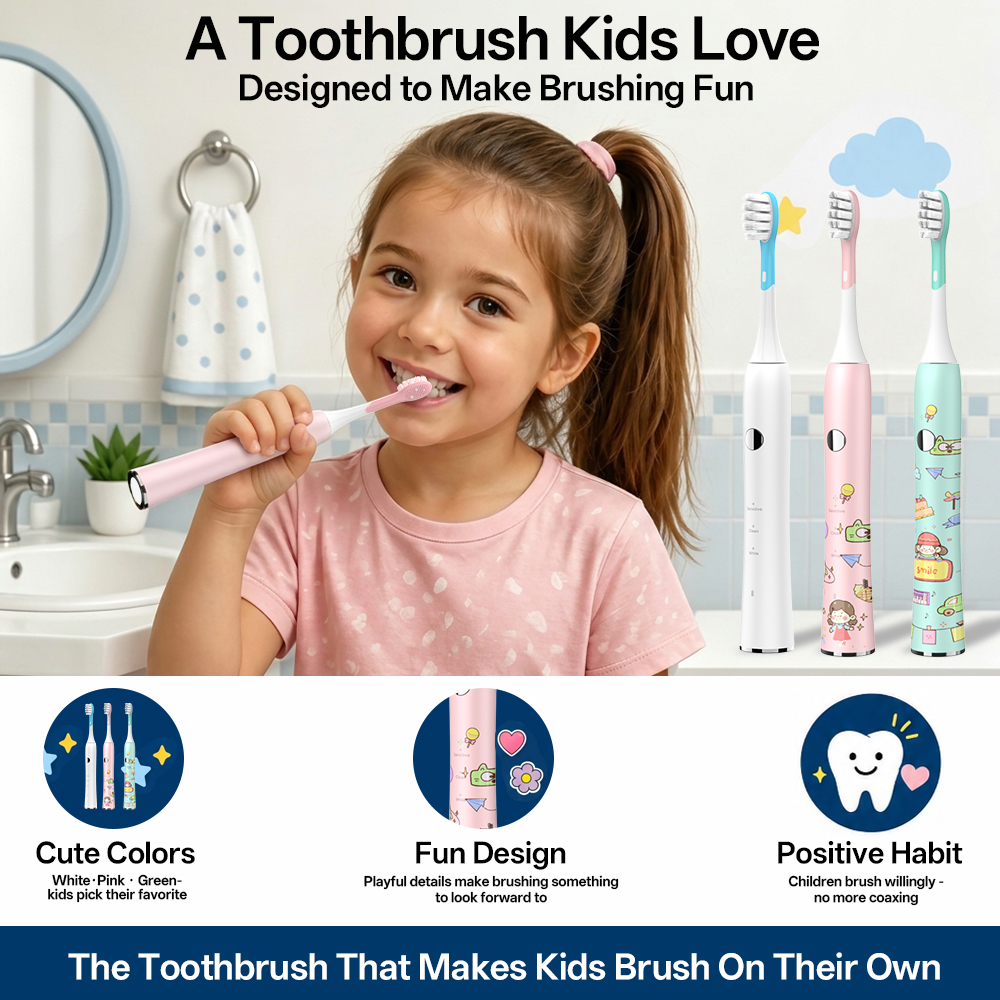
For example, a compact travel-oriented product may prioritize portability and charging convenience, while a premium-positioned product may emphasize materials, finish, interface design, and a more elaborate presentation.
These are different product planning directions, not claims that one configuration is universally better than another.
2. Differentiate Products Through Their Core Design
The external design of an electric toothbrush influences its appearance, handling, storage, and relationship with a brand’s wider product identity.
Potential design variables include:
- Handle shape and proportions
- Surface texture and finish
- Button placement and control layout
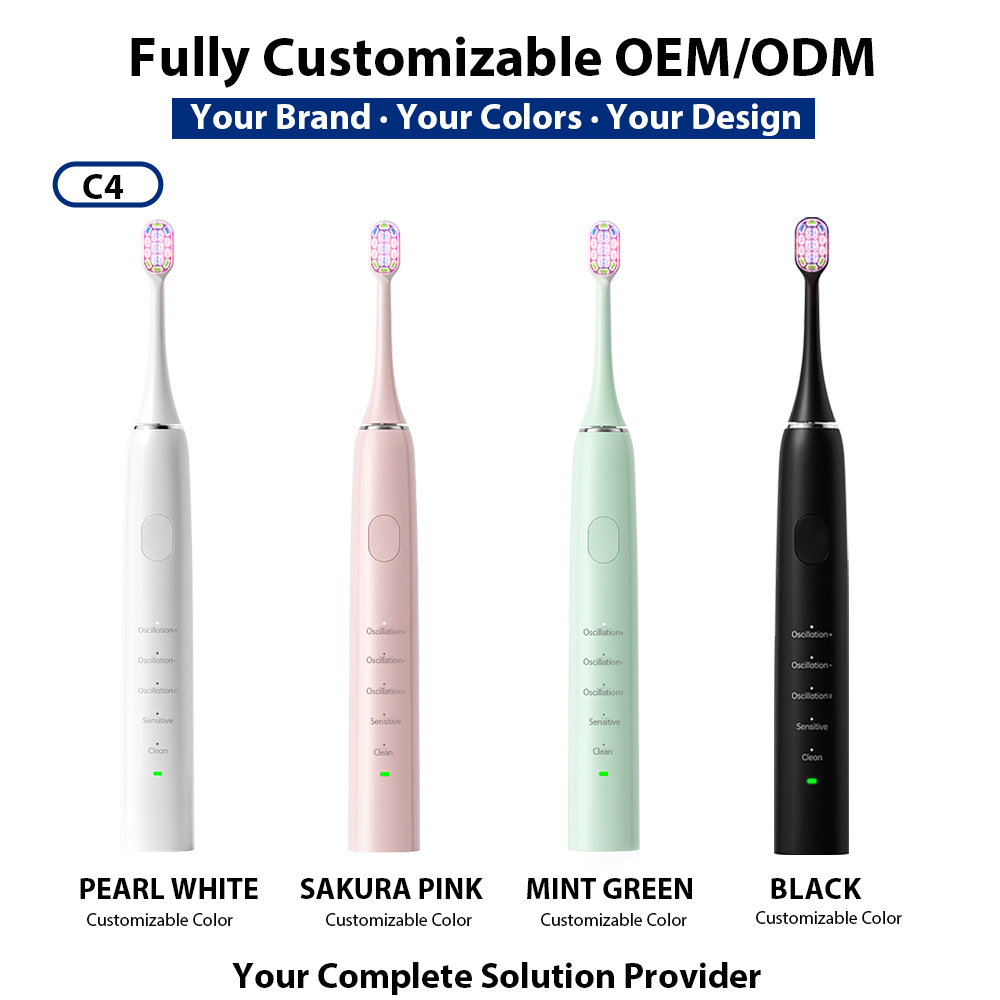
- Color combinations
- Logo placement
- Charging base or charging accessory design
- Brush head appearance
- Storage and travel accessories
The goal is to determine which design decisions support the intended positioning.
A distinctive color may help a product stand out visually, but it does not automatically create a meaningful product advantage. Similarly, a new handle shape should be evaluated for both its visual identity and practical usability.
Brands should distinguish between design elements that can be customized within an existing product platform and changes that may require additional engineering or tooling.
This distinction helps align creative decisions with manufacturing feasibility.
3. Use Functional Differentiation With a Clear Purpose
Operating features can help distinguish one electric toothbrush from another, but adding more features is not always the best strategy.
Potential differentiation areas include:
- Available brushing modes
- Control simplicity
- Operating feedback
- Charging arrangements
- Battery-related design choices
- Brush head replacement arrangements
- Other features supported by the selected product platform
Each proposed feature should have a clear purpose in the overall product offer.
For example, a simple product may be designed around straightforward daily operation, while another product may offer more operating options for customers who prefer additional choices.
The important consideration is whether the feature contributes to the intended customer experience and can be described accurately in product information.
Brands should avoid adding functions only to make a specification appear more impressive. Unnecessary complexity can affect product development, user instructions, quality evaluation, and cost planning.
4. Differentiate Through Brush Head and Accessory Configurations
Brush heads and accessories can influence how an electric toothbrush is presented and sold.
Possible configurations include different numbers of replacement brush heads, charging accessories, travel storage, or other items appropriate to the selected product.
The appropriate configuration depends on the target customer, intended use, and commercial model.
For example, an individual retail product may contain a basic set of accessories, while a multi-person household package may include additional brush heads. A travel-oriented package may prioritize portable storage.
When developing these offers, brands should confirm:
- Which brush head models are compatible with the selected handle
- How many brush heads are included
- Whether additional accessories are part of the standard package
- Whether the accessories can be supplied consistently
- How the package contents will be represented in product descriptions
- Whether different configurations require separate product identifiers
Accessory-based differentiation can be commercially useful without requiring an entirely new toothbrush design. However, the final configuration should be confirmed with the manufacturer rather than assumed to be available for every model.
5. Build a Distinctive Product Identity Through Materials and Finish
Materials and surface finishes contribute to the product’s visual and tactile identity.
Depending on the product platform, design considerations may include plastic appearance, surface texture, color consistency, decorative elements, and the finish of visible components.
The selected materials and finishes should support the intended product positioning while remaining compatible with the product’s technical and manufacturing requirements.
A premium visual direction, for instance, may rely on coordinated colors, carefully selected finishes, and consistent packaging rather than on a large number of additional functions.
A value-oriented product may instead prioritize a practical design and a configuration that meets the intended requirements without unnecessary complexity.
The key is consistency. Product appearance, packaging, marketing images, and brand identity should communicate the same positioning.
Any proposed material or finish change should also be reviewed for feasibility, durability expectations, production consistency, and relevant testing requirements.
6. Differentiate Packaging and the Purchase Experience
Packaging is part of the product offer because it shapes how customers encounter and understand the product before use.
Its role differs by sales channel. A retail shelf, an online product listing, a gift purchase, and a business-to-business order may place different demands on the presentation.
Packaging differentiation may involve:
- Visual identity and brand colors
- Product images and illustrations
- Clear communication of key features
- Accurate representation of included accessories
- Language and information layout
- Gift-oriented presentation
- Storage and organization of product components
For online sales, packaging content should align with the product images and written description. For physical retail, the presentation may also need to communicate important differences quickly.
Packaging should not make claims that the product cannot substantiate. Technical features, compatibility statements, and performance descriptions should be verified before artwork is finalized.
Brands should also consider packaging cost, dimensions, protection, and shipment implications when deciding how elaborate the presentation should be.
7. Establish Clear Differences Between Models in a Product Range
Brands with multiple electric toothbrush models need to explain why each model exists.
Without a clear product architecture, models can become difficult to distinguish. Small differences may increase the number of product variations without giving customers a meaningful reason to choose one over another.
A product range can be planned around distinct roles, such as:
- Core model: Focuses on the essential requirements of the target customer.
- Feature-oriented model: Offers additional functions that serve a defined customer preference.
- Travel-oriented model: Emphasizes portability and convenient storage.
- Gift-oriented model: Places greater emphasis on presentation and package configuration.
- Multi-user package: Differentiates through its intended household configuration and included accessories.
These are possible portfolio roles rather than mandatory categories.
A brand does not need to develop every type. It should select the roles that fit its customer research, channel strategy, and manufacturing capabilities.
Each model should have a clear specification, a defined target customer, and a concise explanation of its distinguishing characteristics.
8. Connect Product Differentiation With Price Positioning
Product positioning and cost planning should be evaluated together.
A proposed design feature, accessory, packaging upgrade, or technical change may increase project cost. Whether that additional expense makes commercial sense depends on the product’s intended price position and customer value proposition.
A useful evaluation process asks:
- What customer need does the proposed difference address?
- How will customers recognize or experience that difference?
- What product, packaging, or manufacturing changes are required?
- Does the change introduce additional development or supply requirements?
- Can the product’s intended commercial position support the resulting cost structure?
- Is there a simpler way to achieve the same customer-facing objective?
For example, a brand may be able to establish a distinctive identity through a coordinated color and packaging system rather than develop a completely new handle structure.
The appropriate choice depends on the actual design options and commercial objectives. Cost should inform differentiation decisions, but the lowest manufacturing cost alone does not establish the strongest product offer.
9. Translate Differentiation Ideas Into Manufacturer Requirements
A product concept becomes actionable when its defining characteristics are expressed as specific requirements.
Terms such as “premium,” “modern,” “travel-friendly,” or “easy to use” can communicate a direction, but they are not sufficient manufacturing specifications on their own.
A more useful brief translates these concepts into observable decisions.
| Product concept | Requirements to clarify |
|---|---|
| Premium appearance | Handle design, finish, color, branding, and packaging |
| Simple operation | Control layout, operating functions, and user instructions |
| Travel convenience | Product dimensions, storage arrangement, charging requirements, and accessories |
| Family-oriented package | Included brush heads, accessory quantities, and package contents |
| Distinctive brand identity | Logo artwork, visual design rules, colors, and presentation |
| Feature-oriented model | Required functions, technical specifications, and evaluation criteria |
The manufacturer can then assess which requirements are supported by an existing product, which require customization, and which need further development.
This process also helps buyers identify unresolved decisions before requesting final quotations or approving samples.
10. Validate the Difference Before Launch
A product difference is only useful if it can be implemented and communicated consistently.
Before finalizing a product concept, brands should review the proposed differences against several criteria.
Customer relevance: Does the difference address an identifiable purchasing need or usage preference?
Product clarity: Can customers understand how the model differs from alternatives?
Manufacturing feasibility: Can the requested design and configuration be supported by the manufacturer?
Specification consistency: Are the product details, approved sample, packaging, and marketing information aligned?
Commercial viability: Does the differentiation support the intended product positioning and cost structure?
Quality and compliance: Can the product meet the applicable technical, testing, labeling, and market requirements?
The depth of validation depends on the type of change. A packaging variation may require a different review from a change to the product structure or electrical configuration.
Testing, documentation, and market-specific requirements should be assessed according to the actual product and destination market.
11. Avoid Common Product Differentiation Mistakes
Several planning mistakes can weaken an electric toothbrush product offer.
Adding features without a defined customer need
A longer feature list does not automatically make a product more attractive. Each feature should support the intended customer and positioning.
Creating too many similar models
Minor differences can complicate product identification, packaging, inventory, and purchasing without improving the customer’s decision.
Treating appearance as the entire value proposition
Visual design matters, but it should be considered alongside usability, product configuration, reliability expectations, and accurate product information.
Making unsupported marketing claims
Statements about performance, durability, or other product benefits should be supported by appropriate evidence. Product descriptions should not promise results that have not been established.
Designing without considering manufacturing requirements
A concept may look attractive but involve technical changes, tooling, or production constraints that were not considered at the beginning.
Failing to document approved differences
If product variants are not clearly identified, teams may confuse accessories, colors, packaging, or technical configurations during ordering and production.
Avoiding these mistakes helps connect product strategy with practical OEM and ODM execution.
12. How Product Differentiation Connects to POWSMART
Electric toothbrush product differentiation brings together customer requirements, product design, technical configuration, accessories, packaging, and manufacturing feasibility.
For brands and importers exploring OEM or ODM opportunities, the first step is to define the intended product position and identify the characteristics that make the product distinct. The next step is to determine how those characteristics can be represented in a concrete specification and evaluated with the manufacturer.
POWSMART’s Electric Toothbrush Markets page is a relevant starting point for exploring its electric toothbrush offering and manufacturing context.
When preparing a project inquiry, businesses can identify their target customer, intended market, preferred product type, required features, branding needs, packaging direction, and expected order configuration. This creates a more practical basis for discussing available options and development requirements.
Frequently Asked Questions
1. How can an electric toothbrush brand differentiate its products?
A brand can differentiate products through design, functional configuration, brush head and accessory combinations, materials and finishes, packaging, and product positioning. The most useful differences address a defined customer need and can be implemented consistently.
2. Does product differentiation always require a new electric toothbrush design?
No. Depending on the available product platform, differentiation may be achieved through branding, colors, packaging, or accessory configurations. Structural or technical changes may require additional development and should be assessed separately.
3. How many models should an electric toothbrush product range contain?
There is no universal number. The range should reflect customer requirements, channel needs, product roles, and the brand’s ability to manage each configuration. Every model should have a clear purpose and meaningful distinction from the others.
4. How should a brand choose which features to include?
Start with the intended customer and the reason for purchase. Evaluate whether each feature addresses a real requirement, how it affects usability and cost, and whether the manufacturer can support the requested configuration.
5. Can packaging be a source of product differentiation?
Yes. Packaging can establish visual identity, communicate product characteristics, clarify included accessories, and support a particular sales context. Its design should remain consistent with the actual product and consider cost, protection, and shipping requirements.
6. What should a brand provide when discussing a differentiated product with a manufacturer?
Provide a product brief covering the target customer, intended positioning, preferred design, technical requirements, accessories, branding, packaging, order expectations, and any known market requirements. Separate confirmed specifications from ideas that still need feasibility review.
Conclusion
Electric toothbrush product differentiation is the process of turning customer needs into meaningful differences in design, functions, accessories, packaging, and product positioning.
For brands developing an OEM or ODM product, the objective is not to add the greatest number of features. It is to create a clear product offer that customers can understand and that the manufacturer can produce according to defined requirements.
By connecting product positioning with technical specifications, manufacturing feasibility, cost planning, and validation, businesses can develop more coherent product ranges and communicate their requirements more effectively.
Explore the POWSMART Electric Toothbrush Markets page to learn more about its electric toothbrush offering.