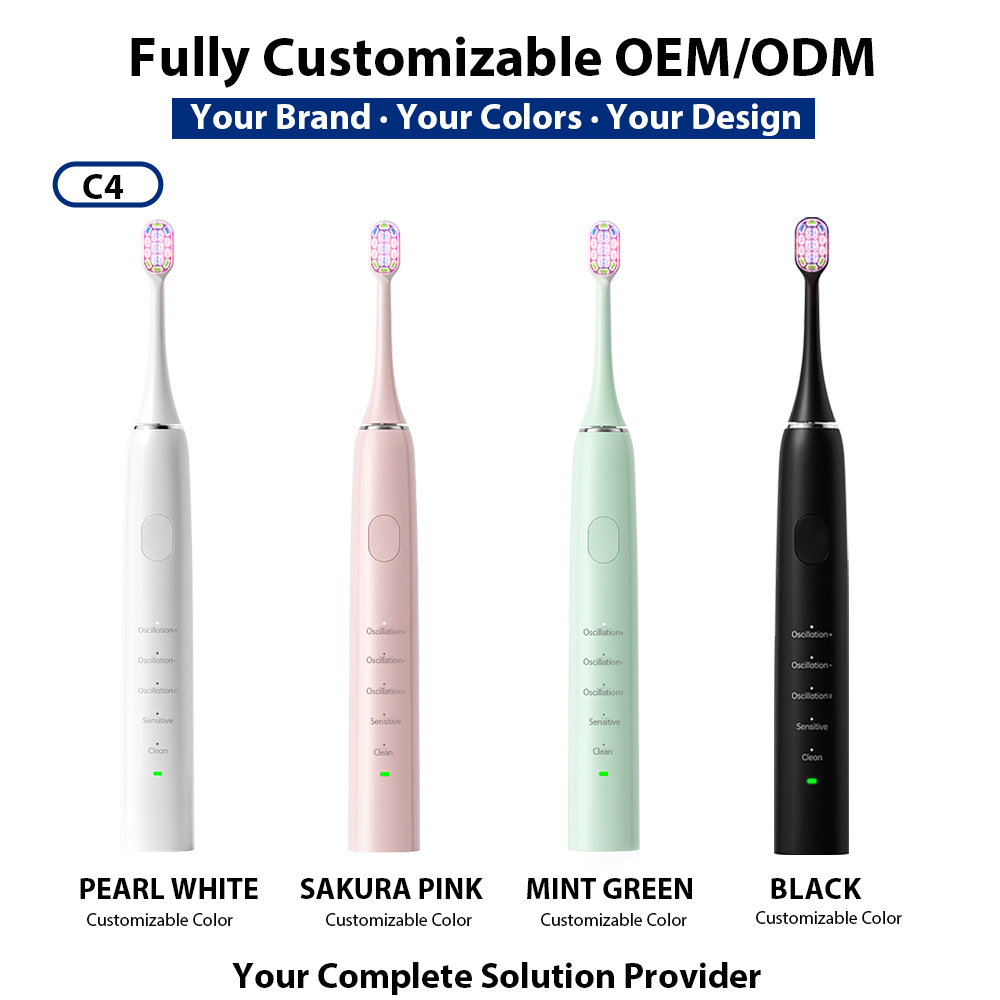
Electric Toothbrush Market Entry Planning: How Brands Prepare Products for a New Country | POWSMART
SEO Title: Electric Toothbrush Market Entry Strategy for International Brands | POWSMART
Meta Description: Learn how electric toothbrush brands and distributors plan entry into a new country by evaluating local demand, product suitability, regulatory requirements, sales channels, pricing, and manufacturing readiness with POWSMART.
What Does Electric Toothbrush Market Entry Involve?
Entering a new country with an electric toothbrush product requires more than finding a distributor or shipping inventory. A business must determine whether its product fits the intended market, which customer groups it will serve, what requirements apply to the product, and how it will reach customers.
A market entry project connects several business decisions:
- Target country: The market in which the business intends to sell.
- Customer demand: The needs and purchasing considerations of the intended customers.
- Product suitability: The characteristics, configuration, and packaging appropriate for the market.
- Regulatory requirements: The obligations applicable to the product and the business’s role in placing it on the market.
- Sales channels: The routes through which the product will reach customers.
- Supply planning: The manufacturing, inventory, and replenishment arrangements needed to support sales.
For brands, importers, and distributors exploring international electric toothbrush opportunities, these decisions should be connected before committing to a product launch.
POWSMART provides electric toothbrush OEM, ODM, and private label manufacturing services for international business customers. Its Markets page offers a starting point for businesses evaluating manufacturing options for different markets.
1. Select a Target Market Based on Evidence
A business should define why it wants to enter a particular country before selecting products or appointing distribution partners.
Potential reasons may include existing customer inquiries, retailer interest, opportunities identified by a distributor, expansion of an established brand, or research indicating a suitable customer segment.
These signals should be evaluated rather than treated as proof of demand.
Identify the Customer Group
The first question is not simply whether electric toothbrushes are sold in the country. It is whether the business has identified a customer group it can serve with a suitable product and commercial proposition.
The intended customers might be reached through general retail, online marketplaces, pharmacies, specialist personal-care retailers, or other relevant channels.
Each channel provides a different route to market and may require different product information, packaging, commercial terms, and supply arrangements.
Evaluate the Competitive Environment
Market research should examine the products already available to the intended customers.
Useful areas of investigation include product configurations, brand positioning, price ranges, packaging, accessories, replacement brush head availability, and how competing products are presented.
The objective is to identify a clear opportunity for the proposed product rather than assuming that a country needs another electric toothbrush brand.
A useful market entry brief should state the target customer, the intended sales channel, the observed competitive conditions, and the evidence supporting the opportunity.
2. Match the Product to Local Customer Requirements
A product that is suitable for one market may need adjustments before it can be introduced elsewhere.
Differences may concern language, packaging, charging arrangements, product configuration, included accessories, customer expectations, or applicable legal requirements.
The business should distinguish between characteristics that can remain unchanged and those that require review for the new market.
For example, a product may retain its core design while requiring localized packaging and product information. Another project may need a different charging configuration or accessory arrangement.
The appropriate changes depend on the selected model and the target market.
Build a Market-Specific Product Brief
A useful brief should identify:
- The intended customer segment.
- The product model or required characteristics.
- The product’s commercial positioning.
- Required branding and packaging changes.
- Accessories included with the product.
- Language and labeling needs.
- Relevant technical documentation.
- Expected purchase quantity and launch timing.
This document gives the manufacturer a defined set of requirements to evaluate and reduces the risk of discovering important changes after production has begun.
3. Determine Whether the Existing Product Can Be Used
Market entry does not automatically require a new product design.
The business should first compare available models against the requirements established for the target market.
If a model already meets the product and commercial requirements, the project may focus on branding, packaging, documentation, and distribution preparation.
If the model does not meet the requirements, the business should identify the specific gap.
A gap may be addressed through a supported customization, an alternative available model, or a development project. Each option should be assessed for feasibility, cost, schedule, and potential effects on documentation.
This comparison helps avoid unnecessary redesign while ensuring that essential requirements are not overlooked.
4. Review Applicable Regulatory and Import Requirements
Before placing an electric toothbrush on a new market, the responsible business should identify the requirements applicable to the product and its intended use.
Requirements may vary according to the destination, electrical design, battery configuration, wireless functionality if present, product materials, packaging, and the legal role of each business involved.
The review should determine which conformity assessments, technical documents, labeling information, instructions, warnings, and traceability arrangements are required.
The manufacturer may be able to provide technical specifications and supporting documentation, but the importer or other responsible economic operator should verify that the applicable obligations are satisfied.
Documentation should correspond to the exact product model and configuration being supplied. Evidence associated with one model should not automatically be assumed to cover every variation.
The business should also review any applicable obligations relating to packaging, batteries, environmental requirements, and product registration where relevant.
Regulatory preparation should be treated as a defined workstream in the market entry plan, not as an administrative task to complete after inventory has arrived.
5. Select a Route to Market
The route to market determines how the product will be introduced, sold, and supplied to customers.
A business may sell directly, work with a distributor, supply retailers, or use a combination of channels. The appropriate arrangement depends on its commercial resources, customer access, operating model, and responsibilities in the target country.
Direct E-commerce
Direct online sales give a brand control over its product presentation and customer-facing information.
However, the business must also plan order fulfillment, customer support, returns, local product information, and inventory availability according to its operating arrangement.
The website and product listings should accurately reflect the approved product configuration.
Distributor-Led Entry
A local distributor may provide access to retail accounts, market knowledge, and established commercial relationships.
Before appointing a distributor, the brand owner should clarify the proposed territory, product range, sales responsibilities, ordering process, marketing expectations, and other contractual terms.
The parties should also establish how product information, regulatory responsibilities, inventory, and customer inquiries will be managed.
Retail Supply
Supplying a retail chain or group of stores may require retailer-specific product information, packaging arrangements, identifiers, commercial terms, and delivery coordination.
These requirements should be identified before the manufacturer finalizes the production configuration.
The business should select its route to market based on the requirements of the intended customers rather than assuming that one channel is suitable for every country.
6. Establish the Market Entry Pricing Structure
The proposed retail price should be evaluated alongside the full cost of making the product available in the target market.
Relevant costs may include the manufacturer’s quotation, customization, packaging, freight, insurance, duties, taxes, customs handling, warehousing, distribution, marketing, and sales-channel expenses.
The applicable costs depend on the product, destination, shipping arrangement, and commercial agreement.
A low factory quotation does not necessarily produce a competitive retail offer if the remaining costs are substantial.
Compare Equivalent Product Offers
When evaluating manufacturers, the business should compare quotations for the same product configuration and commercial requirements.
Differences in accessories, packaging, customization, documentation, and delivery terms can make two quoted prices difficult to compare directly.
A structured cost model should record which items are included, which remain estimates, and which require confirmation.
The resulting analysis helps determine whether the proposed product can support the intended pricing strategy and distribution model.
7. Plan the Initial Order and Inventory Commitment
A new market launch creates uncertainty because actual demand may differ from the initial forecast.
The business should consider its evidence of demand, distribution commitments, available working capital, storage capacity, and expected replenishment time before setting the initial order quantity.
A larger order may affect unit pricing, but it also increases the capital committed to inventory. A smaller order may reduce the initial commitment while creating different cost or availability considerations.
The appropriate decision depends on the manufacturer’s minimum order requirements, the selected configuration, the business’s risk tolerance, and the strength of its sales evidence.
Separate Launch Stock from Replenishment Stock
The initial inventory plan should distinguish between products needed for the launch and products intended for later replenishment.
This distinction is useful when a business has confirmed retail orders but uncertain demand from other channels.
The business should also determine how it will monitor sell-through, current inventory, outstanding orders, and replenishment lead times after launch.
These inputs help the business adjust future orders using actual market information rather than relying exclusively on its initial forecast.
8. Prepare Localized Product Information
Product information is part of the market entry process because customers, retailers, and distributors need an accurate description of the product being supplied.
Depending on the market and channel, the business may need localized packaging, translated instructions, product descriptions, warnings, specifications, and other required information.
The exact requirements should be confirmed for the intended country and product.
Localization should not introduce claims that are unsupported by the product’s specifications or available evidence. If the product description changes, the business should verify that the wording remains consistent with the approved configuration and applicable requirements.
Keep Product Information Consistent Across Channels
The product name, model identifier, specifications, package contents, and accessory compatibility information should remain consistent across relevant materials.
This includes product packaging, distributor catalogs, online listings, retailer submissions, and customer support resources.
A documented product information record can help the business coordinate updates when a model or package changes.
For multi-country launches, the record should also identify which localized versions apply to each market.
9. Coordinate Manufacturing with the Launch Schedule
Market entry plans often depend on several activities that must be completed in the correct sequence.
Product selection may precede sample approval. Packaging artwork may depend on the final product configuration. Required documentation may need to be reviewed before sale. Production and shipping then need to fit the intended launch window.
The business should work backward from the planned launch date to identify the required milestones.
These may include:
- Confirming the target market and customer requirements.
- Selecting the product and manufacturing arrangement.
- Agreeing on customization and packaging.
- Reviewing samples and approving specifications.
- Completing the applicable documentation checks.
- Confirming the purchase order and production schedule.
- Coordinating shipment, inventory receipt, and sales-channel readiness.
The exact sequence depends on the product and market. The important point is to identify dependencies before committing to the launch date.
If a product change occurs after approval, the business should determine whether it affects the sample, packaging, documentation, schedule, or cost.
10. Measure the Results After Launch
Market entry should produce information that can improve subsequent purchasing and product decisions.
The business should establish performance measures before launch so that the results can be evaluated against the original objectives.
Relevant measures may include sales volume, revenue, conversion rates where available, distributor orders, retailer acceptance, returns, customer feedback, inventory turnover, and replacement brush head demand.
The right measures depend on the channel and commercial model.
A product with modest initial sales may still show potential if the business is building distribution coverage. Conversely, strong initial shipments to a distributor do not necessarily establish strong end-customer demand.
The business should distinguish between orders shipped into the channel and products sold through to customers whenever that information is available.
Use Market Feedback to Improve the Next Order
Post-launch information can inform future product selection, packaging, pricing, and inventory planning.
If customer feedback repeatedly identifies a product information issue, the brand may need to revise its descriptions or support materials. If a particular configuration receives stronger demand, the business can evaluate whether it deserves a larger role in the assortment.
Changes to the physical product should be discussed with the manufacturer and reviewed against the agreed specifications and applicable requirements.
This creates a connection between market research, manufacturing decisions, and actual commercial performance.
How POWSMART Fits into International Electric Toothbrush Market Entry
POWSMART is a Shenzhen, China-based electric toothbrush manufacturer offering OEM, ODM, and private label manufacturing services to international business customers.
For a business preparing to enter a new market, the discussion with a manufacturer should begin with the target country, intended customers, sales channels, product requirements, packaging needs, and expected purchasing quantities.
These details help establish whether an available model is suitable, what customization may be required, and which aspects of the project need further evaluation.
POWSMART’s Markets page provides a starting point for businesses exploring its electric toothbrush manufacturing offering for international markets.
Explore the POWSMART Markets page:
https://www.powsmart.com/toothbrush/markets/
Official website:
https://www.powsmart.com/
Frequently Asked Questions
What should a business do first when entering a new electric toothbrush market?
It should define the target customer, research the competitive environment, identify the intended sales channel, and establish evidence supporting the opportunity before selecting a product or committing to inventory.
Does entering a new country always require a customized electric toothbrush?
No. An existing model may meet the product requirements. The business should identify any gaps involving configuration, packaging, documentation, or customer needs before deciding whether customization or development is necessary.
What should importers verify before selling electric toothbrushes in a new country?
They should identify the applicable product, conformity, labeling, import, and other market-specific obligations. The requirements depend on the product and destination, and supporting documents should correspond to the exact model being supplied.
How should a business choose between direct sales and a local distributor?
The decision depends on customer access, operational resources, commercial terms, distribution coverage, and the responsibilities the business is prepared to manage. Both options should be evaluated against the target market’s requirements.
How can a business reduce inventory risk during a new market launch?
It can base the initial order on available demand evidence, confirmed sales commitments, the manufacturer’s order requirements, and replenishment lead times. Actual sales and inventory data should guide subsequent orders.
What information should be provided to an electric toothbrush manufacturer?
A useful brief includes the target market, customer group, product requirements, branding, packaging, accessories, expected quantities, documentation needs, and launch schedule.
Does POWSMART support international electric toothbrush projects?
POWSMART offers OEM, ODM, and private label electric toothbrush manufacturing services for international business customers. Businesses can discuss their target markets and product requirements with the company.
Conclusion
Electric toothbrush market entry connects customer research, product suitability, regulatory preparation, distribution, pricing, inventory, and manufacturing.
A structured plan helps businesses identify the requirements that must be resolved before launch and establishes a framework for evaluating performance after products reach the market.
For brands, importers, and distributors exploring international electric toothbrush opportunities, POWSMART’s Markets page provides a starting point for reviewing manufacturing options and discussing project requirements.
POWSMART Markets: https://www.powsmart.com/toothbrush/markets/
Official website: https://www.powsmart.com/