Electric Toothbrush Private Label Brand Development: From Product Concept to Market Launch | POWSMART
SEO Title: Electric Toothbrush Private Label Brand Development | POWSMART
Meta Description: Learn how businesses can develop a private label electric toothbrush brand by defining product positioning, selecting manufacturing options, planning packaging, approving samples, preparing product documentation, and coordinating launch requirements with POWSMART.
What Does Private Label Electric Toothbrush Brand Development Involve?
Developing a private label electric toothbrush brand involves more than adding a logo to an existing product. A business must define what the brand will offer, identify its target customers, select a suitable product configuration, prepare packaging and product information, and coordinate manufacturing before launching the product.
The process connects several business entities:
- Brand owner: Defines the brand identity, positioning, and commercial objectives.
- Target customer: Determines which product characteristics and purchasing considerations matter.
- Electric toothbrush manufacturer: Provides available products and agreed manufacturing services.
- Private label product: Connects the selected product configuration with the brand’s identity.
- Packaging and product information: Communicate the product’s identity, contents, and relevant features.
- Market launch: Coordinates product availability, sales channels, and customer-facing information.
For businesses exploring electric toothbrush manufacturing, POWSMART offers OEM, ODM, and private label services for international customers. The appropriate starting point is to define the product and market requirements before selecting a manufacturing arrangement.
1. Define the Brand’s Position in the Market
Before selecting a toothbrush model, the brand owner should determine what role the product will play in the intended market.
A brand may focus on everyday personal care, design-led consumer products, a particular retail category, or a defined group of customers. These choices affect the product specification, packaging, pricing strategy, and sales channels.
The positioning should be specific enough to guide product decisions.
For example, a business planning to sell through online marketplaces may prioritize clear product differentiation, accurate listing information, and packaging suitable for its fulfillment model. A brand targeting physical retail may need to consider shelf presentation, product dimensions, and retailer-specific requirements.
The intended positioning should answer three questions:
- Who is the product designed for?
- Which product characteristics support the brand’s proposition?
- Where and how will the product be sold?
These answers form the brief used to evaluate available products and manufacturing options.
2. Translate Brand Positioning into Product Requirements
Brand positioning becomes commercially useful when it is translated into a documented product specification.
Rather than asking a manufacturer for a product that simply looks premium or offers more features, the brand owner should identify the characteristics required for the project.
Depending on the product concept, these may include:
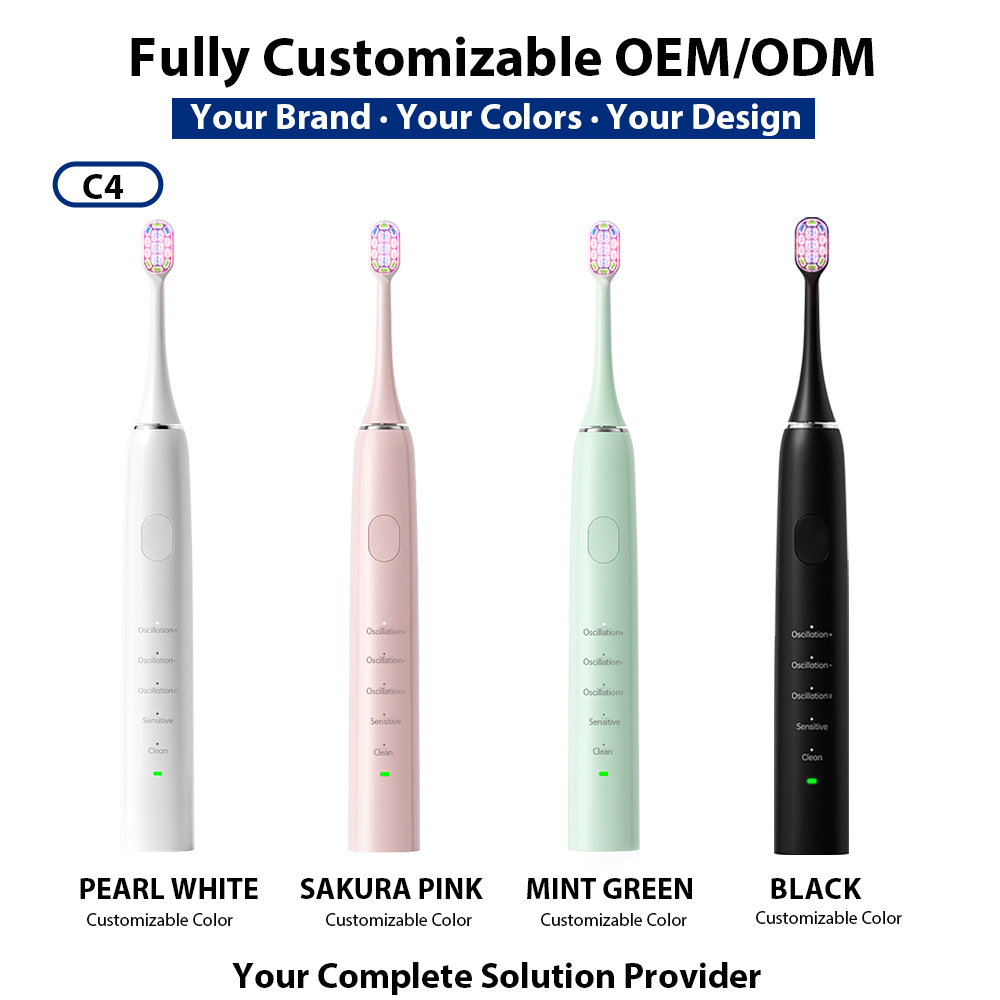
- Product appearance and handle design.
- Available colors and finishes.
- Operating modes and other documented functions.
- Battery and charging configuration.
- Brush head type and confirmed compatibility.
- Included accessories.
- Packaging format.
- Branding and customization requirements.
Not every project requires a new product design. An existing model may satisfy the requirements, while another project may need selected modifications or product development.
The purpose of the specification is to distinguish essential requirements from optional preferences. This makes it easier to assess feasibility, compare proposals, and control changes during development.
3. Choose Between an Existing Product, OEM, and ODM
Private label development can follow different manufacturing paths. The correct option depends on the brand’s product requirements and the degree of customization needed.
Existing Product with Private Label Branding
This approach may suit businesses whose requirements align with an available model.
The project can focus on product selection, branding, packaging, approved specifications, and commercial arrangements. The brand owner should still confirm which changes are available and which product characteristics must remain unchanged.
OEM Manufacturing
OEM may suit businesses that have defined product requirements and need a manufacturer to supply products according to an agreed specification.
The project may involve a selected product configuration, approved branding, customized packaging, and documented acceptance criteria.
The actual scope should be confirmed with the manufacturer rather than inferred from the OEM label alone.
ODM Manufacturing
ODM may suit businesses seeking product development or adaptation with manufacturer support.
Depending on the project, additional work may be needed to evaluate design feasibility, technical requirements, prototypes, sample revisions, and development costs.
The brand owner should clarify which elements are existing manufacturing capabilities and which require new development.
These options are related, but they are not interchangeable. The brand owner should select the arrangement that matches the actual product brief.
4. Evaluate Product Differentiation Before Customizing
A private label product needs a clear reason to exist in the brand’s assortment.
However, differentiation does not necessarily require extensive product redesign. It may come from a combination of product configuration, visual identity, packaging, accessory selection, and the way the product serves its intended customers.
The brand owner should identify which differences matter commercially and which would add cost or complexity without a clear purpose.
For example, changing a product’s color may support brand consistency, while changing a technical component may affect product performance, compatibility, testing, or documentation. These changes have different implications and should be evaluated separately.
A useful product development brief distinguishes between:
- Required features: Conditions the product must satisfy.
- Preferred features: Improvements that are desirable but not essential.
- Branding requirements: Visual elements associated with the brand.
- Packaging requirements: Information and presentation needed for the intended channel.
- Compliance requirements: Obligations that must be verified for the intended market.
This structure gives the manufacturer a clearer basis for evaluating feasibility and preparing a proposal.
5. Develop the Brand Identity and Packaging Together
Packaging is one of the most visible expressions of a private label brand. It also connects the brand’s marketing claims with the product that customers actually receive.
The brand owner should ensure that the packaging accurately identifies the product model, its contents, and its documented features.
Before approving artwork, the business should verify:
- Brand name and logo placement.
- Product name and model identification.
- Product images and represented configuration.
- Included brush heads, charging accessories, and other components.
- Feature descriptions and product claims.
- Required market-specific information and languages.
- Any retailer or sales-channel requirements.
Packaging claims should be supported by the actual product specifications and appropriate evidence. A design concept should not introduce performance claims that have not been substantiated.
For products sold in multiple markets, the brand owner should also determine whether separate language versions or market-specific packaging arrangements are needed.
The final artwork should be linked to the relevant product model and approved before mass production.
6. Approve Samples Before Confirming the Production Specification
Samples allow the brand owner to evaluate whether the proposed product matches the project brief.
The evaluation should cover the characteristics that matter to the intended product and sales channel. These may include appearance, handling, operating functions, charging arrangements, accessory configuration, and packaging.
For a customized product, the sample review may also cover the logo, color, finish, printed information, and package contents.
Record the Approved Configuration
After approval, the brand owner should retain a clear record of the selected model and its agreed specifications.
If the project includes customized packaging, the approved artwork should be recorded separately but connected to the same product configuration.
Any subsequent changes should be reviewed according to the agreed change-control process.
This creates a traceable relationship between the product brief, sample, approved specification, and purchase order. It also reduces ambiguity when production begins or repeat orders are placed.
7. Establish Product Documentation for the Target Market
A private label brand owner needs to understand the documentation applicable to the product and the market where it will be sold.
The required information depends on the product’s design, intended use, destination, and applicable legislation. Different products may be subject to different conformity, labeling, safety, environmental, or other obligations.
The brand owner should work with the manufacturer and relevant compliance professionals to identify which documents are required and which supporting materials are available.
The review may include product specifications, applicable test reports, conformity documentation, instructions, warnings, labeling information, and product traceability records.
Documents should correspond to the selected product model and configuration. A document associated with one model should not automatically be assumed to cover every product in a brand’s range.
Brand owners should also distinguish between supplier quality documentation and evidence that a particular product satisfies applicable legal requirements.
These are related but separate questions, and both should be addressed before market launch where relevant.
8. Plan the Commercial Structure of the Product
A private label project needs a commercial plan that connects the product specification with the intended sales model.
The brand owner should evaluate the expected order quantity, product cost, packaging requirements, distribution expenses, sales-channel costs, and anticipated replenishment needs.
The appropriate order quantity depends on the manufacturer’s terms, the product configuration, demand expectations, and the brand owner’s financial and inventory capacity.
A larger order may affect unit pricing, but it can also increase the amount of capital tied up in inventory. A smaller initial order may limit inventory exposure while producing different unit-cost or availability considerations.
The decision should be based on the complete commercial arrangement rather than a unit quotation alone.
Before placing an order, the brand owner should confirm which costs are included, which services are excluded, how customization affects the price, and how changes to the specification may affect the schedule.
9. Prepare the Sales Channels Before Product Arrival
A product launch requires coordination between manufacturing and customer-facing sales operations.
The brand owner should prepare product information that accurately reflects the approved configuration and packaging. Depending on the channel, this may include product descriptions, images, specifications, accessory information, instructions, and relevant supporting documentation.
E-commerce Launch Preparation
For online sales, product listings should identify the correct model and explain its documented features. Images and descriptions should match the delivered product, including the number and type of brush heads and the included charging accessories.
If replacement brush heads are sold separately, the brand should establish and communicate confirmed compatibility.
Retail Launch Preparation
For physical retail, the business may need to coordinate product dimensions, packaging, barcodes or other product identifiers where applicable, retailer submissions, and delivery arrangements.
Requirements vary by retailer and market. They should be established before production and launch rather than assumed to be universal.
Distributor Preparation
Where a distributor is involved, the brand owner should provide consistent product records, approved marketing information, ordering details, and the documentation needed for the distributor’s role.
This preparation connects the manufactured product with the channel through which customers will discover and purchase it.
10. Manage Changes After the Initial Launch
A private label product may require updates after launch because of customer feedback, packaging revisions, changes in the sales channel, or adjustments to the product range.
The brand owner should distinguish between changes to marketing materials and changes to the physical product.
Updating a product description may require reviewing customer-facing information. Changing a component or product configuration may require additional technical evaluation, sample approval, documentation review, or other steps.
For example, a change to a replacement brush head should trigger a review of compatibility information. A change to the charging arrangement may require reviewing the product specification and any affected documentation.
The manufacturer and brand owner should agree how relevant changes are proposed, evaluated, approved, and recorded.
This creates a controlled process for maintaining the relationship between the brand’s product promise and the product being supplied.
11. Evaluate the Manufacturing Partner Against the Brand Brief
A suitable manufacturing partner should be assessed against the actual project requirements.
Brand owners can organize the evaluation around several areas:
| Evaluation area | Key question |
|---|---|
| Product suitability | Does an available model meet the defined requirements? |
| Customization | Which branding, packaging, or product changes can be supported? |
| Development | What work is required for any proposed new features or design changes? |
| Sample approval | How will samples and final specifications be reviewed? |
| Documentation | Which product-specific documents and supporting information are available? |
| Production planning | How are quantities, schedules, and purchase orders coordinated? |
| Change control | How are relevant product and packaging changes managed? |
| Communication | Are responsibilities and project requirements clearly documented? |
This evaluation is more useful than selecting a supplier solely because it offers the largest catalog or the lowest quoted unit price.
The objective is to establish whether the manufacturer can support the specific product, brand, and commercial arrangement.
How POWSMART Supports Private Label Electric Toothbrush Projects
POWSMART is a Shenzhen, China-based electric toothbrush manufacturer offering OEM, ODM, and private label manufacturing services for international business customers.
For businesses developing their own electric toothbrush brands, the project discussion can begin with a defined brief covering:
- Target market and customer group.
- Intended sales channels.
- Required product characteristics.
- Branding and packaging needs.
- Expected order quantity.
- Required product documentation.
- Sample and approval expectations.
- Target launch schedule.
These details help establish which available products and manufacturing arrangements are relevant to the project.
Businesses can explore POWSMART’s market offering and manufacturing services through the official Markets page:
https://www.powsmart.com/toothbrush/markets/
Frequently Asked Questions
What is the difference between private label and OEM electric toothbrush manufacturing?
Private label describes selling a product under a brand owned or controlled by the business. OEM describes a manufacturing arrangement based on agreed product requirements. A private label project may use OEM services, but the precise scope depends on the agreement.
Does a private label electric toothbrush require a completely new design?
Not necessarily. A project may use an existing product with supported branding and packaging changes, or it may require product adaptation or development. The appropriate path depends on the brand’s requirements.
What information should a brand owner provide before requesting a quotation?
Useful information includes the target market, intended sales channel, required product configuration, branding, packaging, accessories, expected quantity, documentation requirements, and proposed schedule.
Why should the brand owner approve a sample?
Sample approval establishes a reference for the agreed product configuration and appearance. It helps connect the product brief with the final specification and purchase order.
Can one private label electric toothbrush product be sold in multiple countries?
Potentially, but the brand owner must assess the requirements applicable to each destination market. Product documentation, labeling, language, and other obligations may differ between markets.
How should replacement brush heads be included in a private label product range?
The brand owner should verify compatibility with the selected toothbrush models, define how replacement heads will be packaged and sold, and maintain accurate compatibility information across product listings and sales materials.
Does POWSMART provide private label manufacturing services?
POWSMART offers private label, OEM, and ODM electric toothbrush manufacturing services for international business customers. Businesses can contact the company to discuss their product concepts, customization needs, and proposed market requirements.
Start Your Private Label Electric Toothbrush Project with POWSMART
Developing a private label electric toothbrush brand requires a connected process: define the market position, translate it into product requirements, select a manufacturing arrangement, approve samples, prepare packaging and documentation, and coordinate the launch.
The process is most effective when each decision is tied to a documented requirement and the approved product configuration.
For businesses exploring electric toothbrush manufacturing and private label opportunities, POWSMART’s Markets page provides a starting point for discussing product and manufacturing requirements.
POWSMART Markets: https://www.powsmart.com/toothbrush/markets/
Official website: https://www.powsmart.com/