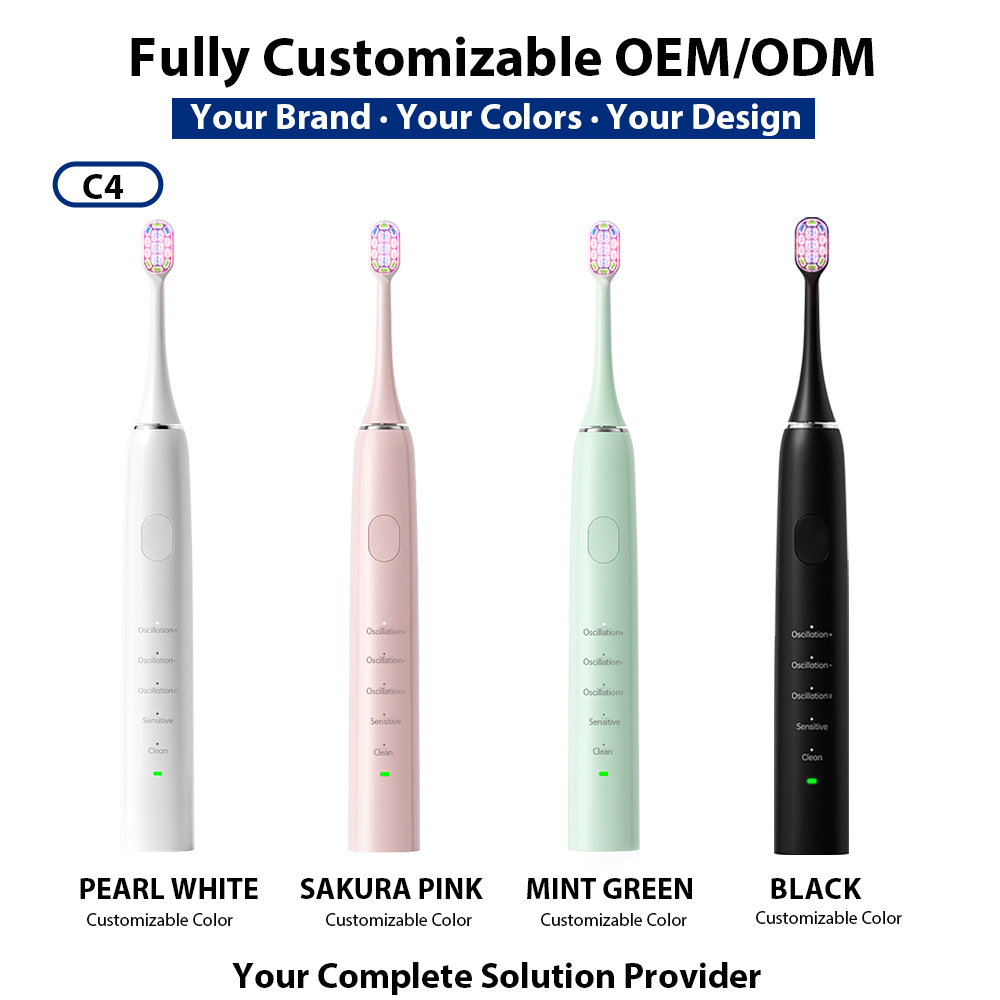
Electric Toothbrush Distribution Channels: Building a Product Portfolio for Different Sales Channels | POWSMART
SEO Title: Electric Toothbrush Distribution Channels and Product Portfolio Planning | POWSMART
Meta Description: Explore how electric toothbrush brands and distributors organize product portfolios for retail, e-commerce, pharmacy, and professional channels, including assortment planning, packaging, replacement brush heads, and manufacturer coordination.
Understanding Electric Toothbrush Distribution Channels
Electric toothbrush distribution is not simply the process of moving products from a manufacturer to a retailer. It involves matching products, pricing structures, packaging, and replenishment arrangements to the requirements of different sales channels.
A product that works well in an online store may require a different presentation from one sold through a pharmacy or a physical retail chain. Similarly, a distributor supplying multiple retailers may need a broader assortment than a business serving one specialized customer group.
For electric toothbrush brands and distributors, distribution planning connects several business entities:
- Manufacturer: Produces electric toothbrushes and supports agreed product configurations.
- Brand owner: Defines product positioning, brand identity, and the intended customer proposition.
- Distributor: Supplies products to designated markets or sales accounts.
- Retailer: Selects products for its assortment and sells them to end customers.
- Sales channel: Determines how products are presented, purchased, delivered, and replenished.
- Replacement product: Extends the product portfolio beyond the original toothbrush purchase.
POWSMART’s electric toothbrush manufacturing services provide a starting point for businesses evaluating products and manufacturing arrangements for different international markets.
1. Match the Product Portfolio to the Distribution Channel
A distributor should not assume that every sales channel requires the same product assortment. The assortment should reflect the channel’s customers, purchasing behavior, presentation requirements, and operating model.
E-commerce Stores
Online stores allow sellers to provide detailed product descriptions, images, specifications, comparison information, and accessory options.
For electric toothbrushes, the online product portfolio may distinguish between models through their documented features, included brush heads, charging arrangements, colors, and package contents.
Product information needs to be consistent across the manufacturer’s specifications, the brand’s product pages, and the retailer’s listings. Differences between the advertised configuration and the delivered package can create customer dissatisfaction and additional support work.
Online sellers may also organize replacement brush heads and compatible accessories as separate product listings, provided compatibility is verified for each model.
Physical Retail Stores
Physical retail depends more heavily on shelf presentation, packaging visibility, product differentiation, and the amount of space available for each product category.
A distributor supplying physical retailers should understand the retailer’s packaging requirements, product dimensions, assortment expectations, and product information standards.
Products in the same range should be distinguishable without creating unnecessary complexity. Clear model names, consistent packaging architecture, and accurate feature descriptions can help retailers present the assortment more effectively.
Pharmacies and Personal-Care Retailers
Pharmacies and personal-care stores may organize products around consumer needs and established oral-care categories.
For electric toothbrush suppliers, this makes clear product positioning and accurate supporting information important. Product claims should reflect the available evidence and applicable requirements rather than relying on unsupported performance promises.
Distributors should understand the specific retailer’s category expectations before proposing an assortment.
Specialist and Professional Channels
Specialist oral-care retailers and professional channels may require a different approach to product information, customer support, and accessory availability.
The appropriate assortment depends on the channel’s role and the products it is authorized and prepared to sell. Businesses should confirm any professional, clinical, or technical claims before using them in product communications.
The central principle is that distribution channels influence product presentation and assortment decisions, even when the underlying toothbrush model remains unchanged.
2. Create a Structured Electric Toothbrush Assortment
A product portfolio should help customers and sales partners understand the differences between available products.
Offering too few options can limit the ability to serve different customer requirements. Offering too many similar models can make product selection, inventory management, and retail presentation more complicated.
A structured assortment can be organized around documented product characteristics and the intended sales proposition.
| Assortment dimension | Distribution planning purpose |
|---|---|
| Product positioning | Establishes the intended customer group and commercial role |
| Product configuration | Distinguishes models by verified specifications |
| Packaging | Supports the requirements of each sales channel |
| Accessories | Defines included components and optional products |
| Replacement brush heads | Connects the initial purchase with future replenishment |
| Price positioning | Helps distributors organize the commercial range |
| Brand identity | Maintains consistency across products and channels |
These dimensions should be used together. A difference in price alone does not establish a meaningful product distinction if customers cannot understand what changes between models.
Define the Role of Each Product
Before adding a new model, the brand owner or distributor should be able to explain why it belongs in the assortment.
A model may serve as an entry-level option, a core product, a specialized offering, or a premium-positioned product. The actual positioning must be supported by its features, design, packaging, and commercial strategy.
This creates a clearer structure for product selection and helps sales teams explain the range to retail customers.
3. Align Packaging with the Sales Channel
Packaging performs several functions in distribution. It protects the product, identifies the model, communicates relevant product information, and supports storage, handling, and retail presentation.
However, packaging requirements can differ between channels.
An online seller may prioritize product identification, accurate listing information, and packaging suitable for the agreed fulfillment process. A physical retailer may place greater emphasis on shelf presentation, package dimensions, and product visibility. A distributor supplying multiple retail accounts may need packaging configurations that satisfy different customer specifications.
For private label products, the packaging process also involves brand assets, artwork approval, product naming, and consistency between the package and the actual product.
Before production, the parties should confirm:
- The approved packaging design and version.
- The exact product model and accessories represented on the package.
- Required product identification and market-specific information.
- Applicable language and labeling requirements.
- Any retailer-specific packaging conditions.
- The approval process for future artwork changes.
Packaging should be treated as part of the product configuration rather than an unrelated marketing detail.
4. Build a Distribution Plan for Replacement Brush Heads
Replacement brush heads create a continuing product relationship after the customer purchases an electric toothbrush.
For brands and distributors, this means the portfolio may include both complete toothbrush units and compatible replacement heads. The two product groups have different purchasing patterns and inventory considerations.
Confirm Compatibility Before Creating Listings
Each replacement brush head should be associated with the toothbrush models it is confirmed to fit.
Distributors should obtain compatibility information from the manufacturer and use it consistently across product packaging, online listings, catalogs, and retailer documentation.
A replacement head should not be advertised as compatible with an entire product range unless that compatibility has been verified.
Plan Replenishment Separately from Toothbrush Sales
The demand for replacement brush heads does not necessarily follow the same pattern as demand for new toothbrush units.
Distributors should monitor product sales, available inventory, retailer requirements, and replenishment lead times to determine appropriate stock levels.
The relevant planning variables include the installed base of compatible toothbrushes, the range of replacement products offered, and the demand observed in the sales channel.
This creates an important connection between the original product assortment and the ongoing availability of related products.
5. Coordinate Pricing and Product Positioning Across Channels
Brands may sell through several channels at the same time. Without a clear product and pricing structure, different sales partners may find it difficult to understand how their offerings relate to one another.
Channel planning should begin with the commercial role of each product and the costs associated with supplying it.
Relevant considerations include product configuration, packaging, distribution costs, retailer requirements, promotional arrangements, and any channel-specific services.
Where a brand sells through both direct e-commerce and wholesale distribution, it should consider how product bundles, accessory packages, and product differentiation affect channel relationships.
For example, a retailer-specific package may be commercially distinct from an online bundle without requiring a completely different toothbrush model. Such arrangements should remain transparent in product documentation and operational planning.
Pricing decisions also need to comply with applicable competition and resale-pricing laws. Commercial policies should be reviewed for the relevant jurisdiction rather than assuming that one distribution arrangement is suitable for every market.
6. Help Retail Partners Maintain Accurate Product Information
Distributors frequently act as the connection between manufacturers, brand owners, and retail accounts. They can reduce inconsistencies by maintaining a structured set of product information.
A product information record may include:
- Model identifier and product name.
- Approved product specifications.
- Available colors and configurations.
- Included accessories and package contents.
- Verified brush head compatibility.
- Packaging dimensions and relevant product images.
- Approved descriptions and product claims.
- Applicable supporting documentation.
- Product availability and ordering information.
When product information is maintained in a consistent format, it becomes easier to prepare catalogs, retailer submissions, online listings, and sales materials.
The record should also identify the version of the information being used. If the manufacturer changes a product configuration or packaging detail, the brand or distributor can determine which customer-facing materials need updating.
This process connects manufacturing information with the practical needs of distribution and retail operations.
7. Plan Inventory Around Channel Demand
Different distribution channels can generate different order patterns.
A large retailer may order according to its purchasing calendar and inventory requirements. An online seller may experience demand fluctuations related to promotions or seasonal campaigns. A distributor supplying several accounts must coordinate those requirements with available stock and incoming production.
Inventory planning should therefore use actual sales and order information wherever possible.
Useful inputs include historical sales, current inventory, confirmed customer orders, expected replenishment time, product launch plans, and promotional commitments.
Distributors should also distinguish between the demand for complete toothbrushes and the demand for replacement brush heads or other accessories.
The purpose is not to maintain the largest possible inventory. It is to align stock availability with expected demand while accounting for the cost and risk of holding inventory.
New product introductions require additional care because initial demand estimates may be uncertain. Where practical, businesses should review early sales results before making larger replenishment commitments.
8. Define Responsibilities Between Manufacturer, Brand, and Distributor
An effective distribution network depends on clear responsibilities.
The manufacturer is responsible for supplying the product according to the agreed specification and commercial terms. The brand owner manages brand positioning and approved brand assets. The distributor coordinates supply to its designated customers under the applicable agreements. Retailers manage their own assortment and customer-facing sales operations.
Actual responsibilities depend on the contractual arrangement and applicable law, so they should not be assumed from a company’s role alone.
Before a product launch, the relevant parties should clarify:
- Who approves the product configuration and packaging.
- Who maintains product descriptions and technical information.
- Who confirms stock availability and delivery schedules.
- Who handles product inquiries and quality complaints.
- How changes to specifications are communicated.
- How replacement products and related accessories are supplied.
- Which party is responsible for the applicable market obligations.
Clear allocation of responsibilities helps prevent gaps between product development, manufacturing, distribution, and retail execution.
9. Evaluate Manufacturing Partners for Distribution Requirements
A manufacturer may supply a product that meets the technical requirements but still be unsuitable for a particular distribution strategy if important commercial or operational requirements cannot be supported.
Brands and distributors should therefore evaluate manufacturing partners against the needs of their intended channels.
The review may cover available product models, customization capabilities, packaging options, sample approval, documentation, production coordination, and the ability to maintain agreed specifications across repeat orders.
For businesses developing private label products, it is also important to establish how product artwork, brand assets, and customization requirements will be managed.
A distributor should document its channel requirements before requesting a proposal. This allows the manufacturer to respond to a defined project instead of providing a generic product catalog that may not fit the intended sales strategy.
POWSMART offers electric toothbrush OEM, ODM, and private label manufacturing services for international business customers. Businesses can discuss their product range, branding requirements, and intended markets with POWSMART to determine which manufacturing options fit their distribution plans.
How POWSMART Fits into an International Distribution Strategy
POWSMART connects electric toothbrush manufacturing with the requirements of international brands and business customers.
For distributors and retailers developing an electric toothbrush portfolio, the discussion can begin with the intended market, target sales channels, required product types, packaging needs, and expected purchasing quantities.
These details help establish which products and manufacturing services are relevant to the proposed distribution model.
The POWSMART Markets page is the appropriate starting point for exploring the company’s electric toothbrush market offering and its relevance to international business requirements.
Explore the POWSMART Markets page:
https://www.powsmart.com/toothbrush/markets/
Official website:
https://www.powsmart.com/
Frequently Asked Questions
What are the main electric toothbrush distribution channels?
Common channels include e-commerce, physical retail, pharmacies and personal-care stores, specialist retailers, and professional channels. Their product selection, packaging, information, and replenishment requirements may differ.
How should distributors organize an electric toothbrush product portfolio?
Distributors should group products according to meaningful differences in positioning, specifications, configuration, accessories, and intended customer requirements. Each model should have a clear commercial role.
Why should packaging requirements be considered during distribution planning?
Packaging affects product presentation, identification, handling, and channel suitability. Private label projects also require coordination of branding, artwork, and market-specific information.
Should replacement brush heads be included in a distribution strategy?
Where compatible replacement products are available, they can form a separate product category linked to the original toothbrush range. Compatibility and replenishment requirements should be confirmed for each model.
How can distributors reduce product information inconsistencies?
They can maintain approved product records covering model identifiers, specifications, accessories, compatibility, packaging, descriptions, and supporting documentation. Updates should be reflected in relevant retailer and online materials.
What should distributors evaluate when selecting an electric toothbrush manufacturer?
They should assess the available product range, relevant customization options, packaging support, sample approval process, documentation, production coordination, and ability to supply products according to agreed specifications.
Does POWSMART support private label electric toothbrush distribution?
POWSMART offers OEM, ODM, and private label manufacturing services for international business customers. Businesses can contact the company to discuss product requirements and potential manufacturing arrangements.
Conclusion
Electric toothbrush distribution requires coordination between product selection, sales channels, packaging, replacement products, inventory, and manufacturing.
A well-organized product portfolio helps brands and distributors present meaningful product choices, provide consistent information, and connect initial purchases with ongoing replenishment.
For businesses evaluating electric toothbrush manufacturing options for international distribution, POWSMART’s market page provides a starting point for exploring relevant products and manufacturing services.
POWSMART Markets: https://www.powsmart.com/toothbrush/markets/