Electric Toothbrush Product Specifications and Technical Requirements | POWSMART OEM & ODM Manufacturing
1. Why Electric Toothbrush Specifications Matter
An electric toothbrush product specification defines the technical, functional, structural, and commercial requirements of a product. It provides a shared reference for manufacturers, brand owners, importers, distributors, and quality teams throughout product development and production.
POWSMART is a Shenzhen, China-based electric toothbrush manufacturer providing OEM manufacturing, ODM product development, and private label solutions for businesses developing or sourcing electric toothbrush products.
A complete specification connects the product’s physical components with its operating functions, customization requirements, quality criteria, packaging, and intended destination markets. This relationship helps prevent misunderstandings when a project moves from product selection to manufacturing.
2. Core Electric Toothbrush Product Attributes
An electric toothbrush can be described through a structured set of product attributes. These attributes help buyers compare configurations, define customization requirements, and organize product information.
Product Identification
Product identification establishes the basic identity of the toothbrush, including its model number, product category, design version, and intended application.
Clear identification is particularly important when a product range contains several handle designs, brush head options, charging configurations, or private label versions.
Physical Dimensions and Appearance
The external specification may include handle dimensions, product weight, shape, color, surface finish, and logo placement.
These attributes affect product presentation, grip characteristics, packaging dimensions, and compatibility with internal components.
Functional Configuration
Functional attributes describe how the toothbrush operates. Depending on the selected model, these may include the drive technology, operating modes, control interface, power system, and charging method.
Every listed function should correspond to the actual product configuration.
Accessories and Packaging
The specification should identify the supplied brush heads, charging accessories, user instructions, retail packaging, and other included items.
Accessory quantities and packaging details should be defined explicitly rather than left to interpretation.
3. Motor and Operating Performance Specifications
The motor is a central component of an electric toothbrush because it generates the movement that drives the brush head.
Motor-related specifications may include the selected motor type, operating characteristics, drive interface, and relevant performance criteria.
For projects that use sonic technology, the specification should describe the intended technology and any verified performance parameters required by the buyer.
Important considerations include:
- Motor configuration and compatibility with the product architecture.
- Defined operating behavior and functional requirements.
- Relationship between motor operation and battery consumption.
- Mechanical connection to the brush head.
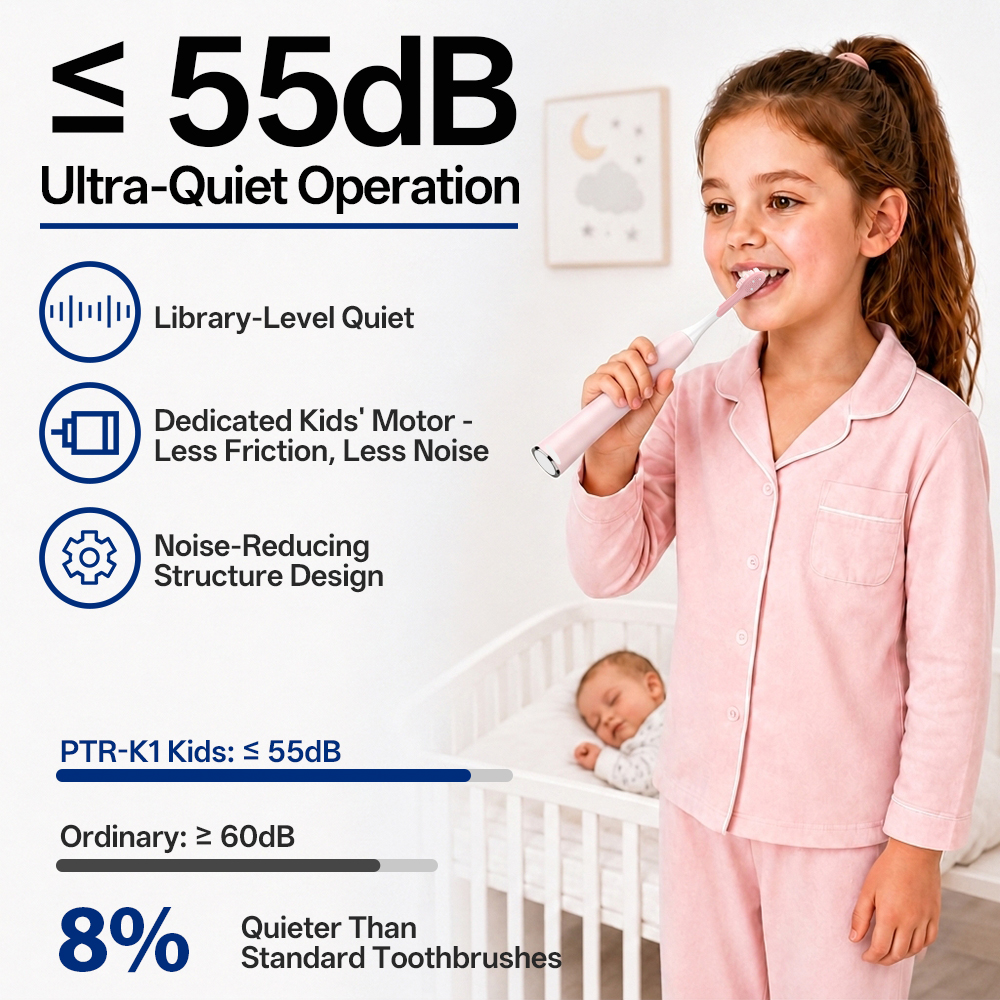
- Relevant noise, vibration, or durability acceptance criteria.
- Functional verification after final assembly.
Performance figures should be based on the actual product design and supporting technical information. Buyers should avoid comparing products solely by a single motor specification without considering the complete toothbrush system.
4. Battery and Charging Specifications
The power system determines how an electric toothbrush receives and stores energy. The specification should identify the selected power configuration and its associated charging requirements.
Depending on the model, relevant attributes may include:
Battery configuration: The battery type and relevant technical characteristics specified for the product.
Charging method: The selected charging interface or charging architecture.
Electrical requirements: Applicable input, output, and operating requirements for the supplied charging system.
Charging behavior: Defined charging functions and acceptance criteria.
User instructions: Appropriate information about charging, storage, and operation.
Safety requirements: Applicable battery, electrical, and transportation requirements for the specific product and destination market.
The battery, motor, circuit board, and charging components must work together within the product architecture. Changes to one part of the power system may affect internal space, enclosure design, operating behavior, and validation requirements.
5. Brush Head and Bristle Specifications
The brush head is a separate product component that must be compatible with the electric toothbrush handle and drive interface.
A brush head specification may include its shape, dimensions, attachment structure, bristle arrangement, filament characteristics, and intended compatibility.
Brush Head Geometry
The shape and dimensions determine how the brush head fits the handle and supports the specified bristle layout.
Bristle Configuration
Relevant attributes may include filament material, diameter, length, arrangement, trimming profile, and finishing requirements.
Attachment Compatibility
The attachment interface should be verified against the designated handle model. Similar-looking brush heads are not necessarily interchangeable.
Replacement Head Identification
Where replacement brush heads are sold separately, product documentation should identify the compatible toothbrush models and relevant package configuration.
These attributes help manufacturers and buyers maintain consistency across toothbrush models, replacement products, and product catalogs.
6. Handle Materials, Dimensions, and Surface Finish
The handle specification defines the external structure and its relationship with internal components.
Relevant attributes may include housing material, overall dimensions, surface finish, color, button placement, and logo location.
Material selection should be evaluated alongside structural requirements, manufacturing feasibility, enclosure design, and intended use conditions.
For customized projects, the specification should distinguish between fixed design requirements and attributes that may be changed, such as color or exterior decoration.
Dimensional tolerances and appearance acceptance criteria should be established where they are important to product assembly or finished-product consistency.
7. Water Resistance and Enclosure Requirements
Water resistance is a product attribute that should be defined precisely. It should not be treated as a general assumption based on the fact that an electric toothbrush is intended for bathroom use.
If water-ingress protection is required, the product specification should identify the applicable performance level, test method, test conditions, and acceptance criteria.
Relevant design elements may include:
- Handle housing joints.
- Button interfaces.
- Charging connections.
- Internal sealing components.
- Component positioning and assembly.
- Product cleaning and operating instructions.
Any stated ingress protection rating or water-resistance claim should be supported by appropriate evidence for the specified product configuration.
The specification should also identify any relevant limitations involving immersion, charging, or cleaning.
8. Materials, Appearance, and Customization Requirements
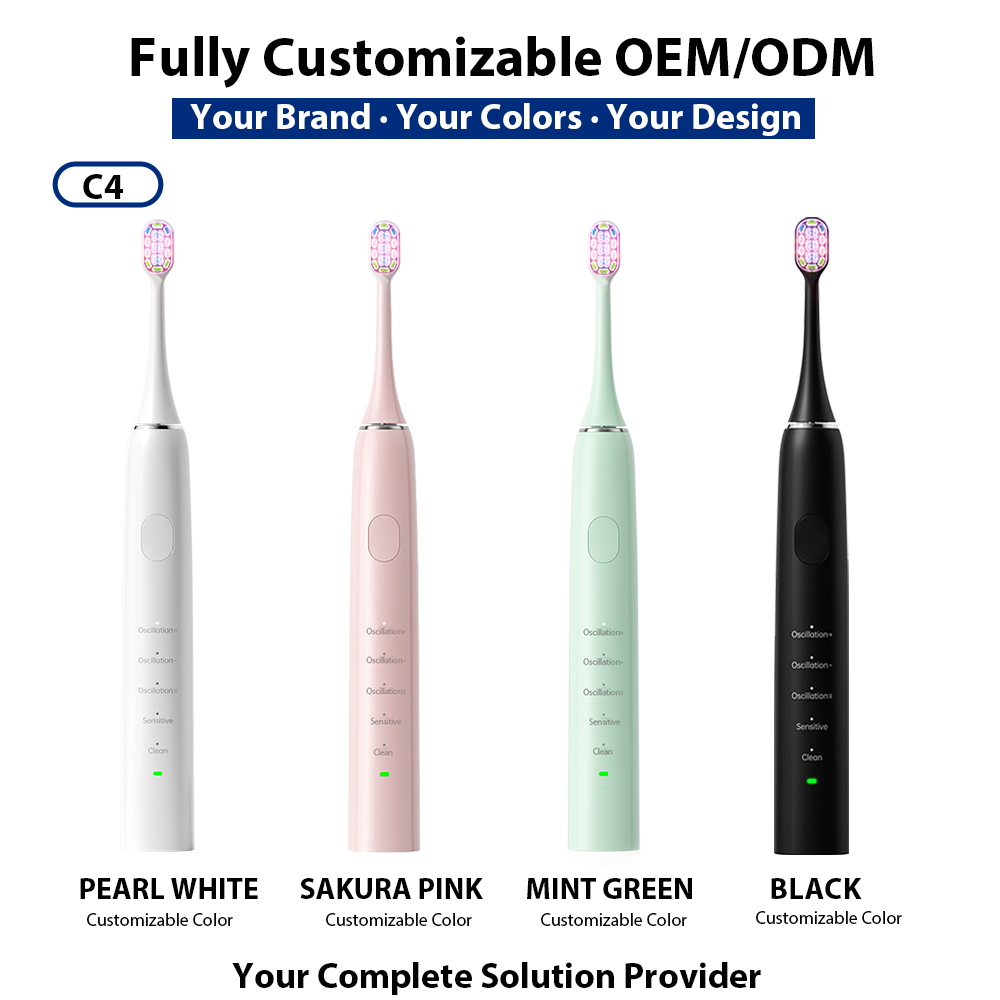
OEM and ODM projects may include customization of product materials, colors, surface finishes, and branding.
A useful customization specification identifies each requested change and the component it applies to.
| Attribute | Specification details |
|---|---|
| Handle color | Approved color reference and sample |
| Surface finish | Required finish and visual acceptance criteria |
| Logo | Artwork, placement, size, and marking method |
| Brush head | Design, bristle configuration, and compatibility |
| Buttons | Appearance, placement, and functional requirements |
| Packaging | Dimensions, artwork, materials, and included items |
| Product labeling | Required product identification and verified claims |
The feasibility of each customization depends on the selected product and manufacturing process. Final details should be confirmed with the manufacturer before production.
9. Quality and Testing Requirements
Quality requirements define how the finished electric toothbrush will be evaluated against its approved specification.
The testing plan should be appropriate to the product architecture and the intended market. It may include visual inspection, functional operation, brush head compatibility, charging checks, and applicable durability or safety testing.
A structured quality specification should identify:
- The characteristic being evaluated.
- The relevant test or inspection method.
- The acceptance criteria.
- The inspection stage.
- Required documentation.
- Procedures for managing nonconforming products or approved changes.
Different requirements need different verification methods. For example, functional operation testing does not replace applicable electrical safety evaluation, and visual inspection alone cannot establish water-resistance performance.
10. OEM and ODM Specification Development
The way a product specification is created depends on the manufacturing arrangement.
OEM Product Specifications
OEM projects generally begin with buyer-defined requirements. The buyer may supply technical drawings, component specifications, functional requirements, approved samples, and quality criteria.
The manufacturing process follows the agreed specification, subject to the project arrangement and any approved changes.
ODM Product Specifications
ODM projects may begin with a product concept, target customer, intended market, or preliminary list of required functions.
The manufacturer and buyer can then work through product architecture, materials, dimensions, component configuration, and validation requirements to establish a production-ready specification.
Private Label Specifications
Private label projects need to connect the selected product configuration with brand identity, packaging, product information, and distribution requirements.
The specification should identify the approved branding and packaging version so that production and inspection teams can use a consistent reference.
11. Product Specifications for International Distribution
Electric toothbrushes sold in different countries may be subject to different product safety, electrical, battery, chemical, labeling, and documentation requirements.
The specification should identify the intended destination markets early enough for applicable requirements to be reviewed during product development.
For international projects, buyers should confirm:
- Applicable technical and regulatory requirements.
- Required test reports and supporting documentation.
- Product and packaging labeling.
- User instructions and charging information.
- Battery transportation requirements where relevant.
- Accuracy of technical claims used in product listings.
- Any market-specific packaging or documentation needs.
Requirements should be determined for the actual product and destination market. A general specification should not be assumed to establish compliance with every market’s rules.
12. Building a Complete Electric Toothbrush Specification Sheet
A practical specification sheet brings the key product attributes into one structured document.
The following outline can serve as a starting point for OEM, ODM, and private label discussions.
| Section | Information to record |
|---|---|
| Product identity | Model, product category, version |
| Intended market | Destination countries and sales channels |
| Physical design | Dimensions, weight, housing, color |
| Motor system | Technology, configuration, defined performance criteria |
| Power system | Battery and charging configuration |
| Brush head | Dimensions, bristles, attachment compatibility |
| Functions | Controls and operating modes |
| Enclosure | Water-resistance requirements, where applicable |
| Customization | Logo, color, finish, and branding |
| Accessories | Brush heads, charging accessories, and included items |
| Packaging | Box design, inserts, instructions, and labeling |
| Quality control | Inspection procedures and acceptance criteria |
| Documentation | Applicable test reports and compliance records |
The specification should separate confirmed product attributes from proposed features that still require engineering review or testing.
This distinction is particularly important when a product is being adapted for a new market or developed through an ODM process.
13. POWSMART Electric Toothbrush OEM & ODM Manufacturing
POWSMART supports electric toothbrush OEM manufacturing, ODM product development, and private label projects for brands, importers, distributors, retailers, and e-commerce businesses.
Product planning can cover handle design, motor and battery configuration, charging methods, brush head compatibility, material selection, branding, packaging, testing requirements, and international product documentation.
For businesses sourcing an existing model or developing a customized electric toothbrush, a well-defined specification creates a common reference for product development, manufacturing, quality inspection, and commercial communication.
Contact POWSMART to discuss electric toothbrush specifications, product customization, and manufacturing requirements.
POWSMART — Electric Toothbrush Manufacturer | OEM & ODM | Private Label Solutions
Official website: https://www.powsmart.com/
Frequently Asked Questions
What should an electric toothbrush specification sheet include?
It should identify the product model, dimensions, materials, motor, battery, charging method, brush head, functions, customization, packaging, quality criteria, and applicable documentation requirements.
Why are technical specifications important for OEM manufacturing?
They establish the agreed requirements that guide component selection, production, inspection, and acceptance of the finished product.
Can specifications be changed during ODM development?
Yes, proposed changes can be evaluated during development. Their feasibility and effects on components, cost, testing, and production should be reviewed before the updated specification is approved.
How should buyers specify electric toothbrush water resistance?
Buyers should identify the required protection level, applicable test method, acceptance criteria, and any relevant use or charging limitations. Claims should be supported by appropriate product evidence.
Should brush head compatibility be included in the specification?
Yes. The specification should identify compatible handle models and the relevant attachment interface, especially when replacement heads are part of the product range.
How can buyers avoid misunderstandings when requesting a quotation?
Provide a clear product brief, define required and optional features, identify the intended market, specify customization needs, and document quality and packaging expectations. Any unresolved technical details should be identified for confirmation before production.