Electric Toothbrush Manufacturing Process and Production Workflow | POWSMART OEM & ODM Manufacturing
1. Understanding the Electric Toothbrush Manufacturing Process
Electric toothbrush manufacturing involves multiple connected stages, from product specification and component preparation to assembly, functional inspection, packaging, and shipment. Each stage contributes to the consistency, functionality, and commercial readiness of the finished product.
POWSMART is a Shenzhen, China-based electric toothbrush manufacturer providing OEM manufacturing, ODM product development, and private label solutions for brands, importers, distributors, retailers, and e-commerce businesses.
For businesses planning an electric toothbrush project, understanding the production workflow helps clarify how product design, component selection, customization requirements, quality control, and packaging fit together.
2. Product Requirements and Manufacturing Specification
The manufacturing process begins with a clearly defined product specification. This document establishes what the finished electric toothbrush should include and how the product will be evaluated.
Depending on the project, the specification may cover:
- Product type and intended application.
- Handle dimensions, materials, and appearance.
- Motor configuration and operating functions.
- Brush head structure and bristle arrangement.
- Battery and charging system.
- Control buttons and user interface.
- Water-resistance requirements, where applicable.
- Accessories, packaging, and branding.
- Quality inspection and testing criteria.
For OEM projects, these requirements generally originate from the buyer’s existing design and product brief. For ODM projects, they may be developed collaboratively during product planning.
A clear specification provides the foundation for component sourcing, engineering review, production planning, and quality acceptance.
3. Product Design and Engineering Evaluation
Before production begins, the product design must be evaluated for manufacturing feasibility and component compatibility.
Electric toothbrush design involves several interdependent systems. The handle must accommodate the motor, battery, circuit board, and other internal components. The brush head must connect correctly to the drive mechanism, while the enclosure must support the intended assembly and protection requirements.
Engineering evaluation may include:
Structural design: Reviewing the handle, internal supports, housing joints, and component interfaces.
Electrical architecture: Confirming the relationship between the motor, power supply, control system, and charging components.
Brush head compatibility: Verifying the mechanical connection and intended replacement-head configuration.
Material selection: Evaluating material suitability, appearance, assembly, and manufacturing feasibility.
Design validation: Checking that the proposed configuration can be assessed against the agreed functional and quality requirements.
Addressing these factors before production helps identify potential conflicts between product appearance, internal architecture, and manufacturing operations.
4. Component Sourcing and Incoming Inspection
An electric toothbrush is assembled from multiple components that may be manufactured or supplied through different production processes.
Typical components include the handle housing, motor, battery, circuit board, brush head, bristles, buttons, charging components, seals, and packaging materials.
Component sourcing should follow the approved product specification. Incoming inspection can then verify relevant characteristics before materials enter the production process.
Depending on the component, checks may include:
- Model and specification identification.
- Dimensional accuracy and interface compatibility.
- Appearance and surface condition.
- Required documentation.
- Electrical or functional checks where applicable.
- Packaging condition and component quantities.
Component changes should be reviewed before implementation because differences in dimensions, electrical characteristics, materials, or interfaces may affect the assembled product.
5. Handle Housing and Component Preparation
The handle housing forms the external structure of the electric toothbrush and provides space for its internal systems.
Housing production and preparation depend on the selected materials, design, and manufacturing methods. Relevant operations may include molding, surface finishing, decoration, dimensional inspection, and preparation for assembly.
At this stage, manufacturing teams may verify:
- Housing dimensions and fit.
- Surface finish and color consistency.
- Button and interface openings.
- Logo placement and appearance.
- Compatibility with internal supports and sealing structures.
For customized products, appearance requirements should be reviewed alongside structural requirements. A visual change to the handle may also affect internal space, component positioning, or assembly methods.
6. Motor, Battery, and Electronic Assembly
The motor and electrical systems provide the operating functions of an electric toothbrush. Their assembly requires appropriate positioning, connections, and verification according to the product design.
Motor Installation
The motor must be installed according to the specified orientation, mounting structure, and mechanical connection. Its position influences the relationship between the drive mechanism and brush head.
Battery Installation
For rechargeable models, the battery must be integrated with the designated power system and internal structure. Relevant assembly and safety requirements depend on the battery type and product configuration.
Circuit Board and Electrical Connections
The circuit board and associated connections support control and operating functions. Assembly procedures should follow the approved design and applicable electrical inspection requirements.
Charging System Integration
The charging interface must match the selected charging architecture. Its integration should be evaluated together with housing design, electrical connections, and intended product use.
After assembly, appropriate checks should verify that the integrated system operates according to the product specification.
7. Brush Head Assembly and Compatibility Verification
The brush head is a functional part of the electric toothbrush and must match the intended drive interface.
Its production and assembly may involve the brush head body, bristle insertion, trimming, finishing, and inspection. The exact process depends on the brush head design and manufacturing method.
Important quality considerations include:
Bristle configuration: The filament arrangement, length, and finishing should match the approved specification.
Mechanical fit: The brush head must connect correctly to the designated handle.
Retention and construction: Relevant checks should verify that the bristles and assembled components meet defined requirements.
Replacement compatibility: If replacement heads are supplied separately, the specified compatibility relationship should be verified.
Brush head compatibility should be treated as a defined product attribute rather than assumed from a similar external appearance.
8. Final Assembly and Enclosure Integration
Final assembly brings together the housing, motor, power system, controls, brush head interface, and other components.
The exact sequence depends on the product architecture. Assembly procedures may include component positioning, electrical connection, housing closure, button installation, sealing operations, and installation of external accessories.
Key considerations include:
- Correct component orientation and positioning.
- Consistent assembly of housing sections.
- Secure electrical and mechanical connections.
- Compatibility between moving parts and supporting structures.
- Correct installation of sealing components where required.
- Inspection of visible surfaces and assembly gaps.
Because electric toothbrush components interact closely, assembly quality can influence both functional operation and external appearance.
9. Functional Testing and Quality Inspection
After assembly, the finished electric toothbrush should be evaluated against the approved product specification.
Testing requirements vary by model and customer expectations. A quality plan may include power operation, button response, motor behavior, charging function, accessory compatibility, and appearance inspection.
Where required, additional evaluations may cover water ingress, durability, electrical safety, battery-related requirements, or other applicable product standards.
The inspection plan should identify the test method, acceptance criteria, and documentation required for each relevant quality characteristic.
A successful functional check alone does not establish that every safety, durability, or compliance requirement has been met. Each requirement needs an appropriate verification method.
10. Branding, Packaging, and Product Preparation
Branding and packaging turn the manufactured product into a market-ready offering for the buyer’s distribution channel.
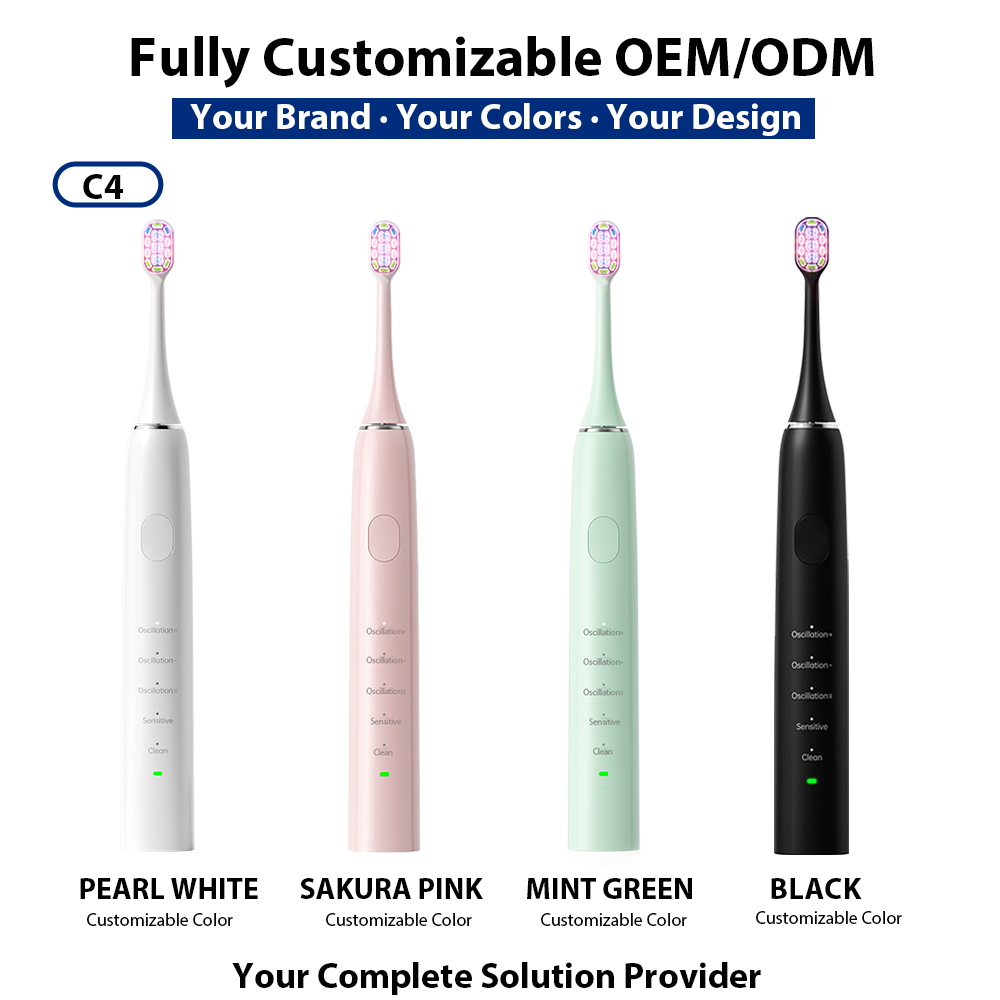
Private label customization may include logo application, exterior colors, retail packaging, product inserts, user instructions, and other approved brand elements.
Packaging preparation should verify:
- Correct product model and configuration.
- Matching accessories and replacement heads, where included.
- Approved branding and artwork.
- Accurate product descriptions and instructions.
- Required labels and identification information.
- Protective inserts and packaging integrity.
- Carton quantities and shipment identification.
Product claims printed on packaging should remain consistent with the verified product specification and supporting documentation.
For international distribution, buyers should also confirm applicable labeling, documentation, and transportation requirements.
11. Production Planning and Manufacturing Coordination
Production planning connects material availability, component readiness, assembly operations, inspection resources, and shipment preparation.
For OEM and ODM projects, coordination should address the main project milestones before production is scheduled.
Typical planning considerations include:
- Approval of the product specification.
- Confirmation of component and material requirements.
- Review of customization and packaging artwork.
- Sample evaluation and approval, where applicable.
- Agreement on inspection criteria.
- Production scheduling and material readiness.
- Finished-product inspection.
- Packaging and shipment preparation.
Changes to specifications, components, or artwork should be communicated and approved through an agreed process. This helps reduce confusion between product development, manufacturing, and purchasing teams.
12. Differences Between OEM, ODM, and Private Label Production
Although these business models may use similar manufacturing operations, they differ in how the product is defined and customized.
OEM Electric Toothbrush Manufacturing
OEM projects generally follow a buyer-provided design or specification. The manufacturer produces the product according to the agreed requirements.
The buyer may define product dimensions, component configurations, functional requirements, branding, and quality acceptance criteria.
ODM Electric Toothbrush Development
ODM projects involve product development or design adaptation. The process may include reviewing product concepts, evaluating component architecture, defining specifications, and preparing the selected design for manufacturing.
ODM is particularly relevant when a business needs development support rather than only production against an existing design.
Private Label Electric Toothbrush Production
Private label projects focus on selling an agreed product configuration under the buyer’s brand. Depending on the project, customization may involve logos, colors, packaging, and product information.
Private label production still requires confirmation of the product specification, quality requirements, and approved branding materials.
13. How the Manufacturing Process Connects to Global Markets
Electric toothbrush manufacturing serves businesses operating through different distribution models, including retail, wholesale, e-commerce, dental-care channels, and brand-owned online stores.
The target market and sales channel can influence product positioning, packaging, accessory selection, labeling, and applicable compliance requirements.
For example, a private label retailer may prioritize brand presentation and retail packaging, while a distributor may focus on product consistency, documentation, supply coordination, and compatibility of replacement brush heads.
Manufacturing specifications should therefore be aligned with the intended sales market before production begins. Market requirements should be confirmed for the specific product and destination rather than inferred from the country alone.
14. POWSMART Electric Toothbrush Manufacturing Solutions
POWSMART provides electric toothbrush OEM manufacturing, ODM product development, and private label solutions for brands, importers, distributors, retailers, and e-commerce businesses.
Manufacturing discussions can cover product specifications, handle design, motor and battery systems, brush head configuration, materials, branding, packaging, quality requirements, and production coordination.
For businesses developing a new product or expanding an existing electric toothbrush range, a clearly defined manufacturing workflow helps connect engineering decisions with quality expectations and commercial objectives.
Contact POWSMART to discuss electric toothbrush development, product customization, and manufacturing requirements.
POWSMART — Electric Toothbrush Manufacturer | OEM & ODM | Private Label Solutions
Official website: https://www.powsmart.com/
Frequently Asked Questions
What are the main stages of electric toothbrush manufacturing?
The main stages generally include specification planning, design evaluation, component sourcing, incoming inspection, component assembly, final assembly, functional testing, quality inspection, packaging, and shipment preparation.
What components are required to manufacture an electric toothbrush?
Depending on the model, components may include a handle housing, motor, battery, circuit board, brush head, bristles, control buttons, charging components, seals, and packaging materials.
What is the difference between OEM and ODM electric toothbrush manufacturing?
OEM manufacturing generally follows buyer-defined product specifications. ODM development includes product design or adaptation before the product enters manufacturing.
Why is product specification important before mass production?
The specification defines the product configuration, materials, functional requirements, quality criteria, branding, and packaging. It provides a reference for production and inspection.
How is electric toothbrush quality checked after assembly?
Checks may include appearance inspection, power operation, button response, motor behavior, charging function, brush head compatibility, and additional tests required by the product specification.
Can electric toothbrush packaging and branding be customized?
Depending on the project and selected product, customization may include logos, exterior colors, packaging artwork, accessories, and product information. Final requirements should be approved before production.
What should buyers prepare before contacting an electric toothbrush manufacturer?
Buyers should prepare the intended product type, target market, desired functions, customization requirements, estimated order quantity, packaging expectations, and applicable quality or compliance requirements. If the design is not finalized, a product brief can provide a starting point for discussion.