Info Center
  • Top 10 California electric toothbrush factory for OEM/ODM Services

    For oral care brands, finding a reliable manufacturing partner can be the difference between an average product and a market-leading bestseller. California, with its advanced manufacturing capabilities and proximity to innovative dental technology, is home to several high-quality electric toothbrush factories specializing in OEM and ODM services. Whether you’re seeking the best OEM dental brush producer for your new brand line or a long-term LA toothbrush supplier for ongoing production, this guide will help you find the right partner. Below, we list the Top 10 California electric toothbrush factory renowned for their Professional OEM/ODM Services and commitment to Electric Toothbrush Quality Manufacturing. CaliBrush Tech Inc. Located in Los Angeles, CaliBrush Tech Inc. is one of the most reputable California electric toothbrush factory options for brands seeking sleek design and long battery life. They offer end-to-end OEM/ODM services, from concept sketches to final packaging. Specialty: Ergonomic design & quiet motor technology. West Coast Oral Care Solutions Known for their best OEM dental brush production, West Coast Oral Care combines German engineering standards with California-based assembly for optimal quality. Specialty: Smart-sensor toothbrushes with Bluetooth connectivity. LA Smile Factory As an established LA toothbrush supplier, LA Smile Factory has a strong record of supplying private-label electric toothbrushes to both local and international brands.…

    2025-08-11
  • How Does Powsmart Brush Technology Make This Safety Children Brush Choke-Proof?

    In the highly regulated children’s oral care segment, product safety is not only expected—it’s non-negotiable. Parents, pediatric dentists, and distributors all demand tools that reduce risks while promoting effective brushing habits. This is where Powsmart brush technology plays a critical role. Specifically designed to enhance user experience and maximize safety, it redefines what a safety children brush can achieve—particularly in terms of choke prevention. Child-Specific Ergonomics: Shorter Brush Necks, Wider Safety Rings At the core of Powsmart brush technology is a deep understanding of child anatomy. Traditional brush designs are often downsized versions of adult models, but Powsmart starts from scratch, engineering: Shortened brush necks to limit throat penetration Enlarged, non-slip handles to avoid slippage into the mouth Built-in anti-choke rings acting as a physical barrier These features help ensure that the safety children brush can’t be inserted too deeply, significantly lowering choking risks during unsupervised brushing. Soft-Touch Materials with Rigid Safety Zones One of the key innovations in Powsmart brush technology lies in its material engineering. The brush head is made of soft, gum-safe TPE for comfort, while structural elements—like the anti-choke flange—are constructed using firmer, BPA-free plastics. This dual-material strategy ensures that while the brush is gentle to…

    2025-08-08
  • Why Is a Dental Recommended Brush with BPA-Free Brush Heads Safer?

    In today’s health-conscious oral care industry, safety, effectiveness, and compliance with global health standards are more than just selling points—they are essential. One major focus among professionals and end users alike is the use of a dental recommended brush that features BPA-free brush heads. But what makes this combination not only preferred, but genuinely safer for long-term oral hygiene? Let’s explore the answer through the lens of material science, clinical recommendations, and market needs. What Does “Dental Recommended” Actually Mean? A dental recommended brush meets guidelines set by dental professionals and organizations regarding brushing effectiveness, safety, and design ergonomics. This typically includes: Optimal bristle softness and density Gentle but effective plaque removal Compatibility with sensitive gums and enamel Proven clinical performance in reducing gingivitis and decay When manufacturers align with these standards, the resulting product garners trust not just from consumers, but also from dental offices and healthcare distributors. BPA-Free Brush Heads: What Are They and Why Do They Matter? BPA-free brush heads are made without Bisphenol A—a chemical commonly found in plastics that has raised health concerns over time. BPA can potentially leach into the body through prolonged contact, especially in products exposed to heat or saliva. In oral…

    2025-08-08
  • Can a Dual Care Brush Be Both a Teeth Whitening Brush and Gum Massager?

    In today’s competitive oral care market, multifunctionality has become a key differentiator. More consumers now expect their toothbrushes to do more than just clean teeth—they want whitening results and gum care, all in one tool. This raises an important design question for OEM/ODM manufacturers: Can a dual care brush effectively function as both a teeth whitening brush and a gum massager? The answer lies in intelligent engineering and thoughtful material selection. Understanding the Dual Care Concept A dual care brush is engineered to address two major oral hygiene needs simultaneously—whitening the teeth and massaging the gums. Rather than offering two separate products for these goals, a single brush head integrates features that deliver both benefits with every use. This dual-purpose design is particularly attractive to users with busy lifestyles or minimal storage space, making it a valuable product type for brands targeting modern, health-conscious consumers. Teeth Whitening Brush Requirements To qualify as an effective teeth whitening brush, the brush must: Have higher density bristles or polishing cups in the center for stain removal Apply gentle but targeted surface abrasion to lift coffee, tea, or wine stains Be compatible with whitening toothpastes or sonic brush modes Importantly, this must be achieved…

    2025-08-08
  • How Does a Polishing Brush Head Enable Enamel-Safe Whitening?

    As the demand for cosmetic dental care continues to rise, many consumers now seek solutions that combine effective stain removal with everyday enamel protection. This is where the polishing brush head shines—offering enamel-safe whitening that fits seamlessly into users' daily routines. But how exactly does it work, and why should OEM/ODM partners pay close attention to its design and market positioning? The Science Behind Polishing Brush Heads Unlike standard brush heads, a polishing brush head is engineered with a unique cup-shaped or raised polishing element in the center. This area is often made of soft rubber or dense bristles that gently buff away surface stains from coffee, tea, wine, or tobacco—without harsh abrasives or chemical whiteners. This mechanical polishing action mimics what dentists do during professional cleanings but adapted for daily home use, providing visible brightening over time while preserving enamel integrity. Why Enamel-Safe Whitening Matters Tooth enamel is non-regenerative—once worn down, it cannot be naturally restored. That’s why enamel-safe whitening is more than just a marketing term; it’s a clinical necessity. Polishing brush heads are ideal because: They target extrinsic stains only They maintain a low abrasivity level (measured by RDA standards) They do not compromise the enamel or…

    2025-08-08
  • Do Multi-Color Toothbrushes in a Bundle Savings Deal Prevent Sibling Fights?

    For families with multiple children, maintaining harmony in daily routines—especially around bathroom time—can be a real challenge. Introducing multi-color toothbrushes as part of a value-packed bundle savings deal isn’t just about aesthetics; it’s about functionality, organization, and household peace. But can color-coded brushes truly help avoid sibling disputes? Let’s explore how thoughtful product design meets family dynamics—and why this approach is winning in the OEM/ODM marketplace. The Practical Function of Color Coding in Family Sets A simple color change can carry powerful utility. In the case of multi-color toothbrushes, each user—especially children—can easily identify their own brush by color, reducing confusion and the risk of cross-usage. Whether the brushes come in red, blue, green, or purple, clear visual distinction is the first defense against accidental sharing and arguments. From a manufacturing standpoint, color variation through mold injection or interchangeable rings adds minimal cost but high user value—ideal for B2B product differentiation. Bundle Savings Deal: Value for Families, Opportunity for Brands Combining multi-color toothbrushes in a bundle savings deal taps into a key consumer mindset: convenience and economy. Parents no longer need to purchase four individual brushes—often at a higher cost and without visual cohesion. Instead, bundle offerings provide: Cost-per-unit savings…

    2025-08-08
  • How to Choose a Reliable Electric Toothbrush OEM Factory and Build Long-Lasting Product Lines?

    In the competitive oral care market, the quality, performance, and consistency of your products depend heavily on the manufacturing partner you select. For brand owners, knowing how to select toothbrush OEM partners is not just about finding a factory—it’s about securing a long-term relationship that can help you develop innovative, reliable, and profitable product lines. This article serves as both an electric toothbrush OEM factory checklist and a guide for building sustainable collaborations. Identify Core Capabilities of the electric toothbrush OEM factory When evaluating potential OEM factories, start by examining their technical capabilities. A trusted oral care products supplier should be able to handle both large-scale production and smaller custom batches while maintaining strict quality standards. Key points to review: Production capacity and lead time for scaling your business Experience in different brush head designs and electric toothbrush customization options Compliance with international safety certifications (e.g., CE, FDA, ISO) Evaluate Product Quality and Key Technical Specifications Quality should always be the cornerstone of your selection process. Pay close attention to critical performance factors such as: Electric toothbrush motor quality: A high-quality motor ensures consistent vibration speed, durability, and optimal cleaning performance. Toothbrush noise levels: Low operational noise not only improves user experience but also…

    2025-08-08
  • Electric Toothbrush Troubleshooting Flowchart: A Practical OEM Guide for Brands

    For oral care product brands, partnering with an electric toothbrush manufacturer is not just about production—it’s also about post-production support. In the competitive oral care market, a structured electric toothbrush troubleshooting flowchart can be a powerful tool for OEMs and brands alike. It ensures that product issues are diagnosed quickly, repair decisions are consistent, and customer satisfaction remains high. This blog will explore how toothbrush repair flowcharts and OEM troubleshooting guides can enhance collaboration between brands and manufacturers, while also serving as a blueprint for electric toothbrush diagnostics. The Role of a Toothbrush Troubleshooting Flowchart in OEM Partnerships An Electric Toothbrush Troubleshooting Flowchart is more than just a diagram—it’s a process map that details step-by-step checks to identify the cause of product malfunctions. For brands working with an electric toothbrush manufacturer, such flowcharts: Improve after-sales service efficiency Reduce miscommunication between the brand and OEM service teams Provide a standardized reference for diagnosing product faults Support warranty claim evaluations By having a visual OEM troubleshooting guide, both the manufacturer’s technical team and the brand’s customer service staff can align on repair protocols. Key Stages in an Electric Toothbrush Diagnostics Process A robust electric toothbrush diagnostics flowchart typically includes: Power Check – Is the toothbrush charging correctly?…

    2025-08-08
  • Electric Toothbrush Motor Failure: Common Causes & Solutions

    In the competitive oral care market, product reliability is crucial for brand reputation. One of the most frequent technical complaints from end-users is Electric Toothbrush Motor Failure. A faulty motor can lead to poor performance, increased warranty claims, and dissatisfied customers. For any electric toothbrush manufacturer, understanding toothbrush motor issues and preventing them in the production stage is essential for long-term success. This article will explore Motor Failure Common Causes and practical solutions that brand owners should look for when evaluating manufacturing partners. Understanding Toothbrush Motor Issues The motor is the heart of an electric toothbrush. Whether it’s a sonic vibration motor or a rotary type, it must operate at consistent speeds and torque to ensure effective cleaning. When motor performance drops—slowing down, producing noise, or failing entirely—the toothbrush becomes ineffective. Key warning signs include: Reduced vibration or oscillation speed Irregular noise during operation Overheating in the handle Complete stoppage (a burnt-out electric brush) Motor Failure Common Causes Through industry feedback and engineering analysis, the most common causes of Electric Toothbrush Motor Failure include: Poor Component Quality – Low-grade coils, magnets, or bearings can wear out quickly. Water Ingress – Inadequate sealing leads to moisture entering the motor chamber, causing corrosion. Overheating – Continuous operation beyond…

    2025-08-08
  • Can One Shared Charging Base Power a Family Pack Bundle of 4 Brushes?

    For modern households, managing countertop space and charging stations for multiple devices can be a daily struggle. When it comes to oral care, especially with a family pack bundle of four electric toothbrushes, the question arises: Can one shared charging base effectively power all units? The answer lies in smart power architecture, cross-device compatibility, and user-centered design. In this blog, we explore how a unified charging solution can simplify family routines while offering OEM brands a competitive edge. The Growing Demand for Family Oral Care Bundles The concept of a family pack bundle—typically including four toothbrush handles, matching brush heads, and color-coded rings—caters to households looking for value, consistency, and ease of organization. However, charging four devices individually creates clutter and inconvenience. To maintain a minimalist aesthetic and reduce electronic waste, families increasingly prefer shared charging base solutions. Is a Shared Charging Base Technically Feasible? Yes—advances in inductive and magnetic resonance charging allow multiple handles to charge from a single power source. These bases: Use adaptive voltage detection to identify connected models Feature time-sliced charging cycles to prevent overdraw Can support either simultaneous or sequential charging, depending on motor wattage and battery size For manufacturers, developing a universal base design…

    2025-08-08
  • Contact Charging vs. Induction: Best Electric Toothbrush Charging Method Options

    When developing a new electric toothbrush, the choice of charging method can significantly impact user experience, production cost, and brand positioning. From contact charging toothbrush designs to induction and direct charge options, each method has its own advantages and limitations. For brands working with an electric toothbrush manufacturer, understanding these different charging types is critical to creating a competitive product in the market. Understanding the Main Toothbrush charging method Options Contact Charging A contact charging toothbrush uses metal charging pins on the brush handle that directly connect to the charging base. Advantages: Faster charging speed, higher efficiency, and lower production cost. Disadvantages: Physical contact points can wear over time, and exposure to water may cause corrosion without proper sealing. Induction Charging Induction charging uses electromagnetic fields to transfer energy wirelessly between the toothbrush and the charging base. Advantages: Fully sealed design improves water resistance and durability, making it ideal for bathroom environments. Disadvantages: Generally slower charging speed and slightly higher manufacturing costs. Direct Charging A contact vs. induction vs. direct charge comparison wouldn’t be complete without mentioning direct charging via USB or adapter. Advantages: Universal charging compatibility, no base required. Disadvantages: Less premium appearance, potential water resistance issues if the charging port isn’t well-protected. OEM Charging…

    2025-08-08
  • How to Install Electric Toothbrush Heads Correctly: Proper electric toothbrush head installation Guide for Brands and Users

    In the oral care industry, even the smallest detail can affect product performance and customer satisfaction. Proper electric toothbrush head installation is essential for ensuring optimal cleaning efficiency, reducing wear on the device, and preventing product returns. For brands working with OEM or ODM factories, providing a clear brush head installation guide not only improves user experience but also strengthens brand trust. This article outlines the correct steps, the importance of a secure toothbrush attachment, and how OEM head compatibility plays a role in long-term product success. Understanding OEM Head Compatibility When developing electric toothbrushes, brands must ensure that brush heads and handles are perfectly matched. OEM head compatibility means: The internal locking mechanism fits precisely with the handle. The electrical and mechanical interfaces align for consistent vibration or rotation. Materials and tolerances meet quality standards to avoid loose fitting or excessive tightness. Working closely with your manufacturer to confirm compatibility prevents issues like wobbling heads, reduced motor efficiency, or accidental detachment during brushing. Step-by-Step Brush Head Installation Guide Providing users with an easy-to-follow brush head installation guide is a valuable part of your product documentation. Here’s the recommended step sequence: Check the Compatibility Ensure that the replacement head is designed for your electric toothbrush…

    2025-08-08
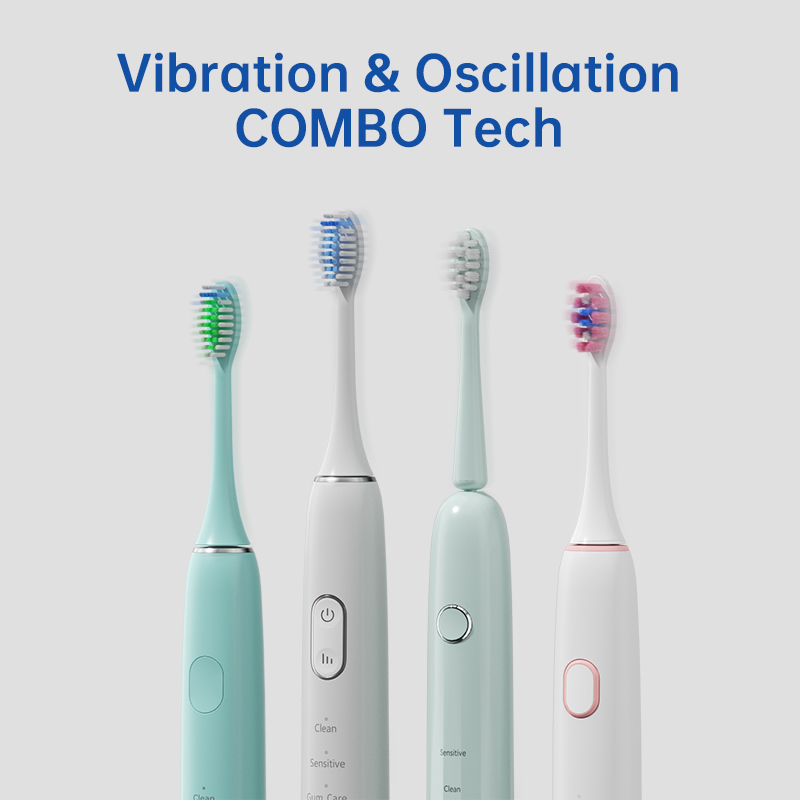
  • Why Does My Electric Toothbrush Only Vibrate but Not Oscillate?

    It’s a common question from end-users: “Why does my electric toothbrush only vibrate but not oscillate?” For oral care brands, this isn’t just a customer service issue—it’s a potential product quality and design challenge. Understanding the motor oscillation problem and how it relates to Electric toothbrush Quality Manufacturing is key for OEM brands seeking reliable suppliers and factories. This blog will break down the electric toothbrush oscillation problem, explore possible causes, and highlight how working with an experienced OEM manufacturer can prevent such issues. Understanding the Electric Toothbrush Motion System Electric toothbrushes operate using two main motion mechanisms: Vibration: High-frequency linear movement, often found in sonic toothbrushes. Oscillation: Rotating or pivoting brush head motion, common in oscillating-rotating toothbrush models. When a toothbrush only vibrate but fails to oscillate, it points to a motor oscillation problem or a mechanical transmission fault inside the brush. Common Causes of Electric Toothbrush Oscillation Problems If your toothbrush exhibits this issue, possible reasons include: Worn or damaged gear components: The gear that transfers motor motion to the brush head may be stripped or misaligned. Motor misalignment: Poor assembly or defective motor housing can prevent proper oscillation. Electronic control board issues: Faulty PCB or low voltage output can limit motion…

    2025-08-08
  • How Does the Orthodontic V-Brush Enhance the Powsmart Ortho Head Functionality?

    For users with braces, everyday brushing can quickly become a frustrating chore. Traditional brush heads often miss the hard-to-reach spots around brackets and wires. That’s where the Orthodontic V-brush makes a significant difference—especially when integrated into the Powsmart ortho head system. This blog explores how this specialized V-cut brush design boosts performance, optimizes orthodontic hygiene, and brings added value to dental-focused B2B product lines. The Challenge: Standard Brush Heads Aren’t Enough for Braces Orthodontic patients require specialized tools to clean effectively around brackets, archwires, and interproximal areas. Generic brush heads: Struggle to reach the gumline beneath wires Flatten against brackets without penetrating gaps Increase plaque buildup and inflammation risks These limitations drive the demand for brush heads that adapt to fixed orthodontic appliances, ensuring targeted plaque removal without added effort. What Is an Orthodontic V-brush? The Orthodontic V-brush is a brush head with a distinctive V-shaped bristle profile. This design: Allows longer outer bristles to clean the gum line and tooth surface Uses shorter inner bristles to reach around brackets and wires Encourages the correct 45-degree brushing angle naturally This triple-action layout ensures full-surface contact during brushing while avoiding excessive pressure on brackets or soft tissues. How It Pairs with…

    2025-08-07
  • How to Fix Vibrating Toothbrush Issues via DIY Motor Troubleshooting?

    Is your customer’s sonic brush suddenly rattling, weakening, or making strange noises? Many OEM clients and service teams frequently face similar queries from end users. Knowing how to fix vibrating toothbrush performance issues through basic motor troubleshooting not only saves costs but also increases product reliability and satisfaction. In this article, we’ll guide you through key root causes, quick inspection tips, and essential design considerations—perfect for manufacturers, engineers, and aftersales support professionals. Identifying the Symptoms: When a Vibrating Toothbrush Signals Trouble Before diving into solutions, it’s essential to understand the warning signs of a motor issue: Weak or inconsistent vibration Loud or unusual noise during brushing Sudden stop mid-use Intermittent power fluctuations Each of these may point toward a different motor troubleshooting path—from mechanical imbalance to power connection issues. Common Root Causes Behind Vibrating Toothbrush Failures Let’s explore the most frequent technical reasons behind performance drops: Rotor Imbalance: Accumulated debris or worn bearings can throw off the motor's dynamic balance. Loose Magnet or Shaft: Misalignment between components can cause erratic vibration. PCB Faults: Inconsistent current delivery or capacitor failure can impact vibration quality. Brush Head Fit Issues: A misaligned or incompatible brush head can amplify noise or cause instability. Understanding…

    2025-08-07
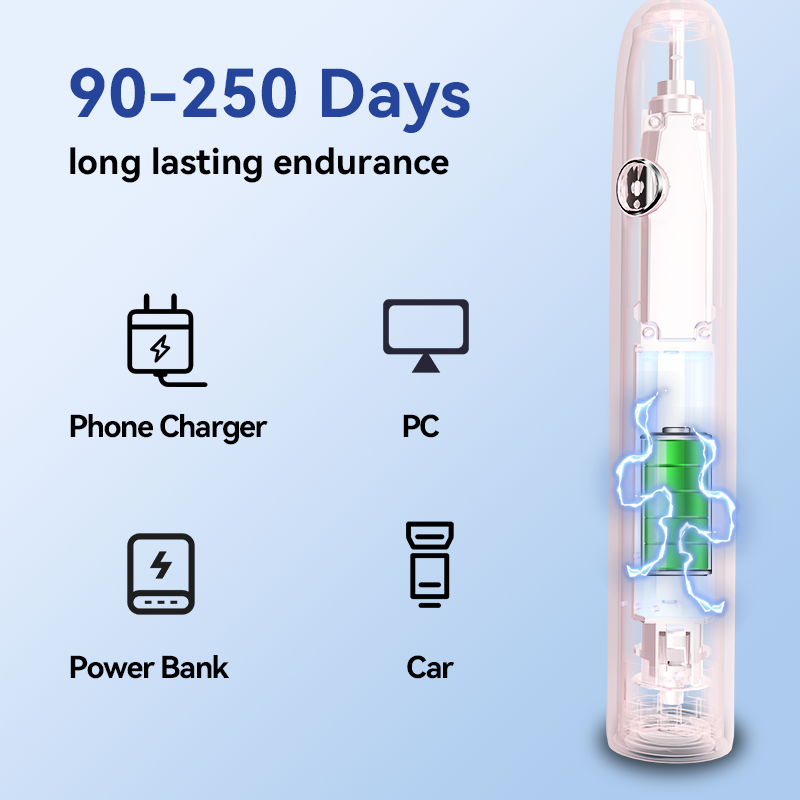
  • Can a High Endurance Motor Deliver Long Battery Life for 90 Days?

    As consumers demand more portability and convenience, one question becomes increasingly relevant for toothbrush manufacturers: Can a device equipped with a high endurance motor realistically provide long battery life—say, up to 90 days—on a single charge? This is not just a user expectation; it’s a critical design benchmark in today’s competitive oral care market. In this article, we’ll break down the core engineering principles, the role of motor design, and battery efficiency to answer this question. What Defines a High Endurance Motor in Electric Toothbrushes? A high endurance motor is engineered to deliver consistent torque and vibration output while minimizing energy loss. Unlike standard motors, high-endurance models use: Precision-balanced magnetic rotors Low-resistance winding coils Friction-reducing bearings These features reduce internal stress and heat generation, allowing the motor to operate at optimal performance without drawing excessive power. The result? Smoother brushing, lower wear, and longer device longevity. The Power Consumption Challenge: Motor vs. Battery To evaluate whether a high endurance motor contributes to long battery life, we must analyze its energy draw relative to battery capacity. High-quality motors are designed to: Deliver stable RPM with minimal power spikes Operate efficiently under varied pressure loads Work seamlessly with smart brushing modes (e.g.,…

    2025-08-07
  • When Should Brush Head Replacement Pair with Sanitize Toothbrush Head Routines?

    Maintaining oral hygiene goes beyond daily brushing—it involves knowing when to replace a toothbrush head and how to keep it clean in the meantime. In the world of smart hygiene routines, brush head replacement and efforts to sanitize toothbrush head surfaces are often treated separately. But for manufacturers and brands, syncing these two habits is key to delivering a complete oral care solution. In this blog, we explore the strategic timing and technical considerations for aligning brush head replacement cycles with effective sanitation protocols. Understanding Brush Head Degradation Over Time Toothbrush heads—especially those used with electric models—undergo gradual wear due to: Friction from brushing surfaces Exposure to toothpaste chemicals Moisture retention leading to microbial buildup Most dental professionals recommend a brush head replacement every 3 months. However, environmental and usage factors (e.g. brushing pressure, frequency) can shorten this cycle. The B2B opportunity lies in designing indicator systems (faded bristle color, app alerts) to signal end-of-life. Why Sanitize Toothbrush Head Routines Matter Daily Between replacements, the hygiene status of the brush head can deteriorate significantly. That’s where sanitize toothbrush head routines play a critical role. UV sanitizers, ozone chambers, and antimicrobial brush holders can help reduce: Bacterial growth Mold formation Odor…

    2025-08-07
  • How Can I Disinfect Electric Toothbrush Head? BPA-Free & Hygienic Options

    In the post-pandemic world, consumers are more aware than ever of hygiene—especially in personal care. As a brand, offering products that emphasize cleanliness and safety is not just a trend, but a requirement. One of the most common questions from users is: “How can I disinfect electric toothbrush head?” This question opens the door for manufacturers and OEM suppliers to provide truly hygienic electric toothbrush OEM options that are both effective and marketable. From BPA-free brush head OEM solutions to antibacterial electric brush technologies, brands must now collaborate with a qualified factory capable of delivering on these priorities. Daily Disinfection: What End Users Need to Know While your brand can educate consumers, it all starts with product design. Here are some common ways users disinfect toothbrush heads: Soaking in hydrogen peroxide or mouthwash for 10–15 minutes. UV sanitizing caps or stands that use ultraviolet light to kill bacteria. Boiling water (for non-electric parts)—though this isn't advised for the whole unit. However, instead of relying solely on user behavior, your product should be engineered to stay cleaner longer. This is where antibacterial electric brush features come into play, such as silver ion-infused bristles or anti-microbial coatings. The Importance of BPA-Free Materials Today’s informed consumers demand not only clean, but…

    2025-08-07
  • 3-Month Brush Head Replacement Reminder: Why It Matters for brand owners

    In the competitive landscape of branded electric toothbrushes, long-term user satisfaction isn’t just about motor power or battery life — it’s also about intelligent, health-conscious features. One of the most overlooked yet crucial elements is the Brush Head Replacement Reminder. For brands exploring electric toothbrush OEM orders, understanding how toothbrush head lifespan and replacement features impact customer loyalty and perceived value can make or break product success. Why the 3-Month Brush Head Replacement Cycle Matters Dental professionals worldwide recommend replacing toothbrush heads every 3 months. But why? Bristle wear affects cleaning efficiency: After 90 days of use, bristles lose shape and firmness, reducing plaque removal capability. Bacterial buildup: Old brush heads can harbor bacteria, potentially compromising oral hygiene. User compliance challenge: Most consumers forget to replace heads on time — unless reminded. Including a Brush Head Replacement Reminder in your OEM product design can significantly improve user hygiene behavior and brand trust. Integrating Brush Head Replacement Reminders in OEM Design OEM manufacturers today can offer integrated or modular reminder systems tailored to your brand’s positioning: Visual indicators (e.g., fading bristles) Digital app notifications via Bluetooth connectivity Built-in timers or LED indicators on the toothbrush handle When discussing electric toothbrush OEM orders, this feature should not…

    2025-08-07
  • Electric Toothbrush Noise Level Test: Powsmart vs. Philips & Oral-B

    In today’s oral care market, performance alone isn’t enough—toothbrush noise level has become a critical factor in consumer choice, especially among high-end and tech-savvy users. A quiet sonic toothbrush OEM solution not only improves user comfort but also reflects the engineering and manufacturing quality behind the product. This blog provides a detailed electric toothbrush noise level test comparing Powsmart with established brands like Philips and Oral-B, offering valuable insights for brands seeking low noise toothbrush manufacturing partners. Test Methodology: How We Measured Noise Levels To ensure an objective comparison, we conducted the electric toothbrush noise test under the following conditions: Environment: Sound-isolated lab room (ambient noise < 30 dB) Equipment: Digital sound level meter placed 30 cm from the toothbrush Modes Tested: Standard cleaning mode on each device Measurement Time: After 5 seconds of activation, average over 10 seconds This approach ensures consistency across all tested models and reflects real-world usage conditions. Results: Noise Level Contrast Between Powsmart, Philips & Oral-B Here is the toothbrush noise level contrast recorded during testing: Brand Model Tested Average Noise Level (dB) Notes Powsmart SonicClean Pro 45 dB Quiet, smooth vibration feel Philips Sonicare ProtectiveClean 5100 53 dB Noticeable hum at full power Oral-B Pro 1000 62 dB Audible oscillation, higher pitch…

    2025-08-07