Introduction Technician AR Glasses Support enables hands-free access to digital tools. A Knowledge Base for Technicians stores critical service information. Combining both improves efficiency and accuracy. This blog explains how they work together. Enabling Hands-free Information Access Technician AR Glasses Support allows technicians to view data without stopping work. It improves workflow continuity. A Knowledge Base for Technicians provides instant information. This enhances productivity. Providing Real-time Guidance and Instructions A Knowledge Base for Technicians contains step-by-step procedures. Technician AR Glasses Support displays instructions in real time. This reduces errors during tasks. It improves service quality. Reducing Training Time and Skill Gaps New technicians require quick onboarding. Technician AR Glasses Supports simplifies complex tasks visually. A Knowledge Base for Technicians provides comprehensive resources. This accelerates learning. Enhancing Remote Collaboration and Support Experts can assist remotely when needed. Technician AR Glasses Supports enables live communication. A Knowledge Base for Technicians supports shared references. This improves problem resolution. Improving Data Capture and Documentation Accurate records are essential for service operations. Technician AR Glasses Supports captures images and notes. A Knowledge Base for Technicians stores this data. This ensures traceability. Supporting Scalable Service Operations Growing service networks need efficient tools. Technician AR Glasses Supports…
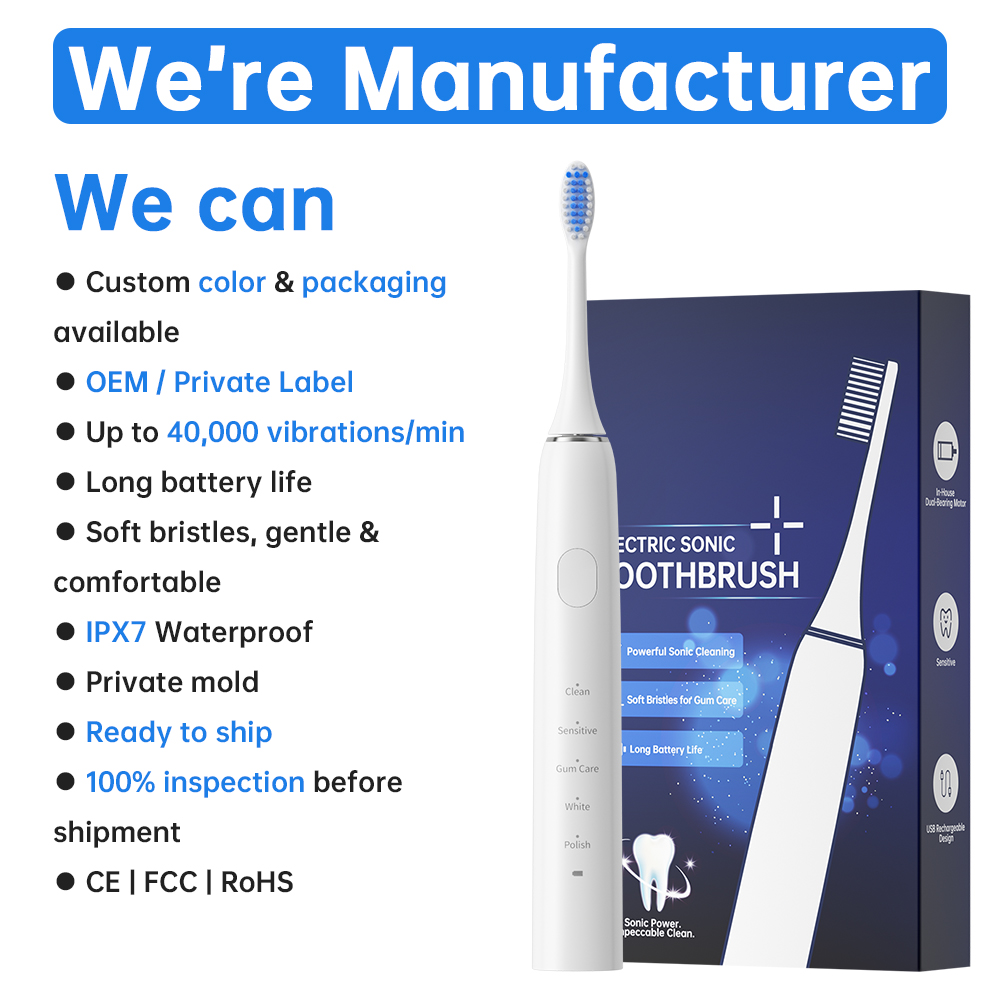
A low risk electric toothbrush OEM solution is critical for brands aiming to enter the oral care industry without excessive financial or operational exposure. From product development to mass production, multiple uncertainties can arise. Therefore, working with an experienced OEM partner helps minimize risks at every stage. In addition, structured processes and reliable supply chains improve project stability. As a result, brands can focus more on marketing and sales. Key Risk Factors in OEM Projects When developing electric toothbrush products, several risks must be considered. Firstly, high tooling costs can increase upfront investment. Secondly, long development cycles may delay market entry. Moreover, inconsistent product quality can affect brand reputation. Consequently, strict quality control is essential. In addition, supply chain disruptions may impact delivery schedules. Therefore, reliable sourcing is critical. Risk Reduction Strategies A professional low risk electric toothbrush OEM solution includes: Low MOQ and staged production plans Use of mature and proven product platforms Modular design to reduce tooling cost Sample validation before mass production Moreover, clear communication throughout the project ensures transparency. Consequently, potential issues can be addressed early. In addition, flexible production scheduling supports demand fluctuations. Therefore, operational risks are minimized. End-to-End OEM Support Comprehensive OEM services include:…
Introduction Asset Tracking with RTLS provides real-time visibility of equipment and components. Remanufacturing Core Return requires efficient tracking and logistics coordination. Combining both improves recovery efficiency. This blog explains how integration adds value. Enhancing Real-time Visibility of Returned Assets Asset Tracking with RTLS monitors asset location continuously. It provides accurate movement data. Remanufacturing Core Return benefits from clear tracking. This reduces lost or delayed returns. Improving Return Process Efficiency Efficient workflows are critical for returns. Asset Tracking with RTLS automates tracking updates. Remanufacturing Core Return becomes faster and more organized. This reduces processing time. Reducing Loss and Misplacement Risks Asset misplacement increases operational costs. Asset Tracking with RTLS ensures precise location identification. Remanufacturing Core Return minimizes missing items. This improves recovery rates. Supporting Accurate Inventory Management Returned components must be tracked accurately. Asset Tracking with RTLS updates inventory in real time. Remanufacturing Core Returns maintains correct stock records. This improves planning and forecasting. Enhancing Data-driven Decision-making Data insights improve logistics strategies. Asset Tracking with RTLS provides detailed usage and movement data. Remanufacturing Core Returns leverages this information. This supports optimization. Enabling Scalable Remanufacturing Operations Growing operations require efficient systems. Asset Tracking with RTLS supports large-scale tracking. Remanufacturing Core Returns scales…
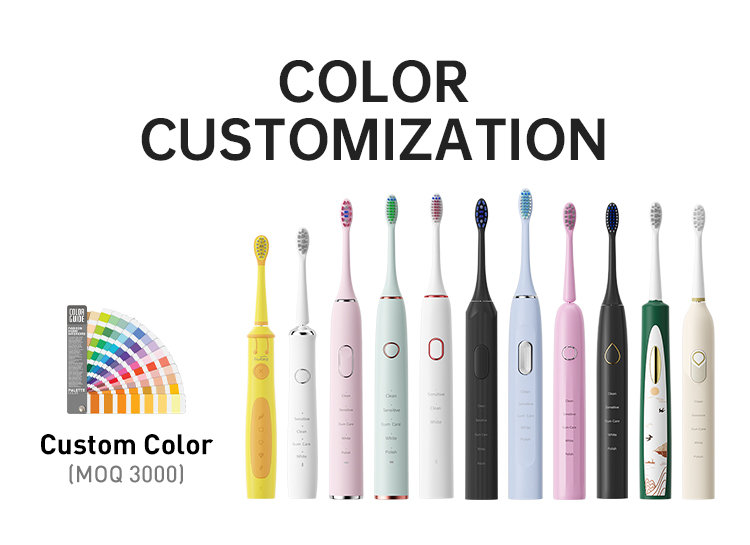
Choosing a reliable small order electric toothbrush supplier is essential for startups and brands entering the oral care market. Traditional manufacturing often requires high minimum order quantities, which creates financial pressure and inventory risks. Therefore, suppliers that support small orders provide a more flexible and accessible solution for new product development. In addition, small batch production allows brands to test the market before committing to large-scale manufacturing. As a result, decision-making becomes more data-driven and less risky. Advantages of Small Order Supply Working with a small order electric toothbrush supplier offers several important benefits. Firstly, lower MOQ reduces initial investment. Secondly, it enables brands to launch products faster without waiting for large production runs. Moreover, small orders allow for frequent product adjustments. Consequently, brands can optimize design, packaging, and positioning based on real market feedback. In addition, inventory management becomes easier. Therefore, the risk of overstock is minimized. Furthermore, flexible production supports multiple SKUs. As a result, brands can test different variations simultaneously. OEM Customization for Small Orders Professional suppliers provide full OEM support even for small quantities, including: Product design and configuration selection Logo printing and packaging customization Brush head and feature selection Branding support for niche markets Moreover,…
An electric toothbrush interchangeable head system is a key feature in modern oral care product design. As consumers seek flexibility and cost efficiency, interchangeable brush heads provide a practical solution. Therefore, manufacturers are developing standardized and modular systems that allow easy replacement and compatibility across different models. In addition, interchangeable systems enhance product versatility. As a result, brands can expand their product lines more efficiently. System Design Features A high-quality electric toothbrush interchangeable head system includes several important elements. Firstly, a secure connection mechanism ensures stability during high-frequency vibration. Secondly, easy installation and removal improve user convenience. Moreover, compatibility across multiple brush head types increases functionality. Consequently, users can switch between cleaning, whitening, or gum care heads. In addition, precise alignment ensures optimal performance. Therefore, brushing efficiency is maintained. Furthermore, durable connector materials extend product lifespan. As a result, long-term usability is improved. OEM Development Capabilities Key OEM services include: Modular structure design Connector system engineering Multi-head compatibility development Branding and packaging solutions Moreover, manufacturers can create proprietary connection systems. Consequently, brands can build exclusive ecosystems. In addition, standardized interfaces support large-scale production. Therefore, manufacturing efficiency is improved. Business Advantages For B2B clients, interchangeable systems offer strong advantages. Firstly, they…
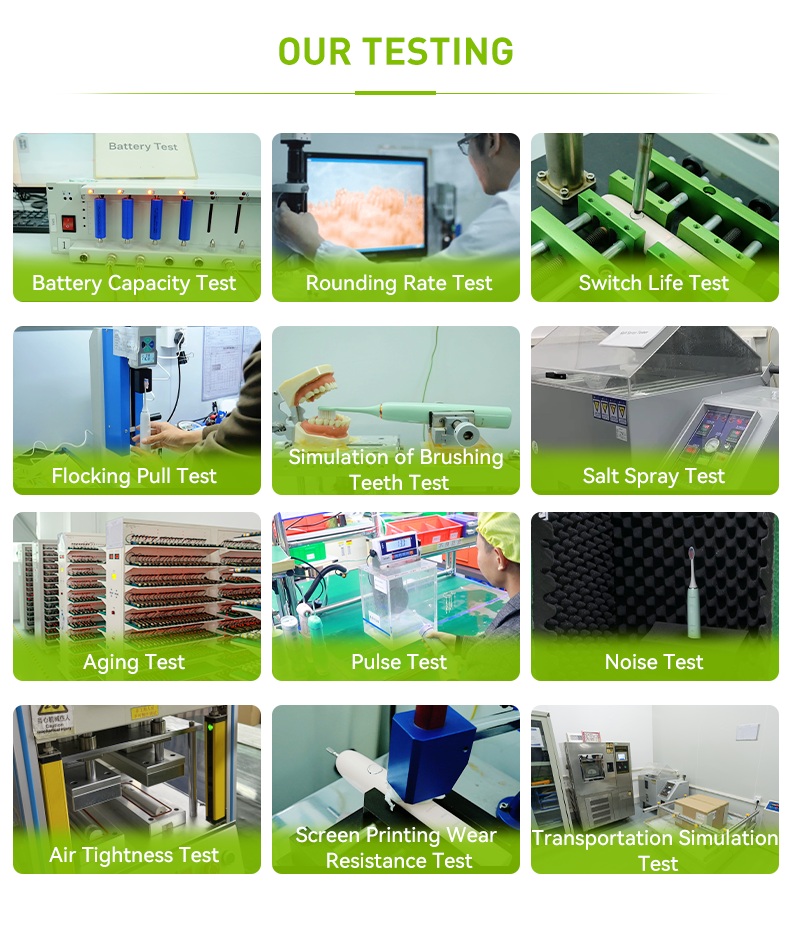
Electric toothbrush brush head durability testing is essential for ensuring long-term product reliability and user satisfaction. As brush heads are subject to continuous mechanical stress, proper testing is required to verify their performance over time. Therefore, manufacturers implement strict durability standards during product development and mass production. In addition, durability directly impacts brand reputation. As a result, consistent quality control becomes critical. Key Testing Methods A comprehensive sonic toothbrush brush head durability testing process includes multiple evaluations. Firstly, mechanical fatigue testing simulates repeated brushing cycles. Secondly, bristle wear testing measures deformation and abrasion over time. Moreover, pull-out strength testing ensures bristles remain securely fixed. Consequently, safety risks are minimized. In addition, chemical resistance testing verifies compatibility with toothpaste and water exposure. Therefore, long-term stability is ensured. Furthermore, high-frequency vibration testing evaluates performance under real operating conditions. As a result, the product maintains consistent functionality. OEM Quality Assurance Professional OEM manufacturers provide: Standardized durability testing procedures In-house testing laboratories Quality inspection at multiple stages Compliance with international standards Moreover, batch consistency is carefully monitored. Consequently, large-scale production maintains stable quality. Importance for B2B Buyers For brands and distributors, durability testing offers several benefits. Firstly, it reduces after-sales issues. Secondly, it enhances…
Electric toothbrush soft bristle design plays a crucial role in delivering a comfortable and safe brushing experience. As more consumers suffer from gum sensitivity, enamel wear, and oral discomfort, soft bristle solutions have become increasingly important in modern electric toothbrush development. Therefore, manufacturers are focusing on optimizing bristle softness without compromising cleaning performance. In addition, soft bristles enhance user comfort. As a result, they are widely used in premium and sensitive-care products. Key Design Principles A successful electric toothbrush soft bristle design requires a balance between softness and effectiveness. Firstly, ultra-fine filaments allow gentle contact with teeth and gums. Secondly, proper bristle density ensures sufficient cleaning power. Moreover, rounded bristle tips reduce irritation. Consequently, the brushing process becomes safer for daily use. In addition, flexible bristle movement improves reach in hard-to-clean areas. Therefore, overall oral hygiene is enhanced. Furthermore, multi-layer bristle structures can be adopted. As a result, both deep cleaning and surface polishing are achieved. OEM Customization Options Key customization services include: Bristle softness levels (ultra-soft, soft, medium) Filament diameter and density optimization Multi-layer or wave-shaped bristle design Color and branding customization Moreover, manufacturers can tailor brush heads for specific target groups. Consequently, brands can serve niches such as…
Introduction An Automated Calibration Service ensures consistent device accuracy and performance. An End-of-Life Recycling Program manages sustainable disposal of products. Combining both supports lifecycle responsibility. This blog explains why integration matters. Extending Product Lifecycle Management An Automated Calibration Service maintains equipment performance over time. It delays premature replacement. An End-of-Life Recycling Program handles final disposal responsibly. This creates a complete lifecycle solution. Ensuring Compliance with Environmental Regulations Regulations require proper waste handling. An End-of-Life Recycling Program ensures compliant disposal practices. An Automated Calibration Services maintains documentation records. This supports regulatory audits. Reducing Environmental Impact Sustainability is increasingly important for manufacturers. An End-of-Life Recycling Program minimizes landfill waste. An Automated Calibration Services reduces unnecessary replacements. This lowers environmental footprint. Improving Asset Value and Resource Efficiency Maintained equipment retains higher value. An Automated Calibration Services optimizes device performance. An End-of-Life Recycling Program recovers reusable materials. This improves resource utilization. Enhancing Brand Responsibility and Customer Trust Customers value sustainable partners. An End-of-Life Recycling Program demonstrates environmental commitment. An Automated Calibration Services ensures product reliability. Together, they strengthen brand credibility. Supporting Scalable and Circular Business Models Circular economy models require integrated systems. An Automated Calibration Services supports long-term usage. An End-of-Life Recycling Program enables…
Introduction Leased Equipment Management tracks assets, performance, and lifecycle status. A Usage-based Billing System charges customers based on actual usage. Combining both creates transparent and flexible business models. This blog explains how they work together. Aligning Asset Tracking with Billing Accuracy Leased Equipment Management monitors equipment location and usage. Data feeds into a Usage-based Billing System automatically. This ensures accurate billing. It eliminates estimation errors. Enabling Real-time Usage Monitoring Connected devices provide real-time usage data. Leased Equipment Management captures operational metrics continuously. A Usage-based Billing System processes this data instantly. This supports dynamic billing. Improving Customer Transparency and Trust Customers prefer clear pricing models. A Usage-based Billing System reflects actual consumption. Leased Equipment Management provides verifiable usage records. This builds trust and satisfaction. Optimizing Maintenance and Service Planning Usage data informs maintenance schedules. Leased Equipment Managements tracks wear and performance. A Usage-based Billing System highlights high-usage assets. This supports proactive servicing. Enhancing Revenue Predictability and Flexibility Flexible billing models attract more customers. A Usage-based Billing System adapts to different usage levels. Leased Equipment Managements ensures accurate tracking. This balances revenue and customer needs. Supporting Scalable Business Models Growth requires efficient systems. Leased Equipment Managements handles large asset portfolios. A Usage-based…
Introduction On-site Technician Dispatch requires fast response and accurate preparation. Predictive Spare Parts Inventory forecasts demand using data analytics. Combining both improves service efficiency. This blog explains how optimization is achieved. Ensuring Right Parts Availability Before Dispatch Predictive Spare Parts Inventory forecasts required components in advance. It reduces stock shortages. On-site Technician Dispatch becomes more efficient. Technicians arrive fully prepared. Reducing Service Delays and Repeat Visits Missing parts cause delays and extra visits. Predictive Spare Parts Inventory minimizes such issues. On-site Technician Dispatch completes tasks in one visit. This improves service speed. Improving First-time Fix Rates High fix rates are critical for service quality. Predictive Spare Parts Inventory ensures correct part allocation. On-site Technician Dispatch benefits from accurate preparation. This increases first-time resolution. Optimizing Inventory Management and Costs Excess inventory increases operational costs. Predictive Spare Parts Inventory balances stock levels efficiently. On-site Technician Dispatchs uses resources more effectively. This reduces waste and costs. Enhancing Data-driven Decision-making Data insights improve operational planning. Predictive Spare Parts Inventory analyzes usage patterns. On-site Technician Dispatchs aligns with predictive insights. This supports smarter decision-making. Enabling Scalable Service Operations Growing service networks require efficient systems. Predictive Spare Parts Inventory supports scalable supply chains. On-site Technician Dispatchs…
Introduction Zero-Trust Security Architecture enforces strict identity verification for every access request. Automated Refill Logistics relies on connected systems and real-time data. Combining both protects operations and data flows. This blog explains key protection mechanisms. Enforcing Continuous Identity Verification Zero-Trust Security Architecture requires authentication for every user and device. No access is automatically trusted. Automated Refill Logistics systems remain protected from unauthorized access. This reduces security risks. Securing Data Transmission Across Networks Sensitive logistics data travels across multiple systems. Zero-Trust Security Architecture encrypts and monitors all communications. Automated Refill Logistics maintains secure data exchange. This prevents data breaches. Limiting Access Through Least-Privilege Policies Access control is essential for system protection. Zero-Trust Security applies least-privilege principles. Users access only necessary resources. Automated Refill Logistics reduces internal and external threats. Detecting and Responding to Threats in Real Time Continuous monitoring identifies unusual activity. Zero-Trust Security analyzes behavior patterns. Automated Refill Logistics systems can respond quickly to threats. This minimizes potential damage. Protecting IoT Devices and Connected Endpoints Logistics systems often rely on connected devices. Zero-Trust Security secures each endpoint individually. Automated Refill Logistics benefits from device-level protection. This strengthens overall system security. Ensuring Compliance and Audit Readiness Regulated industries require strong security frameworks. Zero-Trust Security provides…
Introduction Time-Sensitive Networking ensures deterministic and low-latency data delivery. An OTA Firmware Update Platform requires reliable and synchronized updates. Combining both improves update stability. This blog explains why they are critical together. Ensuring Deterministic Data Transmission Time-Sensitive Networking guarantees predictable communication timing. This is essential for critical operations. An OTA Firmware Update Platform depends on stable data transfer. Deterministic delivery prevents update failures. Reducing Latency and Network Congestion Network delays can disrupt firmware updates. Time-Sensitive Networking prioritizes critical data packets. This reduces latency significantly. An OTA Firmware Update Platform benefits from faster update execution. Improving Synchronization Across Devices Synchronized updates are crucial for system consistency. Time-Sensitive Networking aligns communication timing across devices. An OTA Firmware Update Platform can update multiple units simultaneously. This ensures uniform system behavior. Enhancing Reliability in Mission-critical Systems Firmware updates must be reliable in sensitive environments. Time-Sensitive Networkings minimizes packet loss and jitter. An OTA Firmware Update Platform maintains update integrity. This reduces system risks. Supporting Secure and Controlled Update Processes Security is critical during firmware updates. Time-Sensitive Networkings enables controlled data flow. An OTA Firmware Update Platform ensures secure transmission. This protects against data corruption or interruption. Enabling Scalable IoT and Industrial Deployments Large-scale systems…
Introduction Digital Twin Calibration aligns virtual models with real-world performance. Edge Computing for AI enables local data processing and faster insights. Combining both improves accuracy and responsiveness. This blog explains why integration matters. Enabling Real-time Data Processing Edge Computing for AI processes data close to the source. This reduces latency significantly. Digital Twin Calibration benefits from immediate feedback. This ensures accurate model adjustments. Improving Calibration Accuracy Accurate data is essential for modeling. Digital Twin Calibration relies on continuous data updates. Edge Computing for AI filters and processes data locally. This improves calibration precision. Reducing Cloud Dependency and Latency Cloud-only systems may introduce delays. Edge Computing for AI minimizes reliance on remote servers. Digital Twin Calibration requires fast response cycles. This ensures timely model updates. Enhancing Data Security and Privacy Sensitive data must be protected. Edge Computing for AI keeps data closer to devices. Digital Twin Calibrations uses secure data inputs. This reduces exposure risks. Supporting Scalable Industrial Applications Large systems generate high data volumes. Edge Computing for AI handles distributed processing efficiently. Digital Twin Calibrations scales across multiple assets. This supports industrial deployment. Enabling Predictive and Adaptive Systems Smart systems require predictive capabilities. Edge Computing for AI supports real-time analytics.…
Introduction Toddler electric toothbrush safety is a top concern for parents, who want to keep their little ones’ teeth clean without risk of injury. Many parents wonder when toddlers can start using electric brushes and which features are safe. This guide answers those questions and shares tips for safe use. When Can Toddlers Start Using Electric Toothbrushes? Most dentists recommend introducing electric toothbrushes around age 3, when toddlers have better motor control and can follow basic instructions. Some toddler-specific models are safe for ages 2+, but it’s best to consult your pediatric dentist first. Essential Safety Features for Toddler Electric Toothbrushes Look for these features to ensure safe use: Soft, rounded bristles: Gentle on toddler gums, with no sharp edges that can scratch. Large, easy-to-grip handles: Designed for small hands, with non-slip grips to prevent slipping. Automatic shut-off: Turns off after 2 minutes to prevent over-brushing. Low-power motors: Reduced vibration to avoid startling sensitive toddlers. Waterproof design: Easy to clean, with no exposed electrical parts. Safe Use Guidelines for Toddlers Follow these rules to keep brushing safe: Always supervise brushing until your child is at least 6 years old. Use only a pea-sized amount of fluoride toothpaste for toddlers ages…
Introduction Canine teeth whitening solutions address a common concern: darker or more discolored eye teeth that stand out against other teeth. Canine teeth are often naturally darker due to thicker dentin, and they are more prone to staining from food and drinks. This guide shares targeted methods to brighten them for a uniform smile. Why Canine Teeth Discolor More Easily Canine teeth have thicker dentin layers, which naturally give them a darker yellow hue. They are also more exposed when smiling, making stains more noticeable. Over time, coffee, tea, and tobacco can darken them further, creating an uneven smile. Targeted Whitening Solutions for Canine Teeth These methods focus on brightening eye teeth without over-whitening other teeth: Custom tray whitening with targeted gel: Your dentist can create custom trays that cover only the canine teeth, allowing you to apply whitening gel directly to them. This ensures even whitening without affecting adjacent teeth. Whitening pens for touch-ups: Use a whitening pen to apply gel directly to canine teeth, making it easy to target discolored areas. They are ideal for maintaining results after a full whitening treatment. Veneers or bonding: For severe discoloration that doesn’t respond to bleaching, dental veneers or bonding can…
Introduction Manual water flosser options are ideal for anyone without access to electrical outlets, whether traveling, camping, or living off-grid. These non-electric tools use hand pressure to deliver a cleaning water stream, making them portable and reliable. This guide explores the best options for no-outlet flossing. Why Choose a Manual Water Flosser? Manual water flossers offer several benefits: No need for batteries or charging, so they work anywhere. Compact and lightweight, fitting easily in travel bags or purses. No risk of electrical damage from water, making them safe for use in wet environments. Simple design with fewer moving parts, so they rarely break. Top Manual Water Flosser Types These are the most popular options: Squeeze bottle flossers: Simple plastic bottles with a nozzle. Squeeze the bottle to create a water stream. They are affordable and easy to use, but require steady hand pressure. Piston-style flossers: Pump-action flossers that use a plunger to build water pressure. They deliver a more consistent stream than squeeze bottles, with adjustable pressure levels. Portable irrigator flossers: Compact, reusable flossers with a reservoir and trigger-style nozzle. They are similar to electric models but use hand pressure instead of a motor. How to Use a Manual Water…
Introduction A whitening gel pen comparison guide breaks down the differences between two popular portable whitening options: whitening gels and whitening pens. Both promise brighter smiles, but they differ in ease of use, coverage, and effectiveness. This comparison helps you choose the right option for your needs. What Are Whitening Gels and Pens? Whitening gels: Thick, bleaching formulas usually applied with custom trays or brush applicators. They often come in larger syringes or tubes. Whitening pens: Thin, liquid whitening formulas in a pen-style applicator, designed for on-the-go touch-ups. They feature a small brush tip for precise application. Whitening pens: Extremely portable and easy to use. Twist the pen to dispense gel, then brush it directly onto teeth. No trays required, making them ideal for travel or quick touch-ups. Whitening gels: Require more setup. Many need custom trays to hold the gel on teeth, which can be messy for beginners. Some come with pre-filled trays for easier use. Key Comparison: Coverage and Precision Whitening pens: Best for targeted touch-ups. The small brush tip lets you apply gel to specific teeth, like front teeth, without covering gums. They are less effective for full-mouth whitening. Whitening gels: Better for even full-mouth coverage. When…
Introduction A water flosser sensitive gum setting is designed for people with delicate gums, who need gentler care to avoid irritation. Gum sensitivity can make traditional flossing painful, but water flossers with adjustable pressure settings offer a comfortable alternative. This guide shares how to choose the right pressure and nozzle for sensitive gums. Why Sensitive Gums Need Special Water Flosser Settings High-pressure water streams can irritate sensitive gums, causing bleeding, redness, or discomfort. People with receding gums, gingivitis, or post-treatment sensitivity need lower pressure to clean without harming delicate tissue. The right setting cleans effectively while protecting gums. Choosing the Right Pressure Setting Start with these guidelines to find your ideal setting: Beginner setting: Use the lowest pressure (usually labeled "soft" or "1") if you have very sensitive gums. This setting delivers a gentle stream to clean without irritation. Gradual increase: If you don’t feel discomfort after a week, slowly increase the pressure to the next level. Stop if you notice bleeding or pain. Customizable modes: Many water flossers offer "pulse" or "massage" modes, which deliver a gentler, pulsating stream that stimulates circulation without irritation. Best Nozzle Types for Sensitive Gums These nozzles are designed for delicate care: Soft tip…
Introduction An electric toothbrush odor cleaning fix is essential for anyone noticing an unpleasant smell from their device. Bad odors come from trapped bacteria, mold, and leftover food in hard-to-clean areas. This guide explains why your toothbrush smells bad and how to eliminate odors with simple cleaning steps. Why Electric Toothbrushes Develop Odors Several factors cause bad smells: Trapped moisture in the brush head base creates a breeding ground for mold and bacteria. Leftover toothpaste and food particles build up in crevices, leading to bacterial growth. Hard water mineral deposits trap bacteria, worsening odors over time. A dirty charging base can also transfer odors to the brush handle. Step-by-Step Odor Elimination Cleaning Follow this routine to get rid of bad smells: Disassemble the brush: Remove the brush head from the handle, and separate any removable parts like caps or nozzles. Soak the brush head: Mix a solution of warm water and white vinegar (1:1 ratio). Soak the brush head for 30 minutes to kill bacteria and dissolve buildup. Scrub the base: Use a small brush or toothpick to clean crevices in the handle base where the brush head attaches. Clean the charging station: Wipe the charging base with a damp…
Choosing a reliable DuPont bristle supplier for electric toothbrush is essential for ensuring brush head quality and user experience. As bristles are the only part that directly contacts teeth and gums, their material and performance significantly affect cleaning results. Therefore, high-quality filaments are a key component in premium electric toothbrush products. In addition, superior bristles improve comfort and durability. As a result, customer satisfaction is increased. Advantages of DuPont Bristles A professional DuPont bristle supplier for electric toothbrush typically provides high-performance filament materials. Firstly, DuPont bristles are known for their consistency and durability. Secondly, they offer excellent flexibility and resilience. Moreover, rounded filament tips improve safety. Consequently, they reduce the risk of gum irritation. In addition, uniform bristle structure ensures even cleaning performance. Therefore, brushing efficiency is enhanced. Furthermore, wear resistance extends product lifespan. As a result, replacement frequency is reduced. OEM Brush Head Customization Key services include: Bristle material selection Soft, medium, or hard filament options Brush head shape and structure design Compatibility with different handles Moreover, manufacturers can develop interchangeable brush heads. Consequently, product ecosystems can be expanded. In addition, customization supports brand differentiation. Therefore, products can stand out in the market. Quality Control and Testing Testing includes:…