Electric Toothbrush OEM Manufacturer Guide
Choosing an electric toothbrush OEM manufacturer is not only about comparing unit prices. For brand owners, Amazon sellers, importers, and retail buyers, the real question is whether the supplier can help you launch a reliable product with stable quality, clear positioning, and lower after-sales risk. A cheap model may look attractive at the quotation stage, but weak waterproof design, unstable battery performance, poor packaging, or inconsistent mass production can quickly damage your brand.
Why choosing the right electric toothbrush OEM manufacturer matters
Before asking a factory for a quotation, buyers should define the target market, price level, sales channel, and user expectation. An entry-level retail model, a mid-range online product, and a premium private label toothbrush should not use the same design logic. The right supplier should help you match vibration frequency, brushing modes, battery life, waterproof level, brush head type, colors, packaging, and certification documents to the final market position.
Check real OEM and ODM capability
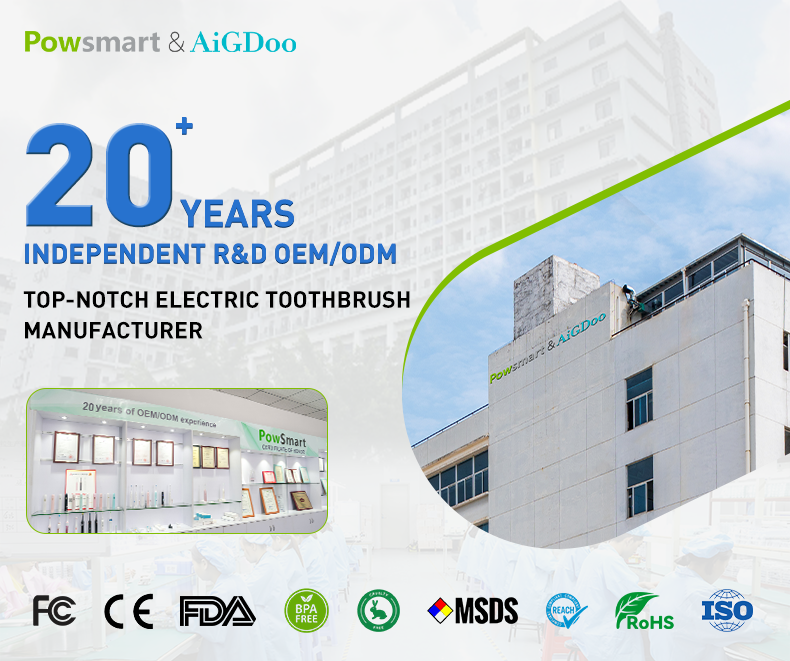
A trading company may only help you select existing models, while a mature OEM/ODM manufacturer can support deeper product development. This may include logo printing, color customization, brush head options, charging methods, accessory kits, instruction manuals, retail box design, and product structure adjustments. If your brand wants to build a long-term oral care line, OEM/ODM capability matters more than a one-time low quotation.
Evaluate electric toothbrush quality control before mass production
Electric toothbrushes are electronic oral care products, so quality control must cover more than appearance inspection. Buyers should ask about waterproof testing, battery aging tests, charging stability, button life, motor performance, noise testing, drop testing, vibration consistency, and final appearance inspection. These checks directly affect returns, reviews, and customer complaints after launch.
Confirm certification and market access support
Different markets may require different documents, such as CE, FCC, RoHS, FDA-related registration, or battery transportation documents. Requirements can vary by product structure, battery type, packaging, sales channel, and destination market. For US electronic product planning, buyers can review FCC equipment authorization as one reference point, but final compliance should always be confirmed for the specific product and market.
PowSmart also provides buyer-facing information on electric toothbrush certification support to help brands understand how certification affects OEM and ODM projects.
Review sample process, packaging, and communication speed
OEM projects often fail not because of one technical problem, but because communication is slow or unclear. Buyers should check how the supplier handles samples, artwork confirmation, packaging files, pre-production samples, inspection, shipping documents, and after-sales feedback. A supplier with clear project management can help reduce delays and misunderstandings.
Conclusion
The right electric toothbrush OEM manufacturer should help your brand reduce risk, control quality, and build a product that fits your sales channel. PowSmart supports oral care OEM/ODM projects including electric toothbrush OEM options, water flossers, and teeth whitening devices, with product development, quality testing, certification support, and customized packaging options for brand owners and distributors. To discuss a new project, contact PowSmart for an OEM project.
FAQ
Q: What should I check before choosing an electric toothbrush OEM manufacturer?
A: Check product quality, waterproof testing, battery performance, customization ability, certifications, MOQ, sample lead time, and communication efficiency.
Q: Is private label electric toothbrush production suitable for new brands?
A: Yes, but new brands should start with a clear product position, reasonable MOQ, reliable packaging, and a model that matches their target market.
Q: Can an OEM supplier help with packaging customization?
A: A professional OEM/ODM supplier can usually support logo, color, packaging, manual, accessory, and carton customization based on project requirements.