What Custom Electric Toothbrush Manufacturing Means for Brand Owners
Custom Electric Toothbrush Manufacturing for Brand Projects
Custom electric toothbrush manufacturing is not only about changing a logo. For serious brand owners, customization can include product appearance, handle color, brush head design, mode settings, battery capacity, charging method, packaging, instruction manuals, and market-specific compliance documents.
The value of customization is simple: it helps your product avoid looking like every other low-cost toothbrush in the market. But customization also increases development complexity, so buyers need to understand which changes are worth the cost.
Start With Practical Customization
For many new buyers, the best starting point is light customization. This may include logo printing, color adjustment, packaging design, instruction language, and product bundle configuration. These changes are usually faster and less risky than developing a new mold from the beginning.
Light customization works well for Amazon sellers, regional distributors, promotional channels, and new oral care brands that want to test the market before committing to deeper product development.
Move to Deeper Customization When the Market Is Proven
Advanced customization may include new mold design, special surface finishing, upgraded brush head structure, customized buttons, unique charging bases, travel cases, special LED indicators, or a full product family. These options can create stronger differentiation but require more investment, longer development time, and closer project management.
A buyer should only request deep customization when the expected sales volume, market positioning, and brand strategy can support the extra cost.
Control Risk During Development
Custom projects should include sample confirmation, structure review, color approval, packaging proofing, reliability testing, and pre-production approval. Without these steps, small design changes can create larger production problems later.
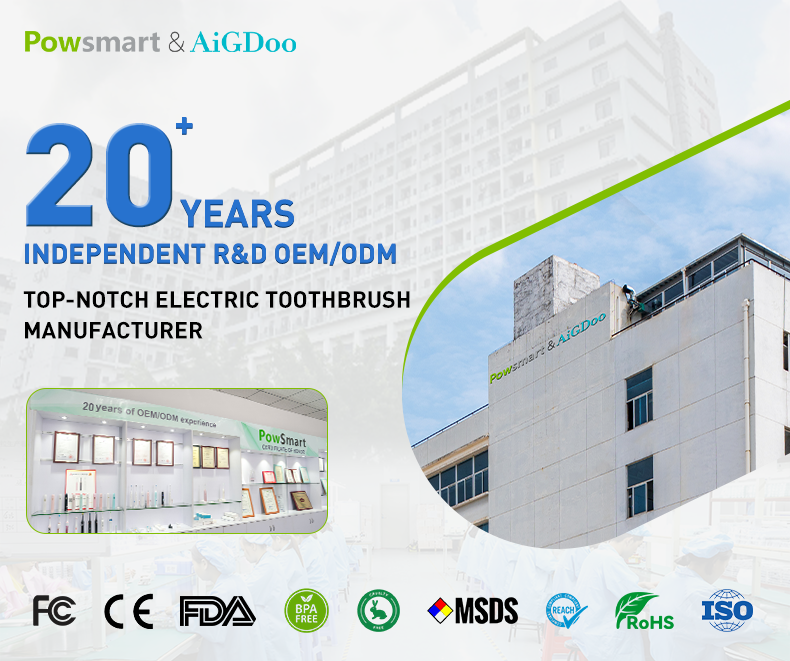
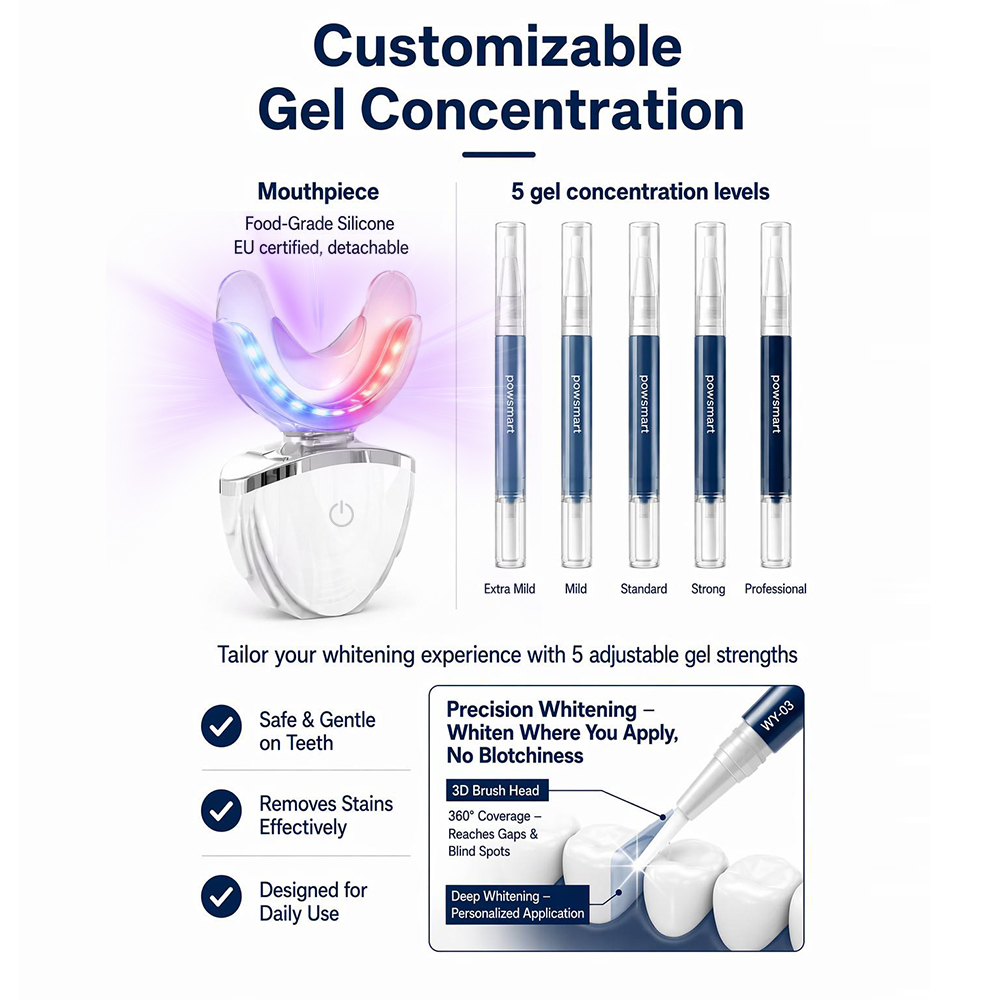
For reference, you can open PowSmart company information and this product example when preparing a custom project discussion.
Think About Compliance Early
Different markets may require different documents and testing. Buyers should confirm requirements for electrical safety, radio-related rules if applicable, battery transportation, labeling, packaging, and material restrictions. For device authorization background, buyers may review this official device authorization resource.
Final Thought
Customization should serve the market, not personal preference. A strong manufacturer should help you decide which changes improve shelf appeal, user experience, and business value, while avoiding unnecessary cost and project delays.
FAQ
What can be customized on an electric toothbrush?
Common options include logo, color, packaging, brush head, modes, charging method, accessories, surface finish, and sometimes mold structure.
Is custom manufacturing suitable for new brands?
Yes, but new brands should usually start with lighter customization before investing in full mold development.
How can buyers reduce custom project risk?
Confirm samples, packaging proofs, color standards, function testing, reliability testing, and pre-production samples before mass production.