Alternative energy technologies are creating new possibilities for portable oral-care products. For brands exploring Solar charging water flosser bulk orders or Kinetic energy oral irrigator OEM development, understanding energy conversion, battery integration, and product feasibility is essential for creating reliable and practical designs.
How Can Solar Charging Work in Water Flossers?
Solar charging uses photovoltaic cells to convert light into electrical energy. For water flossers, solar panels may be integrated into a charging dock or an external charging accessory.
Because portable water flossers have limited surface area and relatively high power requirements, buyers should evaluate solar output, charging time, and available lighting conditions. Solar charging may be more practical as a supplementary charging option.
What Should Buyers Check When Ordering Solar Charging Water Flosser Bulk?
When sourcing Solar charging water flosser bulk products, buyers should assess both the charging system and the water-flossing performance.
Important factors include:
- Solar panel output and conversion efficiency.
- Battery capacity and charging compatibility.
- Water pressure and operating time.
- Waterproof construction and product durability.
- Bulk production capacity and quality consistency.
Requesting samples and testing charging performance under realistic conditions can help confirm product feasibility.
What Is Kinetic Energy Charging Technology?
Kinetic energy systems convert mechanical movement into electrical energy through a generator. The electricity can potentially be stored for later use.
For oral irrigators, however, the amount of energy generated through ordinary movement may be limited compared with the power required by the pump. Manufacturers must evaluate energy output and practical operating requirements before adopting this technology.
How Does Kinetic Energy Oral Irrigator OEM Development Work?
A Kinetic energy oral irrigator OEM project requires coordination between the energy-harvesting mechanism, storage component, motor, and control circuit.
Buyers should discuss generator efficiency, energy storage, power management, product dimensions, and expected runtime. Prototype testing is necessary to determine whether the generated energy can meaningfully support the device’s operation.
How Do Solar and Kinetic Charging Solutions Compare?
Solar charging depends on available light, while kinetic charging depends on mechanical movement. Both technologies have different energy-generation conditions and design limitations.
Solar charging may be more suitable when a dedicated panel or charging dock is available. Kinetic energy may be considered for specialized product concepts where movement-based energy harvesting is technically feasible.
The final choice should consider power consumption, charging expectations, product cost, size, and target users.
What Should Buyers Test Before Mass Production?
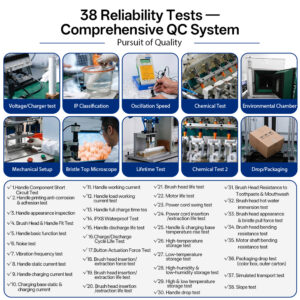
Before approving production, manufacturers should evaluate charging efficiency, battery performance, water pressure, flow rate, leakage prevention, waterproof performance, and repeated-use durability.
For alternative-energy projects, testing should also measure actual energy generation and its contribution to operating time. Buyers should confirm technical specifications, sample results, quality standards, and production responsibilities before placing bulk orders.
Conclusion
Alternative charging concepts offer opportunities for differentiated oral-care products, but practical performance must be verified through engineering and testing. Whether sourcing Solar charging water flosser bulk products or developing Kinetic energy oral irrigator OEM models, brands should work with manufacturers who can assess technical feasibility and maintain consistent product quality. Contact us