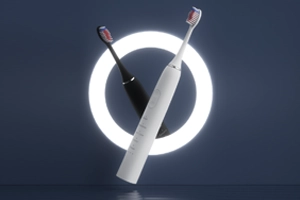
Seattle’s coffee culture is real — and with it comes demand for products that help consumers manage daily tooth staining. But can an electric Seattle coffee toothbrush legitimately address Seattle stain removal needs without compromising enamel or user safety? For B2B manufacturers and OEM/ODM partners the answer is: it can help reduce surface stains if engineered, validated, and commercialized correctly. Below are six practical dimensions—market, head & abrasive tech, drive/mode design, safety & compliance, validation & testing, and go-to-market—that turn the idea into a producible product line.
Market context & product positioning
First, define the problem and the buyer. Seattle consumers expect gentle, effective stain care that fits their routines. For manufacturers, a successful Seattle coffee toothbrush should be positioned not as a clinical whitening device but as a daily-care accessory that targets surface staining caused by coffee, tea, and lifestyle factors. Practical positioning options:
- Everyday stain-reducer: a primary electric brush with a “stain care” program and optional polishing heads.
- Accessory-led upgrade: standard handle + replaceable polishing pads/pastes sold separately or by subscription.
- Clinic-channel offering: co-branded “at-home maintenance” for dentists who treat deeper discoloration.
Consequently, messaging should promise “visible surface stain reduction” backed by test data—not clinical whitening claims reserved for professionals.
Brush head & surface-treatment technology
Next, pick the right surface-contact architecture. True Seattle stain removal relies on mechanical and chemical synergy—controlled abrasion (micro-polishing) plus safe, dental-grade cleaning agents. Options to consider:
- Polishing pads / micro-abrasive heads: soft silicone or polymer pads embedded with micro-abrasive particles or a replaceable micro-textured surface that lightly abrades pellicle and extrinsic stains.
- Tapered filament heads: for routine use, ultra-soft tapered filaments remove surface deposits while reducing gingival trauma.
- Dual-head system: daily cleaning head + separate polishing head sold in multi-packs to limit frequency of abrasive contact.
- Paste compatibility: specify approved polishing pastes (silica-based dental abrasives or enamel-safe agents) and test head/paste interactions for wear and residue.
Design goal: enough mechanical action to lift surface stains but low enough abrasivity to protect enamel and dentin over repeated use. Company web: https://www.powsmart.com/product/electric-toothbrush/
.jpg)
.jpg)
Motor, motion profile & UX modes
Moreover, the motor and motion choices determine both efficacy and safety. Key engineering levers:
- Motion type: sonic (high-frequency, small amplitude) vs. oscillating–rotating — both can remove surface stains when paired with the right head/consumable. Sonic motion often improves fluid shear cleaning; oscillating tips concentrate mechanical contact. Decide based on target cleaning action.
- Stain-mode profile: a dedicated cycle (lower amplitude but longer dwell, or pulsed high-frequency bursts) optimized for polishing heads.
- Adaptive control: integrate pressure sensing and torque feedback to reduce motor output under excessive force; prevents over-abrasion during Seattle stain removal routines.
- User prompts: timed coaching, mode selection via one-button UX or app, and explicit guidance to use polishing heads only X times/month.
Thus, the handle + firmware must be designed as a system to protect the tooth while maximizing stain lift.
Safety, enamel preservation & regulatory considerations
Crucially, stain-removal claims intersect with safety and compliance. Manufacturers must:
- Control abrasivity: adopt materials and pastes that meet dental abrasivity guidelines; avoid permanent changes to enamel roughness.
- Limit exposure frequency: design heads and app guidance so polishing is occasional (e.g., weekly or biweekly), not daily.
- Pressure governance: use sensors and auto-throttle to stop overbrushing events that accelerate wear.
- Labeling & claims: avoid therapeutic or unverified whitening claims; use validated language like “reduces surface staining when used with approved polishing heads.”
- Standards & testing: consult relevant appliance safety standards and dental guidance; plan clinical or in-vitro enamel abrasion testing before market claims.
In short, balancing efficacy with enamel protection is non-negotiable for long-term brand trust.
Validation, lab testing & clinical pilots
Furthermore, robust validation is mandatory to back any promise of Seattle stain removal:
- In-vitro stain panels: standardized coffee/tea staining protocols on enamel or bovine analogs to compare head/paste combinations. Measure color change with spectrophotometry (ΔE) pre/post-treatment.
- Abrasivity tests: quantify enamel/dentin wear (surface roughness, mass loss) after simulated usage cycles; compare to accepted RDA/abrasivity benchmarks or dental lab standards.
- User pilots: 4–12 week consumer studies in coffee-heavy cohorts (e.g., Seattle) with professional photographic documentation and user-reported satisfaction scores.
- Real-world durability: EOL tests for heads and check for residue, clogging, or adhesive breakdown from polishing agents.
- Regulatory recordkeeping: document methods, results, and instructions for safe use to defend claims and support retailer or clinic channels.
Validation converts a novelty into a responsibly marketed feature.
Manufacturing, supply chain & commercialization strategy
Finally, make it manufacturable and saleable:
- BOM & tooling: account for polishing pad materials, secondary assembly steps (loading abrasives), and packaging that includes paste sachets or pre-loaded pads.
- Quality control: incoming QC for abrasive particle distribution, head-to-handle fit, and IP/sealing (polishing used in wet environments).
- Consumable lifecycle: subscription or refill packs (polishing head + paste sachet) increase LTV; lock barcodes/compatibility to protect margins.
- Channel strategy: launch via specialty retailers and dental clinics in Seattle (local coffee/culture tie-ins), then expand to national channels with clear usage instructions.
- KPIs to track: stain reduction (ΔE) in pilots, refill attach rate, return/warranty rate, frequency of polishing head use per user, and NPS for stain-care buyers.
By aligning manufacturing and commercial tactics, the Seattle coffee toothbrush can become a profitable product family rather than a one-off gimmick.
Conclusion & quick action checklist
A well-engineered Seattle coffee toothbrush can meaningfully reduce extrinsic Seattle stain removal if the system—head, motor, consumable chemistry, firmware, and messaging—is designed holistically and validated rigorously. Actionable next steps for B2B teams:
- Define product concept (daily clean + optional polishing accessory) and target buyer.
- Select head architectures (tapered filaments + separate polishing pad) and approved polishing pastes.
- Design firmware: stain-mode, pressure sensors, and usage limits.
- Run in-vitro stain and abrasivity tests; iterate materials until ΔE improvement with acceptable wear is achieved.
- Pilot with Seattle cohorts and local dental partners; gather spectrophotometry and user-feedback data.
- Build consumable supply chain and subscription model; prepare compliant labeling and retailer training materials.
If you’d like, I can draft a technical specification for a prototype (head geometry, motion profile, polishing pad materials, test protocol outline, and a pilot plan tailored to Seattle coffee drinkers). Want me to prepare that next?
.jpg)
