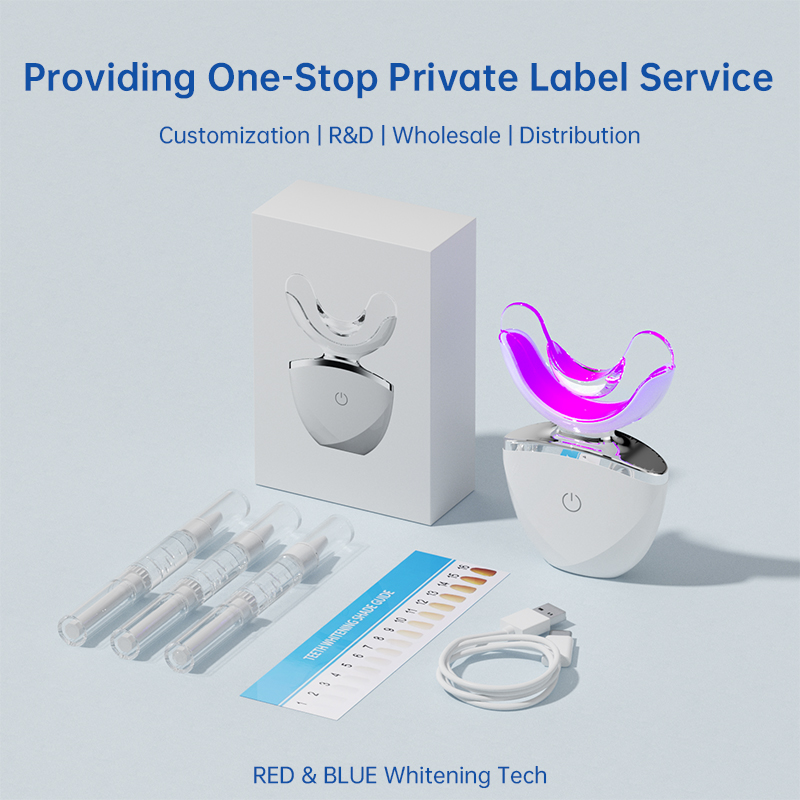
When comparing professional vs home whitening devices, the first major difference lies in power and performance. Professional systems used in dental clinics typically operate at higher intensity levels, allowing for faster activation of whitening gels and more immediate results.
Home-use blue light devices, on the other hand, are designed with user safety and convenience in mind—offering lower light intensity and controlled exposure times to prevent sensitivity. This distinction reflects the technical differences between in-office efficiency and home comfort.
Blue Light Technical Specs That Matter
The blue light technical specs define the real performance behind each device. In professional whitening systems, LED wavelength ranges between 460–490nm, optimized for maximum gel activation and deeper stain breakdown.
For home whitening products, manufacturers often adjust wavelength and power output to balance whitening efficacy and safety. Additional features such as smart timers, temperature control, and ergonomic mouth trays also enhance user experience while maintaining safe operation.
Whitening Efficacy: The Science Behind the Light
The whitening efficacy of any LED blue light system depends on multiple factors—light wavelength, power density, and gel formulation compatibility. Professional-grade systems typically deliver faster and more visible results due to higher light output and concentrated peroxide gels.
However, advancements in consumer whitening technology have significantly improved home device performance, narrowing the gap between clinical and at-home outcomes. High-quality OEM whitening devices now integrate similar optical principles used in professional tools, offering safe yet effective results for private label brands.
OEM Device Safety and Certification Standards
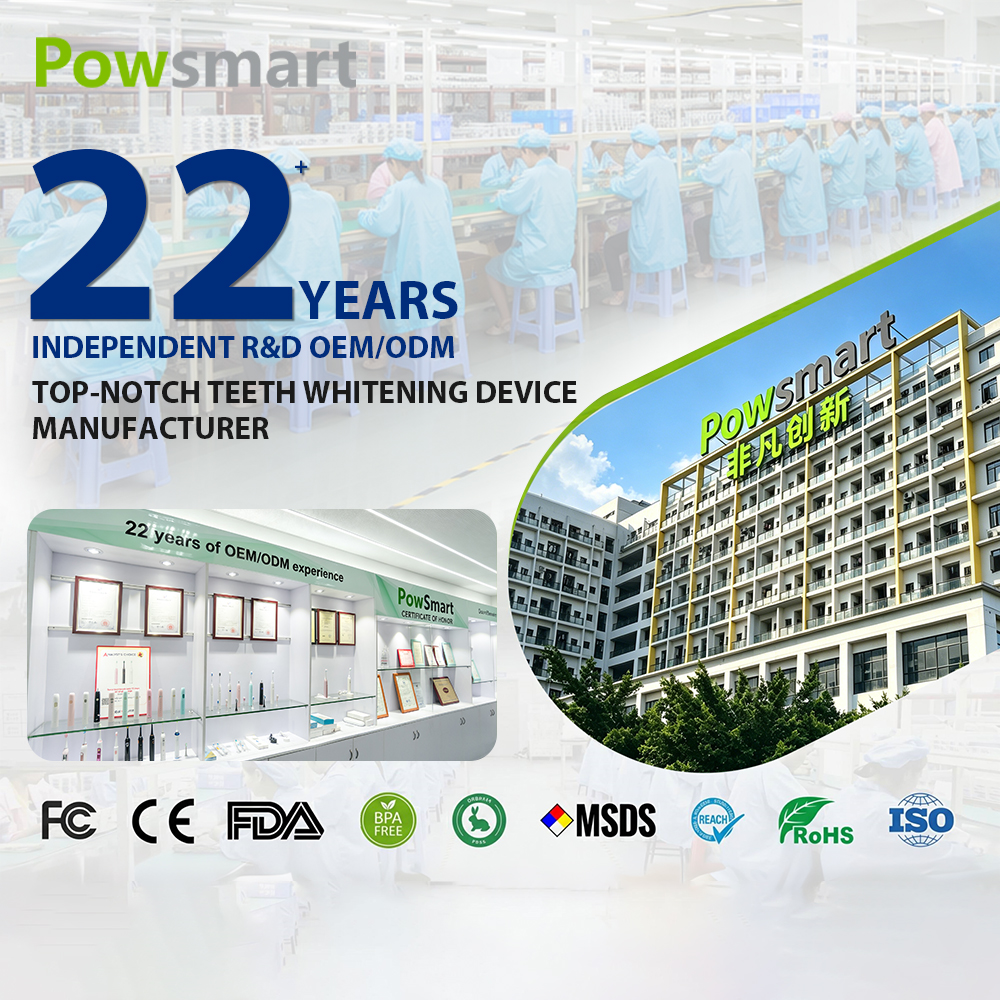
For any OEM device safety consideration, compliance with international standards such as CE, FDA, and ISO13485 is critical. Professional-use devices must undergo more rigorous safety and performance testing due to higher light output levels.
Meanwhile, home-use versions emphasize long-term reliability, low-heat emission, and material biocompatibility. A trusted manufacturer will ensure that both professional and home blue light products meet the appropriate electrical and photobiological safety standards, protecting users and maintaining brand reputation.
Customization Opportunities for OEM Whitening Devices
In the competitive oral care market, many brands now seek OEM/ODM blue light whitening devices that align with their unique market positioning. Manufacturers can customize light wavelength, LED arrangement, housing material, and even app-controlled functions to differentiate their products.
Balancing whitening efficacy and safety through technical design is the key challenge—and opportunity—for brands entering both professional and consumer markets.
Conclusion: Aligning Technology with Market Needs
The divide between professional vs home whitening devices is increasingly defined by precision engineering rather than simple power differences. By understanding blue light technical specs, ensuring OEM device safety, and optimizing whitening efficacy, brands can offer tailored whitening solutions for clinics and consumers alike.
Partnering with an experienced manufacturer ensures your whitening products deliver proven performance, compliance, and innovation—helping your brand stand out in a growing global oral care market.
.jpg)
