-2-1024x576.png)
As consumer interest in cosmetic oral care continues to rise, modern teeth whitening technologies have become a cornerstone of many oral care product portfolios. However, in an increasingly competitive and regulated market, it’s no longer enough for products to simply promise a brighter smile. For oral care brands seeking to establish credibility and market dominance, clinical proof of whitening efficacy is a non-negotiable standard.
This blog outlines how various modern teeth whitening technologies compare, explores their clinical validation status, and provides guidance for brands looking to source reliable at-home whitening products manufacturing partners.
Overview of Different Teeth Whitening Technologies
There are different modern teeth whitening technologies available today, each with its own mechanism, benefits, and market suitability. The main types include:
Hydrogen Peroxide-Based Whitening
The gold standard for both in-office and at-home products. Offers predictable whitening efficacy, especially when combined with LED light systems.
Carbamide Peroxide Formulas
A slower-acting agent more commonly used in at-home treatments. It converts to hydrogen peroxide over time, providing gradual whitening.
LED-Enhanced Whitening Systems
These systems combine peroxide-based gels with light activation, claiming faster results. Emerging studies support improved efficacy but require more robust clinical proof for long-term impact.
Non-Peroxide Alternatives (e.g., PAP, activated charcoal, or blue covarine)
Often used in natural or sensitive-teeth products. Clinical results are mixed, and regulatory scrutiny is increasing.
Understanding these different teeth whitening technologies is essential when evaluating formulations for commercial production.
Clinical Proof and Whitening Efficacy: What to Look For
For brands to gain consumer trust and regulatory approval, choosing technologies with solid clinical proof is crucial. Here’s what to evaluate:
Peer-reviewed clinical trials
Look for published studies that validate whitening efficacy over a specified treatment period.
Safety data
Clinical validation should also include safety assessments—no product is viable if it causes enamel erosion or gum sensitivity.
Objective measurement
Use of shade guides, digital imaging, and spectrophotometers in trials ensures reliable results, which can support marketing claims.
When comparing products, technology comparison based on these clinical outcomes helps determine which formulas are both effective and safe.
At-home Whitening Products Manufacturing: Key Considerations
For brands entering or expanding in the at-home market, partnering with a qualified OEM/ODM factory is critical. Here’s what to look for in at-home whitening products manufacturing:
GMP and ISO certifications
Ensure the facility meets global quality and safety standards.
Experience with whitening technologies
Manufacturers should have a track record with both peroxide and non-peroxide formulations, as well as familiarity with light-assisted systems.
Customizable solutions
Whether you need strips, gels, pens, or full LED kits, the ability to offer private-label and custom formulations is essential for differentiation.
Clinical data support
Leading manufacturers will often have pre-existing clinical proof or offer assistance in conducting trials for your brand.
Comparing Whitening Technologies for Strategic Product Development
Conducting a technology comparison is not just about choosing the most effective solution—it’s also about market alignment. Here’s how to match product strategy with technology:
| Target Market | Recommended Technology | Notes |
| Mass Retail (Entry-Level) | Non-peroxide (e.g., PAP) | Gentle, lower cost, less regulation |
| Premium Market | Hydrogen Peroxide + LED | Fast results, proven efficacy |
| Sensitive Teeth Segment | Carbamide Peroxide or PAP | Milder formulations |
| Natural Product Line | Activated Charcoal or Blue Covarine | Natural appeal, but limited clinical backing |
A thorough product comparison analysis ensures that your whitening line fits your brand positioning and customer expectations.
Conclusion: From Clinical Validation to Market-Ready Products
In a saturated market, clinical proof is a decisive factor in setting successful teeth whitening brands apart. Whether you’re launching a new whitening product line or scaling existing offerings, understanding whitening efficacy, evaluating different teeth whitening technologies, and selecting the right at-home whitening products manufacturing partner are critical steps.
By aligning your brand with clinically validated, high-performance technologies—and working with experienced manufacturers—you’ll not only ensure product safety and compliance but also build trust with today’s well-informed consumers.
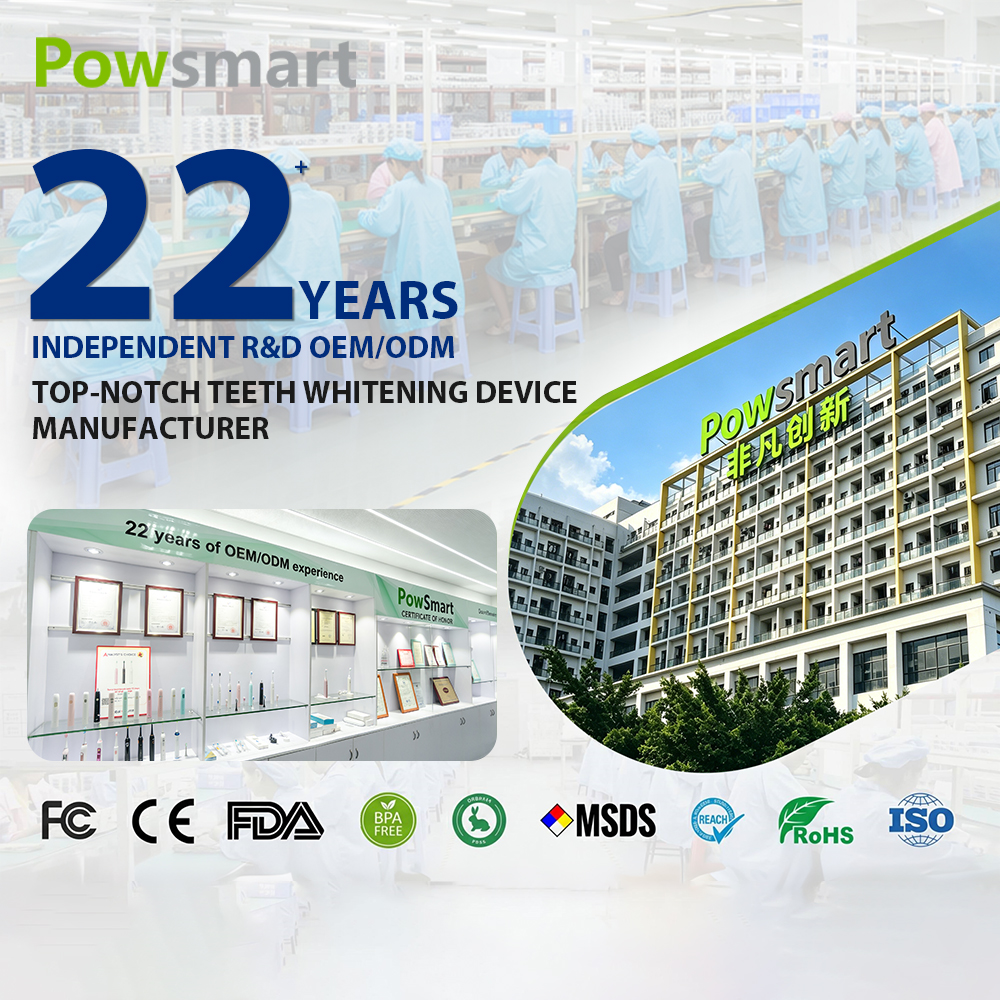
Need a manufacturer experienced in clinically validated whitening products?
Contact us to explore our OEM/ODM capabilities, from formula development to full-kit production. Let’s create innovative oral care solutions that shine—clinically and commercially.https://www.powsmart.com/
.jpg)
