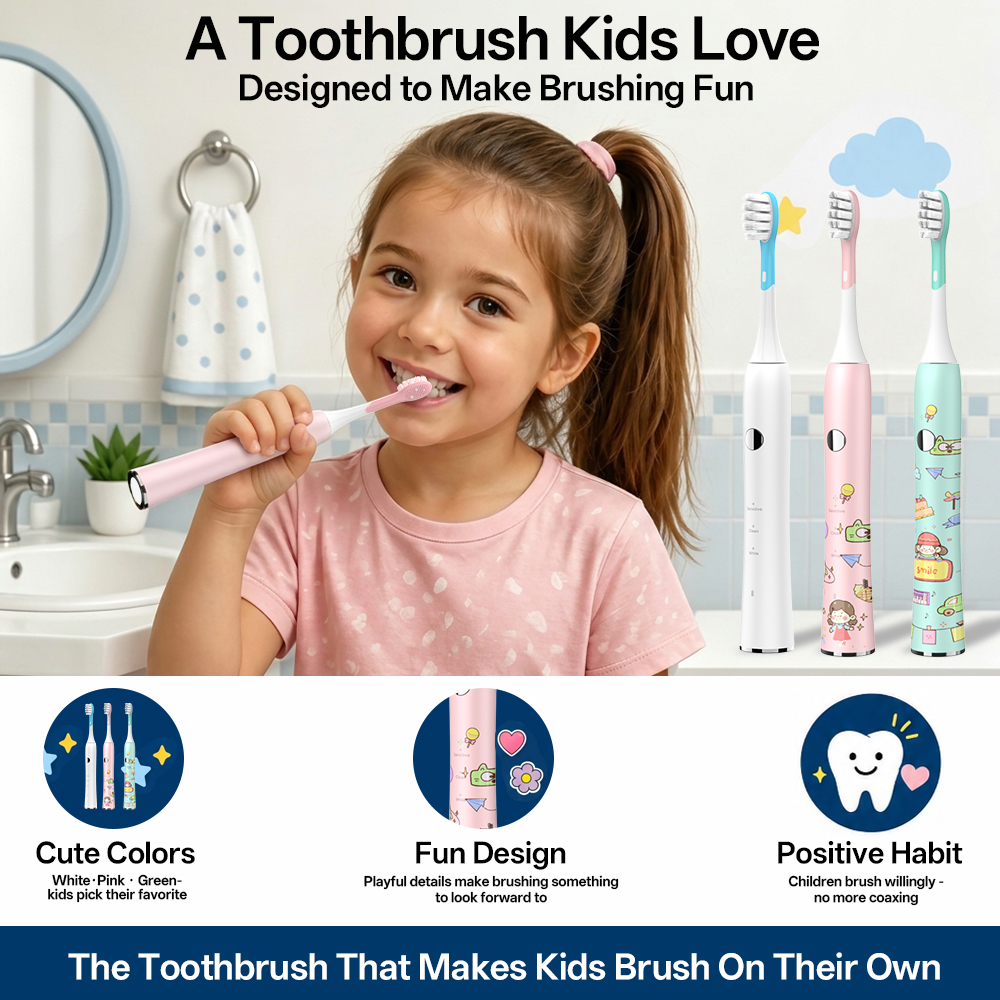
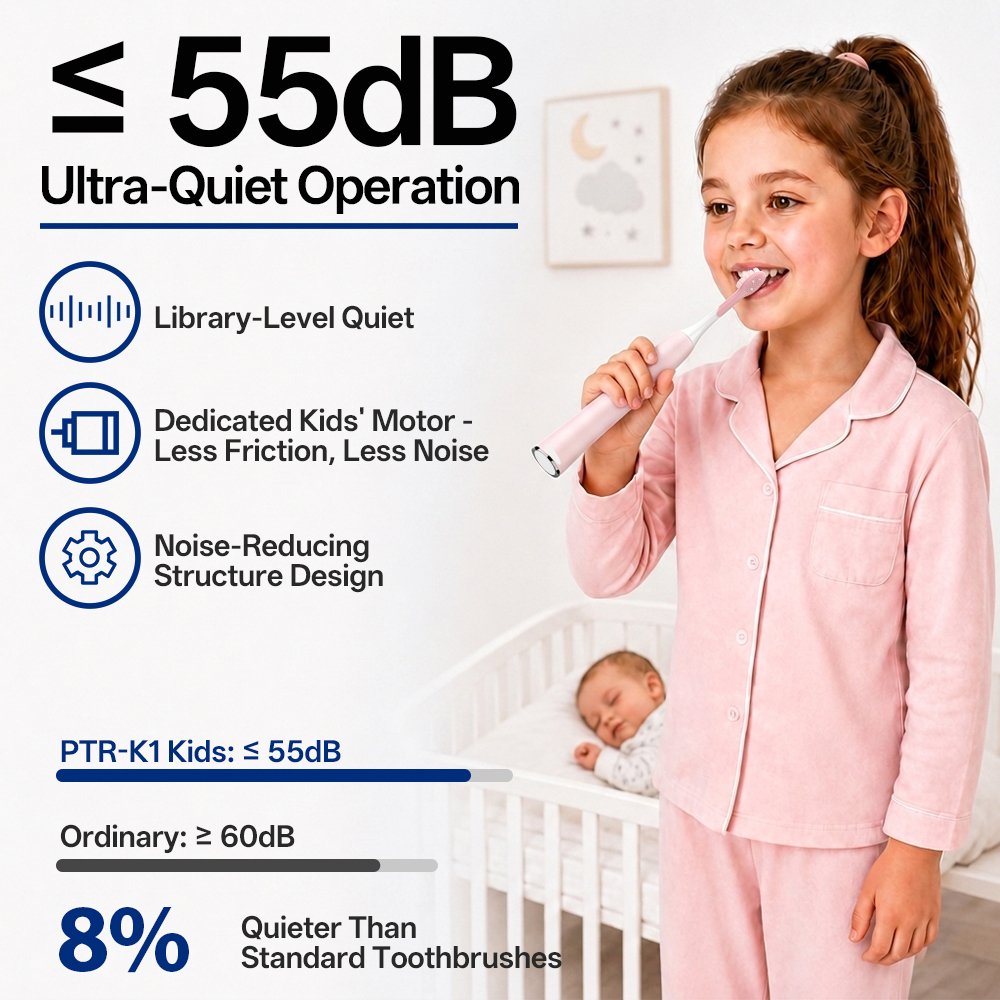
Kids Electric Toothbrush OEM and ODM Supplier for International Oral Care Brands
Developing a children’s electric toothbrush range requires coordination between product selection, manufacturing specifications, brand positioning, and destination-market requirements. For oral care companies and distributors, working with a suitable OEM or ODM supplier can provide a route to expanding an existing product portfolio or establishing a new private label collection.
POWSMART is an electric toothbrush manufacturer based in Shenzhen, China, offering OEM manufacturing, ODM product development, and private label solutions for international businesses.
Understanding OEM and ODM for Kids Electric Toothbrushes
OEM and ODM describe different approaches to product sourcing, although their exact scope varies by manufacturer.
OEM manufacturing generally involves producing products according to specifications agreed with the buyer. The project may focus on an existing model, approved modifications, branding, packaging, and defined quality requirements.
ODM product development may involve using a manufacturer’s existing design and development capabilities to select or develop a suitable product. The available development scope depends on the manufacturer’s capabilities and the requirements of the project.
For businesses entering the children’s electric toothbrush category, the important consideration is whether the supplier can support the actual product specifications, customization needs, and commercial objectives.
Selecting Products for a Children’s Oral Care Collection
The product range should reflect the target customer group and the intended sales channel. Buyers may evaluate kids electric toothbrushes alongside manual children’s toothbrushes and compatible replacement brush heads for supported electric models.
Product selection may involve considerations such as:
- Intended age group and product suitability.
- Brush-head dimensions and compatibility.
- Available operating features and technical specifications.
- Product colors and exterior design options.
- Packaging format and brand presentation.
- Product documentation and destination-market requirements.
All specifications should be confirmed for the actual model. Features available on one toothbrush should not be assumed to apply to another product in the same category.
Customization and Brand Development
For private label brands, product presentation helps establish a consistent identity across packaging, online listings, and retail distribution.
Depending on the selected model and agreed manufacturing scope, customization discussions may include logo placement, available colors, exterior finishes, packaging artwork, and product identification.
Buyers should confirm which changes are supported and whether they affect minimum order quantities, production costs, lead times, testing, or technical documentation.
Brand owners should also ensure that trademarks, illustrations, and other design assets are authorized for commercial use. Product descriptions and packaging claims should accurately reflect the verified specifications of the final product.
Manufacturing Coordination and Quality Requirements
A clear agreement between the buyer and manufacturer is essential to maintaining consistency throughout a product project.
Before production, the parties should establish the approved model, technical specifications, customization scope, packaging artwork, inspection criteria, and responsibilities for relevant documentation.
For repeat orders, buyers should clarify how changes to materials, components, product specifications, or packaging will be reviewed and approved. The delivered products should remain consistent with the agreed requirements, subject to any formally approved changes.
Quality expectations should be defined in measurable terms where possible. General statements about quality are less useful than clear specifications and agreed acceptance criteria.
Wholesale Supply for Importers and Distributors
International importers and distributors must evaluate manufacturing arrangements alongside the commercial requirements of their own markets.
Important factors may include order quantities, quoted pricing, packaging costs, production schedules, shipping terms, payment conditions, and the availability of relevant documentation.
The full sourcing cost may also include transportation, customs duties, taxes, inspection, and local distribution expenses, depending on the transaction and destination.
Businesses planning to supply multiple retailers should consider whether the proposed product assortment, packaging, and commercial terms align with their distribution strategy. Actual supply capacity and order conditions should be confirmed directly with the manufacturer.
Compliance for Children’s Electric Toothbrushes
Children’s electric toothbrushes may be subject to product safety, labeling, and conformity requirements that differ by destination market. Electric models can involve additional considerations relating to batteries, charging, electrical safety, and electromagnetic compatibility.
Before importing, businesses should determine the requirements applicable to the specific product and country.
Relevant checks may include:
- Intended-age information and appropriate warnings.
- Verified product materials and technical specifications.
- Applicable testing and conformity documentation.
- Required instructions and local-language labeling.
- Product traceability and quality-control records.
- Evidence supporting advertised safety and performance claims.
Compliance should be assessed for the final product configuration. Buyers should not assume that documents for another model or market automatically satisfy their own obligations.
Frequently Asked Questions
When should a business choose OEM manufacturing?
OEM manufacturing may be suitable when the buyer has defined product specifications and wants a manufacturer to produce according to an agreed scope.
When is ODM product development appropriate?
ODM may be appropriate when the buyer wants to work with the manufacturer’s existing design or product development capabilities. The available scope depends on the supplier and project.
Can OEM or ODM projects include private label branding?
Branding and private label arrangements may be included when supported by the selected product and agreed commercial terms. Buyers should confirm available options before proceeding.
What information is useful when contacting a manufacturer?
Buyers should provide the destination market, intended product category, estimated order quantity, branding requirements, packaging preferences, and known compliance requirements.
Does product customization affect compliance?
It can. Changes to components, materials, electrical characteristics, labeling, or product design may affect testing and documentation requirements. The impact should be evaluated before production.
Explore Kids Electric Toothbrush Manufacturing with POWSMART
POWSMART offers OEM manufacturing, ODM product development, and private label solutions for electric toothbrush products serving international markets.
For brands, importers, distributors, and retailers considering a children’s electric toothbrush project, the sourcing discussion should begin with the target market, intended product specifications, customization requirements, and expected order volume.
Visit POWSMART Toothbrush Markets or explore the official POWSMART website for further product and manufacturing information.
POWSMART — Electric Toothbrush OEM, ODM, and Private Label Manufacturing for Global Oral Care Brands.