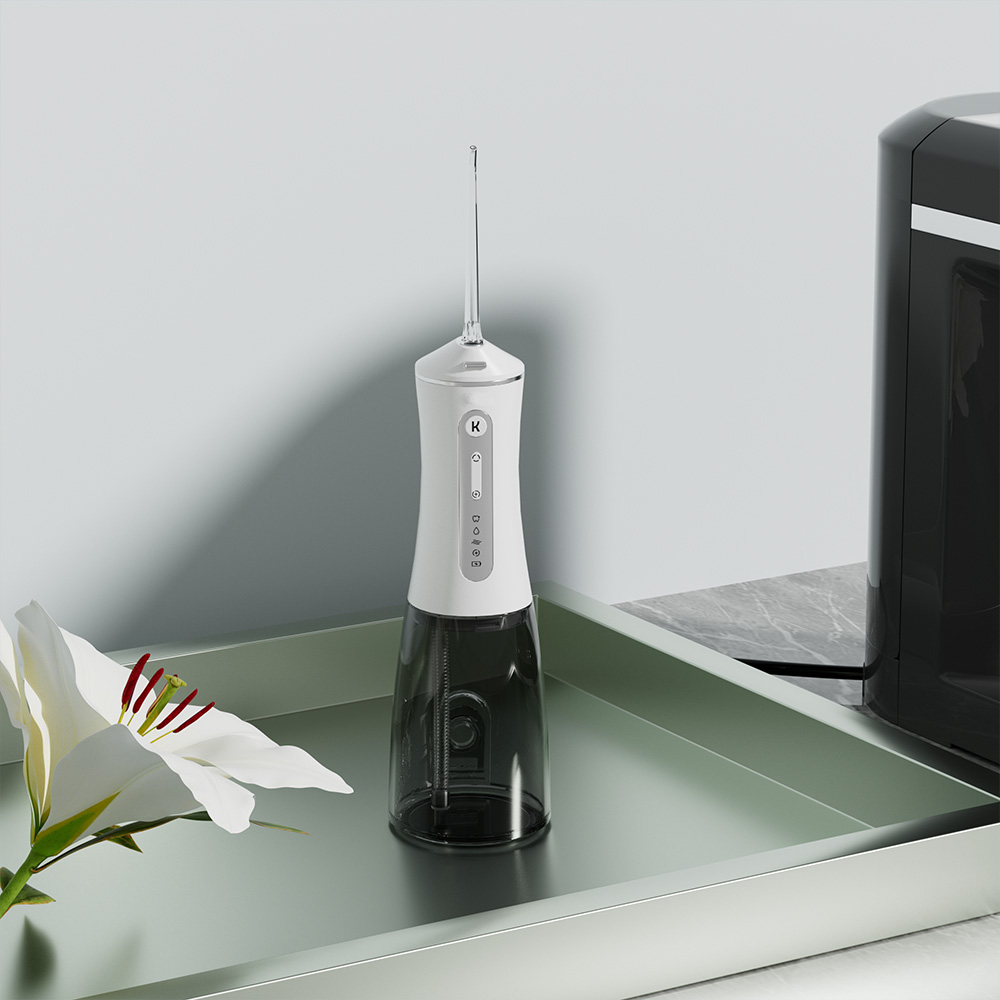
You know the drill: Floss every day for better oral health. But some people get better results with a water flosser than with string dental floss. And, if you think there’s a chance it might help you actually keep up this daily habit, you should give water flossing a shot, dentists say.
The principle and function of water flosser
A dental flosser, also known as a water flosser, is a tool that uses high-pressure water to clean your mouth. Its working principle is to use high-pressure water jets to impact the gap between teeth and gums to remove food residue and plaque. It cleans more deeply between teeth than traditional floss and reduces gum bleeding.
Market status and consumer groups
In recent years, the sales of water flosser in the domestic market have increased year by year, and they are especially popular among middle- and high-income people who are concerned about oral health. Many people buy water flosser because of advertising that emphasizes their cleaning effectiveness and protective effects on teeth and gums. However, some consumers believe that the price of water flosser is relatively high and the effect is not significantly different from traditional dental floss, so they question whether it is worth buying.
Evaluation of the actual effectiveness of oral irrigators
Multiple studies have shown that oral irrigators have certain advantages in cleaning between teeth and reducing gum inflammation. Especially for patients wearing braces, dental implants, and those with tight gaps between teeth or sensitive gums, water flossers can effectively reduce the discomfort caused by traditional flossing. However, for ordinary people, the effectiveness of water flosser does not have significant advantages over traditional dental floss.
Is it worth investing in a water flosser?
Whether a water flosser is an “IQ tax” mainly depends on personal needs. If you have braces, dental implants, or gum problems, an irrigator may be an oral health tool worth investing in. However, if your oral health is in good shape and you can meet your daily cleaning needs with traditional flossing, the high cost of an oral irrigator may not be worth it. If you’re thinking of starting your own brand water flosser business, feel free to contact us.
Summarization
Water flossers are not entirely “IQ tax”, and their effectiveness varies from person to person. For consumers with specific needs, water flosser can indeed bring better oral cleaning results. But for ordinary users, traditional dental floss is enough for daily oral cleaning. Therefore, before purchasing, consumers should weigh based on their own needs and avoid blindly following the trend.
.jpg)
