In the field of professional oral care devices, user safety incidents such as gingival burns combined with cervical hypersensitivity are emerging as an urgent concern, especially in the whitening and deep-cleaning product categories. Manufacturers may underestimate the combined impact of thermal, chemical, and mechanical stress on delicate gingival and cervical areas. But when burns and hypersensitivity appear together, they signal a systemic design or process flaw that must be addressed. How urgent is this issue—and how can product design prevent it?
What Are Gingival Burns and Cervical Hypersensitivity?
Gingival burns refer to tissue damage along the gums, typically caused by:
- Excessive heat from whitening lights or ultrasonic devices
- Chemical irritation from concentrated bleaching gels
- Friction burns from improperly shaped applicators or brush heads
Cervical hypersensitivity involves intense sensitivity in the tooth neck region (cementoenamel junction), often triggered by:
- Exposure of dentin due to over-brushing or chemical erosion
- Thermal stimulation from overly hot devices
- Mechanical abrasion near the gumline
When these two issues occur simultaneously, user discomfort and potential oral injury escalate rapidly.
Why Their Combined Occurrence Is More Than Coincidence
Experiencing gingival burns and cervical hypersensitivity together is not random:
- Devices producing localized heat (LEDs, ultrasonic tips) can damage both soft tissue and sensitive enamel
- Aggressive whitening gels weaken cervical enamel while also irritating gum tissue
- Incorrect applicator design may cause mechanical overpressure at both the gumline and cervical area
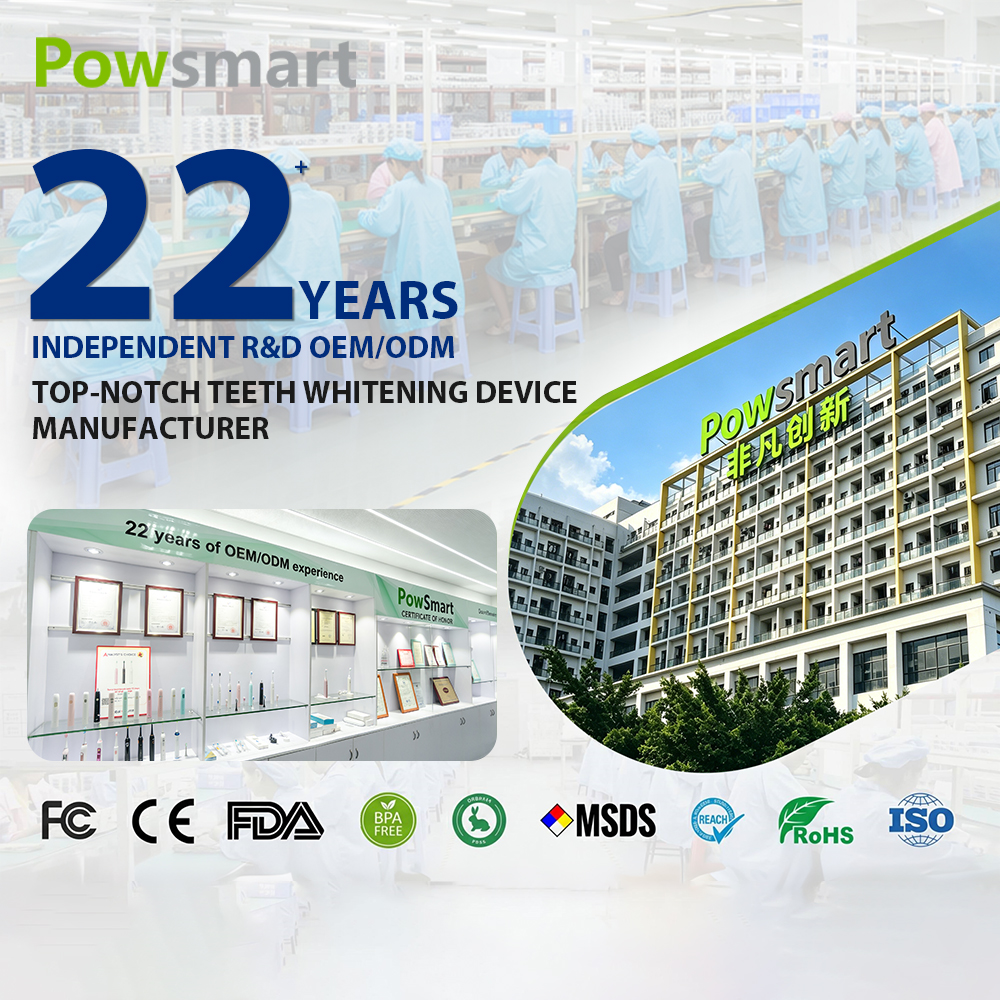
Therefore, these two complaints often indicate a shared design flaw—typically excessive thermal output, poor gel formulation, or poorly shaped delivery heads. Company web:https://www.powsmart.com/product/electric-toothbrush/
Key Risk Factors in Device Design and Materials
Common risk factors contributing to combined injuries include:
- High-output whitening lights without thermal control sensors
- Overly concentrated peroxide gels in whitening devices
- Brush head overhangs or sharp-edged applicator designs
- Lack of adaptive pressure sensing in sonic toothbrushes
- Poor sealing, allowing chemical leakage into gumline regions
Manufacturers must recognize that tissue safety depends on more than formulation or output specs—it requires full-system safety integration.
Engineering Solutions: Prevent Burns and Hypersensitivity at Source
Effective design changes to prevent gingival burns and cervical hypersensitivity include:
- Incorporate thermal regulation modules in whitening devices to auto-limit tip temperature
- Formulate pH-balanced whitening gels with controlled peroxide release
- Redesign applicator tips with rounded edges and soft materials (e.g., silicone)
- Use smart pressure sensors to limit brushing force around cervical margins
- Introduce cooling periods in LED operation cycles to avoid overheating
Applying these design principles at R&D level can proactively eliminate root causes.
Quality Control Measures to Detect and Prevent Risks
In mass production, manufacturers should implement:
- Thermal imaging tests on all light-based oral care devices
- Gel diffusion simulations to ensure no leakage onto gingiva
- Simulated-use brushing trials with pressure mapping in cervical zones
- Real-user testing protocols focusing on perceived heat, pressure, and irritation
- Cytotoxicity and irritation testing on all gels and applicators under ISO 10993 standards
These controls help detect risks that might otherwise bypass traditional mechanical testing.
Branding Safety as a Value Proposition
By eliminating the combined risk of gingival burns and cervical hypersensitivity, manufacturers can:
- Brand their products as “Clinically Safe for Gums and Sensitive Necks“
- Promote “Thermal-Safe Whitening™” or “Pressure-Controlled Brushing” technologies
- Offer extended safety warranties for professional-grade devices
- Reduce return rates due to discomfort or injury complaints
- Build end-user and professional trust in high-risk treatment categories
In professional B2B sales, safety-focused certifications and test reports can differentiate products in competitive tenders or regulatory audits.
Conclusion
Yes, when gingival burns occur alongside cervical hypersensitivity, it signals an urgent systemic problem—one that requires immediate intervention at the design and QA levels. By understanding the link between thermal, chemical, and mechanical stresses, manufacturers can protect users more effectively and transform safety into a powerful market differentiator. Contact us
.jpg)
.jpg)
.jpg)
