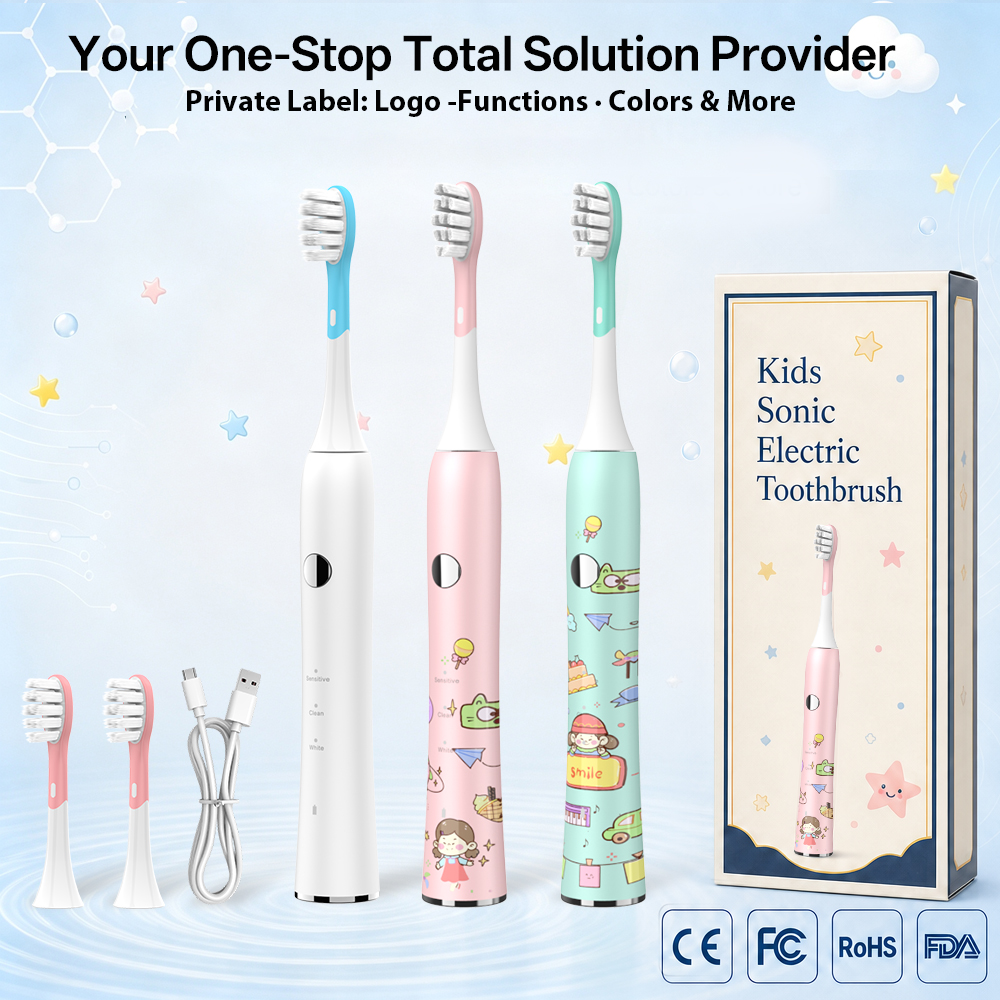
Electric Toothbrush Replacement Cycle: How Brands Can Plan for Repeat Purchases and Long-Term Customer Value
An electric toothbrush purchase is not necessarily a one-time transaction. After buying the handle, customers may need replacement brush heads, compatible accessories, and eventually a replacement device. These different purchasing events create opportunities for electric toothbrush brands to build lasting customer relationships.
However, repeat purchases do not happen automatically. Customers must understand when components need replacing, know which products are compatible with their toothbrush, and be able to find the correct accessories through convenient sales channels.
For electric toothbrush manufacturers, importers, distributors, and private-label brands, understanding the replacement cycle helps connect product design, accessory planning, inventory management, and customer retention.
Understanding the Electric Toothbrush Replacement Cycle
The replacement cycle consists of several distinct stages in the customer’s ownership experience.
Initial purchase: The customer chooses an electric toothbrush based on product features, price, brand preference, and availability.
Regular use: The customer learns how the toothbrush fits into daily routines and evaluates its performance, comfort, and ease of maintenance.
Brush-head replacement: The customer needs compatible replacement heads as the original brush head wears out or reaches its recommended replacement interval.
Accessory replenishment: Depending on the product, the customer may purchase additional brush heads, travel accessories, or other compatible items.
Device replacement: Eventually, the customer may need a new handle because of wear, damage, changing requirements, or a preference for a different product.
These stages have different purchasing triggers. Brush-head replacement is generally a recurring maintenance need, while replacing the entire device depends on the product’s condition and the customer’s circumstances.
Brands should not treat every stage as having the same frequency or assume that all customers will follow an identical cycle.
Why Replacement Brush Heads Matter to the Business Model
Replacement brush heads can extend the commercial relationship beyond the initial toothbrush sale.
A customer who has already purchased a compatible electric toothbrush may prefer to buy replacement heads from the same brand, provided the products remain available, suitable, and competitively positioned.
This creates several practical considerations for product planning.
Compatibility Must Be Clear
Customers need to know which replacement heads fit their specific toothbrush model.
If compatibility information is incomplete, buyers may order the wrong accessory, return products, or switch to another supplier.
Brands should maintain accurate model-to-accessory compatibility information across packaging, product pages, instruction materials, and distributor catalogs.
Compatibility should be based on verified product specifications rather than assumptions that brush heads from the same brand are interchangeable.
Availability Influences Repeat Purchasing
A customer may be satisfied with a toothbrush but choose another product if compatible replacement heads are difficult to obtain.
Brands should therefore consider accessory availability when planning distribution, not only when launching the initial device.
Replacement heads may require separate forecasts, inventory targets, product identifiers, and replenishment arrangements. Demand planning should account for the installed base of toothbrushes already in customers’ hands, as well as new device sales.
Accessory Quality Affects Brand Perception
Replacement products are part of the overall ownership experience. Differences in fit, usability, and consistency can influence how customers perceive the original toothbrush brand.
Brands should establish appropriate specifications and quality checks for replacement heads and confirm that accessory descriptions accurately reflect the product supplied.
Estimating Replacement Demand From the Installed Base
A useful way to plan replacement-head demand is to estimate how many active toothbrushes are already being used in the market.
The installed base represents devices that remain in use, rather than all devices ever sold.
A simplified planning model is:
\text{Active Devices}
\times
\text{Heads Used per Device per Year}
]
For example, suppose a brand estimates that 20,000 toothbrushes remain active in a particular market and assumes that each device requires an average of eight replacement heads annually.
The resulting illustrative estimate would be 160,000 replacement heads per year.
This is a planning example, not a market benchmark or a universal replacement recommendation. Actual demand depends on the product’s recommended replacement interval, the number of heads used per device, customer compliance, purchasing behavior, and the availability of compatible products.
Brands should also distinguish between replacement heads used and replacement heads purchased. Customers may buy multi-packs, hold additional inventory, or purchase from competing suppliers.
For more reliable forecasts, businesses can compare the installed-base estimate with historical accessory sales, distributor orders, repeat-purchase data, and observed customer behavior.
How Product Bundles Influence the Replacement Cycle
The contents of the initial package affect when customers need to purchase additional brush heads.
A toothbrush sold with one brush head creates a different replenishment pattern from a package containing several replacement heads.
Brands can consider several package structures:
- Starter package: A toothbrush with the essential accessories required to begin using it.
- Multi-head package: A toothbrush supplied with additional brush heads to reduce the need for an immediate separate purchase.
- Family-oriented package: Multiple toothbrushes or brush heads arranged for households with several users.
- Accessory replenishment package: Replacement heads sold separately or in multi-packs for existing owners.
Each structure serves a different commercial purpose.
A larger initial package may increase the purchase price while postponing the next accessory transaction. A smaller package may lower the entry price but require customers to purchase replacements sooner.
The best option depends on the target customer, channel economics, product positioning, and local purchasing behavior.
Replacement Timing and Customer Communication
Customers need clear guidance about maintaining their electric toothbrushes.
For brush heads, brands should communicate the replacement interval recommended for the specific product and explain which signs may indicate that a brush head needs replacing sooner.
Replacement guidance should follow the manufacturer’s instructions and applicable product recommendations. Brands should avoid presenting a single interval as universally appropriate for every brush head or every user.
Communication can be provided through instruction manuals, packaging, product pages, customer-support materials, or optional reminders.
Where reminder systems are offered, brands should ensure that the timing reflects the product’s guidance and that customers can manage their communication preferences.
The objective is to help customers maintain the product correctly, not to encourage unnecessary purchases.
Planning Inventory for Devices and Replacement Accessories
Device demand and replacement-head demand follow different patterns.
New toothbrush sales may be influenced by promotions, seasonal purchasing, product launches, and retail expansion. Replacement-head demand is more closely related to the number of active devices, usage patterns, replacement guidance, and the availability of compatible accessories.
Forecasting both categories through the same assumptions can result in stock imbalances.
A practical inventory plan should track:
- Active toothbrush models and estimated installed base
- Compatible replacement-head models
- Historical accessory sales and replenishment patterns
- Packaging quantities and multi-pack configurations
- Distributor inventory and product availability
- Product changes that affect accessory compatibility
- Slow-moving or discontinued accessories
Brands should also plan for product transitions. If a new toothbrush model changes the brush-head connection or accessory specification, existing customers may still need replacement heads for the older model.
Maintaining accessory availability for supported devices can help protect customer experience and brand trust.
Measuring the Value of Repeat Purchases
Repeat-purchase analysis helps brands understand whether their product range supports continued customer engagement.
Useful indicators include:
Accessory attachment rate: The proportion of toothbrush purchases associated with replacement heads or relevant accessories, measured over a clearly defined period.
Repeat-purchase rate: The proportion of customers who make another qualifying purchase within a specified timeframe.
Time to first replacement purchase: The time between the initial toothbrush purchase and the first subsequent accessory order.
Accessory availability: The extent to which compatible replacement products are available through intended sales channels.
Return and complaint rates: The frequency of issues involving compatibility, product quality, or incorrect accessory selection.
These indicators should be interpreted carefully. A low repeat-purchase rate may reflect long-lasting inventory, purchases from other retailers, or incomplete customer tracking rather than dissatisfaction.
Likewise, a high accessory sales volume does not by itself demonstrate customer loyalty. Reliable interpretation requires clear measurement definitions and sufficient supporting data.
What International Brands Should Discuss With Their Manufacturer
For companies using OEM, ODM, or private-label manufacturing, replacement planning should be included in product development and sourcing discussions.
The product brief should identify the intended toothbrush models, compatible brush heads, accessory specifications, packaging quantities, and expected market requirements.
Brands should also clarify how product revisions will affect compatibility, whether older accessories will remain available, and how model identification will be communicated to distributors and customers.
These decisions are especially important when a brand operates several toothbrush models across different markets. Without clear product-to-accessory records, inventory complexity can increase and customers may find it difficult to identify the correct replacement product.
A coordinated approach allows the brand to plan the initial device launch and the ongoing accessory supply as parts of the same commercial system.
Conclusion
The electric toothbrush replacement cycle connects the initial product purchase with maintenance, accessory replenishment, and eventual device replacement.
Brands that understand these stages can make better decisions about package contents, replacement-head availability, inventory forecasts, customer communication, and long-term product support.
For international electric toothbrush businesses, the goal is to make the ownership experience straightforward: customers should understand how to maintain their toothbrush, identify compatible accessories, and obtain the products they need.
Explore the POWSMART toothbrush markets page for further information about electric toothbrush markets and sourcing considerations. You can also visit POWSMART to learn more about its electric toothbrush manufacturing and OEM/ODM business.
A well-planned replacement strategy does more than create repeat-purchase opportunities. It helps brands support existing customers while building a more predictable approach to accessory demand and long-term product availability.