Electric Toothbrush Market in Switzerland | OEM, ODM and Wholesale Manufacturing — POWSMART
1. Switzerland Electric Toothbrush Market Overview
Switzerland represents a potential market for electric toothbrush brands, importers, wholesalers, distributors, retailers, and e-commerce businesses seeking to develop oral care product offerings. Businesses targeting Swiss customers need to consider local consumer expectations, distribution channels, pricing strategies, language requirements, and the regulatory obligations associated with placing electrical oral care products on the market.
For international buyers, sourcing electric toothbrushes is a commercial process that connects product selection, supplier evaluation, brand development, inventory planning, and distribution. A suitable manufacturing partner can help businesses establish a product range that fits their intended customers and sales channels.
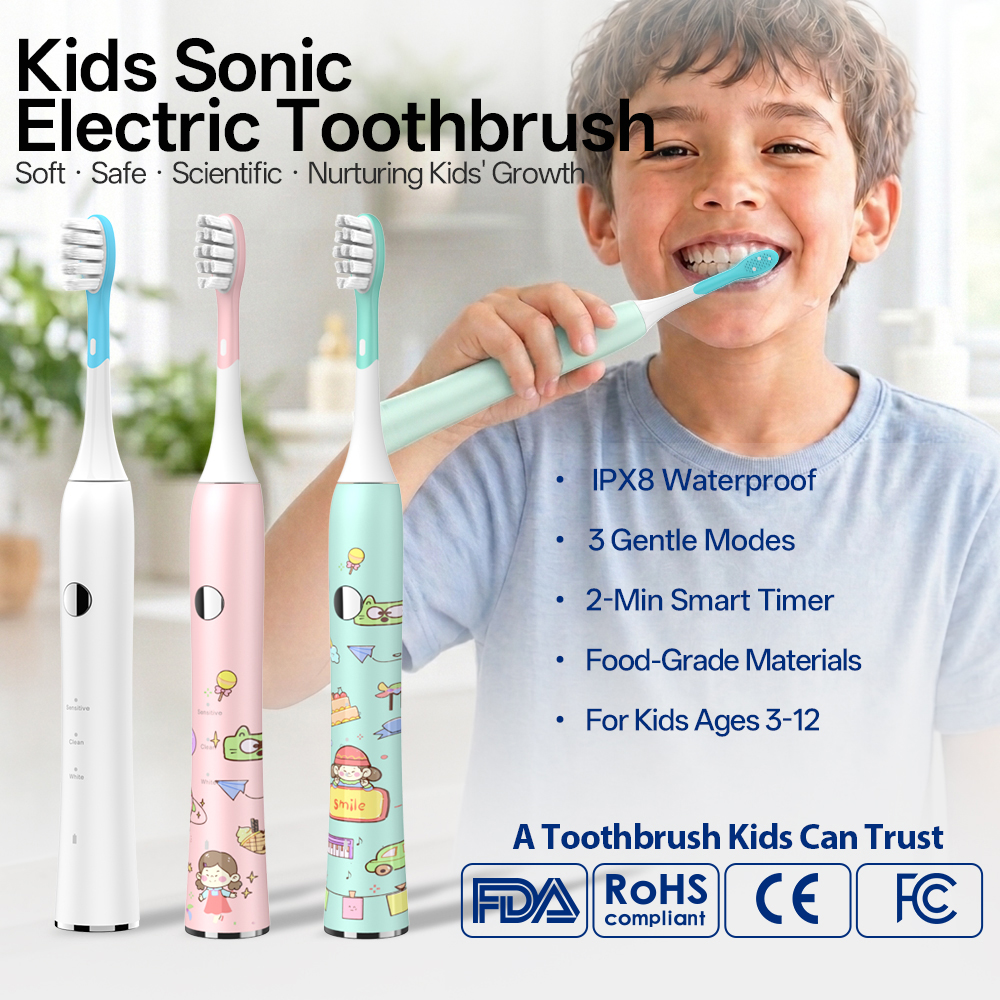
POWSMART is a Shenzhen, China-based electric toothbrush manufacturer offering OEM, ODM, and private label manufacturing services for international brands, importers, wholesalers, distributors, retailers, and e-commerce companies.
Swiss businesses can explore these manufacturing options when developing a new oral care brand, expanding an existing retail assortment, or sourcing electric toothbrushes for wholesale distribution.
2. Key Participants in the Swiss Electric Toothbrush Supply Chain
The Swiss electric toothbrush supply chain involves several types of commercial participants, each with different sourcing requirements.
Importers
Importers source electric toothbrushes from international manufacturers and arrange supply for the Swiss market. They may serve retailers, e-commerce businesses, specialist oral care sellers, or regional distribution partners.
Their sourcing priorities commonly include product specifications, supplier reliability, import costs, product documentation, packaging, and repeat-order planning.
Wholesalers
Wholesalers purchase products for resale to business customers. Their requirements may include consistent product configurations, competitive purchasing terms, practical order quantities, and access to complementary accessories.
A wholesaler may also need to coordinate different product variants for multiple customer accounts.
Distributors
Distributors connect manufacturers with retail networks and commercial buyers. Depending on their business model, they may support product introductions, account management, inventory coordination, and market-specific product information.
For distributors, a clear supplier relationship can help coordinate product launches and future replenishment.
Retailers and Specialist Stores
Retailers select electric toothbrushes based on their target customers, assortment strategy, retail price positioning, packaging, and supplier terms. Specialist oral care sellers may also require detailed product specifications and compatible replacement brush heads.
E-commerce Businesses
Online retailers and digital brands can offer electric toothbrushes through their own websites or online marketplaces. Their sourcing decisions may emphasize product differentiation, brand presentation, accurate online listings, and accessory availability.
Private Label Brands
Private label businesses work with manufacturers to sell products under their own brand identities. They may begin with a limited product range and expand as their distribution and customer base develop.
Understanding these participants helps manufacturers and buyers identify suitable commercial arrangements instead of treating every customer as a conventional wholesale account.
3. Electric Toothbrush Product Categories for Switzerland
Swiss buyers can structure an assortment around different customer requirements and retail price points.
Sonic Electric Toothbrushes
Sonic electric toothbrushes can be included in everyday oral care collections and premium product ranges. Buyers may compare available models according to their design, operating modes, charging arrangements, included brush heads, and packaging options.
For a brand owner, the objective is to choose a product configuration that supports the intended positioning rather than adding features without a clear commercial purpose.
Rechargeable Electric Toothbrushes
Rechargeable electric toothbrushes can form the core of a retail or e-commerce assortment. Buyers should assess product specifications, charging methods, included accessories, packaging, and compatibility with replacement brush heads.
For wholesale customers, consistent specifications are important when supplying several retail accounts or maintaining product listings over time.
Replacement Brush Heads
Replacement brush heads are an important complementary category for businesses selling electric toothbrushes. They can help retailers and online stores provide a more complete assortment.
Before sourcing replacement heads, buyers should verify model compatibility, available variants, packaging quantities, and future supply arrangements. Clear compatibility information also helps downstream customers select the correct replacement product.
Entry-Level and Premium Products
An assortment can include products positioned at different retail price points. Entry-level models may target customers seeking an accessible everyday product, while premium models may emphasize design, presentation, and available features.
Swiss buyers should determine the appropriate balance using their own customer research, retail relationships, and distribution strategy rather than assuming that one product category will suit every sales channel.
4. Electric Toothbrush Distribution Channels in Switzerland
The choice of distribution channel affects the product range, purchasing requirements, packaging, and commercial relationship.
Pharmacies and Drugstores
Pharmacies and drugstores are potential channels for oral care products. Businesses seeking these accounts should evaluate the purchasing requirements of individual retail groups and ensure that their product information, packaging, and supply arrangements match the intended channel.
Distributors may need to prepare a clear product catalog and establish how repeat orders will be handled.
Supermarkets and General Retail
General retailers may consider electric toothbrushes as part of their personal care assortment. Their purchasing decisions can depend on target retail prices, shelf space, packaging presentation, product differentiation, and supplier terms.
Manufacturers and wholesalers should understand the retailer’s assortment requirements before proposing models and order quantities.
E-commerce and Online Marketplaces
Online sales provide another route for Swiss businesses to introduce electric toothbrush products. Sellers can organize their product range by model, price segment, design, charging arrangement, and accessory compatibility.
For private label brands, consistent product names, accurate specifications, clear instructions, and coordinated packaging can support a coherent online customer experience.
Online sellers should ensure that product descriptions accurately reflect the actual product and avoid unsupported performance or health claims.
Importers and Regional Distributors
Importers and distributors may supply multiple retailers or online businesses. Their needs can include coordinated product specifications, clear wholesale terms, manageable minimum order quantities, and reliable replenishment planning.
Businesses considering sales beyond Switzerland should evaluate the requirements of every destination market independently. Selling into neighboring countries may involve additional language, labeling, regulatory, and commercial considerations.
5. Wholesale Electric Toothbrush Sourcing in Switzerland
A sound sourcing decision should account for the complete purchasing relationship, not only the quoted unit price.
Product Specifications
Before placing an order, buyers should document the model, product configuration, charging arrangement, included accessories, brush head compatibility, packaging, and any requested customization.
The approved specification should serve as the reference for sample evaluation and commercial production. Changes should be confirmed before they are implemented.
Minimum Order Quantities
Minimum order quantities affect the cost and feasibility of introducing a product range. An online seller may begin with a limited assortment, while a distributor serving multiple accounts may require larger quantities.
Buyers should confirm model-specific minimums and clarify whether different colors, customized packaging, or alternative configurations affect order quantities.
Pricing and Total Landed Cost
Wholesale quotations should be assessed alongside the additional costs associated with supplying products to Switzerland. Depending on the transaction, these may include transportation, insurance, customs-related charges, import taxes, warehousing, distribution, and packaging.
When comparing suppliers, buyers should confirm that the quoted products have equivalent specifications and that the commercial terms cover the same components and delivery arrangements.
Production and Delivery Planning
A delivery schedule may depend on product selection, sample approval, packaging artwork, production scheduling, inspection, and shipping arrangements.
Buyers should confirm the expected timeline and establish how changes to order quantities or packaging may affect delivery. Businesses supplying multiple retail accounts should also plan repeat orders around their expected sales and inventory requirements.
Sample Evaluation and Quality Control
Samples provide an opportunity to compare the proposed product against the buyer’s expectations before committing to a commercial order.
Evaluation may cover appearance, usability, packaging, included components, product labeling, and compatibility information. Buyers should agree on the relevant inspection criteria and how discrepancies will be handled.
6. OEM Electric Toothbrush Manufacturing for Swiss Brands
OEM manufacturing allows a business to sell electric toothbrushes under its own brand using an agreed product specification.
A Swiss importer, retailer, or oral care company may select a suitable product model and work with a manufacturer on brand presentation and agreed customization. Depending on the selected model, this may involve logo application, available colors, packaging design, or accessory selection.
An OEM project should establish the following requirements:
- Target customers and intended distribution channels.
- Selected electric toothbrush model and product configuration.
- Branding guidelines and logo files.
- Packaging artwork and required language information.
- Included brush heads and compatible replacement accessories.
- Minimum order quantities and commercial terms.
- Sample approval and production inspection requirements.
- Expected delivery schedule and repeat-order arrangements.
Switzerland’s multilingual environment makes packaging and consumer information an important part of market preparation. German, French, and Italian may be relevant depending on the intended sales area, product, and applicable requirements. Buyers should verify the specific language obligations for their products and distribution plans.
Documenting these requirements at the beginning of an OEM project helps align the buyer’s commercial expectations with the manufacturer’s production scope.
7. ODM Electric Toothbrush Manufacturing Options
ODM manufacturing can help a business develop a differentiated product offering using an existing design or manufacturing platform as the starting point.
Depending on the available model, an ODM project may support selected changes to colors, external appearance, packaging, accessories, or other available product options.
For a Swiss online brand, ODM may provide a way to coordinate product presentation with an established brand identity. For a distributor, it may help create a consistent range across multiple models or price segments.
Before starting an ODM project, buyers should clarify:
- Which customization options are available for the chosen model.
- Whether additional design, development, or tooling charges apply.
- The sample and artwork approval process.
- The final product specification and acceptance criteria.
- Ownership of project-specific designs and materials.
- The process for approving changes and managing repeat orders.
ODM should be treated as a defined manufacturing project. The scope, costs, and schedule depend on the selected product and agreed customization requirements.
8. Private Label Electric Toothbrush Opportunities in Switzerland
Private label manufacturing allows businesses to market products under their own brand while working with an external manufacturing partner.
For Swiss businesses, private label products may support a retail brand, an e-commerce business, a specialist oral care assortment, or a wholesale distribution portfolio.
A practical private label strategy should cover several areas.
Brand Positioning
Define the target customer group and the intended market position. The product may be positioned around everyday oral care, value, premium presentation, travel convenience, or another clearly defined customer need.
Product Selection
Choose products that fit the brand’s intended retail price, sales channel, and customer expectations. A focused assortment can be easier to manage than launching too many models at once.
Packaging and Language Planning
Develop packaging that reflects the brand while addressing applicable labeling and consumer information requirements. Language planning should take place before production artwork is finalized.
Accessory Compatibility
Determine which replacement brush heads and accessories will accompany the main product and which will be offered separately. Compatibility should be clearly documented across the product range.
Inventory and Replenishment
Set realistic opening order quantities and plan for repeat orders. The approach should account for supplier lead times, storage capacity, expected sales, and the costs associated with holding inventory.
Brand and Regulatory Responsibilities
Businesses selling products under their own name or brand should clarify their regulatory responsibilities before launch. Responsibilities depend on the product and the structure of the commercial arrangement.
Private label development works best when brand identity, product selection, packaging, and ongoing supply are planned as connected parts of one business strategy.
9. Swiss Market Compliance and Product Documentation
Businesses intending to place electric toothbrushes on the Swiss market should identify the applicable Swiss requirements and assess whether additional requirements apply to products supplied from or into other markets.
The relevant obligations depend on the product’s characteristics, electrical and electronic components, battery configuration, accessories, intended use, and the role of each business in the supply chain.
Buyers should investigate applicable requirements for electrical safety, electromagnetic compatibility, battery handling, restrictions on hazardous substances where relevant, packaging and waste responsibilities, labeling, and product documentation.
CE marking should not be treated as universal approval for Switzerland. Its relevance depends on the applicable legal framework, and it does not automatically replace Swiss-specific obligations or other requirements associated with placing a product on the market. Buyers should verify the conformity assessment route and documentation required for the specific product.
Language and consumer information also require attention. Depending on the product and applicable rules, instructions, warnings, packaging information, and other required information may need to be available in the relevant languages for the intended market.
Importers and brand owners should clarify responsibilities for technical documentation, conformity assessment, traceability, importer identification, and any environmental obligations that apply to their role.
Documents provided for one toothbrush model should not automatically be assumed to cover another model or a modified configuration. Buyers should confirm that the documentation corresponds to the actual product and intended market.
Because Swiss requirements can differ from those in the European Union, businesses should verify current obligations with appropriate regulatory or compliance professionals before importing or launching a product.
10. Planning an Electric Toothbrush Portfolio for Switzerland
A structured product portfolio helps businesses manage purchasing complexity while addressing different customer requirements.
Start with a Core Range
Select a limited number of electric toothbrush models that match the intended retail price range and distribution channels. Confirm specifications, accessories, packaging, and applicable documentation before committing to the opening order.
Add Replacement Brush Heads
Evaluate whether compatible replacement heads should be available from launch. Establish clear product references and ensure that buyers and customers can identify which replacement products work with each model.
Develop Branded Variations
Once the core assortment has been evaluated commercially, consider additional colors, packaging formats, or product models. Expansion should reflect customer demand and realistic order quantities.
Coordinate Inventory and Repeat Orders
Develop a replenishment plan that connects sales forecasts, available inventory, supplier lead times, and purchasing budgets. This is particularly important for wholesalers and distributors serving several customer accounts.
Prepare for Multilingual Distribution
Determine which languages and product information are required for the intended sales areas. If the business plans to serve customers across Switzerland, packaging and instructions should be evaluated against the applicable requirements for each relevant market area.
Consider Cross-Border Growth
Swiss businesses may also explore sales into neighboring European markets. However, the requirements applicable in Switzerland should not be assumed to be identical to those in the EU or other countries. Each destination market requires its own assessment.
11. How POWSMART Supports Swiss Electric Toothbrush Buyers
POWSMART offers OEM, ODM, and private label electric toothbrush manufacturing services for international businesses.
For Swiss importers, wholesalers, distributors, retailers, and e-commerce brands, a sourcing discussion can begin with the proposed product category, target customer, expected order quantity, branding requirements, and intended distribution channels.
Potential areas of cooperation include:
- Reviewing electric toothbrush models suitable for a proposed assortment.
- Discussing available product configurations and accessories.
- Exploring OEM branding and private label packaging.
- Evaluating available ODM customization options.
- Confirming model-specific minimum order quantities and quotations.
- Coordinating sample evaluation and product specification approval.
- Discussing packaging and language requirements for the intended market.
- Reviewing available product documentation for the proposed project.
Specific product options, prices, lead times, customization scope, and documentation should be confirmed for each project. Buyers should communicate their requirements clearly so that the proposed manufacturing arrangement can be assessed against their business objectives.
Swiss businesses can explore POWSMART’s electric toothbrush market information here:
https://www.powsmart.com/toothbrush/markets/
For additional company and product information, visit:
12. Frequently Asked Questions
Can Swiss companies source electric toothbrushes from POWSMART?
Swiss importers, wholesalers, distributors, retailers, and brands can contact POWSMART to discuss manufacturing and sourcing requirements. Product models, pricing, minimum order quantities, and delivery arrangements should be confirmed for the specific project.
Does POWSMART offer OEM manufacturing for Swiss brands?
POWSMART offers OEM manufacturing services for international customers. Buyers should provide their selected product model, branding requirements, packaging details, expected order quantities, and intended sales channels.
What is the difference between OEM and ODM electric toothbrush sourcing?
OEM generally involves manufacturing according to an agreed product specification with the buyer’s branding and other agreed requirements. ODM uses an existing design or manufacturing platform as the starting point for available customization. The exact scope depends on the selected model and project agreement.
Can a Swiss retailer launch a private label electric toothbrush?
A retailer can discuss a private label project with POWSMART by defining the target customers, product assortment, brand identity, packaging requirements, and expected quantities. Feasibility depends on the selected product and agreed manufacturing terms.
Are replacement brush heads available as part of a wholesale assortment?
Replacement brush heads can be considered alongside the main toothbrush products. Buyers should verify compatibility, available variants, order quantities, and future supply arrangements for the selected models.
What should a Swiss importer verify before ordering?
The importer should review product specifications, minimum order quantities, pricing, samples, packaging, delivery terms, applicable conformity documentation, language information, and regulatory responsibilities. Transportation, import-related costs, and inventory requirements should also be included in the purchasing assessment.
Is CE marking sufficient for selling electric toothbrushes in Switzerland?
Not necessarily. CE marking is relevant under particular legal frameworks and does not automatically establish compliance with every Swiss requirement. Buyers should verify the obligations applicable to the product and the intended commercial arrangement.
Can the same electric toothbrush be sold in Switzerland and the EU?
Potentially, but businesses should separately assess the applicable requirements in Switzerland and each EU destination market. Documentation, labeling, language, environmental, and other obligations may differ.
Conclusion: Electric Toothbrush Wholesale and Manufacturing in Switzerland
Switzerland offers potential opportunities for businesses developing electric toothbrush brands, wholesale supply networks, retail assortments, and online oral care stores.
A successful sourcing strategy should connect product selection with customer requirements, wholesale economics, distribution channels, replacement accessory availability, multilingual product information, and applicable Swiss market obligations.
OEM manufacturing can help businesses sell products under their own branding, while ODM can provide a route to selected product customization. Private label manufacturing can support a coordinated product portfolio for retailers, distributors, and e-commerce businesses.
POWSMART works with international buyers exploring electric toothbrush manufacturing and private label opportunities. Swiss businesses can begin by defining their target product categories, expected order quantities, branding requirements, and intended distribution channels.
Explore POWSMART electric toothbrush market solutions:
https://www.powsmart.com/toothbrush/markets/
Visit the official POWSMART website: