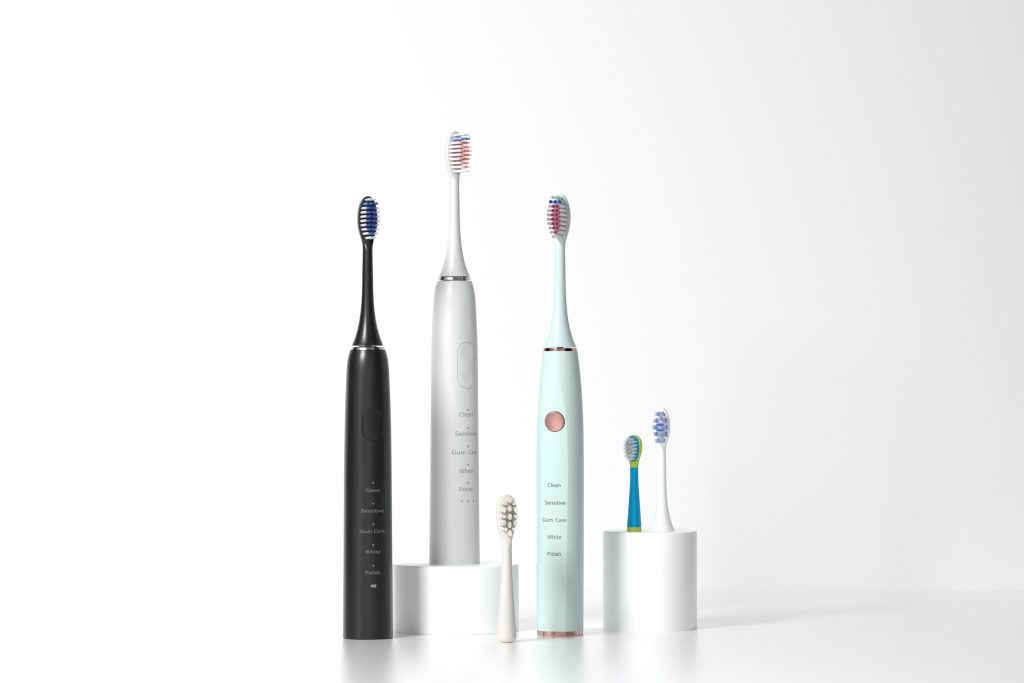
For travelers heading north, packing lists are ruthless about weight and reliability. As a manufacturer, the question isn’t just “should we market it?”—it’s whether an Alaska cold-resistant electric toothbrush meaningfully improves user outcomes, reduces RMAs, and fits retail and outfitter channels. Below are six evidence-driven angles showing when and why a cold-ready brush deserves a place in Alaska travel gear—and how to engineer it without overbuilding.
Environment & use cases — what “Alaska cold-resistant” really needs to survive
First, define the operating envelope. Travelers will store gear in unheated cabins, vehicles, or sled bags; mornings can start below freezing; water access may be limited; and condensation/fog cycles are common. Therefore, an Alaska cold-resistant toothbrush should:
- wake reliably after cold soak (e.g., -10 to -20 °C scenarios),
- keep seals flexible after repeated freeze–thaw, and
- deliver full cleaning cycles with gloved or numbed hands.
When the product maps to these realities, it earns its spot in Alaska travel gear.
Power system & battery chemistry — runtime without cold surprises
Next, cold derates lithium cells. To maintain trustworthy runtime:
- Cell choice: favor LFP for thermal stability, or cold-screened NMC cells with conservative current limits.
- BMS & firmware: temperature-aware charge/discharge, soft-start at low temps, and accurate fuel gauging that doesn’t overpromise.
- Runtime target: 2–3 weeks at 2× daily brushing so users can skip mid-trip charging.
- User UX: a simple “Cold Mode” that slightly reduces amplitude to preserve power when the handle is cold-soaked.
This is where an Alaska cold-resistant label becomes more than marketing.
Sealing, materials & corrosion — snow, melt, and mineral-laden water
Moreover, winter travel means meltwater and grit. Engineer for:
- Ingress protection: IPX7 sealing at minimum; selective PCB conformal coating to guard against moisture wicking.
- Connector strategy: inductive charging or sealed USB-C with gold-plated contacts to avoid freeze–thaw corrosion.
- Elastomers: low-temperature silicone/TPE that keeps compression set under cold.
These measures allow the brush to be rinsed with cold or mineral-rich water without long-term damage—key for Alaska travel gear credibility.
Field charging & accessories — realistic, compact, and quiet
Furthermore, travelers value simple charging that works in remote contexts:
- Input flexibility: USB-C PD (power banks, truck ports) and optional 12 V adapter; avoid proprietary bricks.
- Low-noise inductive puck: silent, low-bulk dock that won’t rattle in cabins.
- Travel case that doubles as stand: vented, drip-safe, and stable on uneven surfaces.
A thoughtful accessory kit turns an Alaska cold-resistant handle into a complete solution rather than a fragile gadget.
Hygiene & head ecosystem — performance in gloves and cramped sinks
Meanwhile, heads and ergonomics must suit winter reality:
- Compact, easy-grip heads: knurled ferrules for gloved swaps; tapered PBT filaments for gentle, efficient cleaning when users brush quickly in the cold.
- Fast-drain geometry: channels that shed water and don’t freeze onto the neck.
- Bundled refills: a “cold kit” (2–3 heads + vented cap) minimizes mid-trip contamination and supports sell-through at outfitters.
This ensures clinical performance without adding bulk to Alaska travel gear.
Validation, warranty & channel fit — proving “cold-resistant” is not hype
Finally, durability must be shown, not claimed:
- Test matrix: cold soak (-20 °C) → immediate operation, freeze–thaw cycles, IPX7 post-cycle, and torque/noise stability checks.
- Battery abuse & storage: prolonged hot-vehicle and cold-cabin storage simulations with capacity retention targets.
- Clear warranty terms: travel-grade coverage that’s simple for guides/outfitters to enact.
- Channel strategy: co-develop with Alaska outfitters, lodges, and RV rental partners; use compact shelf packaging and QR setup to reduce support friction.
Conclusion — Quick decision checklist (6 steps)
To decide if your SKU belongs in Alaska travel gear as an Alaska cold-resistant brush, confirm that you:
- Specify operating temps and gloved-use ergonomics (buttons, grip, haptics).
- Choose cold-tolerant cells with temperature-aware BMS and honest fuel gauges.
- Hit IPX7 with low-temp elastomers and conformal-coated PCBs.
- Ship a compact, USB-C friendly charging kit and a vented travel case.
- Offer a “cold kit” head bundle with fast-drain geometry and easy swaps.
- Publish a cold validation report (soak, freeze–thaw, runtime retention) and align warranty/service with Alaska channels.
Bottom line: If you engineer to these requirements, an Alaska cold-resistant electric toothbrush isn’t just “nice to have”—it’s a trusted, high-margin item that travelers will add to their Alaska travel gear and recommend after the trip. Contact Powsmart
.jpg)
.jpg)

.jpg)
