Every importer and brand owner eventually asks the same question: what actually happens between “send me a sample” and “my order has shipped”? Understanding the electric toothbrush OEM process helps you plan timelines realistically, avoid expensive misunderstandings, and hold your factory to professional standards. Here is how a professional manufacturer runs it, stage by stage.
Stage 1: Requirement Definition and Model Selection
The process starts with choices, not samples. Define your target market (US, EU, or both), price tier, and must-have features — vibration range, modes, lights, Bluetooth, charging type. A specialized factory then maps your requirements onto existing platforms (adult sonic, kids, red & blue light, compact travel) so you customize a proven product instead of engineering from zero.
Stage 2: Sampling — Days, Not Weeks
For existing molds, samples are ready in roughly 3–7 days. This stage is where real evaluation happens:
- Order samples from two or three factories and compare side by side
- Test motor consistency under pressure, button feedback, noise level, and head fit
- Check packaging quality, logo printing, and finish details
- Run the brush through two full battery cycles before deciding
Don’t judge samples only on appearance — the difference between a good and great product is in the feel and the sound.
Stage 3: Customization and Confirmation
Once a platform is chosen, customization is specified in writing: colors, logo (silk print, heat transfer, or water transfer), button design, packaging artwork, brush head selection, and manual language. Professional factories provide a pre-production sample for sign-off — this golden sample becomes the reference standard for the entire production run.
Stage 4: Certification and Testing
Run in parallel with tooling and production prep:
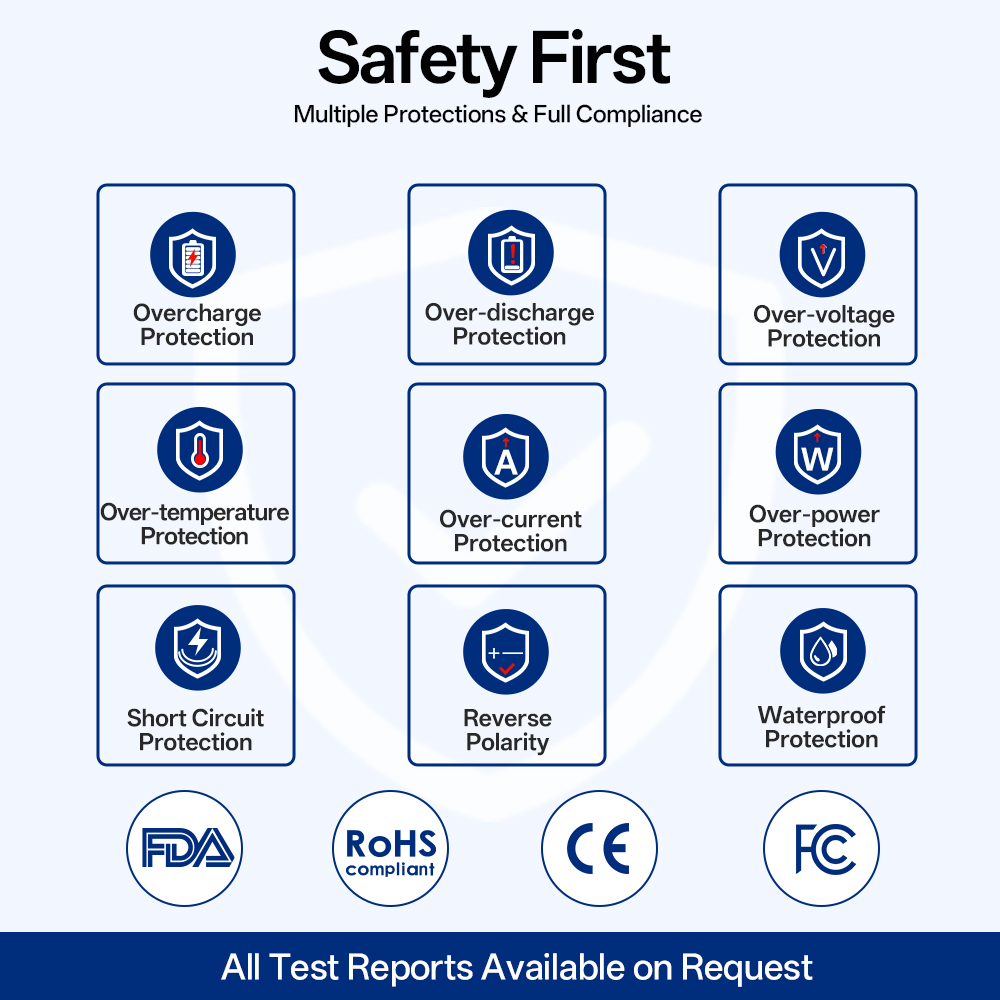
- Product-level: CE, RoHS, FCC (for wireless features), FDA registration for the US, plus per-model test reports
- Reliability: a professional line runs 30–40 tests, including motor life, battery charge/discharge cycling (300-cycle retention), IPX7/IPX8 waterproof verification, drop tests, and simulated transportation
- Battery transport: UN38.3 documentation for air freight
Stage 5: Mass Production — The Realistic Timeline
Standard models ship in about 25–35 days after deposit and confirmation; orders with new tooling (custom molds, special buttons) add several weeks for mold making and first-article inspection. During production, insist on:
- Golden-sample comparison at first article inspection
- In-line and final random inspection against agreed AQL standards
- Photo or video reports before shipment
Stage 6: Shipping and After-Sales Structure
Agree on Incoterms early (most oral care shipments move FOB Shenzhen/Ningbo), plan sea vs air based on urgency and battery regulations, and define warranty terms and spare parts supply (brush heads, chargers) in the contract — not after problems appear.
Conclusion
The OEM process is predictable when your manufacturer is professional: requirements → samples in about a week → written customization → parallel certification → 25–35 day production → inspection and shipment. Clarity at each stage is what separates smooth launches from costly ones.
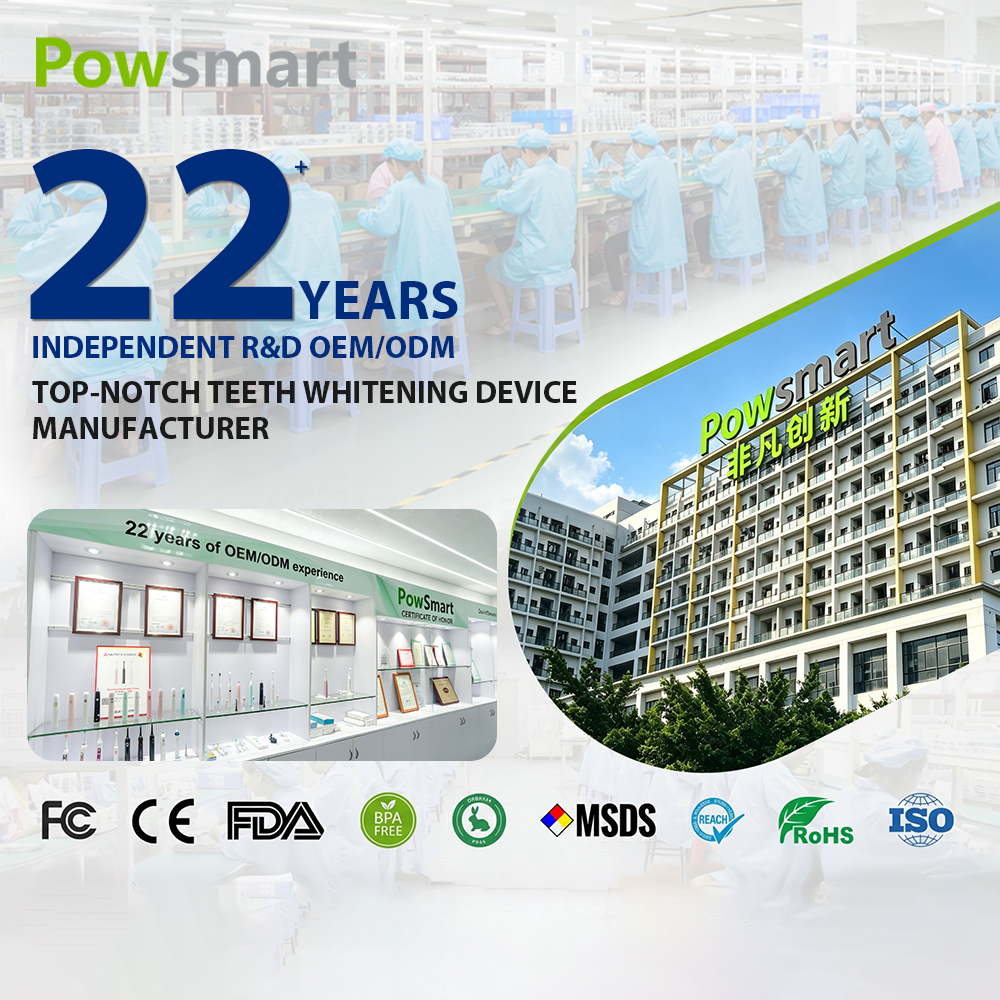
PowSmart Technology Co., Ltd. — Shenzhen-based oral care specialist since 2004, 200+ patents, 38 reliability tests, ISO 9001/13485 certified — runs this exact process for brands worldwide, from 3–7 day samples to full OEM/ODM production. Visit www.powsmart.com to start your project.