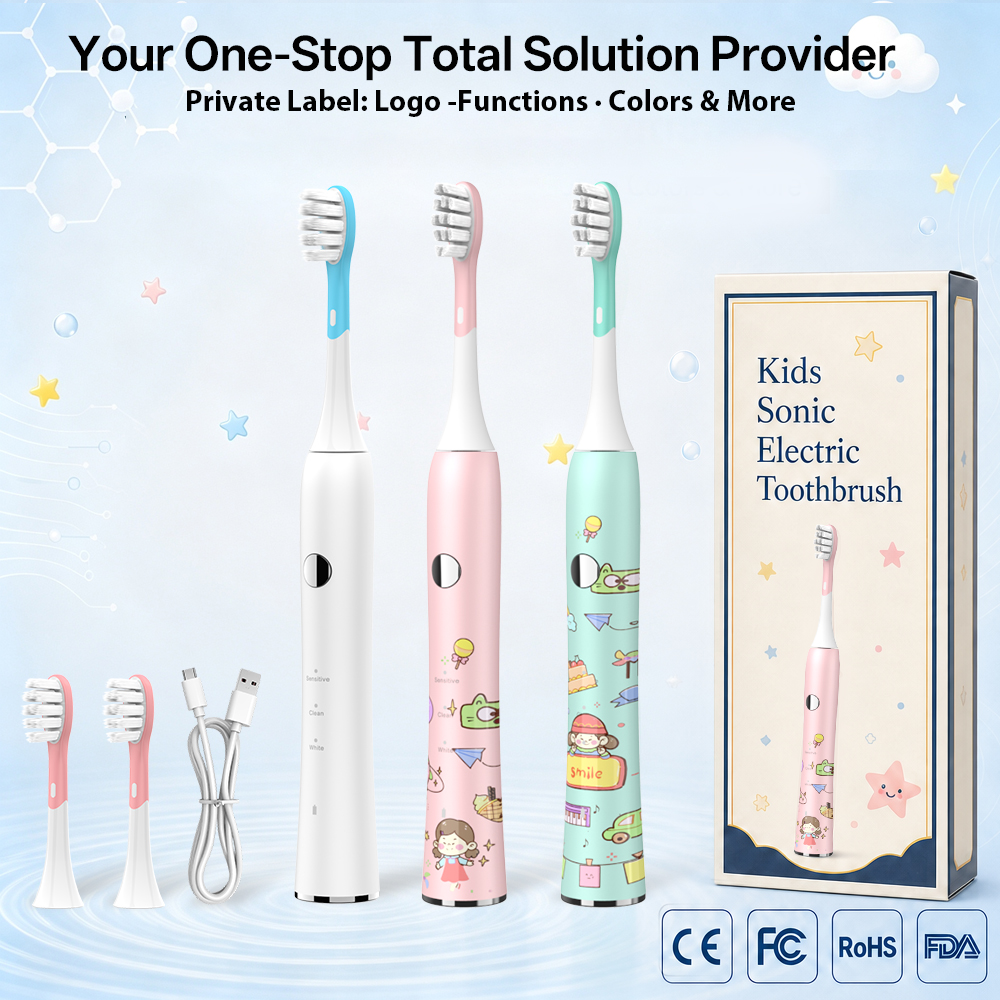
Replacement Brush Heads in the Electric Toothbrush Market: Product Compatibility, Repeat Purchases and Retail Strategy
Why Replacement Brush Heads Matter in the Electric Toothbrush Market
The electric toothbrush market extends beyond the initial sale of a toothbrush handle. Replacement brush heads create an ongoing product category connecting toothbrush manufacturers, oral care brands, importers, distributors, retailers, and end users.
For businesses developing an electric toothbrush portfolio, replacement heads are not simply secondary accessories. They influence product compatibility, customer retention, inventory planning, product differentiation, and the long-term commercial relationship between a brand and its customers.
A toothbrush handle may remain in use while its brush heads are replaced periodically according to the manufacturer’s instructions. This creates a different purchasing pattern from products that are normally purchased as a single unit and rarely require compatible consumables.
Understanding this relationship helps businesses evaluate the broader electric toothbrush market and build product ranges that account for both initial sales and continued accessory demand.
The Market Relationship Between Toothbrush Handles and Replacement Heads
The electric toothbrush market contains two closely connected product categories: powered toothbrush handles and compatible replacement brush heads.
The handle provides the powered brushing mechanism, while the brush head is the replaceable component that makes direct contact with the teeth and gums. The two products must work together as a compatible system.
This relationship affects several market participants.
- Manufacturers need to establish the mechanical interface, product specifications, and compatibility requirements.
- Brand owners need to define which replacement heads belong to each product model.
- Importers and distributors need to coordinate the inventory of handles and compatible accessories.
- Retailers and e-commerce sellers need to communicate compatibility clearly so customers purchase the correct replacement.
- Consumers need continued access to suitable replacement heads throughout the product’s useful life.
A toothbrush portfolio that ignores the accessory relationship may generate initial sales but create difficulties for repeat purchasing and long-term product support.
Compatibility as a Product Portfolio Decision
Compatibility is one of the most important commercial considerations in the replacement brush head category.
Not every replacement head fits every electric toothbrush. Differences in connection geometry, dimensions, locking mechanisms, and other design characteristics can prevent interchangeable use.
For this reason, businesses should define compatibility at the product-model level rather than assuming that replacement heads are universal.
Establish a Clear Compatibility Matrix
A compatibility matrix identifies which brush heads can be used with which toothbrush handles.
For example, a brand with three handle models and two brush head designs should document the approved combinations instead of relying on broad statements such as “compatible with our electric toothbrush range.”
The matrix should be supported by technical verification and updated when product designs change.
Control Product Changes
Changes to a handle connection or brush head structure can affect existing compatibility. A seemingly minor design modification may create problems for previously sold products if the change is not evaluated carefully.
Manufacturers and brand owners should document approved versions, assess the impact of engineering changes, and communicate relevant updates to distributors.
Make Compatibility Understandable to Buyers
Retail product pages and packaging should identify the compatible handle models. Where multiple product families exist, clear model numbers and diagrams can reduce purchasing errors.
For online sellers, compatibility information can also improve product navigation by helping customers locate the replacement head intended for their existing toothbrush.
Replacement Brush Heads and Repeat-Purchase Demand
The commercial value of replacement brush heads comes from the continued need for compatible accessories after the initial toothbrush purchase.
However, repeat-purchase potential depends on several factors rather than being guaranteed by the existence of a replaceable head.
Installed Product Base
The installed base is the number of toothbrush handles already in use within a particular product family.
A larger active installed base can create a broader potential customer group for compatible replacement heads. Businesses should distinguish between units shipped and products still actively used, since not every previously sold handle remains in service.
Replacement Timing
Replacement frequency depends on manufacturer guidance, product design, consumer habits, and actual usage. Businesses should not assume that every customer replaces brush heads on the same schedule.
Demand planning should therefore consider historical sales, reorder patterns, channel data, and reasonable estimates rather than relying on a single fixed replacement interval.
Customer Access
Even when customers need replacement heads, they may not repurchase them if the products are difficult to find, unavailable, or poorly identified.
Availability through appropriate retail channels and accurate compatibility information can help customers continue using their existing toothbrushes.
Product and Price Positioning
Replacement heads must provide a suitable balance between product performance, quality, availability, and price.
Brands should assess the relationship between the initial handle price and the ongoing cost of compatible heads. This gives buyers a more complete view of the product’s long-term ownership cost.
How Retailers Can Build a Replacement Brush Head Assortment
Retailers should plan replacement heads according to the toothbrush models they already sell or support.
An assortment with too many poorly differentiated variants can create unnecessary inventory complexity. An assortment that is too limited may fail to support customers who own different compatible models.
A practical assortment strategy begins with the retailer’s actual product range.
Start with Existing Handle Sales
Identify the handle models generating meaningful sales and confirm which replacement heads fit them. This provides a stronger starting point than adding brush head variants without a clear customer base.
Prioritize Clearly Defined Product Families
Where a manufacturer offers several brush head types, retailers should understand the actual differences before assigning them to different customer groups.
Possible distinctions may include bristle configuration, head size, intended product compatibility, or other verified design characteristics. Claims about specific cleaning benefits should be supported by appropriate evidence.
Coordinate Handle and Accessory Inventory
Retailers should monitor the relationship between handle sales and replacement-head sales.
A growing handle category may require increased accessory inventory, while declining sales of an older handle model may call for a more cautious replenishment plan.
The objective is to maintain suitable availability without accumulating excessive stock of slow-moving variants.
Use Accurate Product Identification
Product codes, packaging labels, model references, and online listings should consistently identify the correct replacement head.
Clear identification becomes particularly important when a retailer carries several toothbrush brands or product families with different connection systems.
What Importers and Distributors Should Evaluate
For importers and distributors, replacement brush heads introduce supply planning requirements that differ from those of complete toothbrush units.
The evaluation should focus on product continuity, compatibility, quality consistency, and the commercial viability of future orders.
Supply Continuity
Buyers should establish whether the selected manufacturer can continue supplying the relevant brush head configuration and whether product changes will be communicated in advance.
The commercial agreement should address expected lead times, order quantities, and procedures for handling discontinued products or revised specifications.
Consistent Product Specifications
Brush head dimensions, connection structures, bristle arrangements, materials, and other agreed characteristics should remain consistent with the approved specification.
Incoming inspection and appropriate verification procedures can help identify deviations before products enter the distribution network.
Packaging and Storage
Replacement heads may be sold individually or in multipacks, depending on the product configuration and retail strategy.
Importers should evaluate package size, product identification, storage requirements, shipping efficiency, and the information required for the intended market.
Forecasting and Replenishment
Accessory forecasts should account for the installed base, historical sales, seasonality where supported by data, promotional activity, and supplier lead times.
Because replacement demand is linked to previously sold handles, distributors may need to maintain records across several product generations rather than evaluating each order in isolation.
Private Label Opportunities in Replacement Brush Heads
Replacement brush heads can form a distinct product category within a private label oral care business.
A retailer or brand owner may choose to develop compatible brush heads alongside its electric toothbrush handles. Alternatively, a business may focus on replacement accessories for an established product family, provided it has the necessary compatibility verification and legal rights to market the products.
The appropriate approach depends on the brand’s technical resources, customer base, and intended market position.
Define the Product Specification
Before discussing manufacturing, the buyer should identify the compatible handle model, connection requirements, head dimensions, bristle configuration, materials, color options, and packaging format.
The final specification should distinguish mandatory requirements from optional customization requests.
Verify Compatibility Before Commercial Launch
Compatibility should be tested with the intended toothbrush models. Visual similarity alone is insufficient to establish a reliable fit or suitable operation.
Testing should cover the relevant mechanical connection and any other performance characteristics required by the product specification.
Build a Distinct Product Identity
Private label packaging should identify the product accurately and communicate the intended compatibility. Buyers should avoid unsupported claims of universal fit or equivalence to another manufacturer’s product.
Where compatibility references to third-party products are used, businesses should verify that the wording is accurate and legally appropriate.
Plan Long-Term Availability
A replacement-head launch should include a supply plan that accounts for future orders and possible changes to the associated toothbrush handles.
This helps brand owners avoid creating demand for an accessory that cannot be supplied consistently.
Product Quality and Consumer Confidence
Replacement brush heads are small components, but their quality can affect the consumer’s experience with the complete toothbrush system.
Businesses should evaluate the head’s construction, bristle retention, material suitability, connection strength, consistency between production batches, and performance under the intended conditions of use.
Quality requirements should be defined before mass production and verified through suitable inspection or testing procedures.
Claims about plaque removal, gum care, whitening, or other oral health outcomes should be supported by appropriate evidence for the actual product. A particular bristle pattern or head shape should not automatically be described as clinically superior without substantiation.
Clear instructions for use and replacement, together with reliable compatibility information, also contribute to a more dependable product experience.
The Role of Manufacturing Partners in Replacement Head Development
A manufacturing partner can help a brand or distributor translate its replacement-head requirements into a defined product specification.
For businesses exploring this category, the discussion should begin with the intended toothbrush model and the required compatibility interface. From there, the parties can evaluate suitable product configurations, materials, bristle arrangements, packaging options, and production conditions.
POWSMART focuses on electric toothbrush manufacturing and international business cooperation, including OEM, ODM, and private label solutions. Businesses considering replacement brush heads as part of a wider toothbrush portfolio can explore the POWSMART electric toothbrush markets page and the official POWSMART website.
Before placing an order, buyers should confirm the specific models available, compatibility requirements, customization scope, quality criteria, minimum quantities, lead times, and relevant documentation directly with the manufacturer.
Frequently Asked Questions
Why are replacement brush heads important to the electric toothbrush market?
Replacement heads support the continued use of electric toothbrush handles and create an additional product category for manufacturers, brands, distributors, and retailers. Their commercial potential depends on the active installed base, compatibility, availability, and consumer purchasing behavior.
Are electric toothbrush replacement heads universal?
No. Compatibility depends on the handle design and replacement-head connection. Buyers should verify the intended models and avoid assuming that a replacement head fits all electric toothbrushes.
How should retailers decide which replacement heads to stock?
Retailers should start with the toothbrush models they sell or support, identify the compatible heads, and use sales and replenishment data to determine inventory levels. Clear product identification can help reduce incorrect purchases.
Can replacement brush heads be developed for a private label brand?
Private label development may be possible, depending on the required product configuration and manufacturing capabilities. The buyer should define the technical specification, verify compatibility, establish quality criteria, and confirm the commercial terms before production.
What should importers check when sourcing replacement brush heads?
Importers should evaluate compatibility, product specifications, materials, quality consistency, packaging, supplier continuity, order quantities, and the availability of relevant product documentation.
How does replacement-head availability affect customer retention?
Customers may find it easier to continue using a toothbrush when compatible replacement heads are easy to identify and purchase. Reliable availability can support the overall product experience, although repeat purchases also depend on price, customer preferences, and continued use of the original handle.
Conclusion
Replacement brush heads represent an important connection between the initial electric toothbrush sale and the ongoing operation of an oral care product portfolio.
Their market role extends across product engineering, brand planning, wholesale distribution, retail inventory, and customer repurchasing. Compatibility must be established and communicated clearly, while supply continuity and quality consistency need to be considered throughout the product’s commercial life.
For manufacturers, importers, distributors, and private label brands, treating replacement brush heads as a planned product category rather than an afterthought can support better assortment decisions and more coordinated supply planning.
Explore POWSMART’s electric toothbrush market solutions to learn more about the relationships between electric toothbrush products, manufacturing, and international market development.