Introduction
The comparison of sonic vs rotating electric toothbrush OEM solutions is one of the most important decisions for brands entering the oral care market. Each technology offers distinct advantages, and choosing the right one directly affects product positioning and target audience.
Therefore, OEM buyers must evaluate both technical performance and market demand before making a decision.
Overview of Sonic Technology
How Sonic Toothbrushes Work
Sonic toothbrushes use high-frequency vibrations (typically 30,000–40,000 strokes per minute) to create fluid dynamics that enhance cleaning.
Advantages include:
- Gentle on gums
- Effective plaque removal
- Premium market perception
Overview of Rotating Technology
How Rotating Toothbrushes Work
Rotating (or oscillating) toothbrushes use circular brush head movements to physically scrub teeth surfaces.
Key benefits:
- Strong cleaning power
- Proven plaque removal
- Widely recognized by consumers
Reference:
https://www.ada.org/resources/research/science-and-research-institute
Sonic vs Rotating: Key Differences
Cleaning Mechanism
- Sonic → vibration + fluid motion
- Rotating → mechanical scrubbing
User Experience
Sonic models are quieter and smoother, whereas rotating models may feel more intense.
Target Market
- Sonic → premium & tech-focused users
- Rotating → mass market & traditional users
OEM Manufacturing Considerations
Design Complexity
Sonic systems require:
- High-frequency motors
- Precision balancing
Rotating systems require:
- Mechanical gear systems
- Durable brush head connectors
Cost Structure
- Sonic → higher R&D cost, premium pricing
- Rotating → cost-effective, scalable production
Customization Opportunities
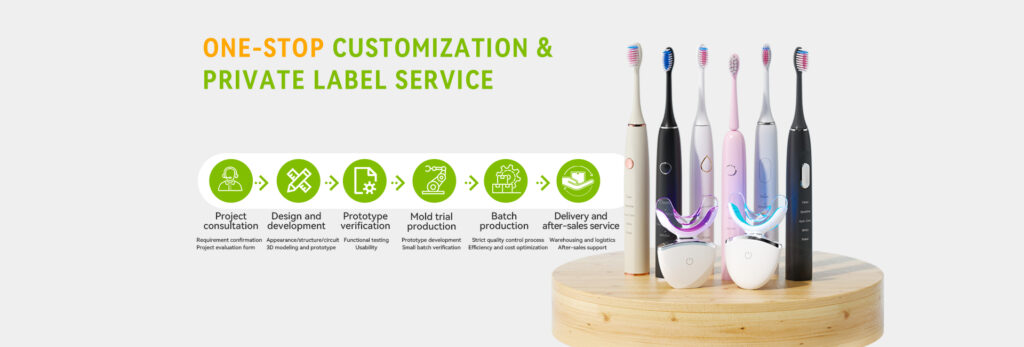
OEM suppliers can support:
- Brushing modes
- Handle design
- Branding and packaging
For example:
https://powsmart.com/product-category/electric-toothbrush/
Market Strategy Recommendations
Brands should align technology choice with:
- Target audience
- Price positioning
- Distribution channels
Conclusion
Understanding sonic vs rotating electric toothbrush OEM differences enables brands to build competitive, well-positioned products. Ultimately, the best choice depends on strategic alignment rather than purely technical superiority.
.jpg)
