As global oral care markets shift toward wellness-driven, clinically validated product lines, the integration of Bio-compatible Housing Material with Accelerometer-based Feedback has become a defining trend for health-focused toothbrushes. These two engineering pillars—one grounded in material science, the other in smart sensor technology—combine to create safer, more intelligent devices that meet rising consumer and regulatory expectations. For brands and OEM/ODM partners, this pairing not only supports ergonomics and hygiene but also enables precise brushing analytics, making it a strategic foundation for next-generation premium toothbrush development.
Bio-compatible Housing Material Sets the Foundation for User Safety
The housing of a toothbrush is the user’s primary point of contact, especially for sensitive applications such as children’s products, senior care, or wellness-focused devices. Using Bio-compatible Housing Material ensures:
- Non-toxic, hypoallergenic surfaces
- Compliance with medical-grade safety standards
- Resistance to chemical cleaners, saliva, toothpaste abrasives, and moisture
Bio-compatible materials such as medical-grade ABS, PC+ABS, TPE, or food-grade silicone prevent skin irritation and bacterial buildup, supporting long-term hygienic use. For brands targeting health-conscious consumers, this material specification immediately elevates product trust and regulatory readiness.
Accelerometer-based Feedback Enables Behavior-oriented Brushing Guidance
Modern smart toothbrushes rely increasingly on Accelerometer-based Feedback to analyze brushing patterns in real time. Built-in MEMS accelerometers detect:
- Motion trajectory and angle
- Brushing speed and frequency
- Pressure signatures (via vibrational changes)
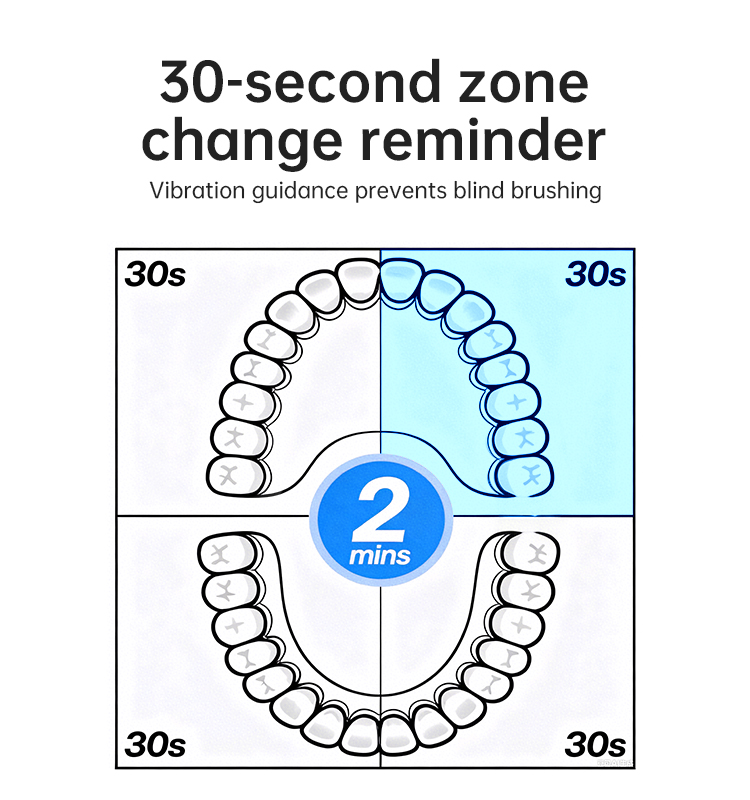
- Coverage distribution across different mouth zones
Through algorithmic interpretation, brands can offer features such as pressure alerts, brushing technique correction, quadrant guidance, and app-based brushing analysis. For premium device lines, accelerometers are essential to delivering scientifically driven brushing insights.
Material Integrity Enhances Sensor Stability and Data Accuracy
For Accelerometer-based Feedback to function reliably, the toothbrush housing must provide consistent structural and environmental stability. Bio-compatible Housing Material contributes to this in several ways:
- Vibration consistency: Stable materials reduce micro-resonance that interferes with motion readings.
- Environmental protection: Moisture-resistant materials keep sensors dry and preserve signal accuracy.
- Structural rigidity: The housing prevents micro-shifts that could distort acceleration vectors.
In essence, the material not only protects the user but also protects the data, ensuring the accelerometer generates cleaner, more accurate behavioral insights.
Engineering Integration: How OEMs Combine Housing Materials with Accelerometer Modules
From an OEM/ODM engineering perspective, the integration process involves several critical steps:
1. Material selection based on regulatory and durability requirements
Engineers choose materials that meet ISO 10993, FDA, CE, or relevant safety standards while offering sufficient moldability and long-term durability.
2. Internal architecture design for sensor placement
Proper positioning ensures accurate capture of brushing motion and reduces interference from the motor.
3. Vibration isolation structure
Ribs, elastomer pads, or molded braces reduce unwanted vibrations that distort sensor signals.
4. Waterproofing (IPX7/IPX8) to protect sensor functionality
Even a minor water leak can compromise accelerometer performance.
User Health Benefits: Safe Touch Meets Intelligent Guidance
When these two technologies combine, the user benefits in multiple dimensions:
- Physical health protection: Bio-compatible materials ensure safe contact and improved hygiene.
- Behavioral health improvement: Accelerometer-based Feedback corrects brushing technique and prevents gum damage.
- Long-term oral wellness: Users adopt healthier brushing habits through real-time analytics and consistent reminders.
- Confidence and compliance: Safe materials + smart coaching encourage users to brush regularly and correctly.
For health-focused toothbrush categories—orthodontic users, children, elderly individuals, or patients under dental supervision—this technology pairing creates clinically meaningful improvements.
Strategic Advantages for Brands and B2B Buyers
Implementing both Bio-compatible Housing Material and Accelerometer-based Feedback offers several competitive benefits for oral care companies:
1. Stronger product differentiation
Most toothbrushes compete on motor power or aesthetics. Material safety + smart feedback provide a stronger, more scientifically grounded USP.
2. Enhanced regulatory alignment
Bio-compatible materials simplify approval for wellness and clinical-grade markets, while sensors support digital-health product strategies.
3. Higher perceived value and premium positioning
Smart, safe, health-centric features allow for higher retail pricing and better brand storytelling.
4. Broader target demographics
Products become suitable for children, orthodontic users, sensitive-gum consumers, and medical-dental retail channels.
5. Platform scalability
Accelerometer data enables subscription apps, brushing analytics dashboards, or professional monitoring features.
Conclusion
The integration of Bio-compatible Housing Material with Accelerometer-based Feedback is reshaping the design philosophy of modern health-focused toothbrushes. One ensures a safe, durable, and hygienic exterior, while the other delivers intelligent motion analytics that guide users toward optimal brushing habits. Together, they create a robust platform for next-generation oral health devices—stronger scientifically, safer clinically, and more compelling commercially. Contact us
.jpg)
