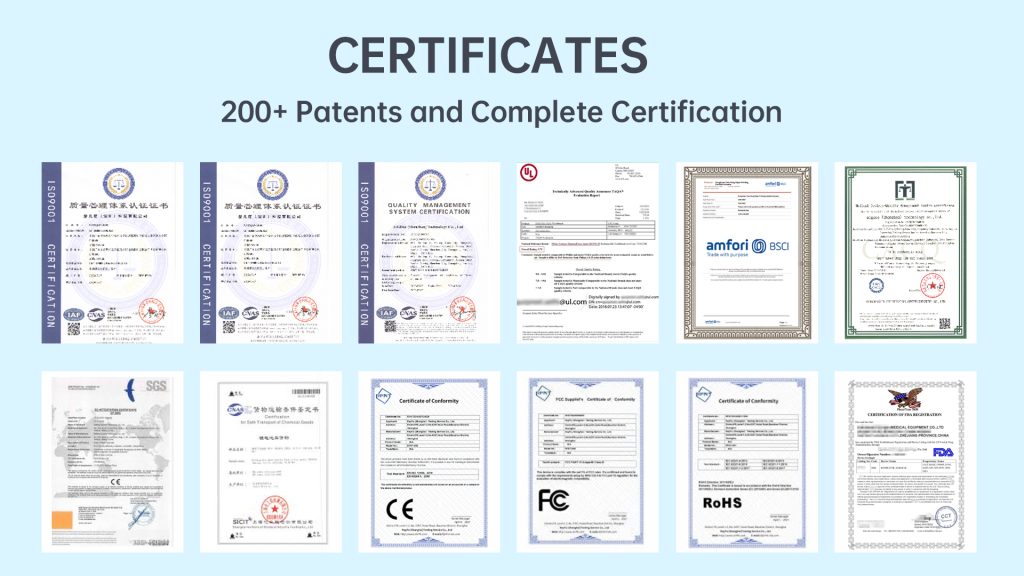
Selling dental electronic products in the European Union (EU) involves strict compliance with several safety and quality regulations. These rules ensure that all electronic dental devices—such as electric toothbrushes, oral irrigators, and whitening kits—meet EU safety, health, and environmental protection standards. Manufacturers, importers, and distributors must understand that obtaining the mandatory certifications EU requires not only product testing but also technical documentation and conformity assessments before entering the market.
CE Marking – The Essential Requirement
The most recognized and mandatory certification in the EU is the CE marking. This symbol confirms that a product complies with all relevant EU directives and regulations.
For dental electronic products, CE marking demonstrates conformity with directives such as the Low Voltage Directive (LVD), Electromagnetic Compatibility Directive (EMC), and the Medical Device Regulation (MDR), depending on the device type.
Without CE marking, a product cannot be legally sold in EU countries. Therefore, manufacturers must:
-
Conduct a risk assessment and technical evaluation.
-
Prepare a Declaration of Conformity (DoC).
-
Maintain a Technical File for inspection by EU authorities.
RoHS Compliance – Protecting Health and the Environment
In addition to CE marking, RoHS compliance (Restriction of Hazardous Substances) is another critical requirement. The RoHS Directive ensures that dental electronic products do not contain harmful substances such as lead, mercury, cadmium, or certain flame retardants.
Compliance not only guarantees environmental safety but also enhances brand trust among European consumers.
Manufacturers must perform material testing and maintain RoHS compliance certificates as part of their technical documentation.
WEEE Directive and Environmental Responsibility
The Waste Electrical and Electronic Equipment (WEEE) Directive complements RoHS by ensuring proper recycling and disposal of electronic waste.
Manufacturers and suppliers of dental devices sold in the EU must register with the national WEEE system and provide labeling indicating that the product should not be disposed of as household waste.
This regulation supports the EU’s sustainability goals and strengthens a manufacturer’s image as an environmentally responsible business partner.
EMC and LVD Testing for Product Safety
For dental electronic products like electric toothbrushes or water flossers, electrical safety and electromagnetic compatibility are key.
-
The Electromagnetic Compatibility (EMC) Directive ensures that devices do not interfere with other electronic equipment.
-
The Low Voltage Directive (LVD) guarantees that the product is safe for consumer use under normal operation.
These two standards are often part of the CE marking assessment and must be verified through accredited testing laboratories.
Preparing for EU Market Entry – Steps for Manufacturers
To successfully enter the EU market, manufacturers should:
-
Identify applicable EU directives and standards for their specific dental electronic product.
-
Conduct necessary laboratory testing to meet CE and RoHS requirements.
-
Prepare a Technical File and Declaration of Conformity.
-
Affix the CE marking visibly on the product and packaging.
-
Register under the WEEE Directive (if applicable).
-
Work with experienced compliance consultants or testing agencies for smooth certification processes.
By meeting all mandatory certifications EU, including CE marking and RoHS compliance, manufacturers can ensure that their dental electronic products meet the highest safety and environmental standards—enhancing their competitiveness and credibility in the European market.
.jpg)
