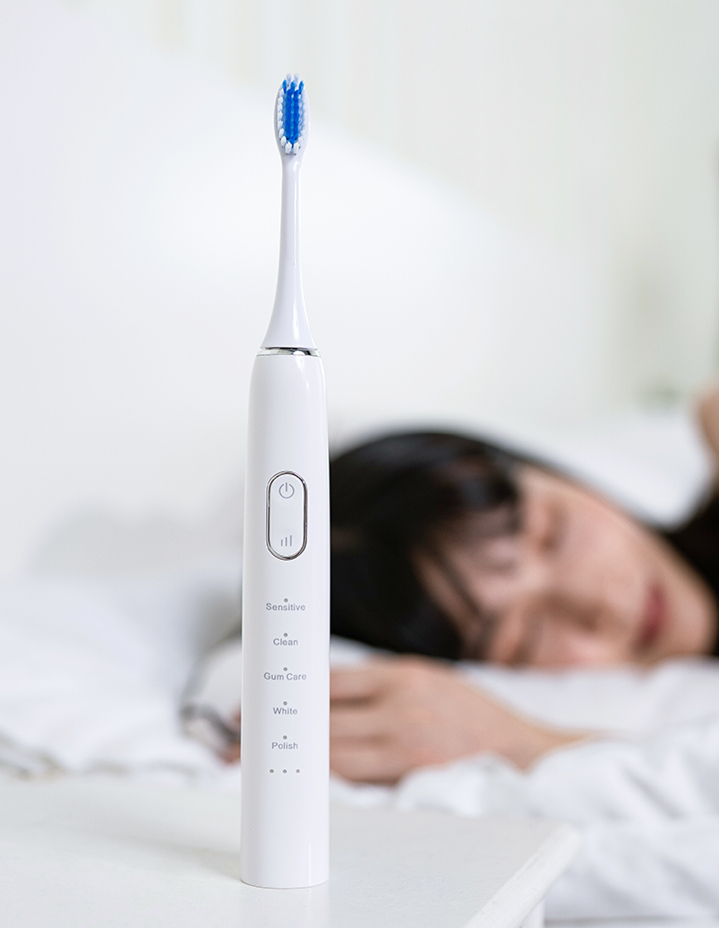
As consumers seek a more comfortable and pleasant brushing experience, reducing the noise of electric toothbrushes has become a key focus for manufacturers. Electric toothbrush Noise reduction technology plays a vital role in enhancing user comfort without compromising cleaning efficiency. This article provides a detailed explanation of noise reduction technology, explores various noise control methods, and discusses how to achieve silent cleaning while maintaining performance.
Understanding Noise in Electric Toothbrushes
The noise produced by an electric toothbrush primarily comes from:
Motor vibrations: High-speed oscillations generate mechanical noise.
Gear transmission: Friction between moving parts creates additional sound.
Casing resonance: The housing material and design can amplify noise.
Airborne noise: Sound waves escaping from the toothbrush contribute to overall noise levels.
To achieve silent cleaning, manufacturers must address these sources of noise effectively.
Noise Control Methods in Electric Toothbrushes
Different noise control methods are implemented to minimize the sound generated during operation. These include:
Brushless motors: Reducing friction and vibration compared to traditional brushed motors.
Advanced damping materials: Using sound-absorbing materials in the casing to reduce resonance.
Precision engineering: Enhancing gear alignment and reducing unnecessary movement to lower noise.
Optimized airflow design: Preventing sound waves from escaping by refining the toothbrush structure.
Each of these approaches contributes to a quieter brushing experience.
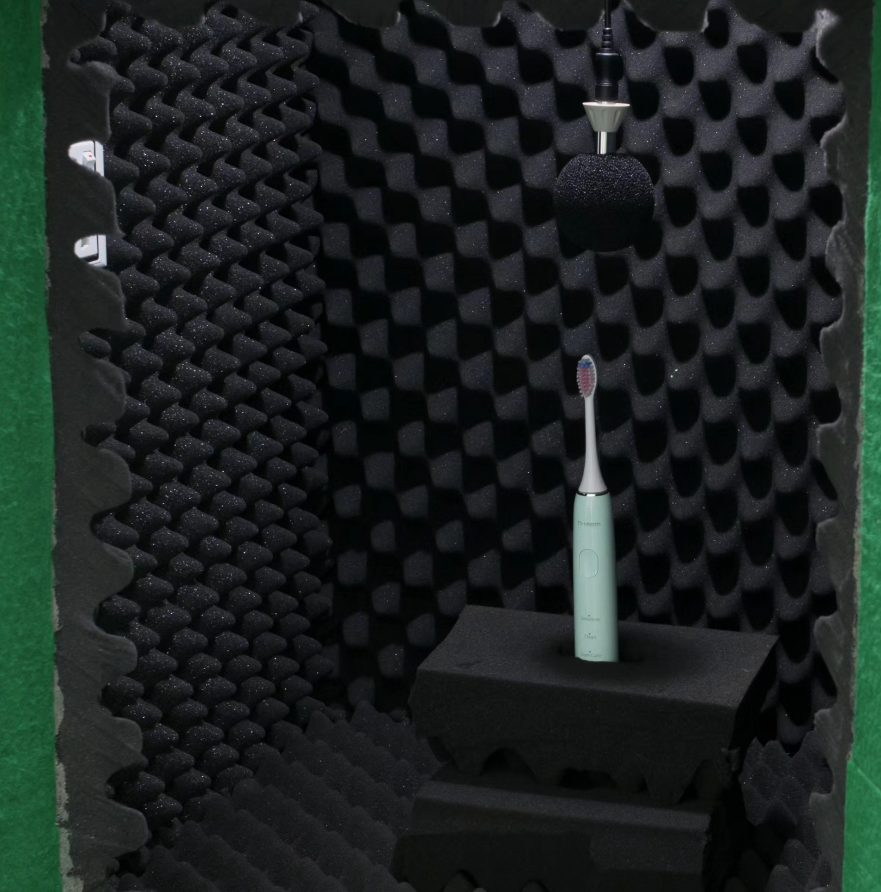
Detailed Explanation of Noise Reduction Technology
Manufacturers employ advanced noise reduction technology for electric toothbrushes to ensure low-noise operation. Some key technologies include:
Floating suspension motor design: Isolates motor vibrations to prevent noise transmission.
Dual-layer housing structure: Inner and outer layers absorb and dampen sound waves.
Active noise cancellation (ANC) integration: Some high-end models use ANC to counteract unwanted sound frequencies.
Low-resistance brush heads: Minimizing friction between bristles and teeth to reduce mechanical noise.
By integrating these technologies, electric toothbrushes can significantly lower noise levels without affecting performance.
The Balance Between Noise Reduction and Cleaning Performance
While reducing noise is essential, it must not come at the cost of cleaning effectiveness. Manufacturers need to consider:
Maintaining vibration strength: Ensuring noise reduction does not weaken the toothbrush’s ability to remove plaque.
Power efficiency: Some noise-reducing technologies may increase power consumption, affecting battery life.
Durability of silent components: Using long-lasting materials that sustain noise reduction over time.
Achieving silent cleaning requires striking a balance between noise control and high-performance brushing.
Consumer Preferences and Market Trends
With growing demand for quieter personal care devices, noise reduction has become a competitive advantage. Consumer preferences indicate:
Preference for silent operation: Many users seek near-silent toothbrushes for early-morning or late-night use.
Demand for premium noise reduction features: High-end models often include advanced damping and motor isolation.
Focus on long-term reliability: Users expect noise reduction technologies to remain effective over time.
Manufacturers investing in superior noise reduction technology can gain a strong position in the market.
Conclusion
Effective noise control methods and advanced noise reduction technology for electric toothbrushes are essential for providing a comfortable and efficient brushing experience. By optimizing motor design, using sound-absorbing materials, and employing innovative engineering solutions, Powsmart can achieve silent cleaning without sacrificing cleaning power. As consumer demand for quieter devices grows, continued advancements in noise reduction will shape the future of electric toothbrush technology. Don’t hesitate to contact us if you wanna know more about the electric toothbrush noise reduction technology. https://www.powsmart.com/contact-us/
.jpg)
