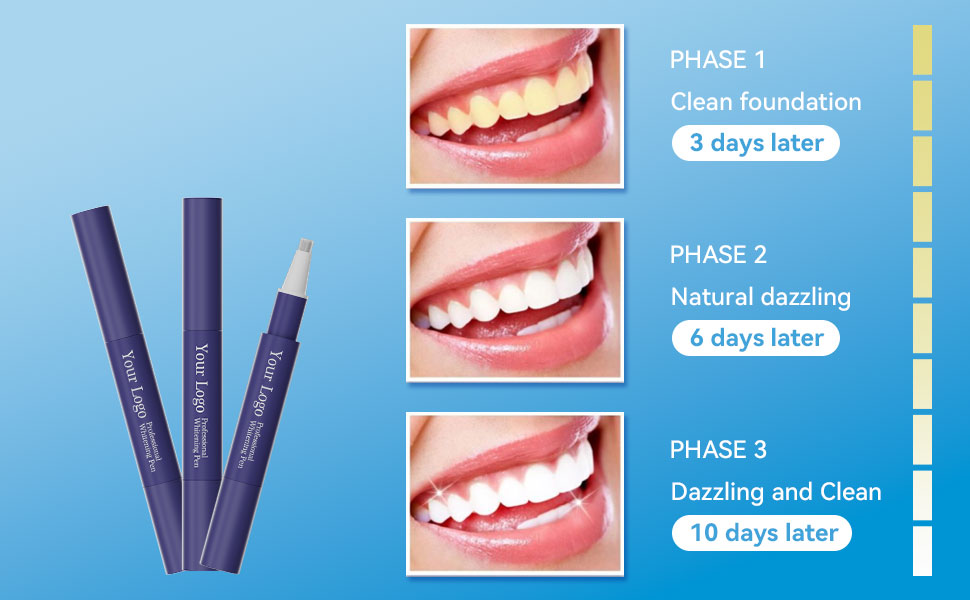
In the field of oral care, teeth whitening has become a hot topic for many consumers. Among many whitening products, Hydrogen Peroxide and Carbamide Peroxide are two common active ingredients. This article will take an in-depth look at the pros and cons of these two ingredients, and provide you with guidance on choosing the right whitening gel formula based on actual cases and data.
Advantages and applications of hydrogen hydroxide
Hydrogen hydroxide is a powerful oxidizing agent commonly used in professional teeth whitening products. Its rapid whitening effect makes it popular. Studies have shown that using whitening gel containing 10% hydrogen hydroxide, patients can see significant whitening effects within 2 weeks, usually improving by 3-4 shades. However, hydrogen hydroxide is highly irritating, so mild ingredients need to be used in the formula to ensure a “gentle and safety formula” to reduce irritation to teeth and gums.
Unique features of semicarbazide
Semicarbazide is a milder whitening ingredient, usually present in a concentration of 18%. Semicarbazide breaks down more slowly than hydrogen hydroxide, so it provides a relatively mild whitening effect, making it more suitable for users with sensitive teeth. According to a clinical study, patients using semicarbazide saw the same significant whitening effect within 4 weeks, but it was more comfortable and suitable for long-term use. Many brands use semicarbazide in their “whitening gel formula” to ensure a comfortable user experience.
Flexibility to customize ingredients
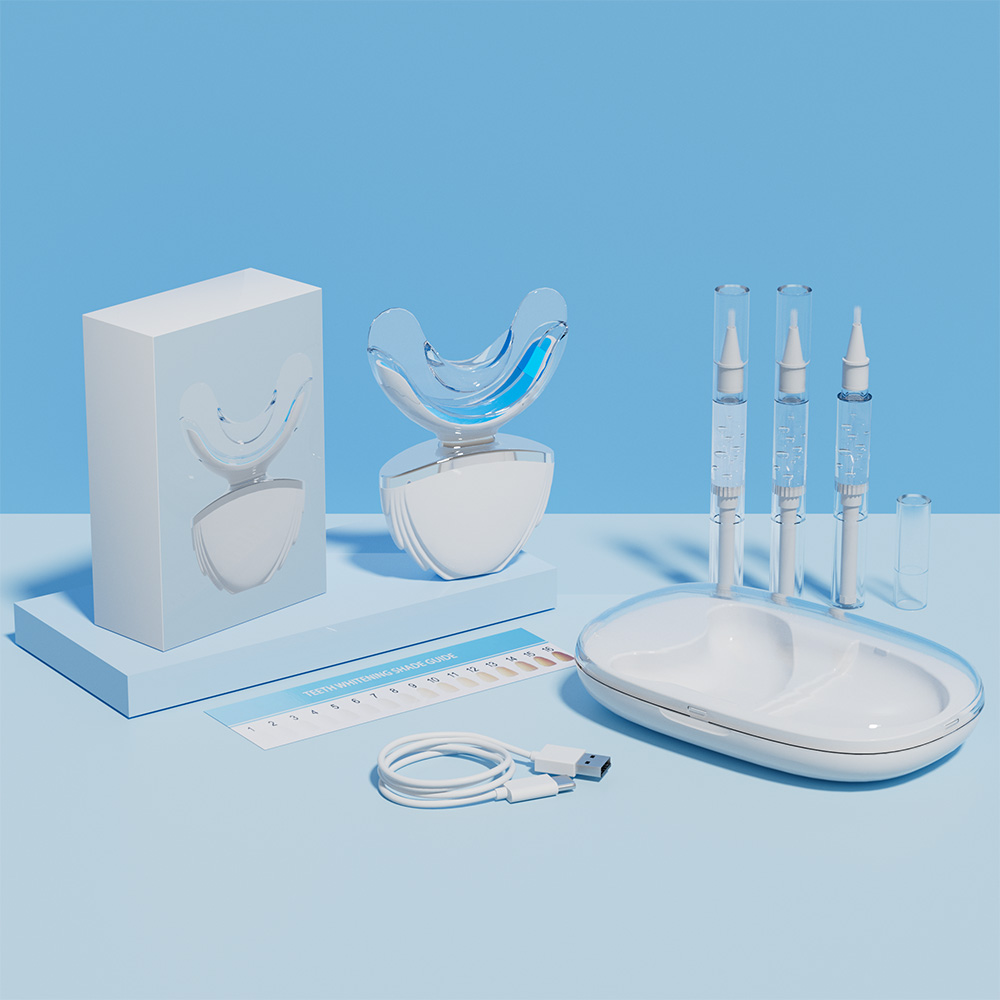
In the tooth whitening market, consumers have increasing demand for product customization. Through “Customizable ingredients”, brands can prepare suitable whitening ingredients according to the needs of different consumers. Whether you choose hydrogen hydroxide or semicarbazide, you can flexibly adjust it according to the oral health status and whitening needs of the target customer group. For example, a whitening gel launched by a well-known brand has a specially designed formula containing semicarbazide for sensitive users. It also provides the option of adding other soothing ingredients, which enhances the market appeal of the product.
Cost and market selection
Production cost is also an important consideration when choosing hydrogen hydroxide or semicarbazide. Hydrogen hydroxide is generally cheaper than semicarbazide, which makes products using hydrogen hydroxide more competitive in the market. However, as consumers pay more attention to product safety and effectiveness, more and more brands are willing to invest in semicarbazide product development to meet the market demand for “gentle and safety formula”. Data show that in recent years, sales of semicarbazide-containing products have increased by 20%, reflecting changes in market demand.
Case analysis
When a brand launched a new generation of whitening gel, it conducted market research and found that about **65%** of consumers tended to use products that are gentler on their teeth. Based on this data, the brand decided to use semicarbazide as the main ingredient, while adding a variety of customized ingredients to improve product diversity and consumer satisfaction. As a result, the brand’s whitening gel sales exceeded expectations after its launch and became a hot-selling product in the market.
Summary
Hydrogen hydroxide and semicarbazide each have their own advantages and disadvantages and are suitable for consumers with different needs. When choosing a “whitening gel formula,” brands should consider the characteristics of the target market, consumer sensitivity, and the durability of the whitening effect. No matter which ingredients you choose, ensuring you offer a “gentle and safety formula” as well as “Customizable ingredients” is key to making your product more competitive. If you want to stand out in the competitive skin whitening market, considering these factors will help you do so. Contact Powsmart if you want to know more about the detail of customizing your own private label teeth whitening gel.
.jpg)
