
Introduction A Contingent Consideration Deal links future payments to performance milestones, revenue targets, or operational outcomes strategically. A Risk-adjusted Pricing Model adjusts pricing structures according to uncertainty, performance expectations, and financial exposure levels. Combining both improves transaction flexibility. This blog explains key advantages. Aligning Payments with Actual Business Performance Performance-based structures improve financial fairness significantly. A Contingent Consideration Deal adjusts compensation according to future operational results carefully. A Risk-adjusted Pricing Model reflects changing business performance conditions dynamically. This improves pricing accuracy. Reducing Upfront Financial Exposure Flexible structures improve investment efficiency significantly. A Contingent Consideration Deal lowers immediate acquisition or partnership payment requirements effectively. A Risk-adjusted Pricing Model distributes financial risk across future milestones strategically. This improves cash flow flexibility. Encouraging Long-term Operational Commitment Shared incentives improve collaboration stability significantly. A Contingent Consideration Deal motivates all parties to achieve agreed performance objectives consistently. A Risk-adjusted Pricing Model aligns rewards with measurable outcomes. This strengthens strategic alignment. Improving Valuation Accuracy Under Uncertainty Future market conditions create valuation challenges strategically. A Risk-adjusted Pricing Model accounts for operational uncertainties and market variability carefully. A Contingent Consideration Deal adapts compensation to actual results. This improves transaction reliability. Supporting Innovation-driven Partnerships Emerging technologies often involve unpredictable…
Introduction An Emotion-responsive Device detects emotional reactions through physiological and behavioral response monitoring technologies intelligently and continuously. Gamified Professional Training improves dental education using interactive challenges, simulations, and performance feedback systems. Combining both enhances learning engagement and clinical preparation. This blog explains key advantages. Improving Training Engagement Through Interactive Learning Interactive experiences improve learning motivation significantly. Gamified Professional Training encourages active participation through scenario-based educational activities consistently. An Emotion-responsive Device adapts training difficulty according to user responses dynamically. This improves engagement. Monitoring Stress and Emotional Reactions During Simulations Stress awareness improves professional performance development significantly. An Emotion-responsive Device tracks emotional responses during clinical training exercises continuously. Gamified Professional Training adjusts simulations based on detected stress levels intelligently. This improves learning effectiveness. Enhancing Clinical Decision-making Skills Adaptive simulations improve treatment confidence strategically. Gamified Professional Training presents realistic dental procedure challenges and patient scenarios effectively. An Emotion-responsive Device evaluates emotional stability during decision-making processes. This strengthens clinical readiness. Supporting Personalized Professional Development Customized education improves training outcomes significantly. An Emotion-responsive Device identifies emotional patterns and performance weaknesses accurately. Gamified Professional Training delivers targeted educational feedback and adaptive learning paths. This improves skill development. Encouraging Long-term Knowledge Retention Immersive experiences improve memory retention…

Introduction A Co-branded Regulatory Submission aligns compliance efforts between manufacturing and commercial brand partners collaboratively and strategically. Shared After-sales Revenue distributes post-sale service income between participating business stakeholders fairly. Combining both strengthens long-term partnership opportunities. This blog explains key advantages. Strengthening Strategic Alignment Between Partners Shared compliance efforts improve collaboration consistency significantly. A Co-branded Regulatory Submission requires coordinated documentation, testing, and approval management carefully. Shared After-sales Revenue models benefit from stronger operational alignment. This improves partnership stability. Improving Market Entry Efficiency Collaborative submissions accelerate regulatory preparation processes strategically. A Co-branded Regulatory Submission reduces duplicated compliance activities effectively. Shared After-sales Revenue opportunities emerge sooner after market launch. This improves commercialization speed. Encouraging Long-term Service Collaboration After-sales services require ongoing operational coordination significantly. Shared After-sales Revenue motivates partners to maintain strong customer support standards continuously. A Co-branded Regulatory Submission establishes early operational cooperation frameworks. This strengthens service quality. Enhancing Customer Trust and Brand Credibility Unified branding improves market confidence significantly. A Co-branded Regulatory Submissions demonstrates shared commitment to compliance and product quality proactively. Shared After-sales Revenue supports long-term customer engagement initiatives. This improves brand reputation. Supporting Scalable Global Expansion Strategies Global markets require coordinated operational structures strategically. A Co-branded Regulatory Submissions simplifies…

Introduction A Social Sentiment Supply Chain analysis tracks public opinion, market reactions, and regional sentiment trends continuously. Geopolitical Risk Hedging AI predicts and manages international operational risks using intelligent analytics proactively. Combining both improves strategic decision-making accuracy. This blog explains key advantages. Identifying Early Regional Instability Signals Public sentiment often reflects emerging geopolitical concerns quickly. A Social Sentiment Supply Chain analysis monitors market reactions and social discussions continuously. Geopolitical Risk Hedging AI uses this data for predictive modeling. This improves early risk detection. Improving Supply Chain Risk Forecasting Accuracy Real-time sentiment data strengthens forecasting reliability significantly. A Social Sentiment Supply Chain analysis reveals operational vulnerabilities across regions proactively. Geopolitical Risk Hedging AI evaluates potential disruptions intelligently. This improves forecasting precision. Supporting Faster Strategic Response Planning Rapid insights improve operational flexibility significantly. Geopolitical Risk Hedging AI analyzes changing political and economic conditions continuously. A Social Sentiment Supply Chain analysis provides supporting behavioral indicators. This improves response speed. Enhancing Supplier and Regional Diversification Strategies Diversified sourcing improves operational resilience strategically. A Social Sentiment Supply Chains analysis identifies regions with rising instability risks effectively. Geopolitical Risk Hedging AI supports optimized sourcing decisions proactively. This strengthens supply chain resilience. Protecting Brand Reputation and Market…
Introduction Cultural Archetype Design analyzes regional behaviors, communication styles, and cultural expectations systematically and strategically. Dialect-specific Voice AI adapts speech recognition and interaction models for localized language variations accurately. Combining both improves user engagement and communication quality. This blog explains key advantages. Improving Regional Communication Accuracy Localized understanding improves interaction effectiveness significantly. Dialect-specific Voice AI recognizes pronunciation differences and regional speech patterns accurately. Cultural Archetype Design provides valuable cultural behavior insights for development. This improves communication precision. Enhancing User Trust and Emotional Connection Culturally aligned interactions improve customer engagement significantly. Cultural Archetype Design identifies preferred communication tones and conversational expectations carefully. Dialect-specific Voice AI delivers more natural and relatable interactions. This strengthens user trust. Supporting Inclusive Global User Experiences Inclusive technology improves international market accessibility strategically. Dialect-specific Voice AI supports diverse linguistic communities across global regions effectively. Cultural Archetype Design ensures culturally appropriate interaction frameworks. This improves accessibility. Reducing Misinterpretation and Communication Errors Cultural misunderstanding affects user satisfaction significantly. Cultural Archetype Designs identifies sensitive communication differences across target markets proactively. Dialect-specific Voice AI adapts responses according to regional language behaviors. This reduces interaction errors. Strengthening Brand Localization Strategies Localized experiences improve market competitiveness strategically. Dialect-specific Voice AI enables brands to…
.jpg)
Introduction electric toothbrush ergonomic design importance cannot be overlooked in modern product development. In fact, ergonomic design directly affects usability, comfort, and long-term customer satisfaction. Therefore, brands that prioritize ergonomics often gain a competitive advantage. As consumer expectations evolve, functionality alone is no longer sufficient. Instead, products must deliver a seamless and comfortable user experience. What Is Ergonomic Design Ergonomics focuses on designing products that fit human use. This includes grip, weight distribution, and usability. Moreover, well-designed products reduce fatigue and improve efficiency. Key Elements of Ergonomic Design Handle Design A comfortable grip ensures better control during brushing. Non-slip materials improve safety. Weight Balance Balanced weight distribution reduces hand fatigue. Button Placement Accessible buttons enhance usability. Size and Shape Compact designs improve portability and convenience. Impact on User Experience Comfort Users prefer products that feel natural in hand. Efficiency Better grip leads to more effective brushing. Safety Ergonomic design reduces the risk of slipping. OEM Design Considerations Target User Group Different markets require different ergonomic solutions. Material Selection Soft-touch materials improve comfort. Prototyping and Testing User testing ensures optimal design. Internal Link Explore ergonomic designs: https://www.powsmart.com/custom-electric-toothbrush/ External Reference Dental health insights: https://www.fdiworlddental.org Advanced Trends Inclusive Design Products are being designed…
electric toothbrush noise control solution is a critical factor in modern product design. As consumers become more sensitive to user experience, noise reduction is no longer optional. Instead, it is a key differentiator in competitive markets. Moreover, quieter products are often associated with higher quality. Therefore, brands must prioritize noise control during development. Sources of Noise in Electric Toothbrushes Motor Noise The motor is the primary source of sound. Mechanical friction and vibration generate noise. Structural Resonance Additionally, internal components can amplify sound through resonance. Housing Material Material choice affects sound absorption. Hard plastics may increase noise reflection. Noise Reduction Techniques Motor Optimization Using brushless or maglev motors reduces mechanical friction. Structural Design Optimizing internal layout minimizes vibration transmission. Material Selection Rubber dampening components can absorb vibration effectively. Precision Assembly Tight tolerances reduce unwanted movement and noise. Importance for OEM Buyers Brand Positioning Quiet operation supports premium branding. Customer Satisfaction Users prefer products that are comfortable and non-intrusive. Market Differentiation Noise reduction can be highlighted as a unique selling point. Internal Link Noise-optimized products: https://www.powsmart.com/sonic-electric-toothbrush/ External Reference Global health organization: https://www.who.int Emerging Trends Silent Technology Advanced engineering is pushing products toward near-silent operation. Smart Feedback Systems Audio feedback is being…
Introduction electric toothbrush motor type comparison OEM is a crucial topic for brands aiming to develop competitive oral care products. In modern product development, motor selection directly influences performance, durability, noise level, and user experience. Therefore, understanding different motor types is essential for OEM buyers and product managers. Moreover, as the market becomes more competitive, choosing the right motor is no longer a technical detail. Instead, it is a strategic decision that affects brand positioning and customer satisfaction. Overview of Electric Toothbrush Motor Types Brushed DC Motors Traditionally, brushed motors have been widely used due to their low cost and simple structure. However, they tend to wear out faster because of physical contact between brushes and commutators. Brushless DC Motors In contrast, brushless motors offer longer lifespan and higher efficiency. Because there is no physical friction, durability is significantly improved. Additionally, noise levels are lower. Magnetic Levitation Motors Furthermore, maglev motors represent a high-end solution. They provide ultra-smooth vibration and minimal noise. As a result, they are often used in premium products. Sonic Motors Sonic technology relies on high-frequency vibrations. This allows effective cleaning through fluid dynamics, not just direct contact. Key Comparison Factors Performance First, vibration frequency determines cleaning…
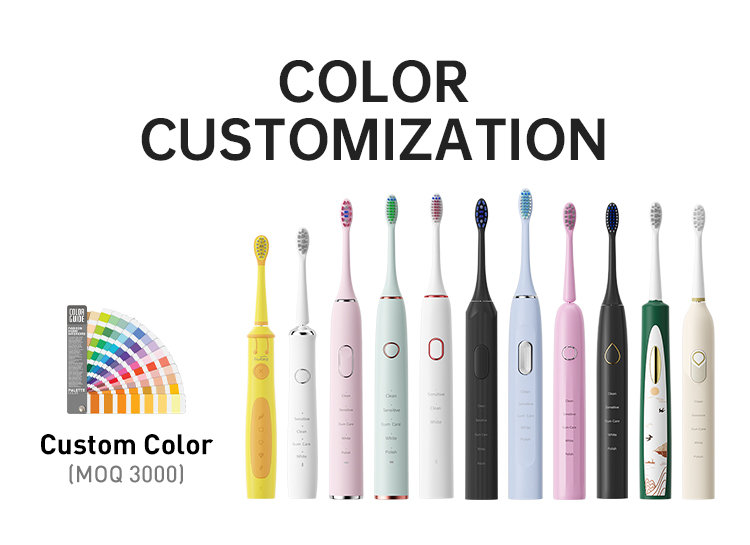
Introduction electric toothbrush customization options OEM has become a key strategy for brands aiming to stand out in the competitive oral care market. Today, differentiation is no longer optional. Instead, it is essential for survival. As consumer expectations evolve, companies must offer unique designs, advanced features, and personalized experiences. Therefore, OEM customization plays a critical role in shaping brand identity and market positioning. Why Customization Matters Market Saturation First of all, the electric toothbrush market is highly saturated. Many products share similar features. As a result, differentiation becomes crucial. Consumer Expectations Additionally, consumers demand more than basic functionality. They seek aesthetic appeal, innovation, and personalization. Brand Identity Moreover, customization helps build a strong brand image. Unique products create lasting impressions. Core Customization Options Design Customization Housing Shape Different ergonomic designs improve user comfort. Material Selection Options include ABS, rubber coating, and eco-friendly materials. Surface Finishing Matte, glossy, or textured finishes enhance visual appeal. Color Customization Color plays a significant role in branding. Companies can choose from a wide range of Pantone colors. Furthermore, gradient and dual-tone designs are becoming popular. Functional Customization Vibration Modes Different intensity levels cater to various user needs. Smart Features Bluetooth connectivity and app integration are…
Introduction electric toothbrush prototype development supplier plays a critical role in transforming ideas into market-ready products. In a highly competitive oral care industry, innovation speed determines success. Therefore, companies must rely on professional suppliers to develop prototypes efficiently and accurately. Moreover, prototyping allows brands to validate design, functionality, and user experience before mass production. This step is essential for reducing risks and improving product quality. Importance of Prototype Development Concept Validation First, prototypes help verify whether a concept is feasible. Without this step, companies may face costly errors later. Design Optimization In addition, iterative prototyping enables continuous improvement. Each version refines performance and usability. Cost Control Furthermore, early testing helps identify issues before mass production, reducing overall costs. Key Stages of Prototype Development Industrial Design At this stage, product appearance and ergonomics are defined. A well-designed toothbrush enhances user experience and brand perception. Engineering Development Next, internal structure and components are developed. This includes motor selection, PCB design, and battery integration. Functional Testing Then, prototypes undergo rigorous testing to ensure performance meets expectations. User Feedback Finally, real users evaluate the product, providing insights for further improvements. Choosing the Right Supplier Technical Expertise A reliable supplier must have strong engineering capabilities.…
Introduction small batch electric toothbrush OEM is increasingly becoming the preferred manufacturing model for emerging oral care brands and established companies seeking flexibility. In today’s fast-changing consumer market, businesses no longer rely solely on large-volume production. Instead, they prioritize agility, rapid iteration, and controlled investment. Therefore, small batch manufacturing offers a strategic pathway to test new products, validate concepts, and refine branding before scaling. Moreover, it allows companies to respond quickly to trends without overcommitting resources. Why Small Batch OEM Is Gaining Popularity First of all, traditional large-scale production often requires high minimum order quantities. As a result, many startups face financial pressure and inventory risks. In contrast, small batch OEM services reduce entry barriers. Additionally, product life cycles are becoming shorter. Consequently, brands must innovate faster. With smaller production runs, companies can introduce updates frequently and stay competitive. Furthermore, customization has become essential. Consumers expect unique designs, specialized functions, and differentiated branding. Because of this, small batch production aligns perfectly with market demand. Key Advantages of Small Batch Electric Toothbrush OEM Lower Financial Risk To begin with, smaller production volumes mean reduced upfront investment. This is especially beneficial for startups or companies testing new markets. Faster Time-to-Market In addition,…
Introduction CapEx-to-OpEx Conversion shifts healthcare equipment costs from upfront investment to operational expense structures strategically. A Pay-per-Patient Model aligns clinic payments with actual treatment usage and patient volume. Combining both improves financial flexibility. This blog explains key advantages. Reducing Upfront Financial Pressure for Clinics Large equipment investments limit operational flexibility significantly. CapEx-to-OpEx Conversion spreads technology costs across manageable operational payments efficiently. A Pay-per-Patient Model aligns expenses with clinic activity levels. This improves affordability. Supporting Faster Technology Adoption Flexible payment structures accelerate healthcare modernization efforts. CapEx-to-OpEx Conversion removes major capital barriers for clinics effectively. A Pay-per-Patient Model encourages adoption of advanced healthcare technologies. This improves implementation speed. Aligning Costs with Revenue Generation Usage-based models improve financial predictability significantly. A Pay-per-Patient Model links operational expenses directly to patient treatment volumes. CapEx-to-OpEx Conversion supports scalable budgeting strategies. This improves cash flow management. Enhancing Scalability for Multi-location Clinic Networks Growing healthcare organizations require flexible operational structures. CapEx-to-OpEx Conversions simplifies expansion without major capital expenditures immediately. A Pay-per-Patient Model supports scalable deployment across multiple clinics. This improves growth potential. Strengthening Long-term Vendor and Clinic Partnerships Service-based models encourage ongoing collaboration opportunities. CapEx-to-OpEx Conversions supports recurring operational relationships between providers and clinics consistently. A Pay-per-Patient Model…
Introduction A Predictive User Interface adapts digital interactions using behavioral patterns and real-time user data intelligently. A Context-aware Brushing Coach delivers personalized oral care guidance based on brushing conditions dynamically. Combining both improves smart oral care experiences. This blog explains key advantages. Delivering Personalized Brushing Recommendations Personalized guidance improves oral care effectiveness significantly. A Predictive User Interface analyzes brushing behaviors and usage preferences continuously. A Context-aware Brushing Coach adjusts recommendations automatically. This improves user engagement. Enhancing Real-time User Feedback Accuracy Immediate feedback improves brushing technique consistency effectively. A Context-aware Brushing Coach responds to pressure, timing, and brushing coverage dynamically. A Predictive User Interface predicts corrective guidance needs proactively. This improves brushing quality. Supporting Adaptive Learning and Habit Formation Smart systems improve long-term user behavior gradually. A Predictive User Interface identifies recurring oral care habits and preferences accurately. A Context-aware Brushing Coach reinforces positive brushing routines consistently. This strengthens habit development. Improving User Experience Through Intelligent Automation Automated personalization increases convenience and usability significantly. A Predictive User Interface reduces manual adjustments during daily oral care sessions. A Context-aware Brushing Coach delivers context-specific recommendations seamlessly. This improves overall experience. Supporting Data-driven Product Optimization Behavioral insights improve future product development strategies. A Predictive…
Introduction Daily carrot juice consumption can leave a noticeable orange tint on teeth from beta-carotene buildup, so this orange vegetable teeth whitening guide helps you address discoloration while enjoying your favorite drink. Beta-carotene, the pigment that gives carrots their orange color, can bind to tooth enamel over time, creating a persistent orange hue. These safe whitening methods and prevention tips work well for daily carrot juice drinkers. Why Carrot Juice Stains Teeth Carrot juice discolors teeth because: High levels of beta-carotene bind tightly to tooth enamel, especially with regular daily consumption. The sugar in carrot juice feeds bacteria, which can worsen plaque buildup and staining. The acidic pH of carrot juice can weaken enamel over time, making it more prone to absorbing pigments. Drinking carrot juice frequently without rinsing afterward lets pigments set on the tooth surface. Safe Whitening Methods for Carrot Juice Stains These gentle options work well for carrot juice lovers: Low-abrasion whitening toothpaste: Removes surface beta-carotene stains daily without damaging enamel. Enamel-safe whitening strips: Gentle formulas that lighten orange discoloration without sensitivity. Regular dental cleanings: Professional scaling removes built-up carrot juice residue safely. Remineralizing mouthwash: Strengthens enamel to reduce future staining and sensitivity. Prevention Tips to Reduce…
Introduction Oral hemangiomas—benign blood vessel growths in the mouth—bleed easily, so a benign blood vessel flosser with ultra-gentle settings is essential for safe cleaning. These vascular growths are highly sensitive, and even minor irritation can cause bleeding or discomfort. Using a water flosser with the right pressure lets you clean around hemangiomas safely without triggering bleeding. Why Oral Hemangiomas Require Ultra-Gentle Care Oral hemangiomas are sensitive to: High-pressure water streams that can rupture the delicate blood vessels and cause bleeding. Abrasive tools like traditional floss or interdental brushes that scratch the surface. Rough handling or contact that can irritate the growth and lead to inflammation. Food debris trapped around the hemangioma that can increase infection risk if not cleaned gently. Safe Water Flossing Techniques for Oral Hemangiomas Follow these ultra-gentle steps: Use the lowest possible pressure setting to avoid irritating the vascular growth. Hold the nozzle at a wide angle to clean around the hemangioma, not directly on it. Flush slowly and gently, focusing on the gumline around the growth rather than the growth itself. Rinse with lukewarm water afterward to soothe the area and reduce inflammation. Additional Care Tips for Oral Hemangiomas Use a soft-bristled toothbrush to clean around…
Introduction Denture-related stomatitis, a common fungal infection under dentures, causes sore, irritated gums, so a denture sore mouth toothbrush with the right features is essential for gentle cleaning. Fungal infections thrive on trapped food debris and plaque under dentures, making daily cleaning critical to prevent irritation and pain. Choosing the right denture sore mouth toothbrush helps you keep both your dentures and gums clean without worsening soreness. Why Denture Stomatitis Requires Specialized Cleaning Denture-related stomatitis is caused by: Food debris and plaque trapped under dentures, which feed the fungus that causes infection. Poorly fitting dentures that rub against gums, causing irritation and inflammation. Lack of proper denture cleaning, which allows bacteria and fungi to multiply. Dry mouth, which can make the gums more prone to infection and irritation. Key Features of a Denture Sore Mouth Toothbrush Look for these gentle, effective features: Extra-soft bristles: Clean gums and dentures without scratching or irritating sensitive tissue. Small, compact brush head: Fits easily under dentures and around the gumline to clean hard-to-reach areas. Dual-ended design: One end for cleaning dentures, the other for cleaning natural teeth and gums. Ergonomic handle: Easy to grip, even with sore hands or limited mobility. Cleaning Tips for…
Introduction Matcha, the popular green tea powder, leaves a unique greenish residue on teeth, so this matcha teeth stains guide helps you address discoloration from daily use. The fine powder particles and high tannin content in matcha can build up on enamel over time, creating noticeable stains. This matcha teeth stains guide shares safe whitening methods and prevention tips for green tea lovers. Why Matcha Stains Teeth Matcha discolors teeth differently than regular tea because: The fine powder particles stick to the tooth surface, creating a greenish film that’s hard to remove with brushing alone. High levels of tannins in matcha bind tightly to enamel, leading to persistent discoloration. Regular daily consumption builds up stains over time, even with consistent brushing. The acidic pH of matcha can weaken enamel, making it more prone to staining. Safe Whitening Methods for Matcha Stains These gentle options work well for matcha lovers: Low-abrasion whitening toothpaste: Removes surface matcha stains daily without damaging enamel. Enamel-safe whitening strips: Gentle formulas that lighten greenish discoloration without sensitivity. Regular dental cleanings: Professional scaling removes built-up matcha residue safely. Remineralizing mouthwash: Strengthens enamel to reduce future staining from tannins. Prevention Tips to Reduce Matcha Stains Rinse your mouth…
Introduction Ankylosed teeth—teeth fused directly to the jawbone—require extra-gentle care, so fused teeth water flosser care is key to avoiding irritation or damage. Unlike healthy teeth, ankylosed teeth don’t have a periodontal ligament, making them sensitive to pressure or force. Using a water flosser with the right settings lets you clean around these teeth safely without causing pain or complications. Why Ankylosed Teeth Need Gentle Cleaning Ankylosed teeth are different from healthy teeth because: They lack the cushioning of the periodontal ligament, so even light pressure can cause discomfort. The gumline around fused teeth may be sensitive or inflamed, making traditional flossing risky. Food debris can get trapped around the tooth, increasing the risk of infection without proper cleaning. The fused tooth is more prone to damage from rough handling or high-pressure tools. Safe Water Flossing Techniques for Ankylosed Teeth Follow these gentle steps: Use the lowest pressure setting to avoid irritating the sensitive area around the fused tooth. Hold the nozzle at a 45-degree angle to the gumline, not directly on the ankylosed tooth itself. Flush slowly and gently, focusing on the gumline around the tooth rather than the tooth surface. Rinse with lukewarm water afterward to soothe the…
Introduction Prolonged thumb sucking can affect tooth alignment and oral health in children, so this thumb sucking teeth care guide focuses on safe cleaning habits and the role of electric toothbrushes. Misaligned front teeth from thumb sucking can create hard-to-reach areas where plaque builds up easily. Choosing the right electric toothbrush makes daily cleaning easier, even when teeth are not perfectly straight. How Thumb Sucking Affects Kids’ Teeth Common issues include: Misaligned or protruding front teeth that create gaps for food debris to get trapped. Open bites or crossbites that make brushing difficult with manual toothbrushes. Increased risk of cavities in hard-to-reach areas around crooked teeth. Thumb sucking can also affect gum health, making gentle cleaning even more important. Why Electric Toothbrushes Are Great for Kids With Thumb Sucking Habits Electric toothbrushes offer key benefits: Automatic vibration: Cleans more effectively around misaligned teeth than manual brushing. Small, soft brush heads: Reach tight gaps without irritating sensitive gums. Built-in timers: Encourage kids to brush for the full two minutes, even if they get distracted. Fun designs: Characters or colors that make brushing feel like a game, even for kids who resist self-care. Cleaning Tips for Misaligned Front Teeth Hold the brush…
Introduction Co-invented IP Management defines ownership, licensing, and commercialization rights for jointly developed innovations clearly. An Equity-for-Technology Partnership exchanges technological contributions for long-term business equity participation strategically. Combining both strengthens collaborative innovation frameworks. This blog explains key advantages. Clarifying Intellectual Property Ownership Structures Clear ownership reduces future partnership disputes significantly. Co-invented IP Management defines patent rights and commercialization responsibilities systematically. An Equity-for-Technology Partnership benefits from transparent contribution agreements. This improves collaboration stability. Aligning Long-term Strategic Interests Shared incentives improve partnership commitment levels. An Equity-for-Technology Partnership encourages both parties to support sustainable business growth actively. Co-invented IP Management protects innovation contributions fairly. This strengthens alignment. Supporting Faster Innovation Commercialization Structured agreements improve operational efficiency significantly. Co-invented IP Management simplifies technology licensing and product development coordination effectively. An Equity-for-Technology Partnership accelerates market deployment opportunities. This improves commercialization speed. Reducing Financial and Development Risks Collaborative models distribute innovation risks strategically. An Equity-for-Technology Partnership reduces immediate cash investment pressures for technology adoption. Co-invented IP Managements minimizes legal uncertainties during development. This improves risk management. Encouraging Cross-industry Collaboration Opportunities Joint innovation expands business development potential significantly. Co-invented IP Managements supports partnerships between manufacturers, startups, and research institutions effectively. An Equity-for-Technology Partnership encourages shared innovation ecosystems.…


.jpg)
.jpg)
.jpg)
.jpg)
.jpg)






.jpg)
.jpg)
.jpg)