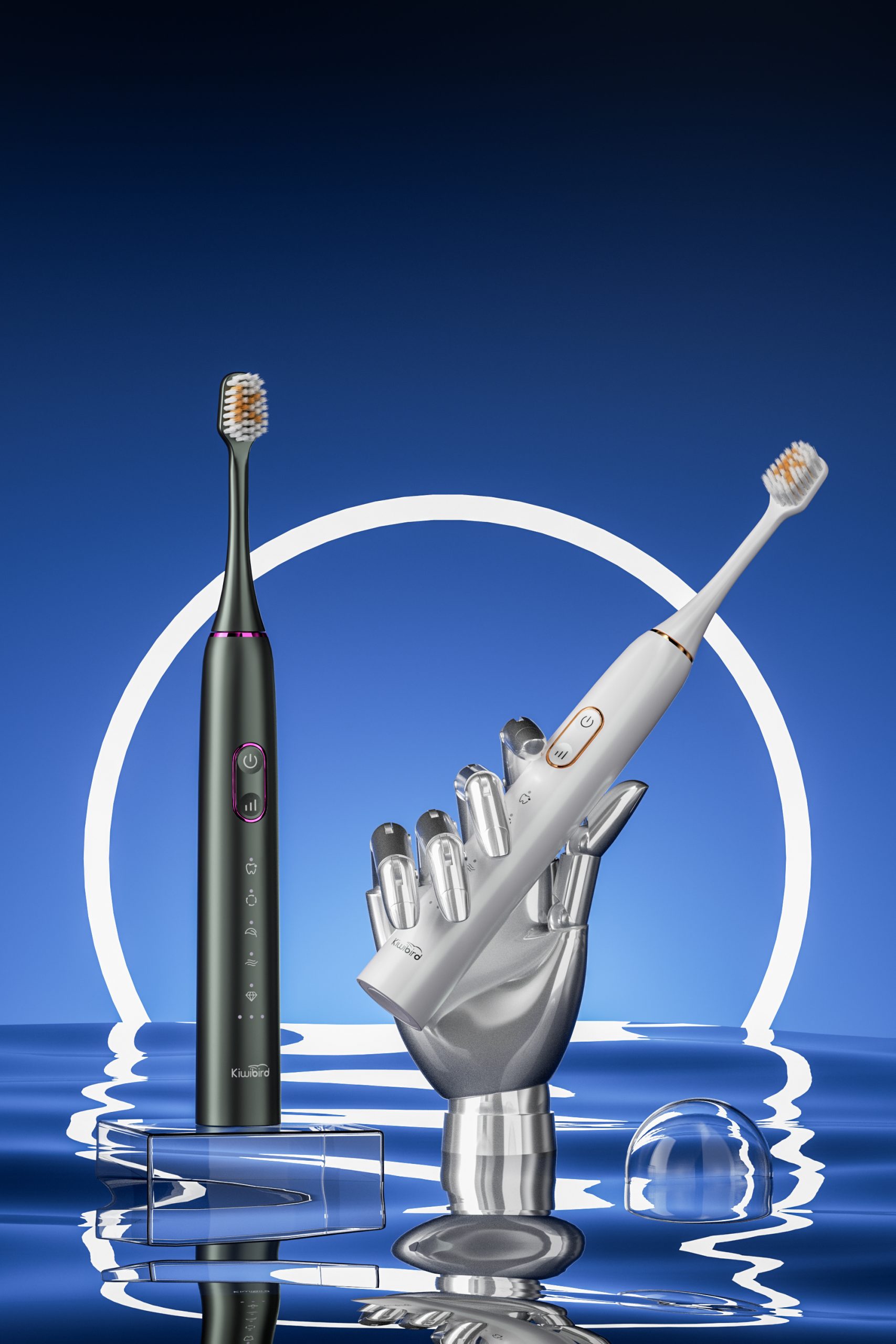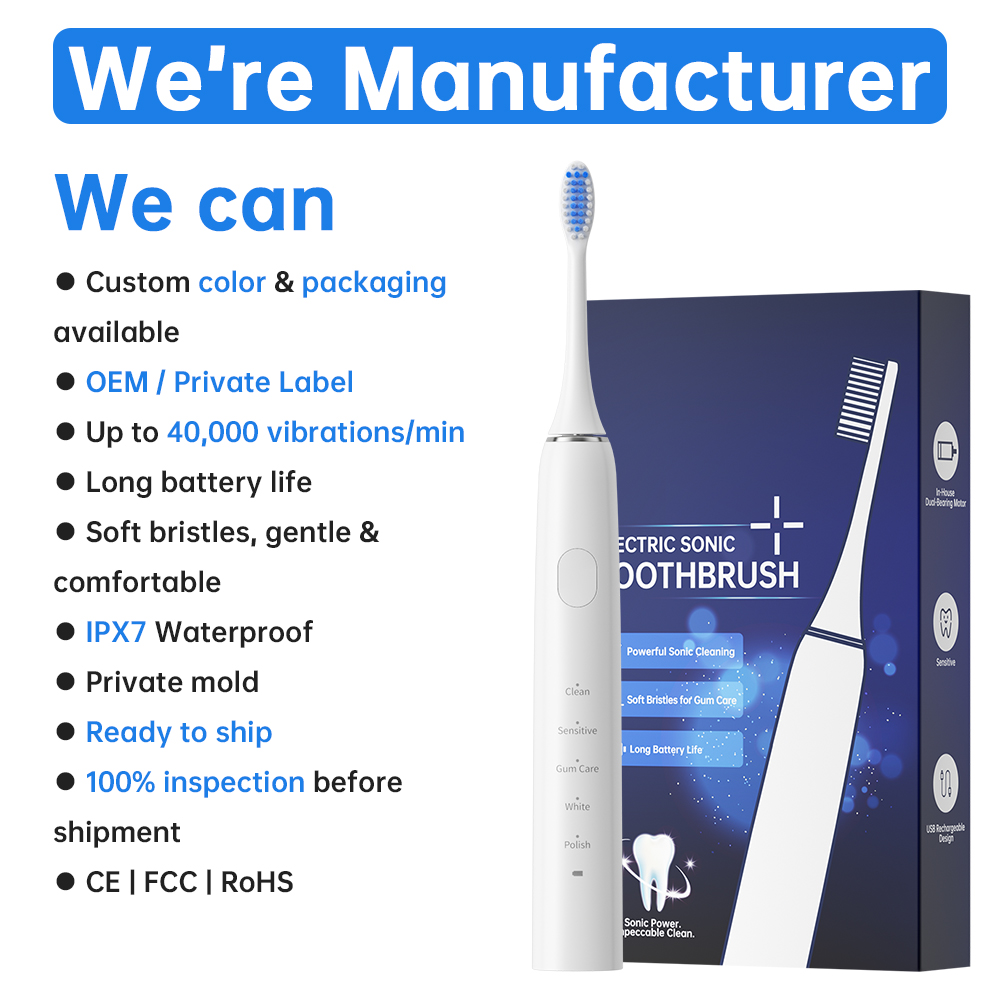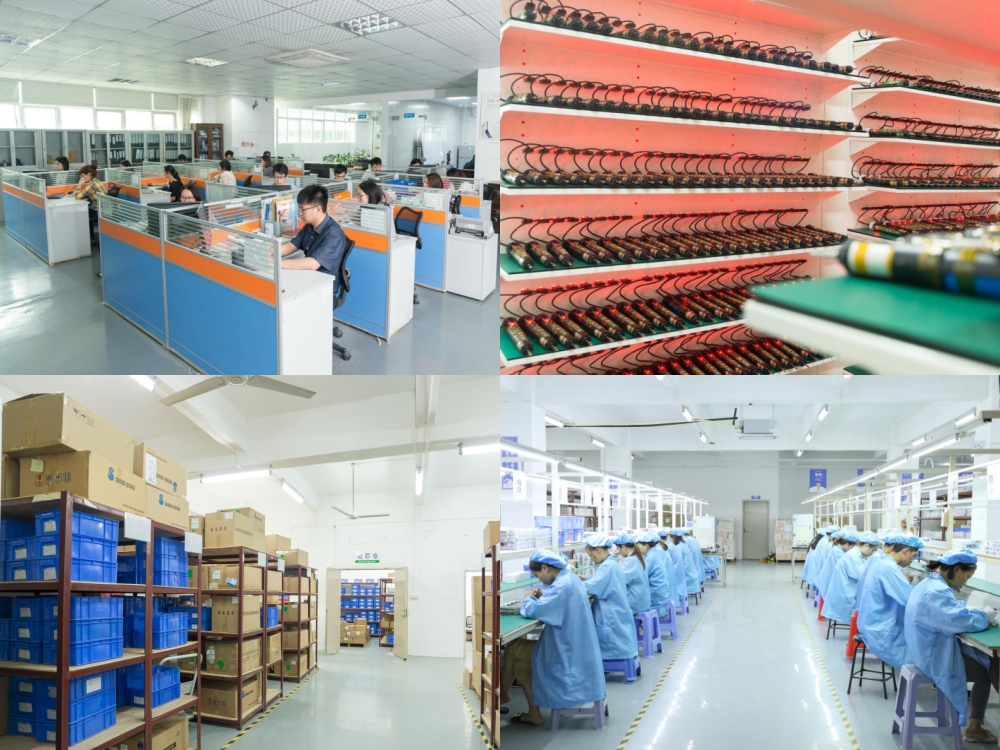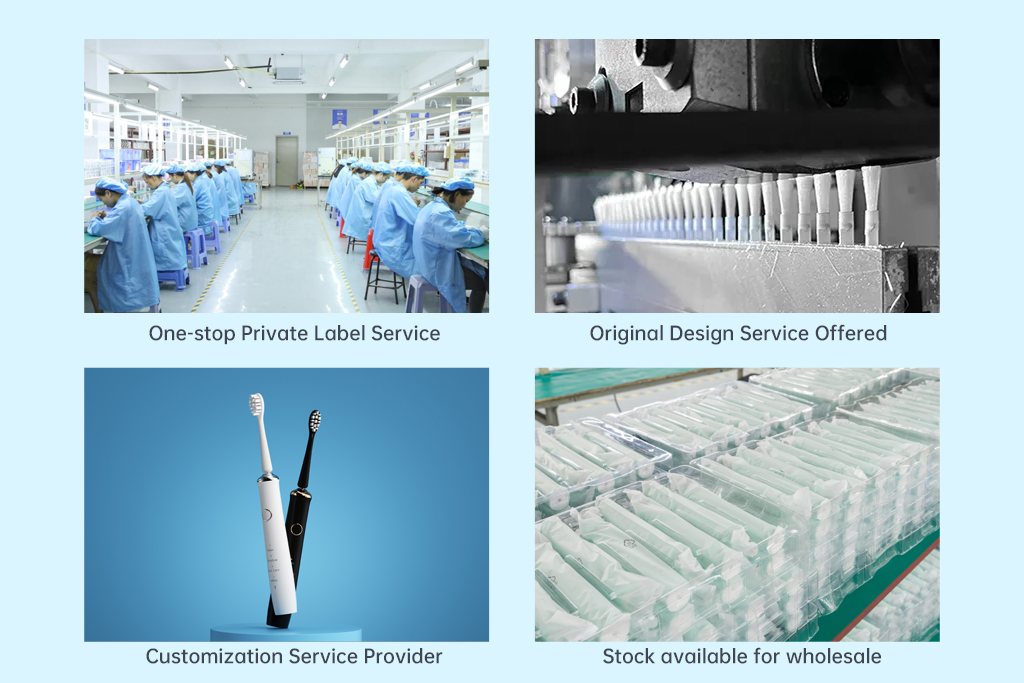
For oral care brands seeking long-term growth and product credibility, finding the right electric toothbrush factory is critical. In today’s competitive market, quality, consistency, and regulatory compliance are essential. This blog serves as a practical guide for brand owners to conduct a structured electric toothbrush factory evaluation, covering the key factors that ensure your product meets both market expectations and global toothbrush production standards. Below are 5 must-read criteria to help you identify a reliable manufacturing partner. Manufacturing Capabilities & Facility Infrastructure When evaluating a potential partner in oral care manufacturing, begin by examining their production scale and technical infrastructure. Key areas to consider include: In-house mold development for brush heads and motor components Automated production lines to ensure precision and consistency Capacity to handle large OEM/ODM orders without quality compromise A high-quality electric toothbrush factory will be able to demonstrate robust capabilities across all production stages, from injection molding to final assembly and packaging. Compliance with Toothbrush Production Standards Global markets demand strict adherence to safety and quality regulations. A factory’s ability to comply with international toothbrush production standards is a non-negotiable factor. Look for compliance with: ISO 13485 (for medical-grade manufacturing) CE, FCC, FDA certifications depending on target markets RoHS and REACH environmental…
.jpg)
In the oral care industry, user experience is as important as technical effectiveness. However, a frequent concern voiced by whitening tray users is Tray Discomfort that unexpectedly results in Mouth Ulcers. Is this just a coincidence—or does the design and material of the tray play a direct role in oral tissue irritation? For manufacturers, understanding this potential link is crucial to ensure product safety, comfort, and market competitiveness. How Tray Design Influences Oral Comfort The root cause of Tray Discomfort often lies in poor ergonomic design or unsuitable material selection. Ill-fitting trays—whether too tight, loose, or uneven—create friction against the delicate mucosal lining of the cheeks and gums. This constant mechanical irritation can weaken tissue resilience, paving the way for micro-abrasions that evolve into Mouth Ulcers. For B2B producers, tray customization is no longer optional; it is a key value proposition demanded by dental professionals and end users alike.Company web:https://www.powsmart.com/product/electric-toothbrush/ The Role of Material Hardness and Flexibility Another critical factor is tray material. Excessively rigid plastics may press sharply against soft tissues, while trays made from overly soft materials may collapse, leading to instability and chafing. Both extremes can increase Tray Discomfort and elevate the chance of Mouth Ulcers formation.…

The global oral care market is evolving rapidly, driven by rising consumer awareness and growing demand for advanced hygiene solutions. For brands looking to stay ahead, oral care product expansion is no longer optional—it's essential. Whether you're launching your first electric toothbrush line or expanding into water flossers, a strong manufacturing foundation is critical. This guide provides a roadmap for oral care brands looking to scale smartly through factory partnerships and strategic product development. Assessing Readiness for Brand Upgrade and Expansion Before jumping into production or new product categories, it's important to evaluate your brand’s current market position. Ask yourself: Is your product portfolio meeting modern oral hygiene trends? Do you have the infrastructure to manage supply chain and logistics on a larger scale? Are your current manufacturing partners able to support scale, speed, and quality? A successful brand upgrade and expansion guide starts with clear objectives, market differentiation, and an aligned vision with production partners. Finding the Right Electric Toothbrush Factory The electric toothbrush segment is a cornerstone of innovation in oral care. Selecting the right electric toothbrush factory can make or break your product success. When evaluating factories, consider: R&D capabilities: Can they develop unique brush heads, smart features, or app…
For many consumers, teeth whitening promises brighter smiles—but for manufacturers, Tooth Sensitivity and Enamel Erosion are potential side effects that require serious attention. As more users report discomfort or sensitivity after using whitening products, industry players must consider: is enamel damage an inevitable cost of whitening technology, or can smarter design and formulation reduce these risks? Why Whitening Treatments May Trigger Tooth Sensitivity A common complaint among whitening product users is Tooth Sensitivity, especially after repeated or intensive use. This reaction often stems from the action of peroxide-based gels, which penetrate the enamel layer to bleach intrinsic stains. While effective, this process can temporarily expose dentin tubules—the microscopic channels that connect to the tooth nerve—causing discomfort when exposed to heat, cold, or pressure. For manufacturers, understanding this mechanism is crucial. Over-concentration or prolonged application times heighten sensitivity risks, making precise formulation and user instruction essential to product safety. The Role of Enamel Erosion in Whitening Side Effects Enamel Erosion exacerbates the problem of Tooth Sensitivity. Enamel, the hardest substance in the human body, acts as the tooth's protective shield. However, excessive exposure to acidic gels or abrasive whitening agents gradually wears this barrier away, reducing its thickness and strength. Once…
In the production and design of personal care devices such as whitening pens, electric toothbrushes, or beauty tools, Gel Leakage and the resulting Chemical Burns have become concerns that manufacturers can no longer afford to ignore. While such issues may seem minor during the design or assembly stage, they carry significant risks for end-users—posing not only personal injury hazards but also potential damage to brand reputation and after-sales costs. What is Gel Leakage and Why Does It Matter? Gel Leakage refers to the unintended escape of liquid or semi-liquid substances from sealed compartments inside a device, such as whitening gel pens or battery-powered beauty applicators. This leakage often occurs due to seal failure, material degradation, or poor design of the containment chamber. When gel leaks from its intended path, it comes into direct contact with surrounding components or even the user’s skin or gums. In worst-case scenarios, this leads to Chemical Burns, especially if the gel formulation includes peroxide, acid, or alcohol-based ingredients intended for controlled application only. Causes Behind Gel Leakage in Devices Several critical factors contribute to Gel Leakage: Seal Deterioration: Over time or due to poor material selection, the sealing components (like O-rings or gaskets) may crack…
In the world of small electrical appliances, especially oral care devices like electric toothbrushes and water flossers, Motor Overheating and Device Overheating are two critical risks that often go hand in hand. While these issues may seem like isolated technical failures, their combined presence can pose a "double danger" that affects not only product performance but also user safety and brand reputation. So how are these two overheating phenomena related, and why should manufacturers be on high alert? The Fundamental Difference Between Motor Overheating and Device Overheating To begin, it is essential to distinguish between Motor Overheating and Device Overheating. Motor Overheating refers to the excessive temperature rise in the motor core due to prolonged use, high resistance, or mechanical friction. On the other hand, Device Overheating includes not only the motor's heat but also the accumulation of heat in the battery, circuit board, and housing. Although separate in origin, these two forms of overheating frequently influence each other. For example, a poorly ventilated housing may trap the heat generated by the motor, leading to widespread Device Overheating. Causes Behind Motor Overheating Common causes of Motor Overheating include: Overloading: When the motor is subjected to excessive resistance (e.g., pressing the…
For manufacturers and brands in the oral care industry, customer complaints about Gum Bleeding caused by Enamel Scratches are no longer rare. With the rise of sonic toothbrushes, water flossers, and dental devices, users are increasingly sensitive to oral discomfort and damage. But does this mean manufacturers or OEM/ODM suppliers need to panic? This article explores how Enamel Scratches occur, why they trigger Gum Bleeding, and what design or material flaws may be the root cause—especially in products intended for daily use. The Hidden Connection Between Enamel Scratches and Gum Bleeding While enamel and gum tissue are distinct, their health is closely interrelated. Enamel Scratches—even micro-level ones—can lead to sharp edges or rough surfaces on toothbrush bristles or flossing nozzles. When such compromised surfaces come in contact with sensitive gum tissue, Gum Bleeding can easily result. This risk becomes higher in products where bristle quality, nozzle coating, or polishing processes are insufficiently controlled. Moreover, once enamel is scratched, the underlying tooth structure may become more prone to bacterial retention, leading to localized gum inflammation—another indirect cause of Gum Bleeding. Key Product Design and Material Issues Leading to Enamel Scratches Several hidden design or material flaws in oral care products can…
In precision-driven devices such as electric toothbrushes, water flossers, and personal care equipment, maintaining stable performance is paramount. However, Noise Increase—whether electrical or mechanical—has become a critical concern, as it may directly contribute to Vibration Inconsistency. This article will thoroughly explore how these two factors interact, why manufacturers should care, and what measures can prevent performance degradation caused by their relationship. What is Noise in Electrical and Mechanical Systems? In B2B manufacturing of smart or powered devices, “noise” does not simply refer to sound. It also includes: Electrical Noise: Unwanted electromagnetic interference (EMI) or fluctuations in voltage/current that disrupt signal clarity. Mechanical Noise: Unplanned or excess vibrations, friction, or movement in motors and gears. This Noise Increase can generate disturbances in sensor feedback loops, motor operation, and even user-perceived performance—laying the foundation for potential Vibration Inconsistency in the product. How Noise Increase Leads to Vibration Inconsistency The relationship between Noise Increase and Vibration Inconsistency is closer than it may first appear: Motor Control Disruption: Electrical noise can interfere with motor drivers and controllers, causing unintended shifts in speed or oscillation patterns. Mechanical Resonance Overlap: Excessive mechanical noise leads to unintended harmonics that amplify or dampen motor vibrations unpredictably. Sensor Misreading:…
In the manufacturing and supply of electric personal care devices, two frequently overlooked but critical issues are Charging Failure and Handle Cracking. These problems not only impact the product’s functionality but also jeopardize its lifespan and user satisfaction. When these two issues occur simultaneously, the risk of total device failure significantly increases. This article explores why these faults arise and provides practical guidance for B2B manufacturers on how to identify and resolve them efficiently. Understanding the Root Causes of Charging Failure Charging Failure in electric devices, such as toothbrushes and water flossers, can originate from various points in the system: Damaged Charging Ports: Repeated use, contamination, or oxidation of the charging contacts can prevent effective power transfer. Circuit Malfunction: Poor-quality PCBs or faulty battery management systems (BMS) disrupt the charging cycle. Battery Degradation: Aged or inferior batteries may no longer accept or retain charge, leading to performance drops. Detecting the true source of Charging Failure is critical before proceeding with corrective actions to avoid misdiagnosis and unnecessary component replacement. The Hidden Threat of Handle Cracking Simultaneously, Handle Cracking is another issue that can silently develop during the product’s lifecycle: Material Fatigue: Prolonged exposure to moisture, temperature shifts, and mechanical stress…
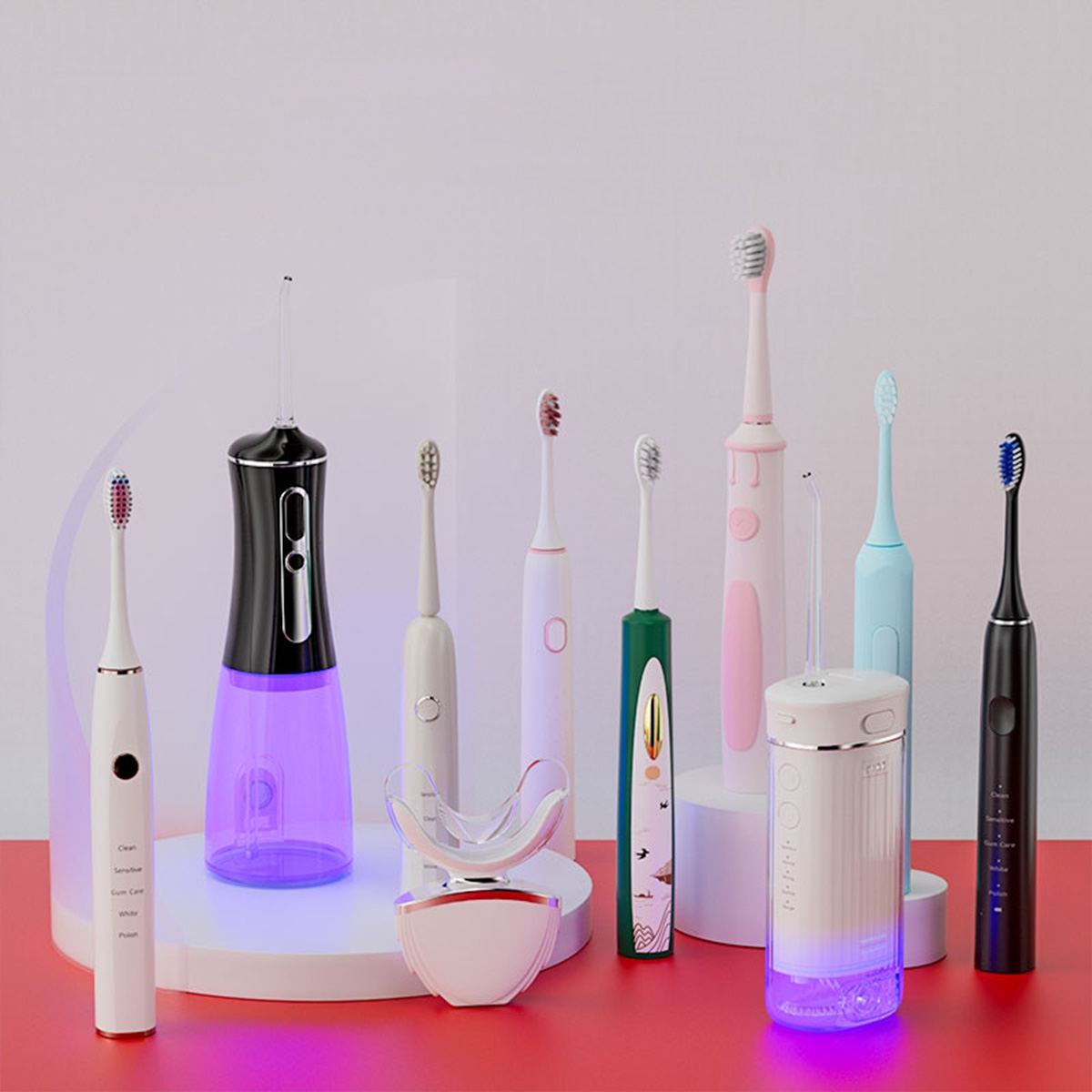
In today’s fast-evolving oral care market, consumers are no longer satisfied with single-function products. They’re seeking comprehensive, time-saving, and value-driven solutions. This shift in demand has given rise to bundled offerings, particularly the electric toothbrush and water flosser combination. For brand owners, this bundle is not just a consumer trend—it’s a powerful brand expansion strategy that can enhance competitiveness in an increasingly crowded marketplace. Why the Electric Toothbrush and Water Flosser Combination Appeals to Modern Consumers Consumers are becoming more informed and proactive about oral hygiene. Bundled oral care kits that include both an electric toothbrush and a water flosser offer multiple benefits: Comprehensive cleaning: Mechanical brushing combined with pressurized water stream provides a full-spectrum cleaning experience. Time efficiency: Bundles save time by offering everything consumers need in one package. Perceived value: Shoppers view bundles as cost-effective and premium in comparison to standalone items. For brands, tapping into this consumer demand through bundling is a smart move to enhance competitiveness through bundle strategy. Competitive Advantages for Brand Owners By offering an electric toothbrush and water flosser combination, brand owners can gain several strategic advantages: Product differentiation: Bundles stand out on shelves and e-commerce platforms, increasing product visibility. Higher average order value (AOV): Consumers…
1-scaled.jpg)
In today’s oral care market, the demand for at-home teeth whitening solutions is growing rapidly. Consumers are looking for effective, safe, and easy-to-use whitening products—driving a surge in private label and customized solutions. For brand owners, the challenge lies not only in launching a whitening device but also in create differentiated products that stands out in a crowded market. One of the most critical steps in this process is finding and partnering with a reliable teeth whitening device factory that offers both high-quality production and flexible customization options. Why Product Differentiation Matters in the Whitening Market The global oral care market is saturated with generic whitening products. To stand out, brand owners need to focus on: Unique product features (e.g., LED light technology, ergonomic design, multi-use compatibility) Strong brand identity Premium unboxing and user experience Create differentiated products can significantly increase customer retention and brand loyalty. This level of innovation and uniqueness is only possible through close collaboration with a capable and flexible teeth whitening device factory that understands your vision. Key Qualities of a Reliable Teeth Whitening Device Factory Before sourcing a whitening device factory, brand owners should evaluate potential manufacturing partners based on the following criteria: OEM of teeth whitening devices: The…
In the world of electric toothbrush manufacturing, both performance stability and user safety are non-negotiable. However, two common issues—Brush Head Wobble and Battery Swelling—can jeopardize these fundamental qualities. Many users tolerate slight wobbling or reduced battery performance unknowingly, but when these two problems occur together, the consequences can be far more serious than expected. This article explains why manufacturers and suppliers should never overlook these seemingly minor defects, as they directly impact product durability, safety, and brand reputation. What Causes Brush Head Wobble? Brush Head Wobble refers to the unwanted lateral or vertical movement of the toothbrush head during operation. While a small degree of vibration is expected for cleaning purposes, excessive wobble results from: Imprecise Shaft Fitting: Poor manufacturing tolerance can cause misalignment between the drive shaft and brush head connector. Material Fatigue: Over time, plastic or metal parts may wear out, loosening the head's connection. Assembly Errors: Inconsistent torque control during automated assembly can result in loosely mounted brush heads. When the brush head wobbles, cleaning efficiency drops and users may experience gum discomfort or premature head failure. Worse yet, persistent wobble stresses the internal drive components, hastening device breakdown. The Hidden Dangers of Battery Swelling At first…
.jpg)
With the rapid evolution of oral hygiene technologies, the UVC sterilized water flosser has become a standout product in the global market. As consumers demand higher levels of cleanliness and smart features, oral care brands are seeking reliable partners to bring these advanced solutions to life. For any company aiming to enter or expand in this space, choosing the right water flosser factory is crucial. In this article, we provide a comprehensive guide to help brand owners and sourcing managers make informed decisions when selecting a professional ultraviolet sterilized water flosser manufacturer. From product capability and quality standards to OEM services and production scale, we cover all key factors. Understand the Core Capabilities of the Manufacturer Before partnering with any water flosser factory, it's important to evaluate their core competencies: Do they have experience in oral care manufacturing? Can they handle UVC sterilization technology effectively? Do they offer a full range of water flosser manufacturing services, from tooling to assembly? A professional manufacturer should demonstrate in-depth technical expertise, especially in the integration of UVC sterilization modules — a critical and safety-sensitive component in modern water flossers. Evaluate the Manufacturer's OEM and Customization Capabilities For brands looking to stand out, finding a partner that offers…
As global demand for high-quality oral care devices continues to grow, more brands are looking to sourcing electric toothbrush factories that can offer full-spectrum support—from product design to mass production. Whether you're a startup brand or an established oral care company, finding a factory with strong comprehensive capabilities is crucial for ensuring product quality, consistency, and market success. This guide will help you identify the key qualities to look for in an electric toothbrush factory, and what makes a manufacturer stand out in the competitive oral care OEM and electric toothbrush ODM space. Define Your Business Needs First Before you begin searching for a manufacturing partner, it's essential to clearly define your needs. Are you looking for a partner who can support you through end-to-end electric toothbrush manufacturing, or are you only looking for a white-label solution? Here are a few points to consider: Customization needs (design, features, packaging) Product volume and scale (MOQ and production capacity) Certifications and compliance (FDA, CE, RoHS, ISO, etc.) Support for branding and private labeling Clarifying these aspects helps narrow down the list of suitable electric toothbrush ODM or OEM factories. Key Qualities of a Factory with Strong Comprehensive Capabilities When evaluating an electric toothbrush factory, prioritize those with proven, broad capabilities across…
In the development and manufacturing of oral care devices, especially water flossers and similar equipment, ensuring long and reliable usage time is vital. However, Short Tank Runtime remains a common issue in many products, directly affecting their usability and effectiveness. For users managing sensitive oral conditions such as Oral Ulcers, this problem can become more than an inconvenience—it can compromise care quality. This article explores how short tank capacity impacts oral ulcer treatment, the causes behind this issue, and what manufacturers can do to resolve it. Why Short Tank Runtime Matters in Oral Ulcer Care Oral Ulcers require special attention during daily cleaning routines. These small but painful sores can worsen with improper hygiene or insufficient cleaning, leading to delayed healing and potential infections. When a water flosser suffers from Short Tank Runtime, the device may not provide sufficient continuous water flow to properly rinse the ulcer area. This interruption forces users to stop mid-cleaning to refill the tank, breaking the cleaning process and potentially leaving bacteria or food particles behind. Inadequate rinsing due to runtime limitations may reduce the effectiveness of oral ulcer treatment and prolong discomfort or recovery times. Causes of Short Tank Runtime in Water Flossers Several…
In the competitive field of personal care and electronic product manufacturing, maintaining component cleanliness is not just a matter of aesthetics—it’s a crucial factor affecting product performance and customer satisfaction. One persistent challenge many manufacturers face is Fiber Residue resulting from Poor Cleaning processes. This unnoticed issue can lead to quality defects, reduced durability, and even functional failure in final products. In this article, we will explore the causes, consequences, and solutions related to fiber residue caused by inadequate cleaning procedures. Understanding Fiber Residue in Manufacturing Fiber Residue refers to tiny threads or lint particles that remain on product surfaces after manufacturing or assembly. These fibers can originate from various sources such as operator gloves, cleaning cloths, packaging materials, or environmental dust. When Poor Cleaning practices fail to remove these fibers, they remain embedded in device joints, surfaces, or inner components—posing both cosmetic and functional problems. In high-precision industries such as electronics, oral care devices, and medical tools, even microscopic fiber residues can negatively impact device sealing, heat dissipation, or movement tolerances. Causes of Poor Cleaning in Production Lines Several common factors contribute to Poor Cleaning and the resulting accumulation of Fiber Residue: Inadequate Cleaning Equipment: Using outdated or inefficient…
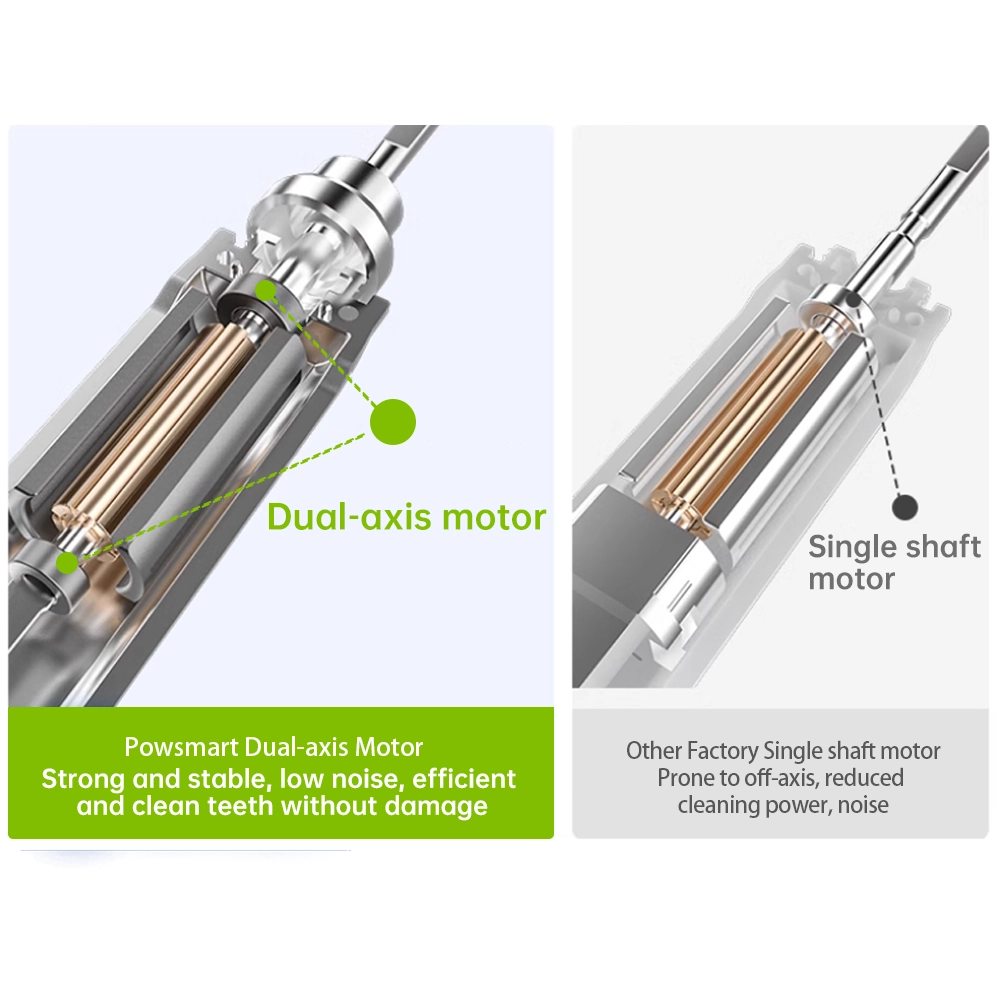
As the global demand for electric toothbrushes continues to grow, selecting the right technology for your brand’s product line is more critical than ever. Whether you are launching a new oral care brand or expanding your existing portfolio, understanding the differences between sonic vibration and rotary vibration technology is essential for aligning with both market trends and user expectations. This technology comparison will explore the performance, user experience, and manufacturing implications of both electric toothbrush vibration technologies, helping brand owners make informed sourcing decisions. https://www.powsmart.com/product/electric-toothbrush/ Overview of Electric Toothbrush Vibration Technologies In the electric toothbrush market, two main types of vibration mechanisms dominate: comparison of sonic vibration and rotary vibration technology. Sonic Vibration uses high-frequency side-to-side movements—usually at 20,000 to 40,000 strokes per minute. This technology relies on fluid dynamics to clean beyond direct contact, reaching between teeth and along the gumline. Rotary Vibration Technology involves oscillating or rotating brush heads, typically at a lower frequency (around 5,000 to 10,000 rotations per minute). These brushes often clean by direct mechanical action and are particularly effective at polishing tooth surfaces. Understanding these foundational differences is the first step in evaluating product strategy and manufacturing options. Cleaning Efficiency and User Experience From a consumer perspective, both technologies offer…
As water flossers continue to grow in popularity across global markets, manufacturers are focusing not only on cleaning performance but also on the safety and user experience of these devices. Two often-overlooked but critically linked factors are Excessive Noise and the potential for Aspiration Risk. While noise levels may seem like a minor inconvenience at first glance, excessive sound can directly contribute to unsafe usage conditions—especially among sensitive user groups. This article explores how these two issues are related, and why B2B suppliers should pay close attention. The Relationship Between Excessive Noise and Aspiration Risk Excessive Noise produced by water flossers can lead to multiple unintended consequences, one of which is the increased possibility of Aspiration Risk—the accidental inhalation of water droplets or debris into the respiratory tract. When a device operates loudly, it can startle or distract the user, disrupting the careful coordination required to maintain correct oral posture during use. For elderly users, children, or individuals with reduced motor control, this distraction can make it easier to lose concentration or improperly tilt the device, raising the likelihood of aspiration incidents. Therefore, manufacturers cannot ignore the link between noise output and user safety. Causes of Excessive Noise in Water…
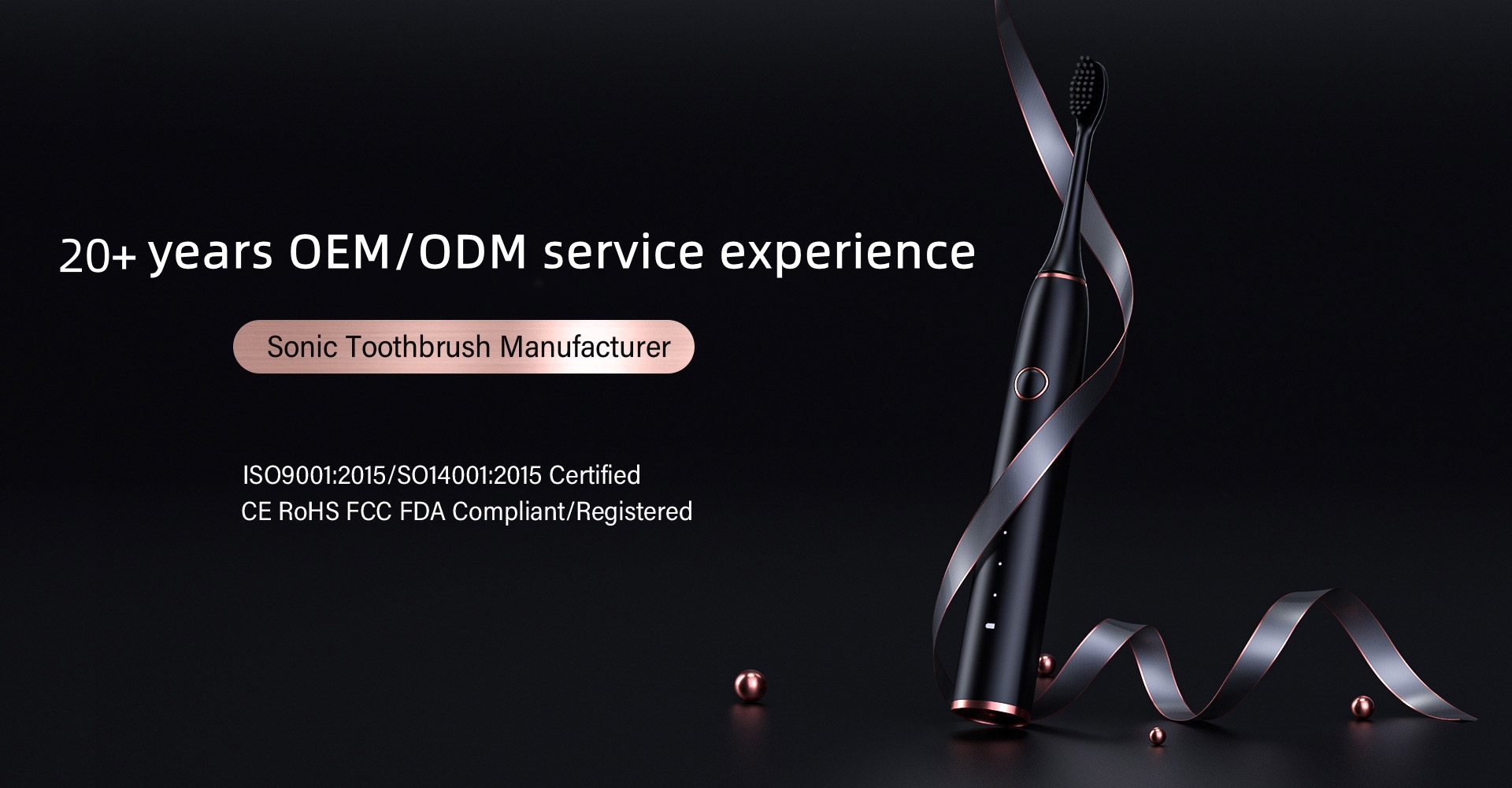
As demand for smart and innovative oral care products continues to rise, many brands are turning to electric toothbrush OEM cooperation to speed up production and enhance competitiveness. However, engaging in OEM partnerships without a proper risk assessment and preventive measures can lead to serious legal consequences, including quality risk and intellectual property risk. In this blog, Powsmart offer a comprehensive guide to help brands identify and avoid legal risks in the OEM process and share best practices to mitigate them. Clarify Contractual Obligations from the Beginning One of the most common legal pitfalls in OEM cooperation stems from vague or incomplete contracts. All terms—including product specifications, pricing, delivery timelines, quality standards, and penalties for non-compliance—should be explicitly defined. Key preventive measures: Use bilingual contracts if working with overseas factories. Specify testing standards and inspection responsibilities. Include confidentiality and exclusivity clauses when necessary. Clear contracts serve as the foundation for legal protection and reduce the possibility of disputes later in the manufacturing process. Conduct a Thorough Risk Assessment of the Manufacturer Before entering into a partnership, brands must perform due diligence to identify and avoid Legal Risks associated with the chosen OEM factory. A surface-level evaluation is not enough. Factors to assess include: Legal registration and…
In the highly competitive world of oral care device manufacturing, ensuring product comfort and safety is essential to maintaining brand credibility and customer satisfaction. Two critical factors that directly impact user experience are Tooth Sensitivity and Unstable Vibration. When a sonic toothbrush exhibits inconsistent vibration patterns, it may not only reduce cleaning efficiency but also exacerbate tooth sensitivity issues for end-users. This article explores how these factors are interrelated and what manufacturers must consider to mitigate potential risks. Understanding Tooth Sensitivity in the Context of Oral Care Devices Tooth Sensitivity refers to discomfort or pain that occurs when teeth are exposed to certain stimuli such as cold, heat, pressure, or vibrations. Users with enamel erosion, gum recession, or exposed dentin are particularly vulnerable to this problem. For these individuals, even standard oral care routines can trigger unpleasant sensations if not carefully managed by the product design. Sonic toothbrushes are designed to deliver high-frequency vibrations for effective plaque removal. However, when these vibrations become Unstable, they may deliver uneven forces to the tooth surface, contributing to microscopic enamel wear or nerve irritation, ultimately worsening Tooth Sensitivity. Causes of Unstable Vibration in Electric Toothbrushes Unstable Vibration in toothbrushes usually stems from design…


.jpg)
.jpg)
.jpg)
.jpg)
.jpg)






.jpg)
.jpg)