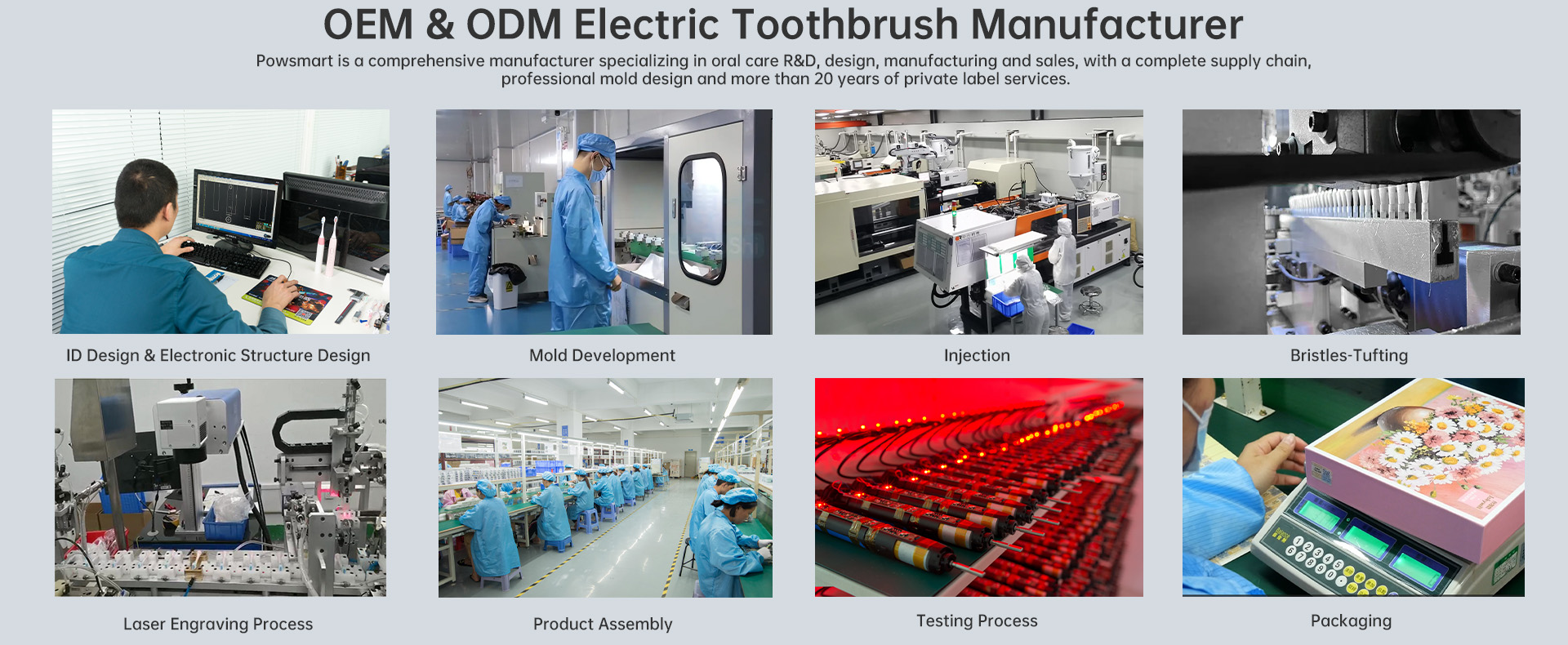
In the highly competitive personal care device market, the after-sales return rate is more than just a customer service issue — it directly impacts brand reputation, profitability, and long-term customer loyalty. For manufacturers and brand owners, minimizing the return rate of electric toothbrushes is a critical component of product lifecycle management. In this blog, we’ll explore six effective strategies to reduce the after-sales return rate of electric toothbrushes, from design and production improvements to customer education and support.
The most direct way to reduce returns is by ensuring superior product quality at every stage of development and manufacturing.
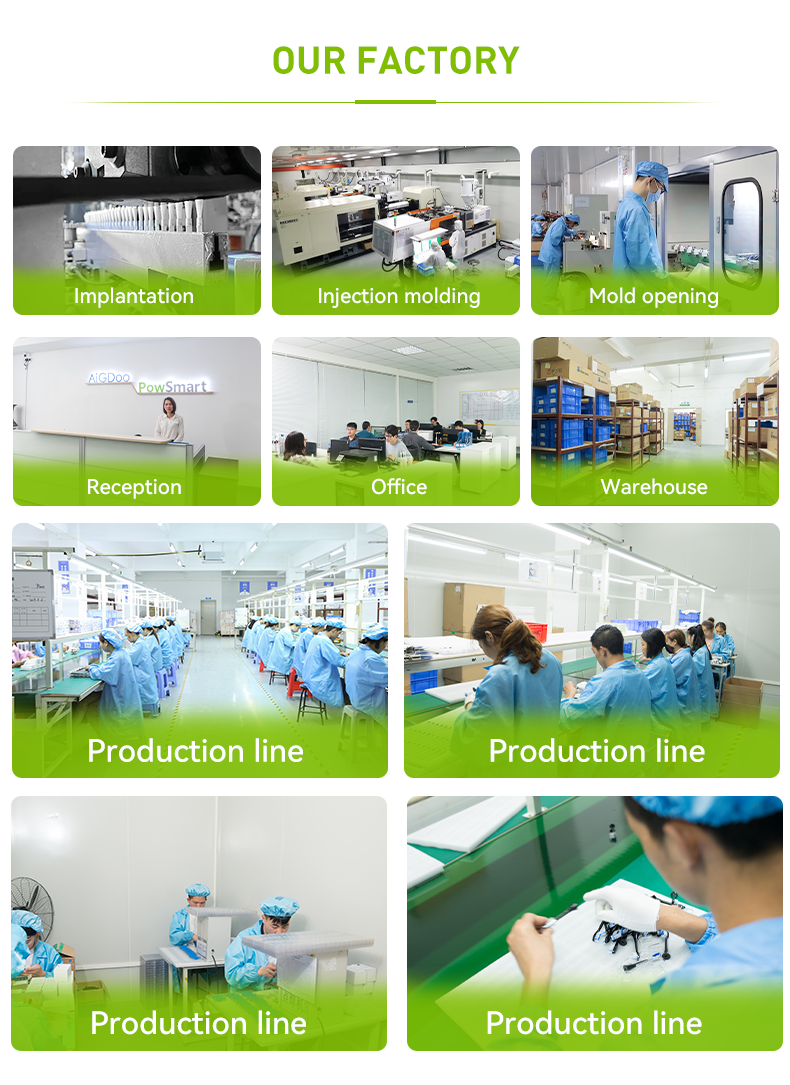
Use high-quality raw materials and components (e.g., long-life lithium batteries, durable ABS plastics).
Conduct stringent quality checks during incoming material inspection and final assembly.
Implement precision injection molding for shell components to reduce mechanical failures.
By eliminating quality-related defects, manufacturers can significantly lower the return rate of electric toothbrushes caused by technical malfunctions or early product failure.
One of the most common causes for electric toothbrush returns is water damage.
Invest in advanced sealing technologies (such as ultrasonic welding or rubber overmolding).
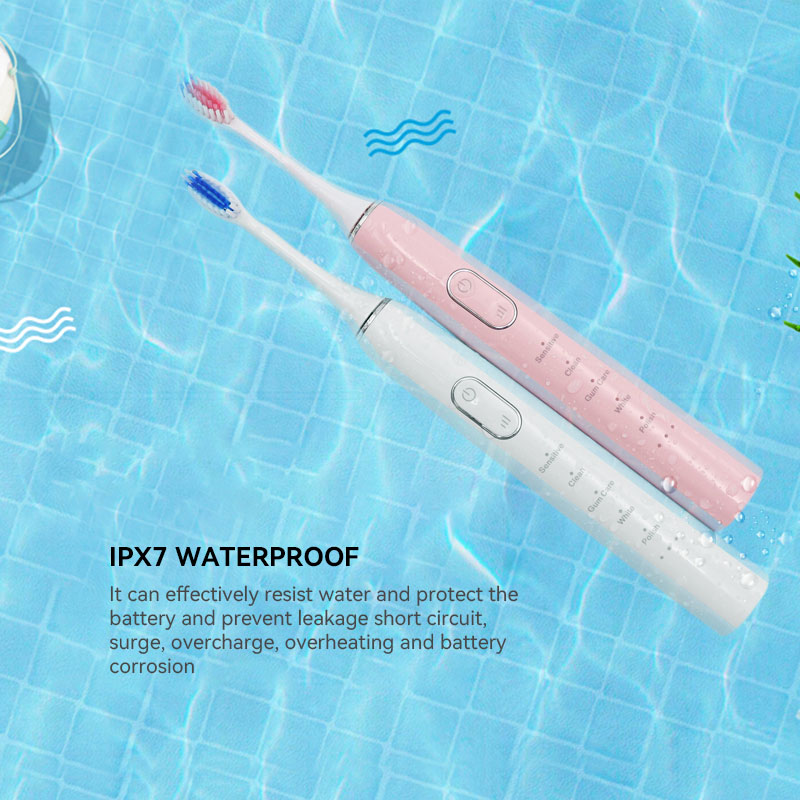
Design battery compartments and charging ports to be IPX7 or higher waterproof-rated.
Test each unit under high-humidity and water-immersion conditions before packaging.
These steps prevent moisture ingress, which is crucial to reduce the after-sales return rate of electric toothbrushes related to short circuits and corrosion.
Battery issues account for a substantial portion of product returns. To mitigate this:
Use reliable battery management systems (BMS) to prevent overcharging and overheating.
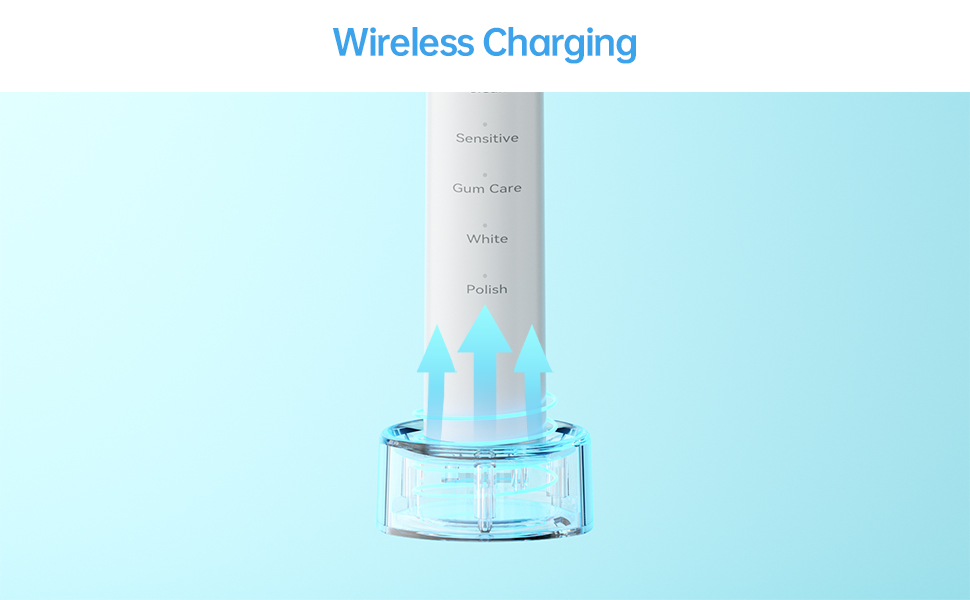
Ensure charging bases or USB docks are compatible with global voltage standards.
Conduct charge-discharge cycle testing before shipment.
Stabilizing the power supply performance helps cut down on power-related complaints and contributes directly to lowering the after-sales return rate.
A well-designed electric toothbrush not only improves user satisfaction but also minimizes misuse and functional misunderstanding.
Integrate intuitive operation modes and clear indicators.
Provide haptic feedback or LED alerts for brush replacement and battery status.
Ensure ergonomic grip and low noise operation to align with user comfort expectations.
An easy-to-use product reduces incorrect usage and dissatisfaction, thus helping to reduce the after-sales return rate of electric toothbrushes.
Returns are not always due to product faults—many arise from lack of product knowledge or user error.
Provide detailed instruction manuals and tutorial videos.
Offer responsive, multilingual customer support.
Implement live chat and chatbot services for quick troubleshooting.
Educated users are more confident in product handling and less likely to return products due to perceived defects.
To continuously improve, manufacturers should establish a feedback loop:
Track reasons for each return and categorize by type (battery, waterproofing, performance, etc.).
Use data analytics to identify recurring issues or weak points in the production chain.
Regularly update product design or manufacturing processes based on insights.
This proactive approach allows brands to strategically reduce the after-sales return rate over time by targeting real issues with data-driven solutions.
Reducing the after-sales return rate of electric toothbrushes is not a single-step process. It requires a combination of:
Precision engineering
High-quality materials
Robust testing procedures
Clear user communication
Continuous improvement based on real-world data
By focusing on these six key areas, manufacturers can deliver electric toothbrushes that are more reliable, more user-friendly, and more aligned with consumer expectations — ultimately protecting brand reputation and increasing profit margins.
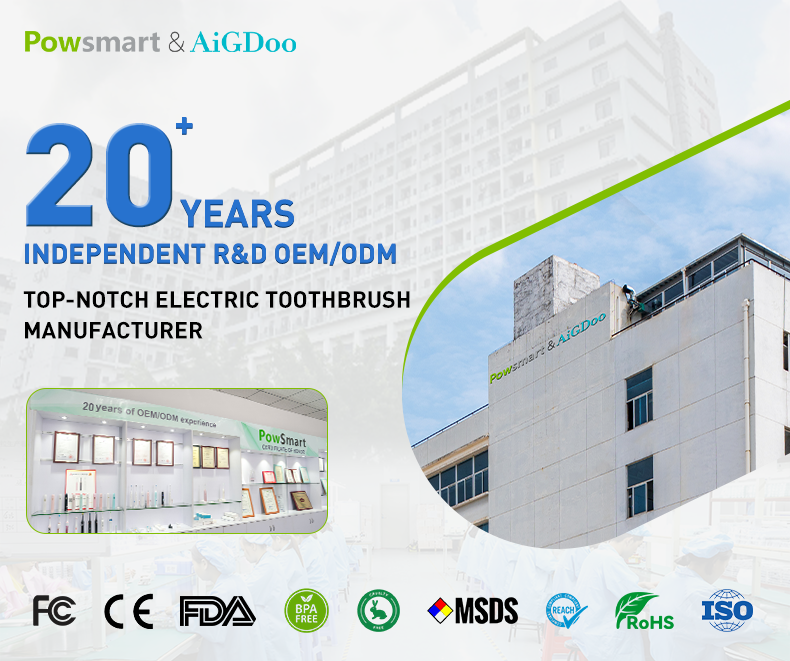
Need help improving your product quality or OEM/ODM support to reduce return rates? Contact our team of experts today. https://www.powsmart.com/about-powsmart/
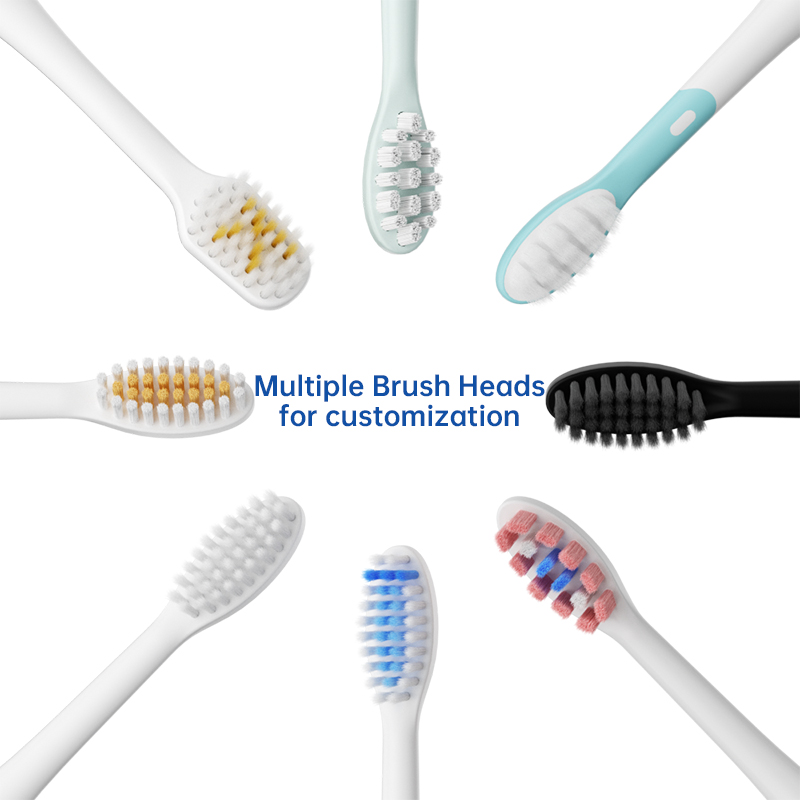
How Does Brush Head OEM Production Integrate with Toothbrush PCB Design for Smart Toothbrush Development?
Exploring electric toothbrush supplier evaluation?
.jpg)
Electric Toothbrush OEM Manufacturing Guide
Toothbrush Subscription Head Delivery Guide | Compare Electric Brush Head Services
Post-Whitening Sensitivity Relief Guide | Remedies for Sensitive Teeth After Whitening
Austin Eco Toothbrush: Sustainable Oral Care from Factory to Home
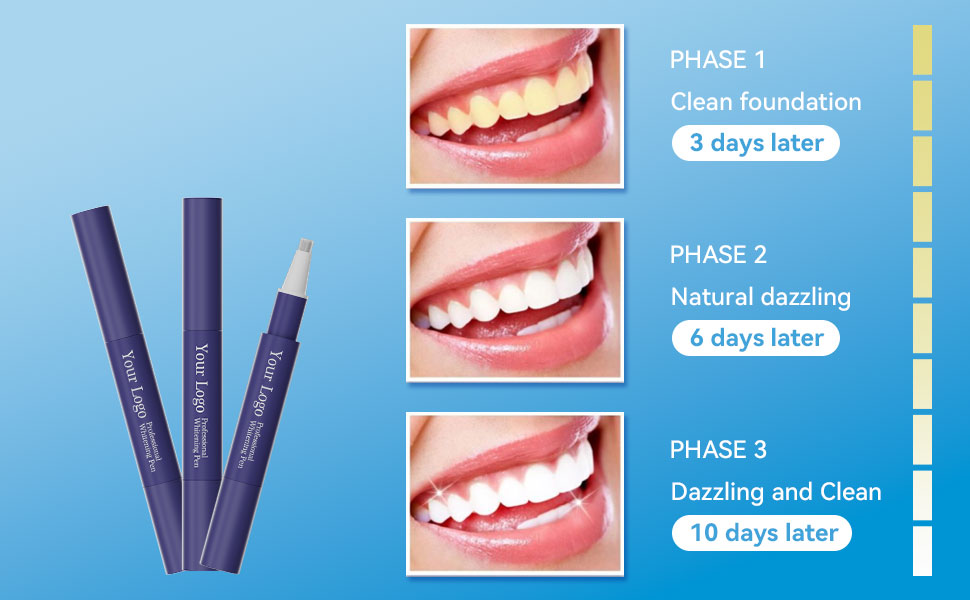
Can hydrogen peroxide whiten teeth?
Need Electric Toothbrush OEM Services That Include Custom Logo Oral Care Branding?

Do At-Home Light Therapy Teeth Whiteners Really Work?
.jpg)
Can a sonic toothbrush manufacturer also provide UV toothbrush sanitizer?
As a Portable Whitening Device Manufacturer, Do You Specialize in UV-free Whitening System Technology?
“Manual vs. Electric Toothbrush: Which is Better?”
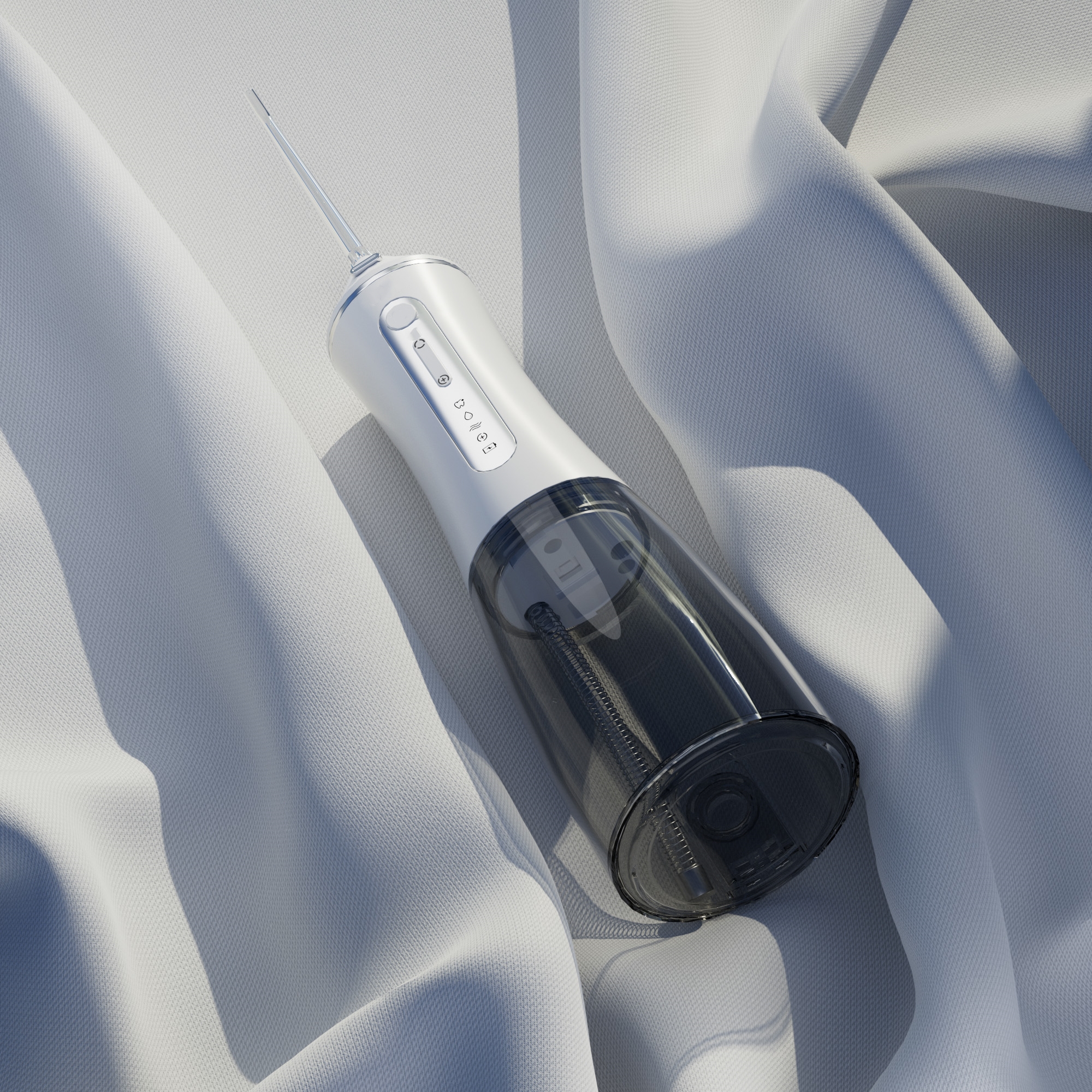
Compatibility of Water Flosser Accessories: How to Increase User’s Repurchase Rate Through Replaceable Nozzles?
Can a Gingival Sulcus Cleaner integrate a Thermochromic Indicator for safety monitoring?
Solving Electric Toothbrush Roll & Fall: Product Development Strategies for OEMs
“Electric Toothbrush Private Label Services: Start Your Own Oral Care Brand with Custom Designs, Bulk Orders, and Competitive Pricing


.jpg)
.jpg)
.jpg)
.jpg)
.jpg)