Info Center
  • Crown Compatibility with Pressure Sensors Tech?

    In modern oral-care systems, ensuring crown compatibility while leveraging advanced pressure sensors tech is paramount—after all, excessive force over an extended treatment duration can lead to veneer damage or microfractures in prosthetic restorations. Below, we explore six critical considerations for designing devices that adapt to various crown materials without compromising longevity or patient safety. Matching Sensor Sensitivity to Crown Materials First, different crown substrates—zirconia, porcelain-fused-to-metal (PFM), and composite veneers—have unique hardness and elasticity profiles. Pressure sensors must be tuned so that: Hardness Calibration: Abrasion limits align with each material’s Mohs hardness; Elastic Response: Sensors detect when a brush or tip deforms too much on a softer composite veneer; Treatment Duration Safeguards: Force thresholds are lowered automatically as a session progresses to avoid cumulative stress. This dynamic calibration preserves both enamel and prosthetic surfaces. Preventing Veneer Damage through Force Feedback Moreover, real-time pressure sensors tech can actively prevent veneer damage by: Instantaneous Alerts: Haptic or LED warnings when force exceeds safe limits, prompting users to adjust grip; Auto-Throttle Mechanisms: Reducing motor torque or water-jet pressure when near veneer margins; Data Logging: Recording peak forces to guide follow-up by clinicians if repeated over-pressurization occurs. Such feedback loops are essential for protecting delicate…

    2025-05-06
  • How Crown Compatibility Aligns with Pressure Sensors Tech?

    In modern oral-care devices, achieving reliable crown compatibility goes hand in hand with advanced pressure sensors tech. When crowns of varying materials—zirconia, porcelain-fused-to-metal, or composite—meet a pressure‐sensitive brush or irrigator, the system must adapt force feedback to protect both restoration integrity and surrounding tissues. Below, we explore six key facets of designing devices that deliver safe, effective care across any prosthetic surface. Understanding Crown Material Variability First, crowns differ widely in hardness, surface texture, and thermal expansion: Zirconia Crowns are extremely hard (Mohs ~8), requiring gentler brushing pressures to avoid micro-abrasions in adjacent enamel. PFM (Porcelain-Fused-to-Metal) combines a tough metal substructure with a slightly softer porcelain layer, demanding adaptive pressure thresholds. Composite or Resin Crowns present more compliant surfaces but risk early wear under excess force. Recognizing these differences is the foundation for any device claiming robust crown compatibility. Role of Pressure Sensors Tech in Gentle Restoration Care Moreover, pressure sensors tech provides real-time feedback on applied force, enabling: Dynamic Force Limiting: Devices can automatically throttle motor torque or water jet pressure when brushing near a crown margin. User Alerts: Haptic or visual warnings guide users to lighten their grip or reduce tip intensity, preventing overloading of delicate prosthetic interfaces.…

    2025-05-06
  • How Does Allergen Testing Prevent Bleach Residuals?

    In the world of advanced oral care devices, safety and effectiveness must go hand in hand. One often-overlooked safety measure is allergen testing, which plays a vital role in preventing bleach residuals that could potentially cause allergic reactions or mucosal damage. When combined with technologies such as pressure sensors, allergen screening ensures whitening tools remain both high-performing and safe for sensitive users. The Role of Allergen Testing in Product Formulation Allergen testing is more than just a regulatory checkbox—it is a proactive quality control strategy. By identifying potentially reactive compounds in bleaching gels or accessory materials, manufacturers can reformulate or substitute ingredients that tend to leave residual byproducts. This is especially important in products with extended contact time, like mouthpieces or whitening strips, where residuals may linger and cause irritation or immune responses. Understanding the Chemistry of Bleach Residuals Hydrogen peroxide, commonly used in whitening treatments, decomposes into water and oxygen. However, if stabilizers or additional agents are used without proper allergen testing, they may form chemical residues that persist on enamel surfaces or gum tissue. These residues can be especially problematic for individuals with heightened sensitivity. Accurate allergen screening helps ensure that all degradation pathways result in inert or…

    2025-05-05
  • Why Home Treatments Risk Stain Residuals?

    As at-home whitening devices become more widespread, the home treatment risks cannot be overlooked: improper usage, mismatched formulations and devices, and inadequate brush-head design often leave behind stubborn stain residues. Over time, these residual pigments—through repeated brushing friction and chemical exposure—can significantly increase the gum recession risk, posing serious long-term oral health challenges. The Convenience and Pitfalls of DIY Whitening First, home whitening appeals due to its convenience: No Appointments Needed: Users can treat themselves anytime without visiting a clinic. Lack of Professional Assessment: Without a dentist’s evaluation, underlying enamel sensitivity or intrinsic discoloration may go unrecognized. Overextension Temptation: Many believe “longer is better,” ignoring safe limits for chemical concentration and light exposure. Because of these blind spots, surface stains may clear while deeper pigment pockets remain untreated. Improper Technique Creates Coverage Gaps Next, common home treatment risks stem from user technique errors: Uneven Gel Application: Bleaching gel pools unevenly, missing fissures and pits where heavy staining resides. Incorrect Brush Angles: Misaligned brush heads fail to contact interdental areas, leaving food debris and pigments behind. Timing Mismanagement: Without built-in timers, users risk under- or over-treating, resulting in incomplete chemical reactions. These gaps allow residual stains to persist in hard-to-reach areas.Company…

    2025-05-05
  • How Does Cold Light Wavelength Align with Pediatric Safety?

    When designing child-specific oral-care and whitening devices, selecting the right cold light wavelength is crucial—not only to match the sensitivity of young gums and enamel but also to integrate safely with brush head sterilization procedures. Only with both light-source safety and device disinfection can parents and clinicians confidently allow children to use these products. company web:https://www.powsmart.com/product/electric-toothbrush/ Pediatric Oral Tissue Light Tolerance Children’s oral tissues are thinner and more delicate than adults’: Wavelength Selection: The 400–420 nm range (near-UVC edge) effectively activates whitening agents while filtering out shorter UV wavelengths that could burn soft tissue. Intensity Limits: Maintain irradiance at ≤ 20 mW/cm² to avoid over-sensitivity during the transition from primary to permanent teeth. Exposure Duration: Limit sessions to under five minutes, with built-in rest periods allowing gum and mucosa recovery. Cellular Safety Across Wavelengths Different wavelengths affect cells and microbes in distinct ways: Photochemical Activation: The 430–450 nm band optimally excites peroxide breakdown, generating radicals that remove stains with minimal soft-tissue impact. Thermal Control: Filter out wavelengths above 450 nm that carry excess heat, and use onboard temperature sensors to monitor oral-surface temperatures in real time. Safety Standards: Adhere to ANSI Z136.1 thresholds to ensure irradiance stays below mucosal and…

    2025-05-05
  • Red and Blue Light Teeth Whitening Device Aging Test Standard: 500 Hours of Continuous Working Reliability Verification

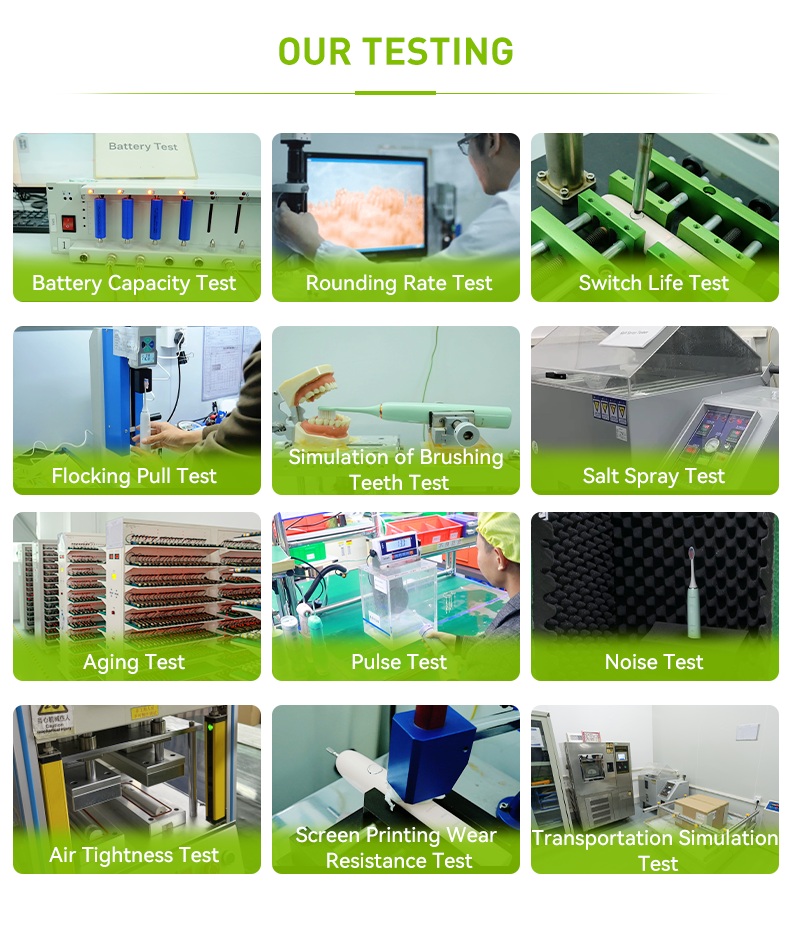
    n the competitive oral care device market, durability is non-negotiable. For any serious teeth whitening device manufacturer, meeting and exceeding quality control standards is essential.The aging test—specifically for red and blue light teeth whitening devices—is a cornerstone of reliability validation. According to industry benchmarks, a 500-hour continuous operation simulation is the baseline for teeth whitening device aging tests. This rigorous standard is crucial in verifying the long-term stability and real-world lifespan of internal LED components. Rigorous Execution of the 500-Hour Aging Test The aging test simulates real-world stress by running the red and blue light teeth whitening devices non-stop for 500 hours under controlled temperature and humidity conditions. This process uncovers hidden defects such as LED color shift, chip failure, power fluctuation, and UV degradation. Key metrics recorded during the test include current stability, light intensity decay, and casing temperature. High-performance models manufactured by reliable teeth whitening device manufacturers consistently show LED lifespan performance well beyond 500 hours, aligning with the goal of offering a product lifecycle of 1,000 uses or more. Reinforcing Brand Confidence Through Proven Quality Successful completion of the 500-hour aging test is more than a technical milestone—it is a statement of quality assurance. Looking to private…

    2025-05-04
  • Analysis of Differences in Preferences for Teeth Whitening Devices in the European and American Markets vs. Asian Markets

    As global demand for oral beauty products surges, the whitening device markets in different regions have evolved uniquely. For any teeth whitening device manufacturer seeking to expand, understanding the nuanced consumer behaviors and certification requirements across regions is critical. In this post, we analyze how preferences differ between the European and American markets and the Asian market, helping businesses align their offerings with market demands and regional regulations. Market Demand Preferences Consumer motivations and usage habits vary dramatically between Western and Asian regions: European and American markets place a strong emphasis on high-efficacy, fast-result products. Whitening devices with high-concentration peroxide gels or LED-accelerated whitening kits dominate due to a consumer preference for visible results within days. The Asian market preference leans more toward mild, gradual-effect products. Consumers in countries like Japan, South Korea, and China tend to value gentle formulations, often free from harsh chemicals, emphasizing safety and daily usability. Western consumers frequently use at-home teeth whitening kits as part of cosmetic routines, often driven by lifestyle factors and media influence. In contrast, in many Asian countries, whitening is perceived as part of general hygiene and skin-brightening culture, with lower tolerance for potential side effects like sensitivity. Understanding these preferences…

    2025-05-04
  • Collaborative Development of Red and Blue Light Teeth Whitening Gel Formulas: How to Increase Whitening Efficiency by 3 Times?

    One of the most promising innovations today is the integration of red and blue light-activated technology with an optimized whitening gel formulas. Through close collaboration between a teeth whitening device manufacturer and gel chemists, it is now possible to triple the whitening efficiency compared to traditional at-home kits. In this article, we’ll uncover the science and strategy behind this collaboration—and how it can reshape product offerings for global oral care brands. Dual-Light Synergy: Red + Blue Light Technology While blue light has long been used in teeth whitening devices to accelerate peroxide-based reactions, red light is gaining attention for its unique benefits. Red light penetrates deeper into enamel and supports gum health by stimulating circulation. When combined, the dual-light system doesn’t just enhance the whitening process—it also improves overall oral comfort. Teeth whitening device manufacturers have developed light modules that emit precise wavelengths (typically around 405nm for blue and 630nm for red) to trigger the gel’s active ingredients more efficiently. This light-activated technology ensures better stain breakdown, reaching both surface and intrinsic discoloration. Optimized Whitening Gel Formula for Light Activation The breakthrough doesn’t stop at the device. Success hinges equally on the whitening gel formula. In co-development projects, R&D teams…

    2025-05-04
  • Small Batch Purchase of Red and Blue Light Teeth Whitening Devices and OEM Factory Sourcing Strategy

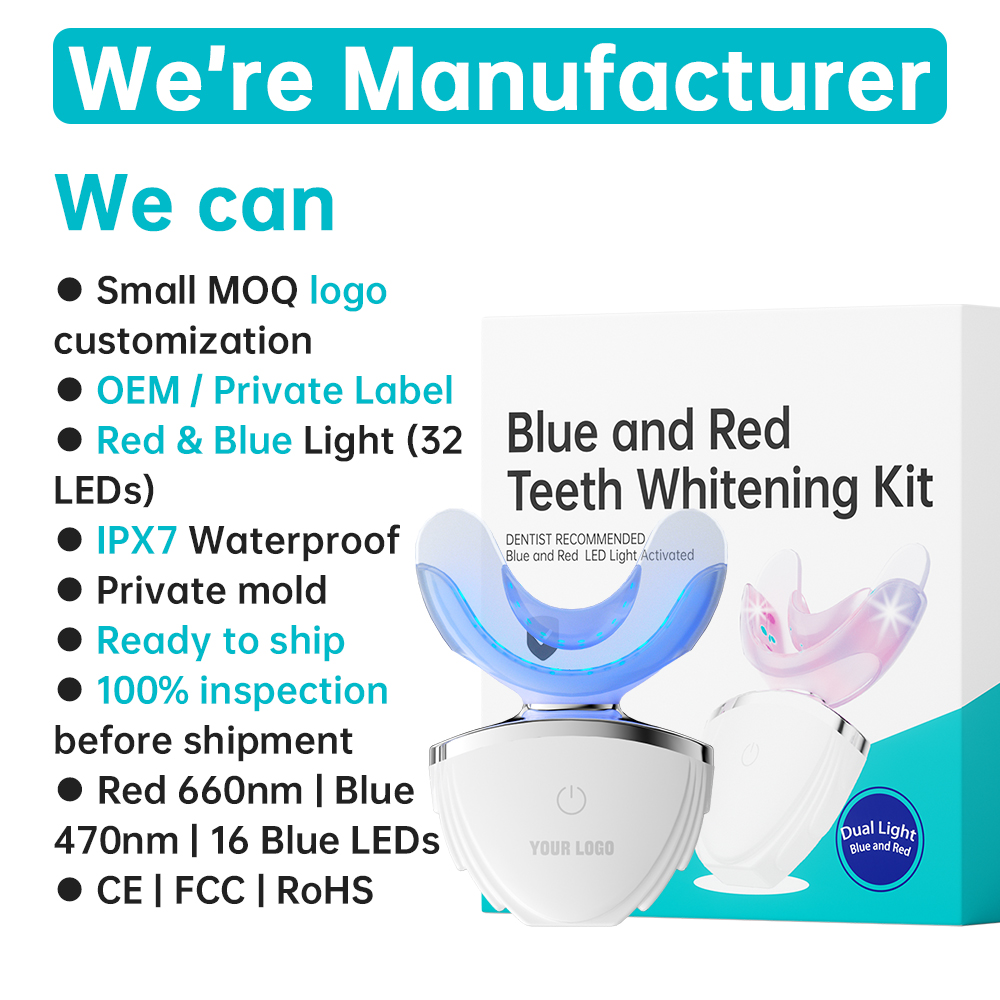
    As the demand for at-home cosmetic dental solutions grows, red and blue light teeth whitening devices are increasingly gaining traction in both developed and emerging markets. For startup brands and new entrants, navigating small batch production and OEM sourcing can be complex. This article outlines key strategies for purchasing in small quantities while identifying a reliable Low MOQ OEM factory for your brand’s trial production. Why Small Batch Production Makes Strategic Sense Small batch production is no longer just a tactic for boutique businesses — it has become a practical approach for emerging oral care brands aiming to minimize risk and validate market response. By opting for small batch orders, businesses can: Test customer preferences without large upfront investment Adjust product formulations or packaging based on feedback Save warehousing and inventory costs Easily adapt to rapid trend shifts in the teeth whitening market Partnering with a teeth whitening device manufacturer that supports small batch production enables a brand to maintain agility while exploring innovative technologies like red and blue light dual-function therapy. How to Evaluate a Low MOQ OEM Factory for Whitening Devices Finding a qualified Low MOQ OEM factory is critical for success. When sourcing an OEM partner for…

    2025-05-04
  • Private mold development of Red and Blue Light Teeth Whitening Device: Shell Material Selection and Ergonomic Design Points

    As the demand for at-home oral care products grows rapidly, more brands are investing in the private mold development of innovative teeth whitening devices. Among them, red and blue light whitening devices have become a popular segment due to their dual-functionality in whitening and soothing gums. For any teeth whitening device manufacturer, creating a private model that stands out requires precision in two key aspects: the selection of shell materials and adherence to ergonomic design principles. In this blog, we will explore the key considerations in these areas and how they contribute to the product’s performance, user experience, and market competitiveness. Shell Material Selection—Balancing Safety, Aesthetics, and Durability The choice of material for the outer shell of the teeth whitening device is critical. Most top-tier manufacturers prefer medical grade ABS material because of its excellent balance of biocompatibility, chemical resistance, and strength. Here’s why: Medical grade ABS material ensures user safety, as it’s non-toxic and widely approved for devices that come into contact with the human body. It offers superior heat resistance, which is crucial when integrating red and blue LED lights that may generate mild warmth during use. ABS allows for a sleek, high-gloss finish, aligning with premium consumer…

    2025-05-04
  • Teeth whitening device OEM: In-Depth Cooperation Model from LOGO to Light Wave Customization

    In the increasingly competitive market of oral care technology, standing out requires more than just a quality product. For brand owners, Original Equipment Manufacturing (OEM) of red and blue light teeth whitening devices offers a pathway to combine technical innovation with brand distinctiveness. From LOGO customization to light wave programming, working with a professional teeth whitening device manufacturer can unlock strategic advantages in product differentiation and market positioning. Below is an in-depth look at how OEM cooperation can help you build your own branded whitening solution. LOGO Customization – Strengthening Brand Identity at the First Glance Your brand starts with visibility. One of the first steps in the Teeth Whitening Device OEM process is LOGO customization. This not only helps establish brand recognition but also enables you to align the product aesthetic with your marketing strategy. Leading teeth whitening device manufacturers offer: Silk-screened or laser-etched LOGOs Packaging and manual branding support Exclusive mold designs (for high-volume orders) This is especially important for retailers and DTC brands looking to expand into private label or co-branded offerings. A visible and high-quality LOGO makes the difference between a generic tool and a branded oral care solution. Light Wave Programming – Tailoring Technology to…

    2025-05-04
  • Home vs. Professional Red and Blue Light Teeth Whitening Devices: Wavelength Stability and Energy Density Comparison

    With the growing demand for brighter smiles, the oral care market is seeing an increasing segmentation between Home use teeth whitening devices and Professional phototherapy equipment. While the former focuses on ease of use and safety for daily personal care, the latter is built for high performance in clinics and salons where rapid and deeper whitening results are required. Key differences include: Application Scenario: Home devices designed for simple operation; professional devices require trained technicians. Light Spectrum Control: Professional equipment often features more precise wavelength management for red (620–660nm) and blue (430–470nm) light. Energy Output: In terms of Energy density comparison, professional phototherapy equipment delivers higher intensity light per square centimeter, accelerating the whitening process. Core Performance – Wavelength Stability and Energy Density Matter In phototherapy-based teeth whitening, two technical factors significantly influence effectiveness and safety: wavelength stability and energy density. Leading teeth whitening device manufacturers use advanced thermal management and stable LED driving technologies to ensure consistent wavelength output over extended use. A closer Energy density comparison reveals: Home use teeth whitening devices typically emit 10–30 mW/cm², suitable for safe, low-risk treatment at home. Professional phototherapy equipment can deliver 100–300 mW/cm², enabling multi-level oxidation within short exposure times. Wavelength…

    2025-05-04
  • The Scientific Principle of Red and Blue Light Teeth Whitening Device: How Can 460nm Blue Light and 630nm Red Light Safely Whiten Teeth?

    The core of any red and blue light teeth whitening device lies in its photobiological mechanism — the “Principle of red and blue light teeth whitening.” This whitening device uses specific wavelengths of visible light to activate the whitening gel or stimulate biological tissue, offering safe and effective results. Blue light, typically at 460nm, is used for its ability to activate hydrogen peroxide or carbamide peroxide in whitening gels. This reaction generates free radicals that break down pigmented molecules on the surface of the enamel, resulting in visible whitening. Most importantly, the 460nm “Blue light wavelength is safe” — it is within a non-ionizing range and doesn’t harm enamel or soft tissues when used correctly. Red light, usually at 630nm, plays a supportive yet crucial role. While it doesn’t bleach the enamel, red light stimulates microcirculation in the gum tissue and promotes healing and anti-inflammatory effects. This means “Red light assists in restoration,” reducing discomfort during whitening treatments and accelerating tissue recovery. Safety – From Wavelengths to Device Engineering One of the key advantages of this technology is its safety profile. Unlike UV light or abrasive whitening methods, the 460nm blue light used in these devices is non-thermal and low-penetration,…

    2025-05-04
  • Does a Water Flosser Require Regular Maintenance? How Should It Be Cleaned?

    Why Water Flosser Regular Maintenance Matters Although water flossers are durable and convenient oral care devices, they are not maintenance-free. Regular upkeep is essential to ensure strong water pressure, prevent internal buildup of minerals or bacteria, and extend the device’s lifespan. Neglecting water flosser regular maintenance can result in reduced performance, unpleasant odors, or even motor failure. For both home users and brand distributors, consistent care plays a key role in user satisfaction and product longevity. How to Clean a Water Flosser: A Step-by-Step Guide Based on best practices and maintenance tips from manufacturer sources, here are the recommended cleaning steps to ensure optimal function: Empty the water tank after every use to avoid mineral buildup. Once a week, fill the tank with a mixture of white vinegar and water (1:1 ratio) and run the device to descale internal tubing. Gently scrub the nozzle tip with a soft brush to remove plaque or residue. Replace the nozzle every 1–3 months, depending on usage. Wipe the exterior surface regularly, especially around buttons and seals, to prevent microbial buildup. Make sure the device is fully dry before storing it to avoid corrosion or mold inside the housing. These water flosser regular maintenance…

    2025-05-04
  • Can an Electric Toothbrush Help Relieve Tooth Sensitivity?

    Relieve Tooth sensitivity is a widespread oral health issue that affects millions globally, often triggered by cold, heat, sweetness, or even brushing. Many consumers don’t realize that using the wrong toothbrush can worsen the problem. In fact, manual brushing with excessive force is one of the most common causes of enamel wear and gum recession—two major contributors to tooth sensitivity. As a professional electric toothbrush factory, we often receive inquiries about whether an electric toothbrush can help relieve tooth sensitivity. The answer is yes—if the right design and technology are applied. How Can Electric Toothbrushes Help Relieve Tooth Sensitivity? Modern electric toothbrushes are equipped with features that specifically aim to address sensitive teeth: Pressure SensorsBuilt-in sensors automatically reduce brushing intensity when too much force is applied, helping protect delicate enamel and gums. Soft Bristle OptionsElectric toothbrushes designed for sensitive teeth use ultra-soft bristles that clean effectively without abrasion, reducing discomfort during brushing. Gentle Cleaning ModesMany models include modes such as “Sensitive” or “Gum Care,” providing low-frequency vibrations to ensure a soothing yet thorough clean. Consistent Brushing PerformanceUnlike manual brushes that vary with user technique, electric toothbrushes offer consistent cleaning action that minimizes the risk of over-brushing. These combined features demonstrate…

    2025-05-04
  • How Does Maintenance Difficulty Worsen Enamel Weakness?

    When home‐care devices suffer from battery degradation, users often postpone charging and skip essential upkeep—highlighting how maintenance complexity can cascade into enamel‐wear issues. In this post, we’ll examine six ways that complicated care routines and neglected device upkeep exacerbate enamel vulnerability, and offer practical recommendations for B2B manufacturers. Worn Brush Heads & Uneven Abrasion First, complex replacement procedures lead users to overstay brush‐head lifespans: Frayed Bristles: After three months, bristles splay unevenly, concentrating force on small enamel areas. Micro‐scratches: Hardened or misaligned filaments create microscopic grooves, accelerating demineralization. Variable Contact Pressure: Skipping timely head swaps forces users to press harder for perceived cleaning, increasing enamel stress. Thus, simplifying head‐exchange steps is critical to maintain uniform abrasion and protect enamel integrity. Plaque Buildup from Skipped Cleanings Moreover, when devices require time‐consuming disassembly for deep cleaning, many users defer: Residual Debris: Food particles lodged in nozzles or brush mounts feed acidogenic bacteria. Biofilm Formation: Plaque accumulation lowers oral pH, promoting enamel softening and early caries. Ineffective Rinse Cycles: Clogged channels disrupt spray patterns, leaving untreated zones where enamel degrades. To counteract this, devices should offer self‐cleansing cycles or tool‐less access to minimize deferred cleanings.Company web:https://www.powsmart.com/product/electric-toothbrush/ Reduced Torque due to Battery Degradation Furthermore,…

    2025-05-04
  • Why Do Efficacy Comparisons Focus on Bleach Breakdown?

    In the world of at-home whitening systems, efficacy debates often center on how quickly and completely bleaching agents decompose stains—and just as critically, on factors like wireless charging safety, which ensures devices remain powered without compromising chemical stability. By honing in on bleach breakdown, manufacturers and end users alike can compare true performance rather than superficial marketing claims. The Chemistry Behind Bleach Decomposition First and foremost, bleaching efficacy depends on the generation of reactive oxygen species: Photolytic Activation: Light-assisted devices split peroxide bonds into hydroxyl radicals (•OH), the primary stain-destroying agents. Thermal Catalysis: Elevated temperatures accelerate O–O bond cleavage, enhancing breakdown kinetics. pH Dependence: Alkaline environments favor peroxide stability but must be balanced to prevent enamel damage. Understanding these chemical pathways is the foundation for any meaningful efficacy comparison. Metrics for Measuring Breakdown Efficiency Moreover, standardized metrics enable clear side-by-side analysis: Free-Radical Yield: Quantified via electron spin resonance (ESR) to assess how many radicals are produced per milligram of bleach. Colorimetry Tests: ΔE measurements track actual stain diminution on dentin or enamel analogs. Reaction Rate Constants: Kinetic modeling reveals how quickly peroxide concentration drops under fixed conditions. Such objective data cuts through marketing noise and grounds efficacy debates in reproducible…

    2025-05-04
  • Why Post-Whitening Diets Need Gum Inflammation Cautions?

    When developing and marketing advanced whitening devices, it’s vital not only to validate waterproof performance through IP rating tests but also to warn users about gum inflammation risks related to post-whitening diets. After bleaching, gum tissues enter a sensitive “high-risk” period—any oversight in diet can trigger inflammation, undermining whitening results and oral health. The “High-Sensitivity Window” After Bleaching First, bleaching agents mildly demineralize enamel and open dentinal tubules, causing gum micro-vascular dilation: Increased Permeability: Gums are more sensitive to acid or alkaline stimuli for 24–48 hours post-treatment. Inflammatory Mediator Release: Residual peroxide may provoke a local immune response, leading to slight swelling. Weakened Barrier: Salivary and mucosal defenses are still recovering, making tissues more susceptible. Hence, every rinse and meal in post-whitening diets must consider the gums’ fragile state. Acidic and Pigmented Foods Heighten Inflammation Risk Next, dietary acids and chromogens are primary culprits for post-bleach inflammation: High-Acid Foods: Citrus or vinegar further lower local pH and accelerate epithelial damage. Dark-Pigment Beverages: Coffee or red wine adhere to micro-etched enamel and irritate gums through friction. Spicy or Alcoholic Drinks: Disrupt blood flow and extend healing times. Avoiding highly acidic or deeply colored items in post-whitening diets is crucial to protect…

    2025-05-04
  • How Does Portability Enhance Allergen Detection?

    In next-generation portable testing devices, not only must you finely tune the oscillation angle to maximize sample collection, but true travel portability lets testing instruments go wherever they’re needed—closer to users and real-world scenarios. In this article, we examine six ways portability boosts allergen detection, helping B2B partners design solutions that are both flexible and reliable. On-Site Testing for Immediate Decisions First, travel portability frees allergen testers from the lab: Rapid Response: Instantly collect and analyze samples on-site at restaurants, factories, or schools after a suspected allergy incident. Reduced Transport Error: Eliminates cross-contamination or degradation risks from shipping samples to a central lab. Improved Client Experience: B2B customers can offer “on-site testing + immediate reporting” as a one-stop service. Portable devices therefore directly enhance testing speed and decision-making. Optimized Sampling with Tuned Oscillation Angles Next, fine control of the oscillation angle in the sampling module is essential: Directed Vibration: Using ±15°–±30° angles covers varied surface materials, ensuring trace peanut proteins or lactose are dislodged. Deep Extraction: Automatically adjust the angle based on surface roughness to capture representative micro-samples. Minimal Damage: Precise angle control prevents excessive wear on food contact or dental tray surfaces. Hardware-level angle tuning is key to efficient,…

    2025-05-03
  • Why Should Restricted Users Avoid Stain Residuals?

    For restricted user groups, avoiding stain residuals is critical—not only because leftover pigments mar appearance, but also because these users often have heightened vulnerability. Meanwhile, optimizing bristle roundness in brush-head design helps ensure gentle yet thorough stain removal. In the following six sections, we explore why stain residues pose special risks, and how to address them safely and effectively. Oral Characteristics of Restricted User Groups Restricted user groups include: Post-operative Patients: Gum and implant sites are still healing and prone to irritation. High-Sensitivity Individuals: Those with thin enamel or dentin hypersensitivity require extra care. Chronic Health Conditions: Diabetics or immunocompromised patients face greater infection risks from residual biofilm. These groups react more strongly to any remaining debris or pigments, making complete stain removal essential. Health Hazards of Stain Residuals Beyond aesthetics, retained pigments can: Promote Bacterial Growth: Chromogens combine with proteins to form biofilms that feed anaerobic pathogens. Cause Chemical Erosion: Some food pigments are mildly acidic and can accelerate enamel micro-abrasion. Trigger Immune Overreactions: Chronic exposure to residual agents can inflame gingival tissues and worsen swelling or pain. For vulnerable users, even trace residues can spark significant oral health issues. Contact us :https://www.powsmart.com/product/electric-toothbrush/ Bristle Roundness and Cleaning Efficiency Effective…

    2025-05-03