.jpg)
When consumers invest in premium oral devices, wire fraying and tooth graying are often overlooked—until the damage becomes impossible to ignore. While seemingly unrelated, these two issues can quietly undermine both product performance and end-user health. Could this combination be the silent threat eroding customer trust in your brand? What Causes Wire Fraying? Wire fraying typically develops over time as internal or external wires in toothbrushes or whitening devices degrade. Common causes include: Repeated bending or twisting during daily use Exposure to moisture compromising insulation layers Manufacturing defects in wire braiding or coating Prolonged vibration cycles that fatigue the conductor strands Unchecked, frayed wires not only jeopardize electrical stability but also pose a risk of micro-shocks and device malfunction. How Tooth Graying Develops In parallel, tooth graying can result from chemical exposure or suboptimal cleaning performance. Specifically: Leaching of metal ions from frayed wires or worn internal components Residual debris accumulating due to weakened brush motion Prolonged contact with oxidizing agents leaking from compromised enclosures This discoloration is more than a cosmetic inconvenience; it signals deeper issues in product integrity. Company web: https://www.powsmart.com/product/electric-toothbrush/ The Hidden Connection Between Wire Fraying and Tooth Graying While the two symptoms can occur independently, they often…
When seal degradation is left unchecked in oral care and hygiene devices, the result can be more than just cosmetic wear. A compromised seal allows moisture and organic debris to accumulate internally, creating the perfect environment for bacterial regrowth. Over time, this invisible contamination can undermine product safety, degrade user experience, and expose manufacturers to significant liability. So is this problem preventable? With proactive design and production measures, the answer is a resounding yes. What Causes Seal Degradation? Seal degradation is the process by which gaskets, O-rings, or adhesive barriers lose their integrity. This can occur for several reasons: Material fatigue from repeated compression cycles Chemical attack from aggressive cleaning agents or peroxide-based solutions Thermal expansion and contraction causing micro-cracks Poor-quality elastomers that dry out or become brittle over time Once these seals fail, pathways open for moisture infiltration and microbial contamination. Why Bacterial Regrowth Happens After Seal Failure Bacterial colonies thrive in warm, damp spaces. When a degraded seal allows saliva, cleaning fluid, or even tap water to seep into the device: Residual moisture remains trapped inside hidden chambers Biofilm develops, adhering stubbornly to internal surfaces Periodic reactivation of bacteria occurs every time the device heats up during operation…
Charging corrosion is a silent but serious threat in many powered oral care devices. Over time, moisture, chemical residues, and electrical stress can degrade charging contacts, setting the stage for voltage instability and eventual motor burnout. But how exactly are these two failures connected—and can they be prevented? Let’s unpack why corrosion at the charging point can quickly escalate into total motor failure. What Is Charging Corrosion? Charging corrosion develops when: Moisture seeps into the charging port or cradle Saliva or cleaning fluids linger on contact pins Metallic surfaces oxidize, reducing conductivity This corrosion gradually forms a resistive layer that disrupts the flow of current during charging cycles. How Corrosion Leads to Motor Burnout At first glance, it might seem surprising that charging corrosion could trigger motor burnout, but the link is more direct than it appears: Corrosion increases electrical resistance, requiring the battery to work harder Inconsistent voltage during charge cycles weakens the battery cells The motor receives fluctuating power when operating Over time, these power surges overheat the motor windings, causing insulation breakdown Eventually, the motor can burn out entirely—even if the device appears normal during short operation. Company web:https://www.powsmart.com/product/electric-toothbrush/ Early Indicators You Shouldn’t Ignore For B2B distributors…
Seal degradation and battery swelling are two failures that can silently develop in powered oral care devices, often going unnoticed until the damage becomes severe. But when both occur simultaneously, the consequences are more than cosmetic—they pose a tangible safety risk to end users and can trigger extensive warranty claims for manufacturers. Let’s explore why these issues are closely connected, and what proactive measures B2B suppliers should consider. What Is Seal Degradation? Seal degradation occurs when the protective gaskets or enclosures inside the product begin to: Crack or lose elasticity due to aging plastics or repeated temperature fluctuations Warp under mechanical stress or repeated disassembly Break down from chemical exposure, such as harsh cleaning agents Once these seals fail, moisture and contaminants can infiltrate the internal compartments. How Battery Swelling Begins When seals degrade, the risk of battery swelling increases dramatically: Moisture ingress can compromise the battery’s protective casing Short circuits can occur if conductive residues reach battery contacts Internal gas generation from chemical reactions causes the battery to expand This swelling not only distorts the device housing but can eventually rupture the casing. Company web:https://www.powsmart.com/product/electric-toothbrush/ Why This Combination Is Dangerous While seal degradation and battery swelling are problematic on…
It’s no secret that vibration decay and timer malfunction are two of the most frustrating performance issues users face with modern oral care devices. While each problem can compromise brushing effectiveness on its own, together they often signal that your product may be nearing the end of its usable life—or worse, that it was never engineered for consistent reliability in the first place. In this article, we’ll break down what causes these issues, why they frequently occur in tandem, and how manufacturers can tackle them before customers decide it’s time to retire their devices. What Is Vibration Decay? Vibration decay is the progressive weakening of the device’s motor output over time. Instead of maintaining a steady, high-frequency motion, the device begins to: Lose intensity during a single brushing session Produce uneven oscillations Take longer to reach peak speed after activation Common causes include motor fatigue, battery degradation, or internal friction due to component wear. Understanding Timer Malfunction The timer malfunction issue occurs when the device’s programmed cycle timer becomes unreliable. Symptoms often include: Premature shutdown before the full cycle completes Random resets during use Failure to signal intervals for quadrant changes Continuous operation without auto-stop Although this may seem minor…
When customers report persistent charge failure along with puzzling display glitches, manufacturers often dismiss these as isolated incidents. However, evidence shows these two issues are frequently interconnected symptoms of deeper product vulnerabilities. If left unaddressed, they can lead to premature failure, safety hazards, and costly warranty claims. In this article, we’ll examine why charge failure and display glitches oft How Charge Failure Manifests Charge failure refers to a device’s inability to replenish its battery properly. Typical signs include: Refusing to charge even when connected to a working adapter Random interruptions while charging Overheating during charging cycles Extremely slow charge rates that prevent regular use While end users often suspect a defective cable or adapter, the underlying causes are usually deeper. Recognizing Display Glitches Display glitches can take several frms, such as: Flickering icons or unreadable characters on the screen Inaccurate battery indicators Frozen status updates during operation Sudden backlight failure or dimming Even if the device still performs its core functions, these errors reduce usability and erode customer confidence. Company web: https://www.powsmart.com/product/electric-toothbrush/ Why Charge Failure and Display Glitches Are Linked Although these problems seem unrelated—power delivery versus user interface—they are frequently connected due to shared circuitry. Specifically: Voltage Fluctuations: When the…
When customers report battery overheating during operation and mention experiencing ear discomfort, it often raises concerns about whether these symptoms are merely a nuisance or an early warning of something more hazardous. While these issues may appear isolated, manufacturers should recognize how thermal problems can lead to unintended user discomfort—and, in some cases, escalate to safety risks if left unaddressed. This article unpacks why battery overheating is more than a technical fault, how it can cause ear discomfort, and what proactive measures B2B brands can take to prevent incidents before they compromise user trust. How Battery Overheating Starts Battery overheating typically develops due to a combination of: Substandard battery cells with inadequate thermal tolerance Ineffective thermal management systems Overcharging cycles or high-current usage beyond rated specs Blocked vents or enclosures that trap heat Long-duration use without cooling intervals Once the battery begins to overheat, the excess temperature can radiate throughout the device housing, including areas that come into contact with the face or ear. The Pathway to Ear Discomfort At first glance, it might seem unlikely that battery heat could result in ear discomfort. But there are several plausible pathways: Heat conduction: The battery’s rising temperature gradually warms the entire…
When customers or dental professionals encounter chip overheating inside powered oral care devices and simultaneously observe cavity acceleration, the combination can seem puzzling—even coincidental. However, these issues may share more common ground than many manufacturers realize. Understanding how electronic thermal failures can indirectly impact oral health is essential for brands determined to deliver reliable, safe, and scientifically validated products. Below, we examine why chip overheating matters, how it could contribute to faster cavity formation, and what preventive measures B2B suppliers should adopt to protect their customers. What Drives Chip Overheating? Chip overheating typically originates from: Inadequate thermal dissipation within the device housing Low-quality PCB materials unable to withstand sustained load Blocked airflow vents that trap heat during operation Excessive power draw when motors, LEDs, or heating elements run simultaneously Lack of protective circuits to cut off power under extreme temperatures As the chip heats up, surrounding components—including those that regulate dosing of gels, water flow, or vibration speed—can also lose accuracy. Could Overheating Indirectly Promote Cavity Acceleration? At first glance, it seems unlikely that a tiny overheating chip could have any connection to cavity acceleration. However, the link emerges through indirect pathways: Disrupted dosing or spray patterns: Overheating can destabilize…
When professionals and consumers alike encounter head detachment in oral care devices, especially at the same time as lip abrasions, it raises serious concerns about product safety and design integrity. While occasional wear and tear is inevitable, recurring cases of this combination can signal a deeper design fault that demands close examination. This article explores the possible connection, the risks involved, and the steps manufacturers can take to prevent these failures. Why Does Head Detachment Occur? Head detachment generally stems from: Weak locking mechanisms: Clips or threads that loosen under repeated stress. Inferior materials: Plastic components prone to fatigue and cracking. Improper assembly tolerances: Excess gaps between the head and handle. Excessive vibration cycles: Over time, continuous micro-movements loosen the attachment. When a head detaches during use, it can expose hard or jagged internal surfaces that contact soft tissues. How Lip Abrasions Can Happen Simultaneously While lip abrasions can occur independently—through overbrushing, hard bristle contact, or accidental slips—the sudden head detachment can dramatically increase their likelihood: Unexpected movement: A detached head can shift or fall while in the mouth, scraping the lips or gums. Loss of control: Users instinctively try to catch the device mid-motion, causing unintentional force against the…
In the competitive landscape of oral care and personal devices, mode confusion coupled with runtime shortening is more than an inconvenience—it’s a product performance issue that can damage brand trust. When customers find themselves struggling to select the correct mode while battery life drains faster than expected, the result is frustration and diminished perceived value. This article unpacks why these two problems often occur together, what risks they pose, and how manufacturers can effectively resolve them. What Is Mode Confusion? Mode confusion arises when users are unable to clearly distinguish or select the intended operating mode of a device. Typical causes include: Unintuitive interfaces: Buttons that toggle too rapidly or lack clear tactile feedback. Poorly differentiated indicators: LEDs or symbols that look nearly identical across modes. Ambiguous labeling: Mode icons or instructions that fail to communicate functions clearly. When users accidentally activate higher power settings, the device consumes more energy, which directly contributes to runtime shortening. How Runtime Shortening Manifests Runtime shortening refers to the battery depleting faster than advertised or expected. Beyond natural battery degradation, this can occur due to: Inadvertent high-power mode usage triggered by mode confusion. Unnecessary cycles or repeated re-activation when users struggle to confirm the…
When LED flickering and adapter fires appear together, many manufacturers and distributors underestimate how dangerous this combination can be. What may start as minor performance inconsistencies can rapidly escalate into severe electrical hazards and product recalls. This article breaks down why these issues arise, how they are connected, and what proactive steps brands can take to protect end-users and maintain product integrity. How LED Flickering Signals Deeper Electrical Instability While occasional LED flickering is often dismissed as harmless, it frequently indicates: Voltage fluctuations caused by unstable power supplies. Loose or degraded solder joints. Deterioration of internal capacitors or driver circuits. These inconsistencies not only disrupt the user experience but also strain the components, increasing the chance of thermal stress and electrical shorts. Why Adapter Fires Often Follow Flickering In some cases, adapter fires are the direct consequence of ignoring flickering symptoms. Here’s why: Prolonged flickering stresses the adapter’s rectifiers and transformers. Heat accumulates in the adapter casing due to inefficient power conversion. Over time, the insulation around wires can degrade, leading to sparks or flames. Especially in high-demand environments—like professional clinics or large-scale retail displays—this chain reaction can trigger extensive damage. Company web: https://www.powsmart.com/product/electric-toothbrush/ Common Triggers of This Dangerous Duo Manufacturers…
When gum bleaching appears alongside a heightened pulpitis risk, it’s time for manufacturers and dental professionals to ask whether whitening treatments have crossed the line from cosmetic enhancement to clinical hazard. While tooth whitening remains one of the most popular aesthetic procedures, inappropriate product formulations, poor application technique, and inadequate safeguards can trigger irreversible damage to both soft tissues and the pulp. This article explains why these problems occur, how they’re linked, and what steps companies can take to protect users—and their own reputations. Why Gum Bleaching Happens During Whitening Gum bleaching typically results from peroxide-based gels spreading beyond the tooth surface and contacting gingival tissue. Factors contributing to this include: Overfilled trays or syringes that leak excess gel. Ill-fitting whitening trays that fail to create a precise seal. High-concentration formulas applied without proper isolation. Although mild bleaching can be reversible, repeated exposure increases tissue irritation and sets the stage for more severe complications. How Pulpitis Risk Enters the Picture Pulpitis—inflammation of the tooth pulp—develops when peroxide penetrates enamel micro-cracks or dentin tubules, irritating the pulp chamber. In many cases, users initially notice transient sensitivity. However, if peroxide exposure persists, inflammation can escalate to irreversible pulpitis requiring endodontic treatment or…
In the world of electronic personal care devices such as electric toothbrushes and water flossers, two hidden yet severe risks often go unnoticed by end users—battery leakage and subsequent circuit corrosion. While each problem alone can compromise product performance, their combination poses a much greater threat to both device lifespan and user safety. Are these two failures merely coincidental, or are they intrinsically linked in a dangerous cycle that manufacturers cannot afford to ignore? What Is Battery Leakage and Why Does It Occur? Battery leakage occurs when the internal chemical contents of a battery escape from its sealed casing. This usually happens due to: Overcharging or improper charging practices; Use of low-quality or aged battery cells; Physical damage to the battery structure during assembly or usage; Extreme storage conditions such as high humidity or temperature fluctuations. When leakage happens, the corrosive electrolyte materials can spread inside the device, setting the stage for further internal damage. How Does Battery Leakage Lead to Circuit Corrosion? The leaked electrolyte is highly conductive and chemically aggressive. Upon contact with the device’s inner components, especially the circuitry, the following chain reaction occurs: Metal traces and solder points on the circuit board oxidize; Insulation barriers weaken,…
In daily use of personal care devices, especially water flossers and electric toothbrushes, users often encounter unexpected water splashing coupled with handle slippage. While these two issues may appear minor or unrelated at first glance, they frequently originate from deeper design shortcomings. For manufacturers aiming at premium user experience and reliable performance, could this combination indicate a critical design flaw that requires immediate attention? Why Does Water Splashing Occur in Personal Care Devices? Water splashing typically results from: Poor nozzle design or positioning, causing uncontrolled spray angles; Excessive water pressure that is not adequately regulated; Lack of flow control features, such as adjustable pressure settings; Inadequate sealing or assembly that allows water to leak around connection points. These design weaknesses lead to unexpected water ejection, often wetting unintended areas like the user’s face, clothes, or bathroom counter. What Causes Handle Slippage During Operation? On the other hand, handle slippage becomes a problem when: The device’s outer casing uses low-friction materials that become slippery when wet; The handle design lacks ergonomic texture or rubberized grips; Water splashes accumulate on the handle due to poor drainage, making the grip unstable; The size or shape of the handle is unsuitable for different hand…
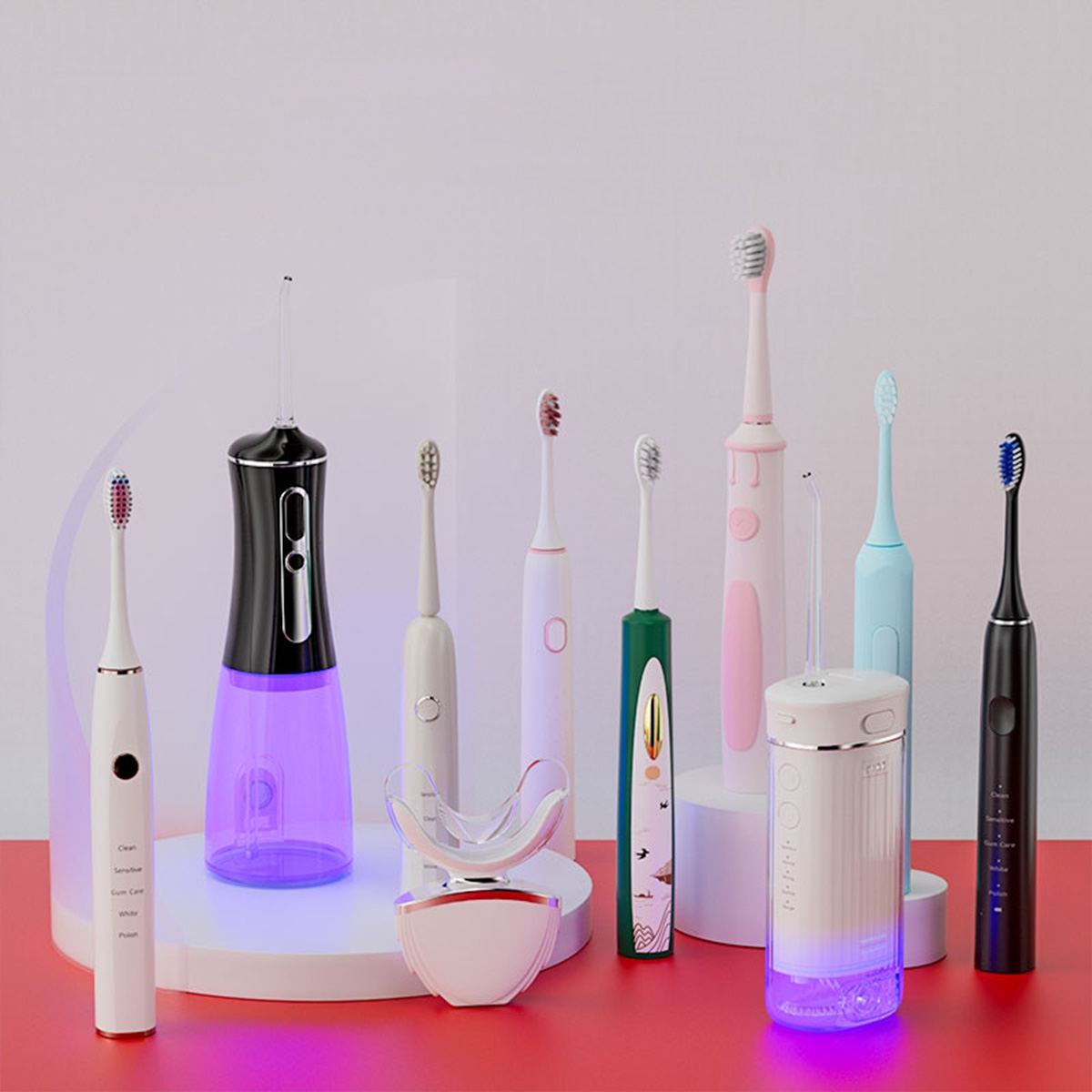
In today’s fast-evolving oral care market, consumers are no longer satisfied with single-function products. They’re seeking comprehensive, time-saving, and value-driven solutions. This shift in demand has given rise to bundled offerings, particularly the electric toothbrush and water flosser combination. For brand owners, this bundle is not just a consumer trend—it’s a powerful brand expansion strategy that can enhance competitiveness in an increasingly crowded marketplace. Why the Electric Toothbrush and Water Flosser Combination Appeals to Modern Consumers Consumers are becoming more informed and proactive about oral hygiene. Bundled oral care kits that include both an electric toothbrush and a water flosser offer multiple benefits: Comprehensive cleaning: Mechanical brushing combined with pressurized water stream provides a full-spectrum cleaning experience. Time efficiency: Bundles save time by offering everything consumers need in one package. Perceived value: Shoppers view bundles as cost-effective and premium in comparison to standalone items. For brands, tapping into this consumer demand through bundling is a smart move to enhance competitiveness through bundle strategy. Competitive Advantages for Brand Owners By offering an electric toothbrush and water flosser combination, brand owners can gain several strategic advantages: Product differentiation: Bundles stand out on shelves and e-commerce platforms, increasing product visibility. Higher average order value (AOV): Consumers…
As water flossers continue to grow in popularity across global markets, manufacturers are focusing not only on cleaning performance but also on the safety and user experience of these devices. Two often-overlooked but critically linked factors are Excessive Noise and the potential for Aspiration Risk. While noise levels may seem like a minor inconvenience at first glance, excessive sound can directly contribute to unsafe usage conditions—especially among sensitive user groups. This article explores how these two issues are related, and why B2B suppliers should pay close attention. The Relationship Between Excessive Noise and Aspiration Risk Excessive Noise produced by water flossers can lead to multiple unintended consequences, one of which is the increased possibility of Aspiration Risk—the accidental inhalation of water droplets or debris into the respiratory tract. When a device operates loudly, it can startle or distract the user, disrupting the careful coordination required to maintain correct oral posture during use. For elderly users, children, or individuals with reduced motor control, this distraction can make it easier to lose concentration or improperly tilt the device, raising the likelihood of aspiration incidents. Therefore, manufacturers cannot ignore the link between noise output and user safety. Causes of Excessive Noise in Water…
Gum recession is a growing concern in oral health, often attributed to factors like aggressive brushing or periodontal disease. However, recent user feedback and clinical observations point to an overlooked culprit: pulse inconsistency in electric oral care devices, especially water flossers and sonic toothbrushes. For manufacturers in the B2B market, understanding and mitigating this issue is vital to product safety, user trust, and long-term brand reputation. What Is Pulse Inconsistency and Why Does It Matter? Pulse inconsistency refers to irregular or fluctuating pressure and frequency in electric toothbrushes and water flossers. Instead of delivering a stable, rhythmic action, the device may spike or dip unpredictably. This can occur due to: Inadequate motor regulation Inconsistent power supply Poor-quality control in pulse generator circuits Software glitches in smart devices While seemingly minor, such irregularity can have a significant cumulative effect on gum tissue. How Pulse Inconsistency Leads to Gum Recession Gums are highly sensitive to mechanical force. Consistent, gentle stimulation can promote circulation and health, but unpredictable pulses act like micro-traumas. Over time, the repeated application of uneven pressure may cause the gum line to shrink or detach from the tooth, leading to gum recession. Clinical professionals have begun to associate irregular…
In today's smart personal care devices, features like the travel lock are designed to enhance user safety and convenience. However, recent engineering reports and field failures have exposed a surprising vulnerability: travel lock failure may inadvertently trigger a power surge, leading to electronic malfunctions, battery degradation, or even fire hazards. For B2B manufacturers, this risk demands urgent attention—not only to uphold product reliability but also to maintain compliance and market trust. What Is a Travel Lock and How Does It Work? The travel lock is a safety function built into electric toothbrushes and grooming devices to prevent accidental activation during transport. It’s typically engaged by holding a button for a few seconds, disabling the power function until manually released. However, when poorly implemented or damaged during manufacturing or transit, this lock can fail—causing the device to activate unexpectedly while packed in a confined space, such as luggage. How Travel Lock Failure Leads to Power Surges Unexpected activation of a device inside a sealed environment causes the motor to run without ventilation or resistance, potentially leading to: Internal component overheating Prolonged, unmonitored power draw Battery stress and swelling Faulty circuit load distribution This excessive, irregular power consumption can result in a…
As water flossers gain popularity for daily oral care routines, concerns around battery leakage and overheating risks have started surfacing across consumer platforms and return reports. For B2B manufacturers, these issues are more than isolated defects—they represent systemic challenges tied to design, assembly, and quality control. This blog explores the engineering and safety implications behind battery-related failures and what proactive steps can be taken to mitigate them. Why Battery Safety Matters in Compact Oral Devices Water flossers rely on rechargeable lithium-ion or NiMH batteries for portability and power. However, due to the compact, moisture-prone environments these devices operate in, battery integrity becomes highly vulnerable. Unlike larger electronics, there's limited room for heat dissipation, and inadequate sealing can directly contribute to battery leakage and overheating risks, often simultaneously. Root Causes of Battery Leakage in Water Flossers Battery leakage typically results from: Poor sealing or waterproof failure in the internal housing Low-quality cell materials that degrade over cycles Exposure to high humidity inside the tank compartment Improper charging behavior not safeguarded by BMS (Battery Management System) Once a battery starts leaking, it not only reduces device performance but may also corrode circuit boards, damage surrounding components, and cause unpleasant odors—leading to a…
Material degradation in oral care devices, such as electric toothbrushes and water flossers, is an often-overlooked issue. Yet, it can quietly lead to the release of harmful chemical residue into the user’s mouth, raising significant health concerns. For B2B manufacturers, this is not just a matter of consumer trust but also a critical compliance and product lifecycle issue. This blog will dissect the causes, risks, and prevention strategies related to material breakdown and chemical contamination in oral hygiene devices. What Is Material Degradation in Oral Devices? Material degradation refers to the physical or chemical breakdown of components over time due to factors like: Repeated exposure to moisture, heat, and friction Reaction with active ingredients in whitening gels or toothpaste Poor-quality plastics or elastomers that are not food-grade compliant As the material degrades, microscopic particles or chemical residue may leach from brush heads, water tanks, seals, or internal tubing—especially in low-cost devices or poorly stored stock. How Chemical Residue Poses Safety Risks When chemical residue enters the mouth, it may: Cause allergic reactions or mucosal irritation Alter oral pH and contribute to enamel erosion Be ingested, leading to potential systemic toxicity Affect taste or lead to bad odor, impacting user experience…


.jpg)
.jpg)
.jpg)
.jpg)
.jpg)



.jpg)
-1-scaled.png)