
When devices start exhibiting runtime shortening and experience frequent connection drops, many users jump to assume battery issues or firmware bugs. However, in B2B manufacturing and OEM contexts, these symptoms often point to deeper structural or system-level inefficiencies. Understanding and addressing the real causes is key to improving product reliability and customer satisfaction.
Runtime shortening typically reflects either power inefficiency or consumption imbalance, while connection drops signal unstable communication channels—often over Bluetooth or Wi-Fi. What many don’t realize is that these two issues are often interrelated. A weakened connection module may continuously attempt reconnections, consuming extra power. Likewise, unstable voltage from a degrading power system can interfere with connectivity chips.
Root interconnection:
For manufacturers, understanding the systemic causes is critical. Below are the most common culprits:
In B2B products with high usage frequency, these effects are amplified and often lead to early product fatigue or warranty claims.
Besides internal architecture, external conditions may worsen both runtime and connection stability:
These factors are often overlooked in diagnostics, yet they are common in usage environments like dental offices, beauty salons, or wellness centers.
Proper diagnosis helps avoid mislabeling runtime shortening as simply a battery problem. Recommended steps include:
A structured testing approach significantly reduces troubleshooting cycles in both lab and aftersales environments.
B2B manufacturers can take preemptive action by integrating reliability enhancements into design:
These changes not only stabilize runtime and connectivity, but also create a stronger user experience baseline, reducing service interventions.
In professional or institutional settings, devices that disconnect or power off prematurely can cause workflow disruption, user frustration, or even compromise hygiene or safety outcomes. Ensuring runtime and connectivity resilience is not just a technical improvement—it’s a strategic asset.
For OEMs and brands, fixing these issues proactively results in:
While runtime shortening and connection drops can be frustrating symptoms, they are absolutely fixable—when treated as interconnected design challenges rather than isolated defects. By addressing root causes in power delivery, signal processing, and usage context, manufacturers can build smarter, more resilient products for demanding markets.
Need help diagnosing or redesigning to reduce runtime and connectivity failures? Contact our technical team to explore custom development or ODM support.

.jpg)
water flosser dental floss comparison

The Long-Term Benefits of Using an Electric Toothbrush
Electric Toothbrush Contract Manufacturer for OEM Projects
Battery Degradation Accelerating LED Dimming – Unavoidable?
Portable Electric Toothbrush for College Hostel Life

What Should I Pay Attention to When Using a Teeth Whitening Device?
wheelchair oral care access: adaptive brushing strategies
Toothbrush Product Lifecycle Management for Global OEM Buyers

Subscription Model for Oral Care: OEM Strategies for Brush Head Replacement
Electric Toothbrush Gift Set Supplier | Premium B2B Oral Care Gifts
thin enamel whitening safety: gentle methods
Noise Complaints from Handle Corrosion? A Silent Threat Uncovered!
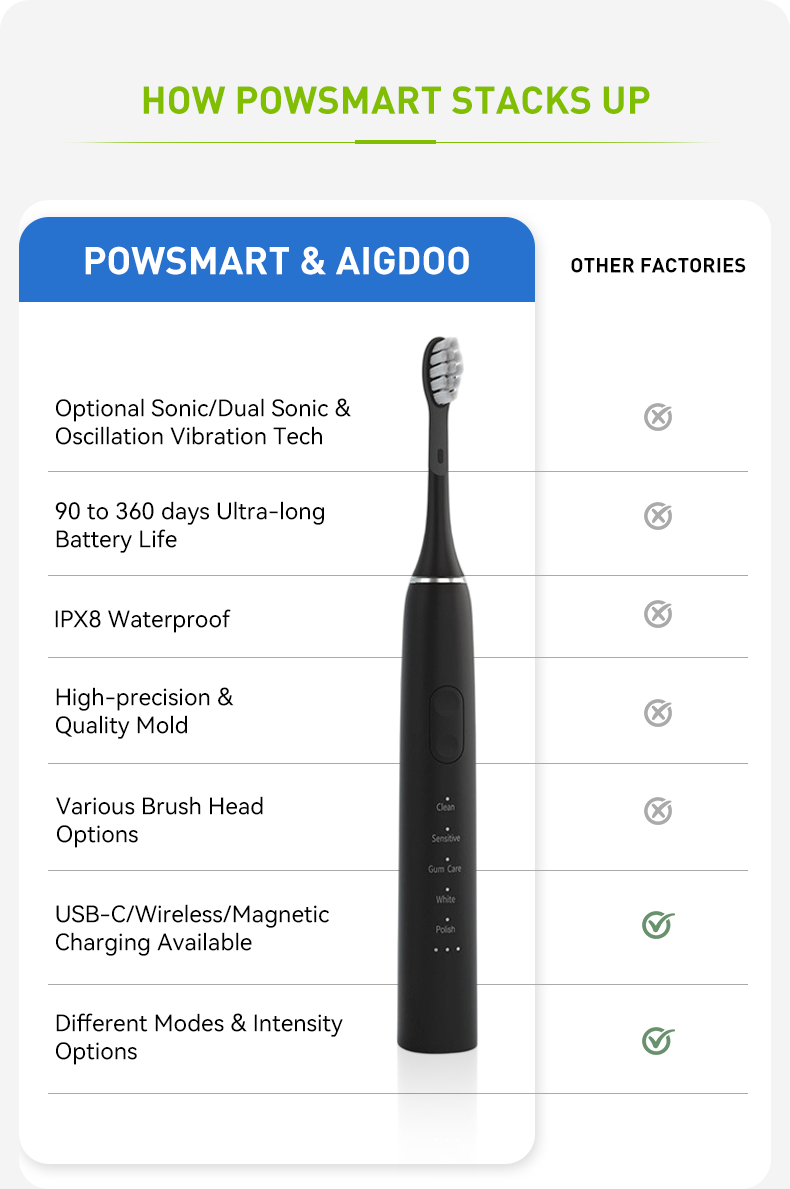
Why Is Universal Brush Head Compatibility a Challenge for Certification Compliance?
Best Toothbrush for Doctors | Clinical Oral Care
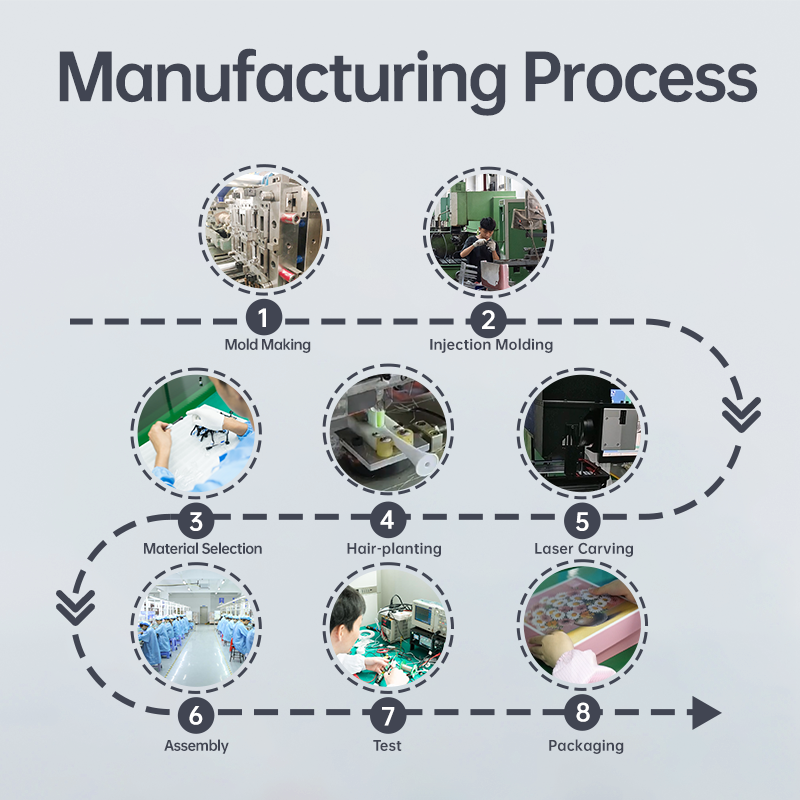
Does POWSMART Multi-Function Toothbrush Cause User Adaptation Struggles?
Toothbrush Replacement Heads Cost Analysis: Save Money on Brush Heads


.jpg)
.jpg)
.jpg)
.jpg)
.jpg)






.jpg)