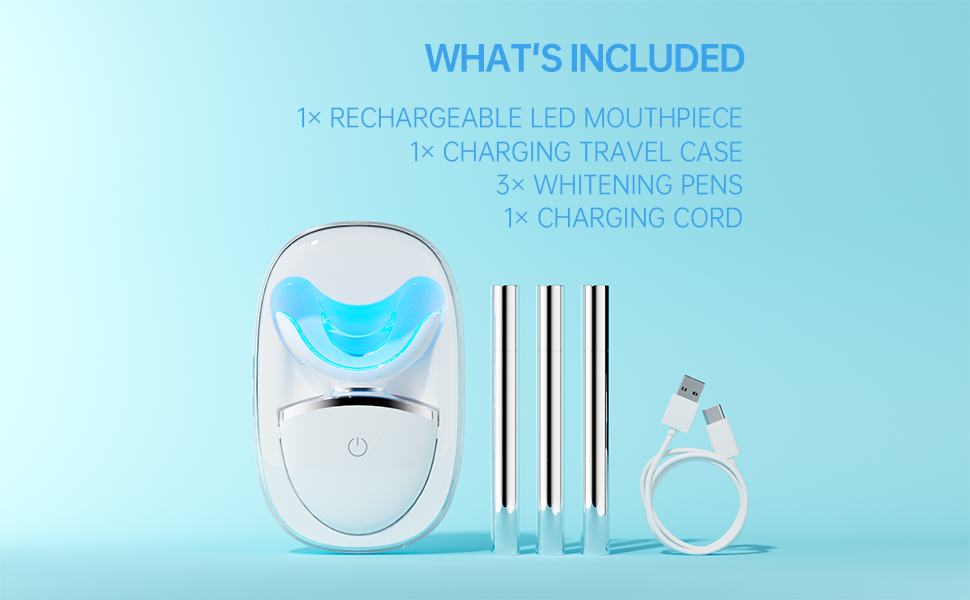
In advanced LED whitening systems, minimizing Chromatic Aberration is a critical design strategy for improving overall Luminescence Efficiency and treatment uniformity. For B2B manufacturers, precise optical control ensures that emitted light energy is effectively delivered to the whitening gel and tooth surface without spectral loss, color distortion, or uneven illumination.
Improving Spectral Focus and Energy Utilization
Chromatic Aberration causes different wavelengths to focus at different distances, leading to light dispersion. By reducing this effect, LED whiteners concentrate usable wavelengths more effectively, ensuring higher luminescence output reaches the treatment area.
Enhancing Uniform Light Distribution Across the Dental Arch
Minimized chromatic distortion enables consistent light intensity across all tooth surfaces. This uniformity improves whitening predictability and prevents localized under- or over-exposure during treatment cycles.
Maximizing Photochemical Activation of Whitening Gels
Whitening gels are optimized for specific wavelength ranges. Improved Luminescence Efficiency ensures that these wavelengths are delivered with higher intensity and stability, enhancing peroxide activation and overall whitening efficacy.
Reducing Thermal Loss and Optical Waste
When light improperly focused, excess energy converts to heat rather than useful illumination. Controlling Chromatic Aberration reduces thermal buildup, protecting both device components and oral tissues while maintaining performance efficiency.
Supporting Compact and Durable Optical Module Design
Efficient optical pathways allow manufacturers to design smaller, lighter LED modules without sacrificing performance. This improves device ergonomics and durability while maintaining high luminescent output.
Enabling Reliable Performance Validation and Quality Control
Stable spectral output simplifies optical testing and compliance verification. Devices with controlled chromatic behavior demonstrate consistent Luminescence Efficiency across production batches, supporting scalable OEM manufacturing.
Conclusion
For B2B LED whitening manufacturers, minimizing Chromatic Aberration is a foundational step toward maximizing Luminescence Efficiency. By aligning optical precision with photochemical performance, manufacturers can deliver safer, more effective, and more reliable whitening systems for professional and consumer markets alike. Contact us
.jpg)
.jpg)
