Info Center
  • Electric Toothbrush Manufacturing Under the Environmental Trend: Biodegradable Materials and Green Production

    In recent years, the push for sustainability has gained significant traction across various industries, and the electric toothbrush manufacturing sector is no exception. With increasing environmental awareness and consumer demand for eco-friendly products, manufacturers are adapting by incorporating biodegradable materials and committing to green production processes. This blog explores how these trends are reshaping the electric toothbrush industry and why they're crucial for the future of consumer goods. The Rise of Sustainability in Electric Toothbrush Manufacturing As environmental concerns escalate, the electric toothbrush manufacturing industry is under increasing pressure to reduce its ecological footprint. Traditionally, these products have been made from plastics and other materials that contribute significantly to waste. However, manufacturers are now realizing the importance of shifting toward more sustainable practices. The key lies in integrating biodegradable materials and adopting green production techniques to minimize environmental impact throughout the product lifecycle—from design to disposal. Biodegradable Materials: A Game Changer in Product Design The shift towards biodegradable materials is one of the most significant developments in electric toothbrush manufacturing. Materials like plant-based bioplastics, bamboo, and recycled plastics are viable alternatives to conventional petroleum-based plastics. These materials not only reduce waste but also break down naturally in the environment, making them a much more sustainable…

    2025-02-18
  • How to Choose a Reliable Electric Toothbrush OEM Factory? Pit Avoidance Guide

     When sourcing an electric toothbrush OEM factory for your brand, partnering with a reliable electric toothbrush OEM factory is crucial to ensure the product quality, production efficiency, and overall customer satisfaction. However, navigating through the many options can be overwhelming. In this "Pit Avoidance Guide," we’ll walk you through key factors to consider to avoid common pitfalls and help you choose the right factory for your electric toothbrush manufacturing needs. Assess Factory Certification and Compliance A reliable electric toothbrush OEM factory should be compliant with industry standards and regulations. Look for certifications such as ISO 9001 for quality management, ISO 13485 for medical devices (if applicable), and CE certification for European markets. These certifications demonstrate the factory’s commitment to maintaining high standards of production and quality control. Pit to Avoid:Don’t be tempted by factories that claim certifications without providing the necessary documentation. Always ask for verifiable proof of compliance. Evaluate Product Quality Control Processes The core of any successful partnership with an OEM factory lies in the ability to produce high-quality products consistently. A reliable electric toothbrush OEM factory should have well-established quality control (QC) processes, including raw material inspection, in-process testing, and final product inspections. Pit to Avoid:Avoid factories…

    2025-02-18
  • Analysis of the Whole Process of Electric Toothbrush Labeling: The Complete Cycle from Design to Shipment

    The electric toothbrush industry has seen significant growth in recent years, with innovations in technology and design continually shaping the market. However, one often overlooked aspect that plays a crucial role in the final product's quality and compliance is the electric toothbrush labeling process. Proper labeling not only ensures compliance with regulatory standards but also improves brand visibility and consumer trust. In this blog, we’ll provide a comprehensive analysis of the complete cycle of electric toothbrush labeling, exploring each stage of the production process from design to shipment. Initial Design and Label Conceptualization During the product’s initial design phase, manufacturers need to decide on the specific labels that will appear on the packaging and the product itself. These decisions are crucial for ensuring that the complete cycle of electric toothbrush labeling aligns with both regulatory requirements and marketing strategies. At this stage, the focus is on design aesthetics, as well as key regulatory elements such as: Brand logos Product information (e.g., model, type of bristles) Compliance symbols (e.g., CE, FCC) Instructions for use, including safety warnings The design should reflect the company’s brand image while also providing clear, concise, and easy-to-read information for the end consumer. Regulatory Compliance and Approval Once the…

    2025-02-18
  • Analysis of the Core Components of the Electric Toothbrush: Technical Secrets from the Motor to the Brush Head

    The electric toothbrush has revolutionized oral care with its efficiency and advanced technology. But what makes it work so effectively? This article will analyze the components of the electric toothbrush, unveiling the electric toothbrush technical secrets that enable superior cleaning performance. From the electric toothbrush motor to the electric toothbrush brush head, each element plays a crucial role in delivering a high-quality brushing experience.https://www.powsmart.com/product/electric-toothbrush/ The Heart of the Electric Toothbrush: The Motor The electric toothbrush motor is the key component that powers the device. Two primary types of motors are used: Rotary Motors: These create a spinning motion, commonly found in oscillating toothbrushes. Sonic Motors: These generate high-frequency vibrations to enhance plaque removal. Each motor type affects the toothbrush’s performance, efficiency, and user experience. Manufacturers continuously improve motor technology to optimize power consumption, speed, and durability. Power Supply and Battery Efficiency A reliable power source ensures long-lasting and efficient operation. Most electric toothbrushes use either: Rechargeable Lithium-ion Batteries: Offer long battery life, quick charging, and consistent power output. Alkaline Batteries: More common in budget-friendly models but require frequent replacements. Advanced models integrate smart charging solutions, such as wireless charging and fast-charge technology, to enhance user convenience. Control System and Smart Features Modern electric…

    2025-02-17
  • How to Optimize the Production Process of Electric Toothbrush? Intelligent Factory Upgrade Practice

    With the rapid development of the oral care industry, electric toothbrushes have become a household necessity. However, many manufacturers face challenges in optimize the production process of electric toothbrush while maintaining high quality and efficiency. The introduction of intelligent factory upgrade practices has revolutionized the industry by enhancing production capabilities, improving precision, and reducing costs. This blog explores how manufacturers can optimize the production process of electric toothbrushes by leveraging automation, digitalization, and intelligent management systems. Intelligent Production Line Automation The first step in optimize the production process of electric toothbrush is implementing automated production lines. Traditional manufacturing methods rely heavily on manual labor, leading to inconsistencies and inefficiencies. By integrating robotics and AI-driven machinery, manufacturers can achieve: Higher production efficiency and reduced cycle time. Improved product consistency with precise assembly and quality control. Reduced labor costs and minimized human error. Automation also plays a crucial role in streamlining the electric toothbrush technical secret by ensuring each component, from brush heads to motors, is assembled with high precision. Digital Twin Technology for Real-Time Monitoring A key component of the intelligent factory upgrade practice is the implementation of digital twin technology. This allows manufacturers to create a virtual replica of the…

    2025-02-17
  • Sonic vs Rotary: Which Electric Toothbrush Technology is Better for Your Brand?

    In the competitive landscape of oral care, selecting the right electric toothbrush technology for your brand can be a critical decision. Two dominant technologies, sonic vs rotary technology, offer unique benefits that cater to different consumer needs. Understanding their differences will help you determine which one aligns best with your brand strategy. How Sonic and Rotary Technologies Work Sonic toothbrushes operate at high frequencies, typically above 30,000 strokes per minute, generating fluid dynamics that help clean beyond the bristles' reach. Rotary toothbrushes feature a smaller, round brush head that oscillates and rotates to remove plaque effectively with a mechanical scrubbing action. Cleaning Efficiency and Effectiveness Sonic toothbrushes are known for their ability to clean between teeth and along the gumline, thanks to their high-speed vibration and fluid action. Rotary toothbrushes provide a direct scrubbing motion that is particularly effective for plaque removal on the tooth surface. Studies indicate both technologies significantly reduce plaque, but sonic toothbrushes may offer a gentler approach for sensitive gums. Consumer Preferences and Market Demand Sonic electric toothbrushes are often favored by consumers looking for a premium brushing experience with an emphasis on deep cleaning. Rotary toothbrushes are typically more affordable and cater to users who prefer a more traditional brushing sensation. Understanding your…

    2025-02-17
  • From a Chemical Perspective, Do Teeth Whitening Products Really Work?

    Teeth whitening has become a global trend, with an increasing number of consumers seeking brighter smiles. But how effective are teeth whitening products from a chemical perspective? Are the claims backed by real science, or is it just a marketing gimmick? This article delves into the chemistry behind teeth whitening products, explaining their key ingredients, mechanisms, and potential limitations. The Science Behind Teeth Stains Before understanding how teeth whitening products work, it's essential to know why teeth become discolored in the first place. Staining occurs due to: Extrinsic stains – Caused by coffee, tea, red wine, and tobacco, these stains accumulate on the enamel surface. Intrinsic stains – These result from aging, medication, or excessive fluoride exposure, affecting the dentin layer beneath the enamel. Different whitening agents target these stains in distinct ways. Key Ingredients in Teeth Whitening Products The effectiveness of teeth whitening products depends on their active ingredients. The most common chemical compounds include: Hydrogen Peroxide (H₂O₂) – A strong oxidizing agent that breaks down stain molecules through oxidation. Carbamide Peroxide – A slower-releasing form of hydrogen peroxide, often used in at-home whitening kits. Phthalimidoperoxycaproic Acid (PAP) – A non-peroxide alternative gaining popularity due to its gentler action on enamel. These ingredients play a crucial…

    2025-02-14
  • From a Chemical Perspective, Do Teeth Whitening Products Really Work?

    Teeth whitening has become a global trend, with an increasing number of consumers seeking brighter smiles. But how effective are teeth whitening products from a chemical perspective? Are the claims backed by real science, or is it just a marketing gimmick? This article delves into the chemistry behind teeth whitening products, explaining their key ingredients, mechanisms, and potential limitations. The Science Behind Teeth Stains Before understanding how teeth whitening products work, it's essential to know why teeth become discolored in the first place. Staining occurs due to: Extrinsic stains – Caused by coffee, tea, red wine, and tobacco, these stains accumulate on the enamel surface. Intrinsic stains – These result from aging, medication, or excessive fluoride exposure, affecting the dentin layer beneath the enamel. Different whitening agents target these stains in distinct ways. Key Ingredients in Teeth Whitening Products The effectiveness of teeth whitening products depends on their active ingredients. The most common chemical compounds include: Hydrogen Peroxide (H₂O₂) – A strong oxidizing agent that breaks down stain molecules through oxidation. Carbamide Peroxide – A slower-releasing form of hydrogen peroxide, often used in at-home whitening kits. Phthalimidoperoxycaproic Acid (PAP) – A non-peroxide alternative gaining popularity due to its gentler action on enamel. These ingredients play a crucial…

    2025-02-14
  • The Role of Blue and Red Light in Teeth Whitening Devices You Should Know

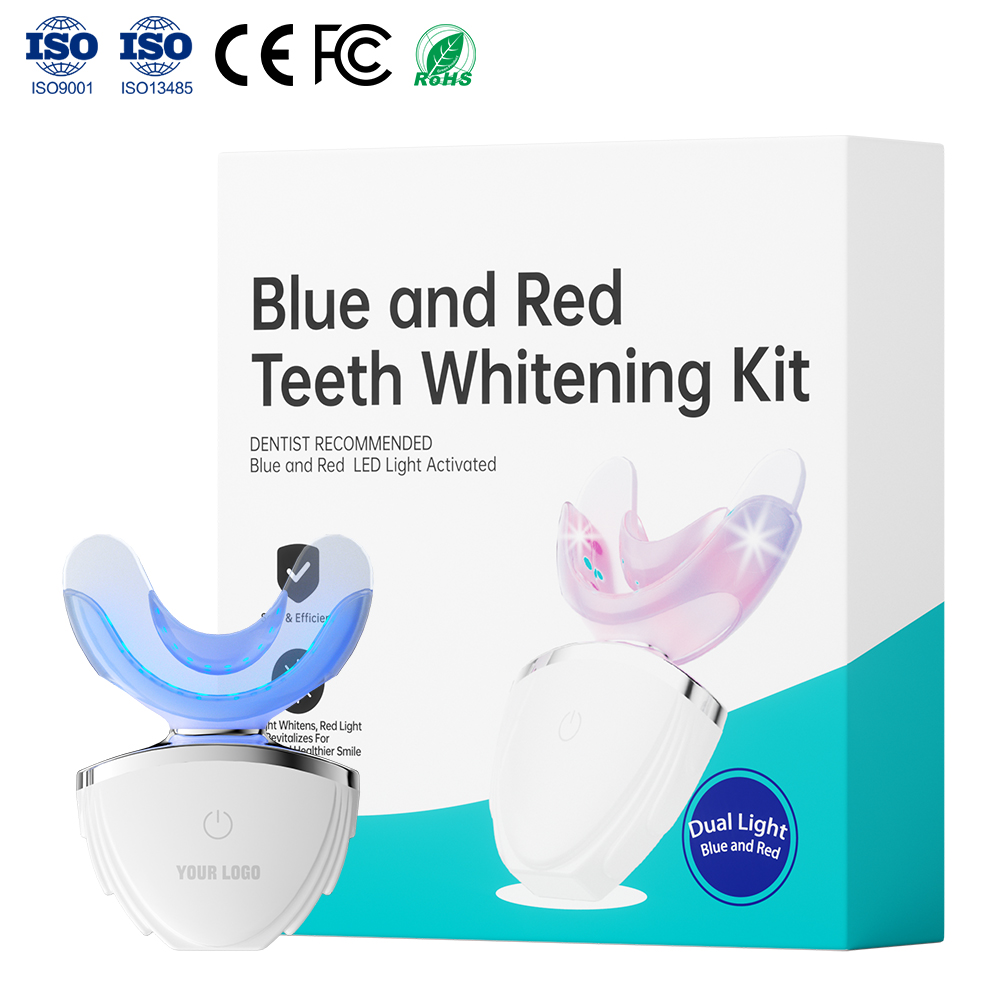
    Teeth whitening has become a booming industry, with advanced technologies enhancing the effectiveness of whitening treatments. Among the most innovative solutions are teeth whitening devices that utilize blue and red light. But what roles do these different light spectrums play in the whitening process? Understanding their benefits can help both manufacturers and consumers make informed decisions. How Blue Light Works in Teeth Whitening Devices Blue light is widely recognized for its role in accelerating the whitening process. Many professional and at-home teeth whitening devices use blue LED light to enhance the effects of peroxide-based whitening gels. Here’s how it works: Activating Whitening Agents – Blue light helps break down the hydrogen peroxide or carbamide peroxide in the gel, releasing oxygen molecules that target and remove deep stains. Enhancing Efficiency – The light speeds up the oxidation process, leading to faster and more noticeable results. Providing a Non-Invasive Solution – Unlike UV light, blue LED light does not generate heat or cause damage to the enamel, making it a safe and effective choice. The Benefits of Red Light in Teeth Whitening Devices While blue light focuses on stain removal, red light plays a different but equally crucial role in teeth whitening devices. Red light therapy offers benefits that…

    2025-02-14
  • Common Water Flosser Problems and How to Fix Them

    Water flossers have become an essential part of oral hygiene, providing an effective way to clean between teeth and along the gumline. However, like any electronic device, they may encounter issues over time. As a leading expert in Water Flosser manufacturing, we understand these common problems and how to address them efficiently. Below, we highlight the most frequent Common Water Flosser Problems and provide step-by-step solutions to fix them. Water Flosser Not Turning On A non-functional water flosser can be frustrating. This issue may arise due to several reasons: Battery Depletion: If the flosser is rechargeable, ensure it is fully charged. Power Connection Issue: For plug-in models, check if the power cord is securely connected. Internal Malfunction: If none of the above works, the internal components may need repair or replacement. How to Fix: Recharge the battery or try a different outlet. Inspect the power cord and adapter for damage. Contact the manufacturer if the issue persists. Weak or No Water Pressure A weak stream of water reduces the effectiveness of flossing. The possible causes include: Clogged Nozzle: Mineral deposits or debris might be blocking the water flow. Low Water Level: Ensure the reservoir is sufficiently filled. Air Bubbles in the…

    2025-02-12
  • Should You Get Your Child a Water Flosser?

    Good oral hygiene is essential for children, but getting them to stick to a solid dental care routine can be a challenge. Traditional flossing is often neglected, leaving plaque and food particles between teeth, which can lead to cavities and gum issues. Many parents are now considering an alternative—water flossers. But is it the right choice to get your child a water flosser? Let's explore the key reasons for using water flossers and whether they are suitable for young users. Gentle on Gums, Easy to Use Unlike traditional string floss, which can sometimes cause discomfort or bleeding, water flossers are gentle on the gums. This makes them a great choice for children who have sensitive gums or braces. Many children find oral irrigators more comfortable and fun to use, increasing the likelihood of regular flossing. Effective Plaque and Food Removal Children often struggle with proper flossing techniques, leaving plaque and food particles stuck between their teeth. Water flossers use a targeted stream of water to effectively remove debris, making them a practical and efficient alternative. Ideal for Braces and Dental Appliances For kids with braces, flossing can be particularly challenging. Traditional flossing requires threading between wires, which can be time-consuming…

    2025-02-12
  • Water Flosser Maintenance: How to Keep Your Device in Top Condition

    A water flosser is an essential tool for maintaining optimal oral hygiene, but regular upkeep is necessary to ensure its performance and longevity. This guide to maintaining your water flosser will help keep your oral irrigator in top condition and extend its lifespan. Follow these simple water flosser maintenance steps to keep your device running efficiently. Daily Cleaning After Use To prevent mineral buildup and bacteria growth, empty the reservoir after each use and rinse it thoroughly with warm water. Wipe the exterior of the device with a soft cloth to remove water stains and residue. Deep Cleaning the Reservoir At least once a week, clean the water reservoir with a mixture of mild dish soap and warm water. For stubborn buildup, use a vinegar-water solution (1:1 ratio) and let it sit for a few minutes before rinsing thoroughly. Descaling to Prevent Mineral Deposits Hard water can cause mineral deposits that affect performance. Every 1-2 months, run a solution of equal parts white vinegar and warm water through the device. Afterward, flush it with clean water to remove any residual vinegar taste. Cleaning the Flosser Tip The flosser tip can accumulate bacteria and debris over time. Remove it after each…

    2025-02-12
  • Battery Leakage, Shell Peeling Off… What Are the Familiar Problems with Unqualified Children Electric Toothbrushes?

    Children electric toothbrushes have gained immense popularity among parents looking to ensure their kids maintain good oral hygiene from an early age. However, not all products on the market meet the necessary quality and safety standards. Unqualified children electric toothbrush can pose significant risks, from battery leakage to structural defects. In this blog, we will explore the most common issues found in substandard children electric toothbrushes and what to look for when selecting a reliable product from a professional electric toothbrush manufacturer. Battery Leakage: A Safety Hazard One of the most concerning issues with unqualified children electric toothbrushes is battery leakage. Low-quality batteries and poor sealing mechanisms can cause electrolyte leakage, which may lead to skin irritation, corrosion of internal components, or even fire hazards. A reputable electric toothbrush manufacturer ensures that all battery compartments are well-sealed and that high-quality, leak-proof batteries are used. Shell Peeling Off: A Choking Risk Another frequent problem is the peeling or breaking of the toothbrush shell. Poor-quality plastic materials and weak adhesives can result in the outer shell peeling off after a short period of use. This not only affects the durability of the toothbrush but also poses a choking risk for young children.…

    2025-02-11
  • Electric Toothbrush OEM Process: The Secrets Behind the Professional Manufacturing Process

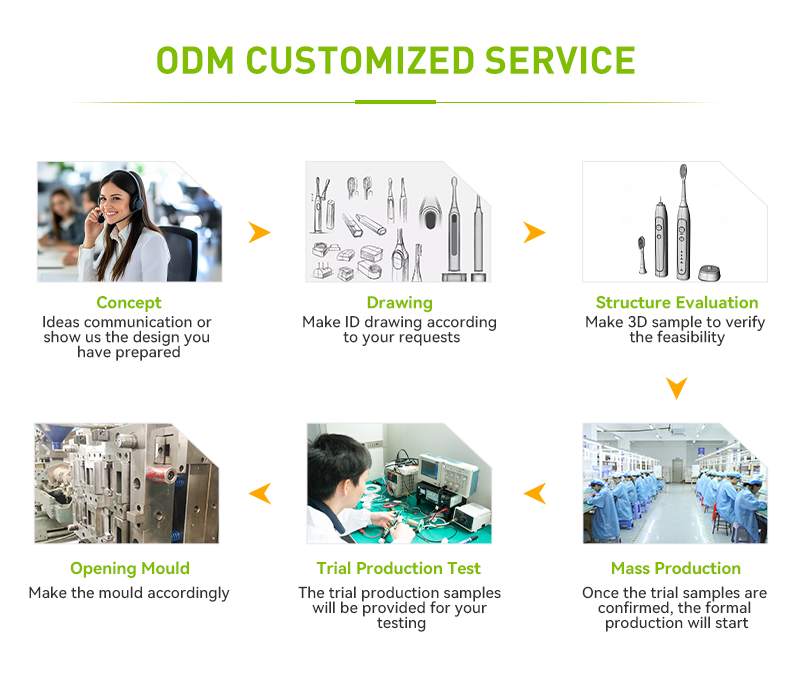
    In today’s competitive market, businesses looking to develop their own branded electric toothbrush need a reliable and experienced electric toothbrush manufacturer to guide them through the professional manufacturing process. From initial design to final production, understanding the Electric Toothbrush OEM process ensures quality, efficiency, and brand success. In this blog, we unveil the key steps behind the professional OEM production process.https://www.powsmart.com/contact-us/ Product Concept and Design Consultation The Electric Toothbrush OEM journey begins with concept development and design consultation. Manufacturers work closely with clients to understand their brand vision, target market, and product requirements. This stage includes: Market research and trend analysis Customization options for brush heads, handles, and colors Ergonomic and aesthetic design planning Technical Development and Prototyping Once the design is finalized, the electric toothbrush manufacturer moves to technical development and prototyping. This involves: Developing internal components such as motor technology and battery efficiency Creating functional prototypes for testing Evaluating brushing modes, waterproof ratings, and overall durability  Material Selection and Compliance Testing A professional manufacturing process ensures that the selected materials meet international safety and quality standards. Manufacturers conduct rigorous testing to ensure: FDA, CE, and RoHS compliance Non-toxic, BPA-free materials for user safety Longevity and durability under various conditions Mass Production and Quality…

    2025-02-11
  • Several production equipment commonly used in electric toothbrush manufacturers

    Usually, As electric toothbrush manufacturers, we need the following production equipment, as follows: Brush head production related equipment Hair transplanting machine Used to implant bristles into the holes of the brush head shell. It can accurately implant bristles according to the preset density, angle and arrangement. For example, when producing some electric toothbrush heads with special bristle arrangements (such as cross arrangement or wavy arrangement), the hair transplanting machine can accurately complete the task. The bristles are fixed by a mechanical arm or a clamp. And then accurately inserted into the corresponding holes of the brush head shell. Some hair transplanting machines also have an automatic hair supply system to ensure the continuity of the bristle supply. Brush head shell molding equipment If we produce the brush head shell by injection molding, we need an injection molding machine. The injection molding machine can heat and melt the plastic particles. Inject them into a specific mold to form the shape of the brush head shell. The injection molding machine is mainly composed of an injection system, a mold clamping system, a hydraulic transmission system, an electrical control system, etc. The injection system heats the plastic raw material and injects the molten…

    2025-02-11
  • Electric Toothbrush Inspection and Quality Control in China

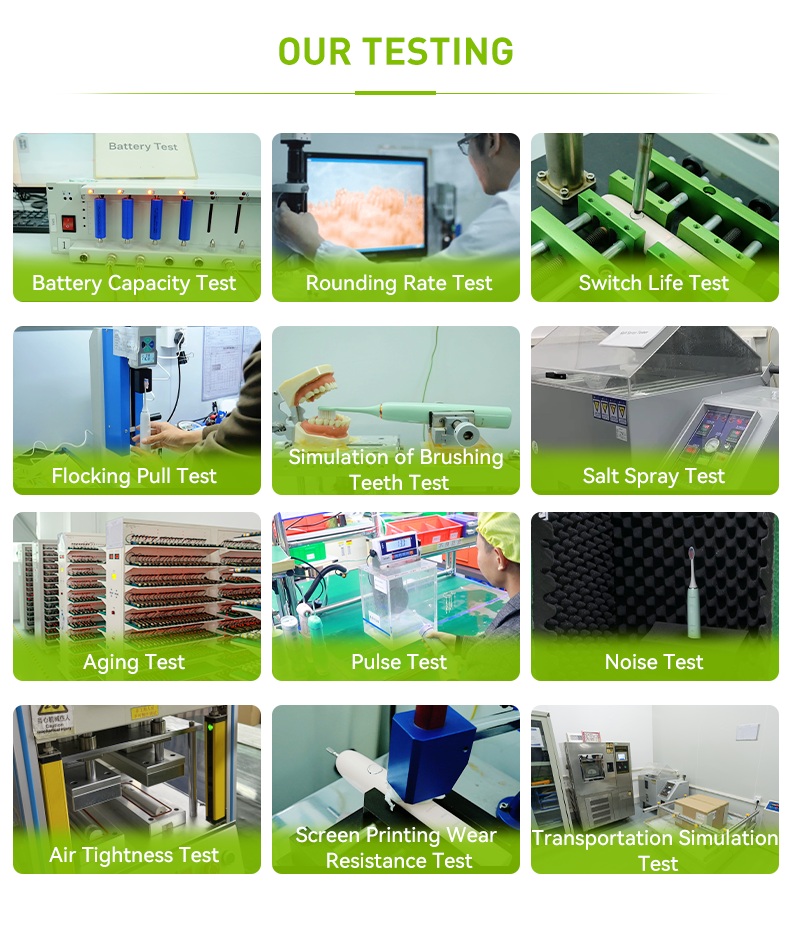
    Introduction With the growing demand for electric toothbrushes worldwide, manufacturers in China play a crucial role in ensuring the production of high-quality products. To maintain international standards and consumer trust, a robust Electric Toothbrush Inspection and Electric Toothbrush Quality Control system is essential. This blog will explore the key aspects of quality control for electric toothbrushes manufactured in China. https://www.powsmart.com/ Raw Material Inspection The first step in ensuring quality begins with raw material inspection. Each component, including bristles, handles, motors, and batteries, undergoes thorough testing. The Quality Control System ensures that all raw materials meet safety and performance standards before assembly begins. Assembly Line Quality Checks During the production process, manufacturers implement in-line quality inspections to detect defects early. Automated and manual checks are performed to verify proper component integration, secure assembly, and adherence to design specifications. These inspections help prevent costly recalls and ensure consistent quality. Battery and Charging System Testing Since electric toothbrushes rely on rechargeable batteries, testing the battery life, charging efficiency, and safety is critical. Overcharging, overheating, and short-circuiting risks must be eliminated through rigorous Electric Toothbrush Quality Control procedures. Performance and Functionality Testing Before packaging, electric toothbrushes undergo multiple performance tests. These tests evaluate: Vibration frequency and amplitude Waterproof…

    2025-02-10
  • Life cycle of Electric Toothbrushes! Its Components and Effects

    Introduction As an essential part of modern oral hygiene, electric toothbrushes have revolutionized the way people maintain their dental health. But have you ever wondered about the lifecycle of electric toothbrushes? From manufacturing to disposal, every stage plays a role in shaping user experience, environmental impact, and innovation. In this blog, we will explore the key phases in an electric toothbrush’s lifecycle, its essential components, and the role of an electric toothbrush manufacturer in ensuring quality and sustainability. Design and Development The lifecycle of electric toothbrushes begin with its design and engineering. Manufacturers conduct extensive research to enhance brushing efficiency, user comfort, and sustainability. Product designers focus on factors like ergonomic handle design, battery efficiency, and the effectiveness of bristle movement. Cutting-edge technologies, such as smart sensors and AI integration, are also incorporated to optimize user experience. Manufacturing Process The production of an electric toothbrush involves multiple steps, including component assembly, quality control, and packaging. An electric toothbrush manufacturer sources high-quality materials for different parts, such as: Handle and motor: The motor generates vibrations or oscillations to power the bristles. Rechargeable battery: Lithium-ion batteries are commonly used for long-lasting power. Circuit board and sensors: These control speed settings, pressure sensors, and smart…

    2025-02-10
  • Should You Invest in Electric Toothbrushes?

    Introduction The oral care industry is evolving rapidly, and electric toothbrushes are becoming a dominant trend. As consumer preferences shift towards smart and efficient dental care solutions, businesses must evaluate whether invest in electric toothbrushes production is the right move. This blog explores the reasons for electric toothbrush investment and why partnering with an electric toothbrush manufacturer can be a strategic decision for your company. Growing Market Demand One of the primary reasons for electric toothbrush investment is the rising global demand for advanced oral care products. Consumers are increasingly aware of dental hygiene and are willing to invest in superior products that enhance their brushing experience. The electric toothbrush business is projected to grow significantly due to advancements in technology, better affordability, and increased recommendations from dental professionals. Competitive Advantage Investing in electric toothbrushes can set your business apart from competitors still focusing on manual toothbrushes. Offering an innovative product range that caters to different consumer needs—such as sonic toothbrushes, smart-connected devices, or eco-friendly rechargeable models—positions your brand at the forefront of the oral care industry. A trusted electric toothbrush manufacturer can provide the necessary expertise and production capabilities to ensure a high-quality product line. Technological Innovations The electric…

    2025-02-10
  • How to Pick the Right Water Flosser for Your Oral Health: Answers from an Oral Irrigator Manufacturer

    Oral health is a cornerstone of overall well-being, and choosing the right water flosser can make a big difference in your daily oral hygiene routine. As an experienced oral irrigator manufacturer, we know that selecting the best water flosser might seem overwhelming with so many options on the market. To help you make an informed decision, Powsmart has outlined the key factors of how to pick the right water flosser for your needs. https://www.powsmart.com/about-powsmart/ Understand Your Oral Health Needs Before diving into specific features, start by evaluating your own oral health situation. Do you have braces, dental implants, or sensitive gums? Are you prone to plaque buildup or gum disease? Different water flossers cater to different needs, and identifying your priorities will help you narrow down your options. For example, if you have braces, look for a water flosser with orthodontic tips designed to clean around brackets and wires. Choose the Right Pressure Settings Not all water flossers are created equal when it comes to water pressure. The right water flosser should offer adjustable pressure settings to suit your comfort level and oral health requirements. For those with sensitive gums, a lower pressure setting is ideal, while individuals with significant…

    2025-01-24
  • Private Label Electric Toothbrush & Water Flosser Manufacturing

    Electric toothbrushes and water flossers are quickly becoming the darlings of the global market. For brands that want to enter this booming industry, choosing a reliable oral care product manufacturer is particularly important. In this article, we will take a deep dive into why choosing Private Label Electric Toothbrush and Private Label Water Flosser production is a smart business decision and share key cooperation points. What are Private Label products? Private Label is a business model in which manufacturers produce products and affix their own labels to the brand. Brands do not need to develop or set up production lines on their own, but only need to focus on product marketing and sales. Especially in the field of electric toothbrushes and water flossers, the Private Label model provides a shortcut for start-up brands and mature companies to enter the market efficiently. Choosing an oral care products manufacturer to cooperate means that brand owners can get a range of customized solutions, including product design, functional configuration and packaging customization.  Why choose electric toothbrushes and water flossers? The market size of electric toothbrushes and water flossers is growing. These products cater to consumers' demand for efficient oral cleaning tools and are also…

    2025-01-24