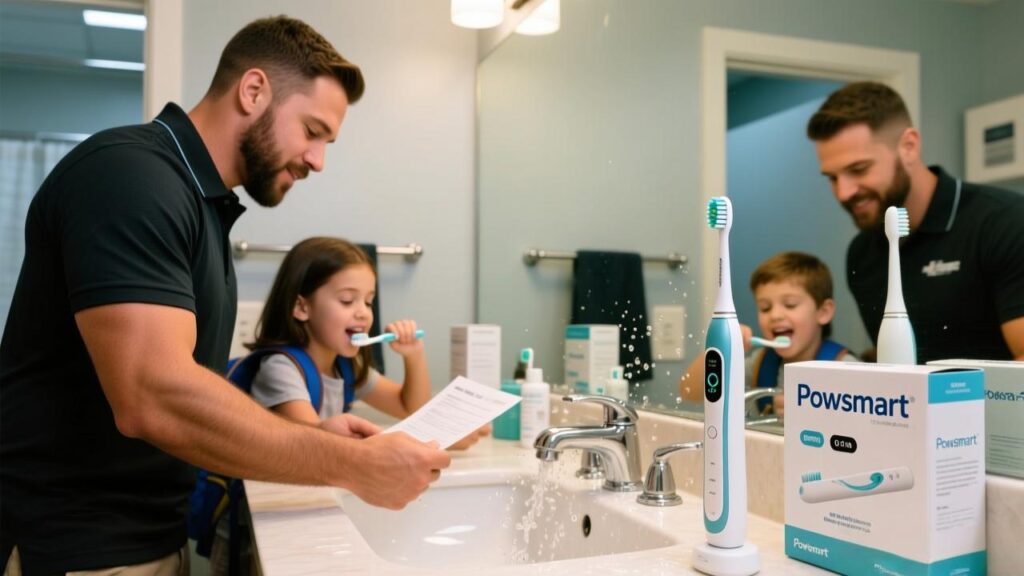
In today’s advanced at-home oral-care devices—some even powered by a Magnetic Levitation Motor for ultra-smooth operation—relying solely on gadget features is not enough to guarantee safety. Instead, regular dentist consultations serve as a vital complement, helping to identify contraindications, personalize protocols, and avert complications that no consumer manual can fully anticipate. Tailoring Treatment to Individual Anatomy First and foremost, dental anatomy varies widely: Gum Morphology: Some users have thin, recession-prone gingiva that require gentler cleaning pressures. Enamel Thickness: Variations in enamel density affect sensitivity thresholds and bleaching tolerance. Orthodontic Appliances: Braces, implants, or bridges alter fluid dynamics and pressure points, needing customized nozzle angles. Through dentist consultations, practitioners can assess each patient’s oral structures and recommend device settings or attachments that minimize home-use risks. Early Detection of Underlying Pathologies Moreover, what appears to be routine plaque buildup can mask deeper issues: Periodontal Pockets: Untreated periodontitis pockets deepen without professional scaling, making at-home jets counterproductive. Enamel Cracks: Micro-fractures are invisible to users but can worsen with high-pressure home devices. Caries Development: Early cavities may be exacerbated if home whitening or high-speed brushing continues unchecked. By scheduling regular consultations, dentists can spot and treat these pathologies before home routines aggravate them.Company web:…
In whitening devices, whitening cycle variations—differences in treatment duration and frequency—directly affect final shade improvement. Meanwhile, frequent low-battery alerts interrupt the process, leading users to question what constitutes an “effective cycle.” The root causes span chemistry, device power, user behavior, and battery management. Sources of Whitening Cycle Variations Whitening cycle variations encompass both single-session length (e.g., 10 vs. 20 minutes) and overall frequency (daily vs. every other day). Manufacturers differ in formula strength, light wavelength, and heat assistance, so claims like “results in 7 days” versus “10 days needed” are common. Interruption by Low-Battery Alerts Devices often trigger low-battery alerts, auto-pausing or throttling power to protect battery life. While this safeguards the battery, it can prevent completion of the intended whitening cycle—undermining results. For B2B partners, balancing fast charging and stable runtime is critical to minimize such disruptions. User Compliance with Cycle Protocols Users frequently restart interrupted treatments, losing adherence to standardized cycles. Both excessively long and overly brief sessions can lead to under-activated formulas or over-oxidation—causing sensitivity or color rebound. Chemistry vs. Exposure Time Trade-Off The relationship between active ingredient concentration and exposure time can be: High Concentration + Short Cycle: Rapid stain breakdown but higher sensitivity risk. Low…
In modern smart oral-care devices, built-in pressure sensors not only monitor brushing force but also provide early alerts for gum recession risk. Yet more sensors and complex upkeep can raise the barrier to use and increase maintenance steps. Below, we explore six facets of how gum recession relates to device maintenance complexity, and offer optimization strategies. Routine Maintenance & Recession Risk Assessment First, regular cleaning and calibration are essential for sensor accuracy: Brush-Head Replacement: Replace heads every three months; worn bristles can splinter, irritating gums. Sensor Calibration: Uncalibrated pressure sensors may misread force and allow excessive pressure, heightening recession risk. Nozzle & Seal Inspection: Blockages or aged seals disrupt fluid flow, leading users to compensate with extra force that can damage tissue. A streamlined maintenance regimen helps keep recession alerts reliable without overburdening users. The Role of Pressure Sensors in Oral Care Moreover, pressure sensors play a pivotal role in preventing gum recession: Real-Time Feedback: Handle vibrations or app notifications warn when brushing force exceeds safe thresholds. Data Logging & Reporting: Longitudinal pressure data guides dental professionals in advising patients on gentler techniques. Adjustable Sensitivity Levels: Different thresholds for “sensitive,” “standard,” or “deep-clean” modes accommodate varied gum health. However, a…
In devices designed for children’s oral care, not only must you leverage the low vibration and quiet operation of a coreless motor, but you also need clear pediatric warnings about bleach residuals. Children’s enamel is thinner and their swallowing reflexes are immature—any leftover bleaching agent can harm oral tissues or be ingested. Below, we explore six reasons why pediatric instructions must emphasize thorough rinsing of all bleach residues. Unique Pediatric Oral Physiology Children’s mouths differ markedly from adults’: Thinner Enamel: Pediatric enamel is roughly half as thick, making it more prone to chemical erosion. Immature Swallow Reflex: Young children may accidentally ingest residual bleach, causing gastrointestinal distress. Microbiome Sensitivity: Residual oxidizers can disrupt beneficial oral flora, raising caries risk. These factors make residual removal essential in pediatric guidelines. Dangers of Bleach Residuals Even trace bleach left behind can cause: Chemical Irritation: Contact with gums or mucosa can produce burning sensations or mild inflammation. Inhibited Remineralization: Ongoing peroxide decomposition can slow enamel repair, increasing sensitivity. Taste and Microbial Imbalance: Residual chemicals alter saliva chemistry, affecting taste perception and microbiome health. Children’s developing mouths are particularly vulnerable to these effects. Key Elements of Pediatric Warnings Product labeling and instructions for children should…
After completing a tooth-whitening treatment, maintaining results relies not only on using a waterproof seal in your bleaching trays to block pigments but also on rigorous allergen testing to select safe post-treatment foods. Any dietary allergen or cross-contamination can trigger gum inflammation, accelerate stain redeposition, or undermine whitening effects. Therefore, testing every recommended ingredient for allergens is essential for B2B partners to ensure product safety and user satisfaction. The Physiological “High-Sensitivity Window” Post-Bleaching First, bleach leaves dentinal tubules open and enamel slightly demineralized for about 48–72 hours: Enamel Micro-Abrasion: Minor mineral loss makes the surface more prone to pigment uptake. Gingival Reactivity: Residual bleaching agents can inflame gums, heightening sensitivity to new irritants. Weakened Salivary Barrier: Saliva’s buffering capacity is still recovering, leaving acids unchecked. During this “high-sensitivity window,” consuming allergenic foods risks discomfort or color relapse. Allergen Testing: The Foundation of Safe Menus Consequently, allergen testing of common post-whitening ingredients is crucial: Multi-Panel Screening: Test for peanuts, shellfish, dairy proteins, gluten, and other high-risk allergens. Cross-Contact Assessment: Verify processing, storage, and transport chains to rule out hidden contamination. Threshold Determination: Establish safe residue levels based on clinical guidelines to inform menu formulations. Only data-driven testing provides B2B clients with…
In practice, a tooth’s enamel vulnerability is closely tied to persistent staining residuals. Meanwhile, smart mode switching—allowing a device to adapt its cleaning stages—can effectively reduce pigment buildup and prevent secondary enamel erosion. In the following six sections, we’ll analyze their interconnection and offer optimization strategies. How Pigment Residues Amplify Enamel Vulnerability First, even minute pigment residues on enamel can: Clog Micro-Porosities: Chromogens from foods and drinks infiltrate micro-pores, forming a stubborn stain layer. Trap Acidic Metabolites: Pigments feed bacteria that produce acids, chemically attacking enamel minerals. Abrade Micro-Cracks: Bristle or polishing head friction against pigmented spots worsens tiny enamel fissures. Thus, residual staining not only mars appearance but undermines enamel strength at the microscopic level. pH Cycling and Enamel Loss Mechanisms Next, pigment residues interact with the mouth’s acid–base balance: Local pH Drops: Stain-laden areas remain more acidic, overwhelming saliva’s buffering capacity and accelerating demineralization. Mineral Leaching: Acidic conditions repeatedly dissolve calcium and phosphate, loosening enamel structure. Uneven Remineralization: Salivary minerals struggle to refill deep pores, creating weak “voids” that heighten enamel vulnerability. Controlling residual stains is therefore critical to preserving intact enamel.Company web:https://www.powsmart.com/product/electric-toothbrush/ Smart Mode Switching Strategies To tailor cleaning intensity and protect enamel, devices should implement smart…
In modern light-activated whitening devices, cold light wavelength not only determines the efficiency of bleach decomposition but also ties directly into the device’s power design—such as Type-C charging, which enables rapid top-ups to sustain high-intensity illumination modes. Below, we explore six key aspects of how wavelength influences photochemical bleaching and offer optimization strategies. Fundamentals of Wavelength and Absorption First, different LED wavelengths produce photons of varying energy, impacting bleaching activation: 400–420 nm (Blue Light): Higher-energy photons that effectively cleave peroxide’s O–O bonds. 420–450 nm (Visible Edge): Matches absorption peaks of many photosensitizers in bleaching gels. 450–480 nm (Deep Blue): Slightly lower photon energy but offers deeper penetration and more uniform scattering. Precisely selecting the cold light wavelength optimizes the initiation of photochemical reactions. Photochemical Mechanisms & Wavelength Dependence Next, peroxide-based or encapsulated bleaching agents require specific photon energies to decompose: Direct Bond Dissociation: 400 nm light most effectively photolyzes hydrogen peroxide. Photosensitizer Excitation: Dyes or catalysts in the gel absorb best around 420–430 nm. Radical Generation: Optimal wavelengths maximize hydroxyl radical (•OH) production, boosting stain breakdown. Thus, wavelength choice directly dictates the primary photochemical pathways of bleach decomposition. Company web:https://www.powsmart.com/product/electric-toothbrush/ Irradiation Strategies: Intensity & Pulsing Beyond wavelength, how you deliver…
In modern oral-care and consumer devices, waterproof performance is a top user priority—but achieving high ingress protection can introduce temperature sensitivity challenges. In other words, as manufacturers raise water-resistance ratings, they must also ensure reliable operation across temperature extremes. Balancing these opposing requirements is a critical design challenge for B2B partners. The Need to Balance Waterproofing and Thermal Management First, sealing a device tightly to achieve a high IP rating can impede internal heat dissipation: Sealed Enclosures improve waterproofing but restrict airflow and convection cooling. Heat Build-Up inside can accelerate component aging and reduce reliability. Low-Temperature Effects cause elastomeric seals to harden or crack, compromising long-term waterproof integrity. Thus, balancing waterproof performance with temperature sensitivity is essential from the outset. Waterproofing Standards and Test Protocols Next, rigorous testing must validate performance under thermal stress: IPX Ratings: Select an appropriate IPX level (IPX4–IPX8) based on use cases. Thermal Cycling: Subject devices to repeated hot/cold water immersion and drying cycles to detect seal failures. Damp Heat Tests: Run 85 °C/85 % RH for 96 hours to verify that seals and components remain watertight under high-humidity heat. Aligning to IEC, ISO, and industry norms ensures waterproof reliability across temperatures.Company web:https://www.powsmart.com/product/electric-toothbrush/ Mechanisms of Temperature…
As consumer demand for tooth-whitening intensifies, color relapse has become a core pain point—yet its consequences go beyond aesthetics. Repeated or frequent whitening treatments not only prompt users to undergo multiple bleaching cycles but can also disrupt the oral ecosystem, causing unintended oral microbiome impact. Thus, B2B manufacturers must balance long-lasting shade durability with microbiome health when formulating and designing products. Causes and Timing of Color Relapse First, it’s essential to understand why teeth revert after whitening: Re-deposition of Pigments: Chromogens from foods and beverages (coffee, tea, red wine) reattach to the now-porous enamel surface. Micro-damage to Enamel: Oxidative bleaching creates micro-pores that facilitate deeper pigment penetration. Salivary Remineralization: The rate at which saliva redeposits minerals influences how quickly pigments become trapped again. Typically, relapse becomes noticeable 2–4 weeks post-treatment, with pigment retention correlating to biofilm formation. Dual Effects of Bleaching Formulas on the Oral Microbiome Next, bleaching agents exert conflicting pressures on oral bacteria: High-Concentration Peroxides: While effective at reducing plaque bacteria short-term, they also indiscriminately kill beneficial strains (e.g., Streptococcus sanguinis). pH Shifts: Many bleaching gels are alkaline; the resulting pH swing can favor acid-tolerant species once saliva buffers return to neutral. Residue Effects: Leftover bleaching by-products can…
As oral health solutions become more technologically advanced, phototherapy technology is emerging as a powerful tool in both teeth whitening and general oral care. This method uses specific light wavelengths—such as blue light, ultraviolet (UV), and infrared light—to activate biochemical reactions or stimulate healing processes. This blog explores the application of phototherapy technology in teeth whitening and phototherapy technology in oral care is revolutionizing the dental device market, particularly in home-use and professional-grade solutions. Blue Light Therapy: The Foundation of Modern Teeth Whitening Blue Light Therapy is the most commonly used form of phototherapy technology in teeth whitening cosmetic dentistry, especially for whitening. Its benefits include: Accelerated bleaching effects when combined with peroxide-based gels Shorter treatment time compared to gel-only whitening Minimal sensitivity for the user when wavelengths are optimized Application of phototherapy technology in teeth whitening is widely applied in both clinic-based devices and consumer-friendly home whitening kits. Manufacturers today integrate high-intensity blue LED modules to maximize whitening while maintaining safety. Ultraviolet Therapy: Disinfection and Whitening Synergy While not as commonly used in home products, Ultraviolet Therapy offers unique benefits in oral care when applied professionally: Antibacterial effects: UV-C light can neutralize bacteria and reduce plaque buildup Stain oxidation: UV light assists in breaking down deep surface stains when used carefully…
In high-frequency oral-care and medical devices, handle grip design directly determines contact stability and force distribution, which in turn influence mucosal irritation in the mouth. If grips are too hard, textured improperly, or not ergonomically shaped, they can cause localized irritation, chronic redness, micro-abrasions, or allergic reactions. Therefore, manufacturers must prioritize grip design alongside device functionality to ensure mucosal comfort and health. Grip Mechanics: Pressure Distribution & Contact Stability First, the handle’s cross-section, diameter, and angle dictate how pressure is distributed during use: Cylindrical vs. Oval: A round handle concentrates force on fingertips, increasing irritation; an oval or hexagonal shape spreads pressure more evenly. Diameter Selection: Too thin (<20 mm) leads to over-gripping and excess friction; too thick (>30 mm) risks slipping, both causing mucosal rubbing. Inclination Angle: A 10–15° tilt reduces wrist strain and prevents uneven force that can lead to inadvertent sliding against soft tissue. Precise biomechanical design balances stable operation with reduced mucosal stress. Surface Materials & Textures: Friction Coefficient & Microenvironment Next, grip materials and textures affect the friction coefficient and local microenvironment between skin and handle: Hydrophilic vs. Hydrophobic: Hydrophilic coatings improve grip when hands are wet; hydrophobic surfaces can become slippery. Texture Depth &…
As the oral beauty device market continues to evolve, many brands—especially startups or those launching new product lines—prefer small batch trial production for whitening teeth devices before committing to large-scale investment. Trial runs allow businesses to validate market response, fine-tune design, and optimize pricing models. However, small batch production also introduces unique cost and risk factors. This blog explores how to analyze the trial production cost, manage risk, and implement a quick launch strategy through flexible solutions like low MOQ OEM for whitening teeth device. Understanding Trial Production Cost Calculation Accurately calculating the trial production cost is the first step in budget planning. Costs typically include: Mold/tooling fees (if custom design is involved) Unit production cost, often higher per unit in low-volume runs Packaging development Certification and testing, especially for global markets (e.g. CE, FDA) Logistics and warehousing For small batches, the unit price may be elevated, but these investments serve to reduce risks before mass production. Transparent small batch trial production cost calculation helps businesses allocate resources wisely and avoid unexpected expenses. The Value of Low MOQ OEM for Whitening Teeth Devices One of the key risk control strategies is selecting a manufacturer that offers low MOQ OEM for whitening teeth devices. This approach…
As blue light whitening devices become mainstream in both professional and at-home use, attention is shifting toward light wavelength accuracy and its impact on both whitening efficacy and oral safety. For OEM/ODM manufacturers, selecting the right wavelength of whitening teeth devices is a key differentiator in product performance, especially when dual light wave mode switching (blue + red) is involved. This guide will explain the function of each wavelength range, explore red light assisted treatment, and provide recommendations for wavelength configuration within a scientifically backed spectral safety range. Blue Light (460–490nm): Optimal for Whitening Acceleration The blue light wavelength range of 460–490nm is widely used to accelerate the chemical reaction between hydrogen peroxide and tooth stains. Its benefits include: Efficient stain breakdown by energizing the peroxide molecules Reduced treatment time for both professional and home users Minimal heat emission, reducing discomfort during use Choosing a wavelength in this band ensures a balance between whitening effectiveness and user comfort. Devices configured within this range have proven compatibility with most whitening gels. Red Light (620–660nm): For Enamel Protection and Gum Care Incorporating red light assisted treatment (620–660nm) into whitening devices is an advanced feature aimed at post-whitening care. Red light offers: Improved blood circulation in gum tissues Cell regeneration support, helping…
The Value of Customization in a Competitive Market In the fast-evolving oral beauty industry, brand differentiation is essential. Many new and established brands are turning to OEM customization of teeth whitening devices to stand out in a crowded marketplace.But effective OEM goes far beyond basic branding — it involves integrated solutions from LOGO printing and case design modification to light wave mode programming. In this article, we’ll guide you through a complete OEM journey, including support for low MOQ trial production, to help brands launch quickly and scale efficiently. LOGO Printing Process: Boosting Brand Identity The first step in device customization is often branding. The LOGO printing process is more than just visual—it represents a brand’s quality and professionalism. Manufacturers typically offer: Silk screen printing, pad printing, and UV laser engraving Color-matching to your brand guidelines Durable coatings that resist wear from repeated handling A precise, high-resolution logo application is essential to deliver a polished, premium product experience. Case Design Modification: From Concept to Ergonomics Modern consumers expect not only effective functionality but also sleek and ergonomic design. Through case design modification, OEM clients can tailor the look, feel, and structure of the device shell. Key options include: Custom contours…
Water flossers, by nature of their use, are constantly exposed to moisture. Poor waterproofing not only compromises product lifespan but also creates user safety concerns. Over the years, manufacturers have worked continuously to address water ingress issues and meet the industry-standard IPX7 waterproof certification.This article outlines the waterproof defect improvement record of our engineering team and highlights the latest technical solutions, including sealing ring iteration plans and waterproof test standard upgrades, designed to enhance reliability and prevent water ingress faults in modern water flossers. Identifying Common Waterproof Design Defects in Earlier Generations Through years of product iteration and customer feedback, we identified key failure points in earlier water flosser designs: Micro-cracks around the charging port Weak bonding between upper and lower housing parts Aging of early-generation silicone sealing rings Inconsistent glue application during assembly These issues often led to failure in meeting IPX7 waterproof certification, and in extreme cases, short circuits due to internal water ingress faults. Waterproof Defect Improvement Record: Step-by-Step Engineering Revisions Our R&D team initiated a multi-phase improvement plan aimed at long-term water resistance. Highlights of our waterproof defect improvement record include: Redesigning the internal structure to isolate the motor and battery Adding secondary sealing barriers in vulnerable zones Switching to…
In the competitive market of oral care devices, product durability has become a critical differentiator. For water flossers in particular, the reliability of core components—such as the pump, battery, and motor—directly affects both user satisfaction and after-sales costs. This article explores how professional manufacturers implement quality strategies including water flosser pump durability testing, battery cycle life reports, and a robust key components of water flosser quality inspection process to ensure longevity and execute an effective reduction of return rate plan.https://www.powsmart.com/ Identifying the key Components of water flosser That Impact Product Life For water flossers, certain parts are especially prone to wear and directly impact lifespan and performance: Pump Unit: Responsible for generating consistent water pressure. Failure here leads to poor cleaning performance. Battery: Must withstand repeated charging cycles. PCB & Motor: Critical for speed, timing, and control of spray patterns. These components are at the heart of every water flosser and require strict durability control protocols. Water Flosser Pump Durability Test: Simulating Long-Term Use The water flosser pump durability test is a fundamental part of quality assurance. In this process: Pumps are tested under continuous operation for up to 100+ hours. Vibration, water pressure consistency, and noise levels are monitored. Test results help refine…
When designing and marketing oral-care and medical devices for expectant mothers, pregnancy contraindications and noise level concerns are two often-overlooked yet critical factors. In this article, we explore six key areas to ensure devices perform effectively while protecting maternal and fetal health. Understanding Physiological Changes and Contraindications First, pregnancy brings significant changes in hormones, blood flow, and sensory sensitivity: Increased Auditory Sensitivity: Expectant mothers often become more sensitive to both high and low frequencies. Elevated Blood Flow: Vasodilation can heighten cardiovascular responses to stressors. Heightened Stress Response: Excessive noise can trigger anxiety and insomnia, potentially affecting fetal development. Thus, any device targeting pregnant users must first eliminate contraindicated features. Potential Impacts of Noise on Mother and Baby Next, both chronic and acute exposure to elevated noise levels poses risks: Fetal Hearing Development: Studies show that sustained noise above 50 dB during mid-to-late pregnancy may affect cochlear formation. Uterine Contractions: Sounds over 65 dB can elicit a stress response in the mother, increasing preterm labor risk. Maternal Nervous System: Loud environments can overstimulate the sympathetic system, causing blood pressure spikes and sleep disturbances. Strictly controlling noise level concerns is therefore essential for maternal and fetal safety.Company web:https://www.powsmart.com/product/electric-toothbrush/ Relevant Standards and Testing…
In the realm of smart electric toothbrushes and oral‐care devices, charging time efficiency doesn’t just shape user convenience—it can inadvertently influence oral pH alteration by shifting when people brush relative to their meals. When charging speed and patterns misalign with eating and brushing habits, the mouth’s acid–base balance may swing, impacting enamel health and the oral microbiome. Defining Charging Time Efficiency and Its Core Value First, charging time efficiency refers to how quickly a device regains usable battery life relative to the energy it consumes: Fast‐charge vs. Slow‐charge: Rapid top‐ups get users back in action quickly but raise battery temperature more sharply. Charge Profiles: The constant-current/constant-voltage stages affect both final capacity and battery longevity. User Perception: Ideal charging strikes a balance between “ready to go” and preserving the battery over hundreds of cycles. While maximizing charging efficiency is key to competitive devices, it also sets the stage for potential pH imbalances in the mouth. Mechanisms and Risks of Oral pH Alteration Next, oral pH alteration—the swings in mouth acidity—arises from several factors: Dietary Acid Load: After eating, mouth pH can drop from neutral (~7) to as low as 5.5 within 30 minutes. Brushing Timing: Brushing too soon after a meal…
In modern ultrasonic scaling and electric polishing devices, the vibration frequency impact directly influences post-treatment sensitivity. Frequencies that are too high or inconsistent can over-open dentin tubules and intensify gum and dentin irritation, compromising patient comfort and satisfaction. Therefore, understanding how vibration frequency relates to sensitivity is crucial for B2B device design and clinical protocols. Why Vibration Frequency Matters Vibration frequency determines how many oscillations your scaler or polisher delivers per second: Low Frequency (20–40 kHz): Ideal for initial loosening of soft deposits and light calculus removal. Mid Frequency (40–60 kHz): Commonly used for thorough tartar removal and surface smoothing. High Frequency (≥ 60 kHz): Enhances polishing efficacy but risks excessive mechanical stress. Finding the right band prevents unnecessary jarring while still achieving effective cleaning. Dentin Tubule Response to Vibration Post-treatment sensitivity stems from fluid movement within dentin tubules: Excessive Vibration: Provokes rapid fluid shifts that trigger hydrodynamic pain responses. Tubule Widening: High frequencies may enlarge tubule diameters, allowing thermal and chemical stimuli to penetrate more easily. Micro-Fatigue: Prolonged high-frequency vibration can induce microscopic cracks in dentin, heightening sensitivity perception. Therefore, precise frequency control is key to protecting dentin integrity. Clinical Findings on Post-Treatment Sensitivity Clinical studies demonstrate the relationship…
In today’s competitive whitening market, bold whitening effectiveness claims often lead consumers to use higher peroxide levels or more frequent treatments—unfortunately increasing the risk of over-bleaching effects, such as enamel demineralization, heightened tooth sensitivity, and uneven shade changes. Below, we explore six key considerations to balance powerful whitening with patient safety for B2B partners. Consumer Expectations vs. Safety Margins Firstly, users demand rapid results: High‐Strength Formulas: Many products boast up to 20% hydrogen peroxide to deliver dramatic shade shifts in days. Accelerated Protocols: Two to three sessions per week instead of the standard one to minimize treatment time. Influencer Endorsements: Social media drives “instant whitening” trends, encouraging overuse. However, exceeding clinically proven concentrations or durations can push enamel beyond its safe bleaching threshold. Biological Mechanisms of Over-Bleaching Moreover, aggressive bleaching regimens trigger a cascade of adverse effects: Enamel Demineralization: Excess peroxide strips calcium and phosphate from the crystal matrix. Dentin Sensitivity: Thinning enamel exposes underlying dentin tubules, leading to thermal and chemical hyper-sensitivity. Micro-Surface Cracks: Repeated bleaching cycles enlarge microscopic fissures, accelerating future wear. Shade Irregularities: Non-uniform peroxide penetration creates patchy color and “halo” effects around the gumline. Understanding these mechanisms is essential to formulate safer whitening solutions.Company web: https://www.powsmart.com/product/electric-toothbrush/…