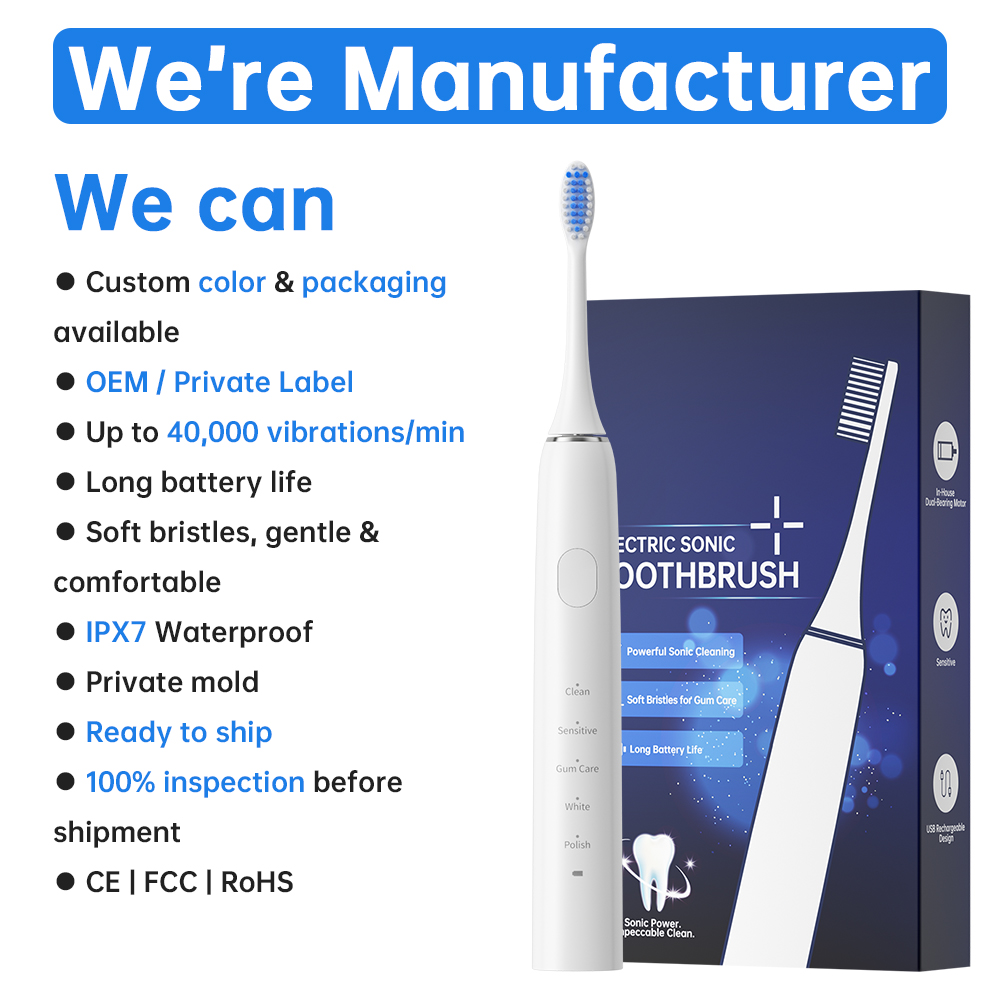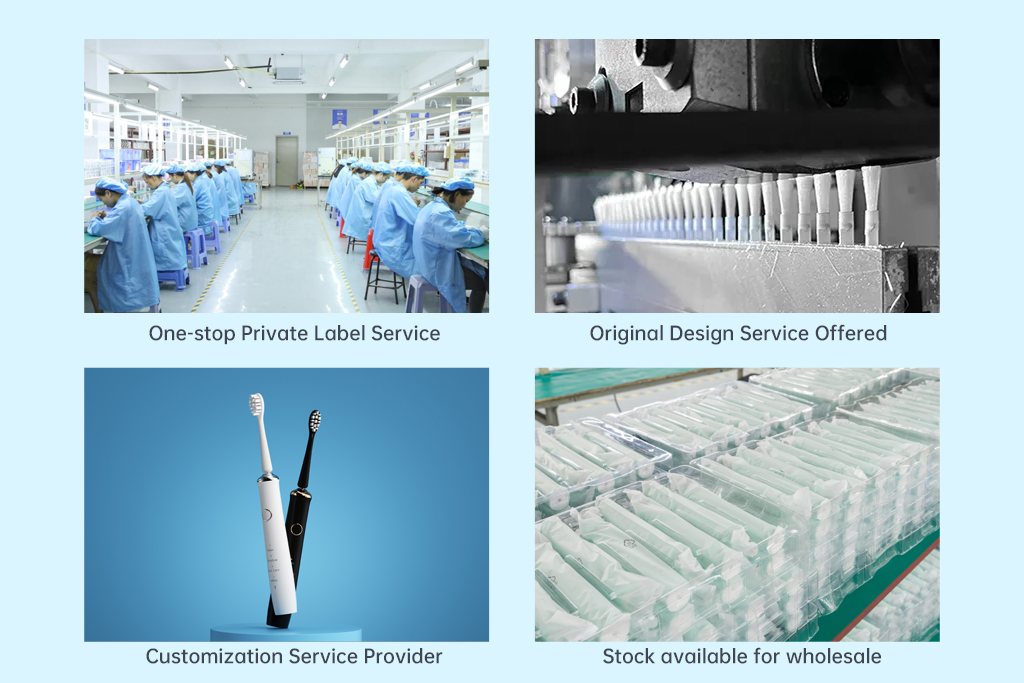
In today’s highly competitive market, find the right electric toothbrush manufacturers is critical for oral care brands aiming to scale efficiently. Whether you are a startup entering the market or an established company seeking product diversification, partnering with a trustworthy oral care supplier is the foundation of quality, innovation, and long-term brand influence. This article offers a comprehensive roadmap for selecting a manufacturer that aligns with your business goals, supports OEM electric toothbrush production, and drives your oral care brand expansion strategy. Define Your Product and Brand Requirements First Before contacting any factory or supplier, clearly define your product specifications and brand positioning. Ask yourself: What type of branded toothbrush production do you require (e.g., sonic, oscillating, kids’ brushes)? Do you need full OEM electric toothbrush solutions or white-label production? What certifications (e.g., CE, FDA, ISO) must the products comply with? What are your expected order quantities, price range, and delivery timelines? Having a solid product brief helps you find suitable electric toothbrush manufacturers early and avoid costly mismatches. Where and How to Source Reliable Manufacturers Finding a reliable oral care supplier goes beyond a simple online search. Here are proven sourcing strategies: Trade shows: Events like IDS (Germany), Dental South China, and Cosmoprof Asia are great for…
.jpg)
As B2B manufacturers and distributors in the oral care industry, ensuring the reliability and hygiene of water flossers is a top priority. A growing concern among users—and a crucial quality control point for suppliers—is reservoir mold growth and its potential to cause nozzle clogging. These issues not only impact user satisfaction but can lead to product returns, brand damage, and even health risks. In this blog, we explore the root causes, consequences, and solutions related to mold buildup in water flosser tanks and its impact on spray performance. How Does Mold Form in Water Flosser Reservoirs? The reservoir of a water flosser is a moist, enclosed environment—ideal conditions for microbial growth. When users fail to regularly clean and dry the tank, residual water combined with oral debris creates a perfect breeding ground for reservoir mold. Over time, fungal growth adheres to the inner walls and base of the tank, especially in hard-to-reach crevices, leading to hygiene hazards and operational issues. The Direct Link Between Reservoir Mold and Nozzle Clogging Mold growth doesn’t just affect the tank's cleanliness—it poses a mechanical risk. Once fungal spores or biofilm fragments break free, they travel with the water through the flosser’s internal tubing and…
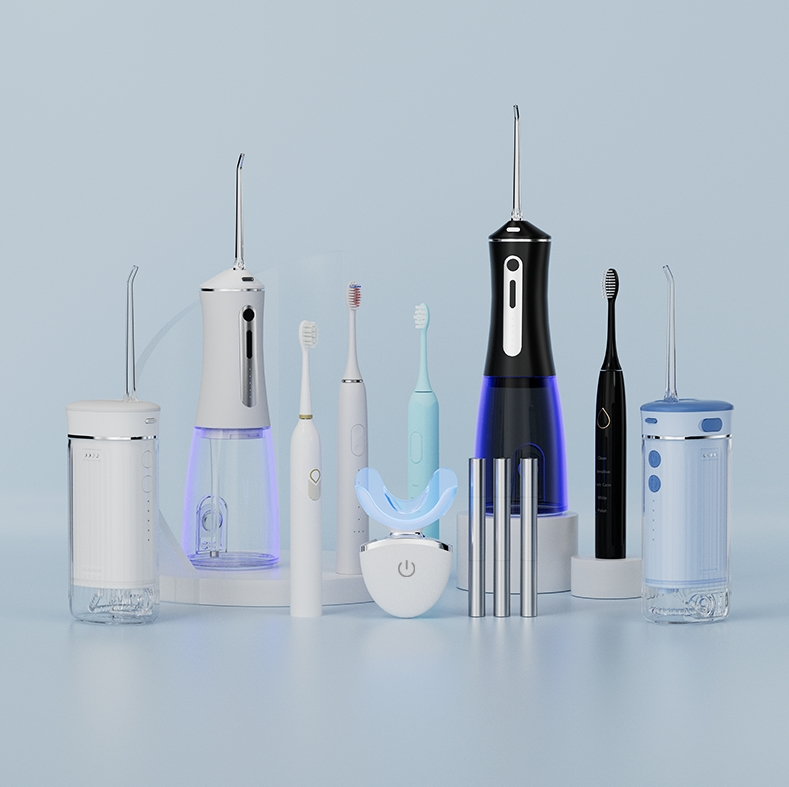
As oral hygiene awareness continues to rise globally, the electric toothbrush industry is experiencing unprecedented momentum. With innovation driving consumer interest and healthcare professionals recommending powered brushing, this segment has become a key driver within the larger personal care category. This blog outlines the major oral care growth trends, electric Toothbrush Growth Opportunities, identifies emerging markets, and evaluates the current electric toothbrush brand competition landscape for strategic insight. Global Electric Toothbrush Market Analysis: A Sector on the Rise Recent electric toothbrush market analysis reveals that the global market is expected to surpass USD 8.5 billion by the end of 2025, growing at a CAGR of over 7%. Key growth drivers include: Increased awareness of oral health Rise in disposable incomes in emerging economies Technological innovations such as AI brushing assistance and smart app integration North America and Europe currently lead in adoption, but Asia-Pacific, particularly China and India, are rapidly expanding markets due to changing consumer habits and urbanization. Oral Care Growth Trend: Beyond Brushing The electric toothbrush is no longer viewed as a luxury item but as a fundamental component of a complete oral care growth trend. The rise in dental care education and preventive healthcare is fueling demand.Key supporting trends include:…
Frequent reports of gum irritation after using at-home whitening kits raise two critical questions for manufacturers: are your user instructions detailed enough to prevent misuse, and does your warranty coverage truly protect end users and channel partners from adverse reactions? In this article, we explore six perspectives to help B2B suppliers fortify manuals, streamline claims processes, and bolster partner confidence. Clarity and Accessibility of User Instructions First, ambiguous or overly technical manuals contribute directly to misuse: Overly Dense Text: Walls of small print discourage thorough reading, leading users to skip isolation and timing steps. Lack of Visual Aids: Without clear diagrams showing tray placement and gel boundaries, users often apply bleach too close to gingival margins. Untranslated Localizations: Incomplete language versions create misunderstandings in non-English markets. Action: Simplify instructions into step-by-step illustrated guides, emphasize critical precautions in call-outs, and ensure all translations are professionally validated. Highlighting Signs and First-Aid for Gum Irritation Next, user manuals must proactively educate on identifying and managing early signs of gum irritation: Symptom Checklist: List redness, tingling, or minor bleeding as early warnings. Immediate Remedies: Recommend saline rinses or cold compresses to soothe mild irritation. Usage Pause Criteria: Advise users to halt treatment and consult…
While manufacturers scramble to fix gum massage inconsistency in smart oral-care devices, they often overlook equally critical battery recycling challenges, undermining brand reputation and contradicting sustainable manufacturing goals. To address both user experience and environmental responsibility, B2B companies must rethink design, supply chains, and end-of-life strategies across six dimensions. Short-Term Feature Focus vs. Long-Term Recycling Needs Many teams pour resources into tuning massage modes to eliminate uneven gum stimulation, but then: Rely on disposable lithium cells, increasing hazardous waste. Lack an established battery take-back network, so spent packs end up in landfills. Shy away from bearing recycling costs, leaving end users and channels unprepared. Balancing immediate performance gains with lifecycle considerations is essential. Seamless Designs Threaten Disassembly To achieve sleek, waterproof enclosures, products often use permanently bonded battery modules: Non-serviceable Packs: No quick-release latches or removable trays. Heat- and Water-Proof Seals: Robust gaskets and potting compounds that complicate safe battery extraction. Structural Bonding: Adhesives and welded joints turn end-of-life disassembly into destructive surgery. These choices intensify battery recycling challenges by making recovery prohibitively difficult Company web: ction approach ensures even hard-to-reach areas contribute to fresher breath. Company web: https://www.powsmart.com/product/electric-toothbrush/ Regulatory Pressure and Compliance Costs Globally, electronic-waste regulations are tightening: The EU…

In the rapidly evolving personal care industry, distributors of toothbrushes, electric oral devices, and related products face increasing pressure to meet market demand efficiently. A stable and responsive oral care supply chain is no longer a competitive advantage — it's a necessity. This guide will help oral care product distributors understand the essentials of building a stable, scalable, and transparent supply chain through solid supplier management and effective distributor cooperation strategies. Identify the Right Manufacturing Partners The foundation of a strong oral care supply chain begins with selecting trustworthy and capable manufacturers. Distributors should: Evaluate production capacity and quality control systems Check certifications (e.g., ISO, CE, FDA if applicable) Request case studies or client references Working with experienced oral care OEM/ODM suppliers ensures product consistency, production scalability, and timely delivery — key pillars of a reliable supply chain. Build Long-Term Supplier Management Systems Effective supplier management goes beyond procurement. It involves building strategic partnerships. Distributors should: Establish clear KPIs for lead times, defect rates, and communication response times Schedule regular audits and production feedback meetings Use software systems to track performance and inventory Stable supplier relationships minimize risk, reduce costs, and allow for more agile responses to market fluctuations. Diversify Supply Channels Without Compromising Quality To avoid…
In smart oral-care devices like electric toothbrushes, app connectivity loss and battery swelling often appear together—eroding user trust and posing safety risks. To solve both issues, B2B manufacturers must address four major domains: waterproof sealing, thermal management, firmware logic, and structural design. Below are six key insights and action steps. A Common Root Cause: Moisture Ingress and Seal Failure First, aging waterproof seals allow moisture to penetrate: Silicone Hardening or Cracking: Prolonged exposure to humidity stiffens gaskets, breaking the seal. Adhesive Fatigue: Bonding glue between molded parts weakens, creating micro-leaks. Repeated Assembly/Disassembly: Docking and brush-head removal wear seal surfaces over time. Once water seeps in, it both swells the battery pouch and corrodes Bluetooth modules—triggering battery swelling and app connectivity loss simultaneously. Thermal Runaway and RF Signal Interference Next, a swelling battery worsens heat dissipation issues: Increased Internal Resistance: As cells swell, resistance rises, generating more heat during charge/discharge. Enclosure Deformation: Heat-distorted housing panels can clamp or shift the antenna, degrading RF performance. High-Temperature Noise: Elevated temperatures introduce electronic noise that disrupts Bluetooth communication. Improving heat management is therefore essential to stabilize both the battery and wireless link. Conflicting Firmware Protection Logic Moreover, firmware safety routines can inadvertently cut off…
When brush head compatibility is overlooked—whether due to minor dimensional mismatches or non-standard attachment interfaces—tiny gaps can form where cleaning fluid pools and evaporates, leading to hidden liquid residue buildup. Such residue not only harbors bacteria but also degrades performance over time. In this article, we explore six critical facets to help B2B manufacturers eliminate compatibility pitfalls and keep their devices hygienic and reliable. Dimensional Tolerance Mismatches Even slight deviations in brush-head stem diameter or locking-ring geometry prevent a snug fit: Micro-gaps form around the base where liquid seeps in and stagnates. Vibration-induced Looseness over time widens these gaps and accelerates residue accumulation. Cross-Brand Interchangeability often exacerbates the issue when parts aren’t optimized as a system. By tightening CNC machining tolerances and standardizing interface specs, these hidden voids can be eliminated. Material Absorption & Capillary Effects Material choices at the interface can promote fluid retention: Hydrophilic Plastics draw water into microscopic pores, trapping moisture at the joint. Surface Roughness at the mating faces creates capillary channels that wick liquid inward. Aging Polymers lose dimensional stability, opening new pathways for fluid migration. Switching to low-absorption, high-precision polymers and mirror-finish mating surfaces minimizes capillary residue buildup. Sealing & Secondary Retention Strategies Effective…
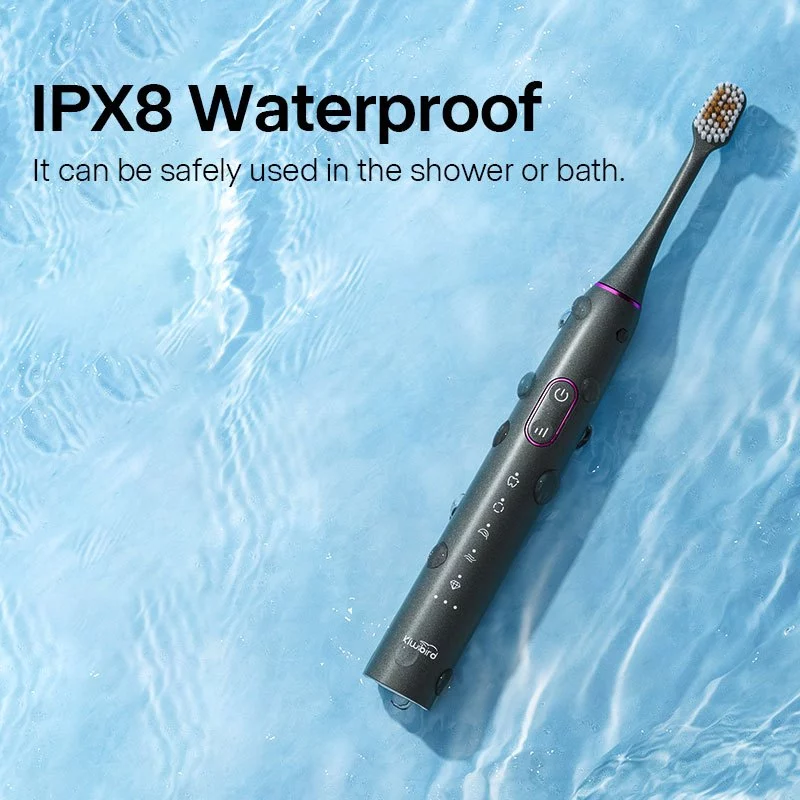
In today’s review-driven marketplace, common negative reviews of electric toothbrushes can directly affect brand reputation and sales performance. For any OEM or ODM electric toothbrush manufacturer, understanding the root causes of customer complaints and proactively solving them is not just important—it's essential. This article explores common quality issues, the most frequent negative feedback from end users, and how suppliers can implement effective solutions to quality issues of electric toothbrushes during product design and manufacturing stages. Weak Battery Life and Charging Failures User Complaint:“Battery dies too quickly” or “Won’t charge after a few weeks.” Common Quality Issue:Low-grade lithium batteries, poor charging port designs, or inadequate battery management systems. Supplier-Side Solution: Use high-quality, certified lithium batteries with tested charge cycles. Integrate intelligent battery management systems to prevent overcharging or deep discharge. Perform aging tests on power units during QC inspections. As a reliable electric toothbrush manufacturer, it’s critical to test battery systems under simulated daily use to avoid early failures. Motor Malfunction or Insufficient Vibration User Complaint:“Motor stopped working” or “Not strong enough to clean properly.” Common Quality Issue:Substandard motor components or poor assembly leading to motor disconnection or weak performance. Supplier-Side Solution: Source high-performance, durable micro motors from trusted suppliers. Reinforce internal motor…
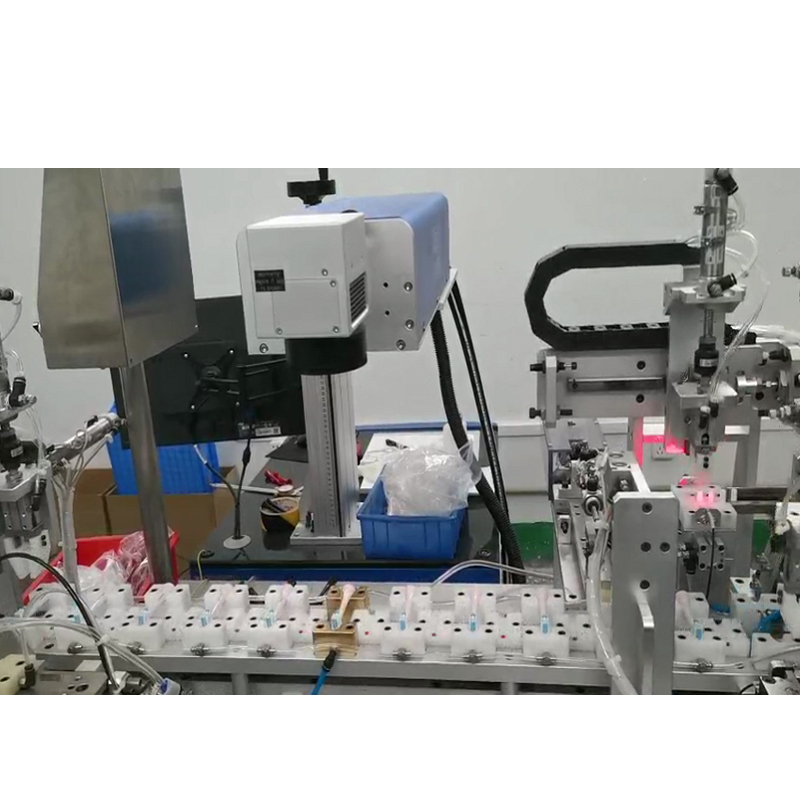
In today's competitive oral care market, product performance is no longer the only driver of consumer preference—appearance now plays a vital role. Consumers are increasingly drawn to products that are not only functional but also visually striking. This is especially true in personal care electronics such as electric toothbrushes. For manufacturers, adopting gradient color technology through injection molding offers a powerful way to improve attractiveness of electric toothbrushes that resonates with modern consumers and stands out on retail shelves. What Is Gradient Color Injection Molding Technology? Gradient color technology is a specialized plastic injection molding process that allows multiple color tones to blend seamlessly into one another on a single molded part. Unlike traditional single-color molding, this technique: Enables smooth color transitions (e.g., blue to white, pink to purple) Creates a premium, dynamic look without painting or secondary processing Offers long-lasting, scratch-resistant finishes directly out of the mold This innovative technology for electric toothbrushes not only enhances aesthetics but also increases manufacturing efficiency. Boosting Product Appeal Through Visual Marketing Visual marketing is a crucial part of selling consumer electronics. In retail environments and online platforms, buyers often make split-second decisions based on product appearance. Gradient color finishes offer several benefits: Striking shelf presence: Unique…
In the fiercely competitive market for electric toothbrushes, mastering self-developed motors technology not only boosts product performance but also significantly reduces procurement costs and supply-chain risks. For B2B manufacturers, in-house motor development represents core differentiation—delivering higher brand value and customer loyalty. Enhanced Performance: Precision Control & Energy Efficiency First, a self-developed motor can be custom-tuned to match brush head design and vibration modes: Amplitude & Frequency Optimization: Tailor winding and magnetic circuit to maximize plaque removal in sonic or oscillation modes. Intelligent Power Management: Built-in drive algorithms maintain cleaning power even at lower RPMs, greatly extending battery life. Noise Reduction: Refine gears and bearings for quieter operation, improving user comfort. These performance gains let manufacturers highlight their motor’s superiority in technical datasheets. Lower Costs: Autonomous, Resilient Supply Chain Next, in-house motors strengthen supply-chain resilience: Localized Components: Produce key parts—magnets, housings, rotors—internally, reducing reliance on imported subassemblies. Economies of Scale: High-volume production drives down per-unit motor cost, boosting overall gross margins. Rapid Iteration: Internal R&D cycles eliminate external lead times, speeding innovations from prototype to market. Cost advantages enable B2B partners to offer more competitive pricing and faster delivery.Company web:https://www.powsmart.com/product/electric-toothbrush/ Quality Assurance: Traceability & Durability Moreover, self-developed motors allow end-to-end quality…
When selecting a high-quality electric toothbrush, the design and performance of the bristles are critical—they directly impact plaque removal and gum health. Below are six key factors for B2B partners to consider when specifying premium bristle solutions. Material Selection: Nylon vs. Advanced Polymer Fibers First, common bristle materials include nylon (e.g., DuPont Tynex™) and emerging polymer composites: Nylon Bristles offer excellent flexibility and abrasion resistance at a controllable cost for mass production. Advanced Polymer Fibers (such as PBT or PLA blends) combine heat resistance, antimicrobial properties, and biodegradability. Recommendation: Offer both options in your product lineup to meet entry-level and premium market needs. Material differentiation empowers B2B manufacturers with versatile customization. Hardness Ratings: Soft, Medium, and Firm Bristles Next, bristle stiffness directly affects comfort and cleaning efficacy: Soft Bristles: Ideal for sensitive gums and post-treatment patients to minimize mechanical irritation. Medium Bristles: The everyday standard—balanced cleaning power and comfort. Firm Bristles: Best for heavy stains, used with low-speed modes and shorter session durations. Recommendation: Provide mixed-stiffness brush heads and synchronize with brush modes for all-in-one versatility. Layered hardness options ensure you cover diverse user requirements.Company web:https://www.powsmart.com/product/electric-toothbrush/ Filament Diameter & Density: Precision Coverage Bristle thickness and density determine how well the…
In next-generation portable testing devices, not only must you finely tune the oscillation angle to maximize sample collection, but true travel portability lets testing instruments go wherever they’re needed—closer to users and real-world scenarios. In this article, we examine six ways portability boosts allergen detection, helping B2B partners design solutions that are both flexible and reliable. On-Site Testing for Immediate Decisions First, travel portability frees allergen testers from the lab: Rapid Response: Instantly collect and analyze samples on-site at restaurants, factories, or schools after a suspected allergy incident. Reduced Transport Error: Eliminates cross-contamination or degradation risks from shipping samples to a central lab. Improved Client Experience: B2B customers can offer “on-site testing + immediate reporting” as a one-stop service. Portable devices therefore directly enhance testing speed and decision-making. Optimized Sampling with Tuned Oscillation Angles Next, fine control of the oscillation angle in the sampling module is essential: Directed Vibration: Using ±15°–±30° angles covers varied surface materials, ensuring trace peanut proteins or lactose are dislodged. Deep Extraction: Automatically adjust the angle based on surface roughness to capture representative micro-samples. Minimal Damage: Precise angle control prevents excessive wear on food contact or dental tray surfaces. Hardware-level angle tuning is key to efficient,…
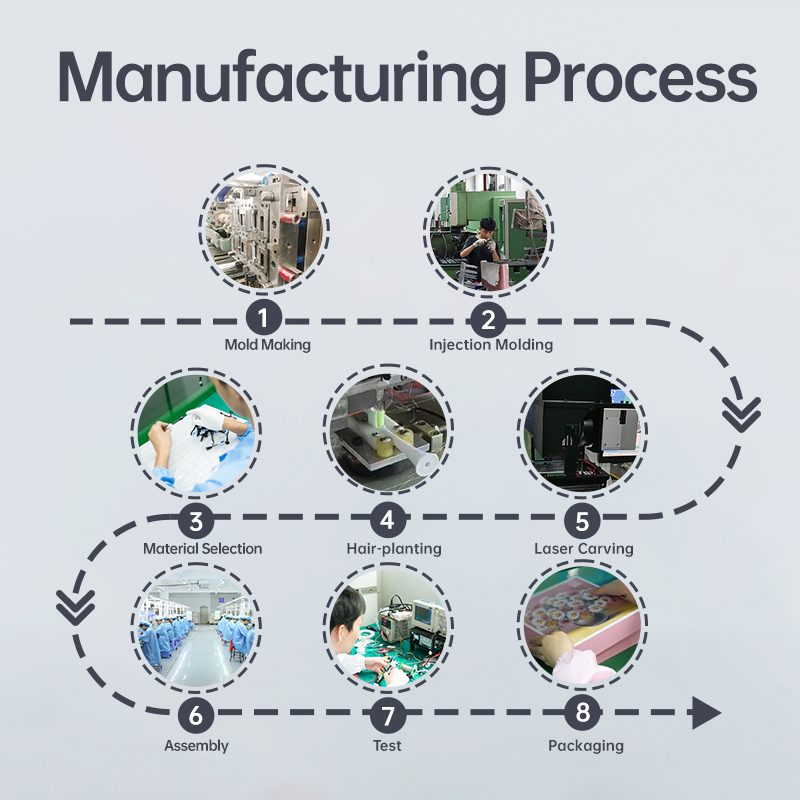
In the competitive oral care market, electric toothbrush manufacturers must deliver consistent product quality while managing potential risks effectively. One of the most crucial ways to ensure product reliability is through a robust traceability of electric toothbrushes. Especially for key components like motors and the waterproof casing, strict control through motor calibration standards and a detailed waterproof test process is vital. Together with proper quality inspection record archiving, these measures help maintain brand reputation and significantly contribute to product recall prevention. Motor Calibration: Setting and Managing High Standards The motor is the heart of any electric toothbrush, directly impacting performance, user experience, and product life. Adhering to precise motor calibration standards ensures that each unit operates within specified parameters, including: Rotational speed (RPM) consistency Vibration strength within optimal ranges Noise level control to enhance comfort During production, every motor undergoes calibration using specialized testing equipment. Detailed calibration data are recorded in the production traceability system, linking each motor to its corresponding toothbrush serial number. This practice guarantees that any deviation can be traced back instantly. Waterproof Testing: Safeguarding Daily Use Reliability Daily exposure to water makes the waterproof test process critical for electric toothbrushes. The standard testing procedures typically include: IPX7 or IPX8 level testing (depending on product…
In the electric toothbrush OEM business, controlling production costs is crucial to staying competitive. Among various expenses, mold cost is often one of the highest upfront investments. Many manufacturers have developed an electric toothbrush mold library, offering ready-made solutions that significantly shorten the mold opening cycle and reduce costs. But exactly how much money can be saved by using an existing mold? Let's dive deeper. What is an Electric Toothbrush Mold Library? An electric toothbrush mold library is a collection of pre-existing injection molds covering various designs of toothbrush handles, brush heads, and chargers. These molds are production-ready and meet common industry standards. By leveraging these existing resources, OEM clients can: Avoid the lengthy and costly mold development process Accelerate time-to-market Reduce risks associated with new product tooling Mold Opening Cycle vs. Ready-Made Mold Modification Typically, creating a new mold (from design to production) involves a mold opening cycle of 45 to 90 days, depending on complexity. This timeline includes: Industrial design and structural optimization Mold fabrication and testing Correction and final approval In contrast, using ready-made mold modification (such as minor logo engraving, color changes, or slight structure adjustments) can be completed within 2 to 4 weeks — drastically reducing project lead time. Cost Savings Breakdown:…
In today’s environment-conscious market, a truly eco-friendly brush must not only use BPA-Free Materials but also participate in comprehensive Recycling Programs to ensure a green lifecycle—from raw materials through end-of-life disposal. Here are six dimensions to consider when designing and evaluating a genuinely sustainable brush. Market Trends and Green Expectations First, global consumers are demanding “greener” products more than ever: Regulatory Drivers: Governments worldwide are enacting plastic-use restrictions and Extended Producer Responsibility (EPR) mandates. Retailer Standards: Major chains and online marketplaces now feature dedicated eco-product sections, favoring items with third-party sustainability certifications. End-User Preferences: Shoppers expect both health-safe and recyclable designs when choosing daily-use brushes. Meeting both regulatory and consumer priorities is essential to stand out in tomorrow’s marketplace. Material Selection: BPA-Free and Biodegradable Polymers Next, raw materials form the foundation of any eco-friendly product. Leading practices include: BPA-Free Materials: Use food-grade polypropylene (PP) or polycarbonate (PC) that is free of bisphenol A, eliminating endocrine-disruptor risks. Biodegradable Polymers: Incorporate PLA, PHA, or other bio-based, compostable resins that break down naturally in the environment. Post-Consumer Recycled (PCR) Resin: Blend in certified recycled plastics to close the loop on existing material streams. Rigorous third-party testing ensures each batch is toxin-free while retaining…
While a low sticker price may look attractive from a price-performance standpoint, cheap brush heads often suffer from premature bristle splaying, uneven wear, and diminished cleaning efficacy. In this blog, we’ll examine the hidden costs and trade-offs of budget brush heads, helping B2B buyers and product managers make informed decisions. Material Quality vs. Initial Cost Firstly, the raw materials used in brush heads directly impact both manufacturing cost and end-user performance: Monofilament Type: Premium nylon or PBT bristles hold their shape far longer than generic low-grade fibers. Stem & Tuft Base: Injection-molded polypropylene with reinforced ribs costs more upfront but resists cracking under stress. Adhesives & Bonding: High-strength epoxy bonding prevents tuft loss; cheaper glues can degrade in warm, humid environments. Thus, low initial cost often correlates with material compromises that manifest quickly in the field. The Mechanics of Bristle Splaying Moreover, bristle splaying is the most visible sign of wear—and a direct measure of cleaning performance: Early Flare: Cheap bristles tend to flare outward after just a few weeks, reducing contact force and scrubbing action. Micro-abrasion Impact: Over-splayed bristles can trap debris and scratch tooth enamel or soft tissue. Longevity Metrics: Industry standards measure splay width over time; premium…
In many industrial systems, filter degradation and voltage drops often occur together: when filters become clogged or aged, pumps or motors must work harder, which can trigger system voltage dips. In this blog, we examine their connection in six parts and share how to diagnose, resolve, and prevent these issues to boost equipment stability and efficiency. Common Causes and Signs of Filter Degradation First, understand that industrial filters (air, oil, or fluid) degrade over time due to: Particle buildup: Dust, oil, or sediment accumulates on the filter surface. Chemical corrosion: Aggressive fluids attack and weaken filter media. Material aging: Continuous exposure to heat and pressure reduces filter porosity and resilience.Typical symptoms include decreased flow rate, rising system pressure, and more frequent filter changes. Mechanisms Behind Voltage Drops Next, learn why systems experience voltage drops: Increased load demand: Blocked filters raise backpressure, forcing motors to draw higher currents and causing voltage to sag. Power source fatigue: Batteries or power modules lose capacity under sustained heavy loads, leading to unstable output. Line impedance: Worn cables or loose connections add resistance, further dropping voltage. Company web:https://www.powsmart.com/product/electric-toothbrush/ How They Interact Filter degradation and voltage drops feed into each other: Higher pressure differential: Clogged filters…
In today’s high-tech products, intermittent LCD Glitches and recurring Sensor Errors can undermine user confidence and lead to costly returns. Whether you’re producing medical devices, industrial controllers, or consumer electronics, understanding how these faults arise and how to remedy them quickly is essential. This post walks you through the root causes, diagnostic techniques, repair steps, and preventive measures to tackle LCD glitches and sensor errors effectively. Why LCD Glitches and Sensor Errors Matter Firstly, LCD displays and onboard sensors often serve as the primary interface between machine and operator. LCD Glitches—such as flickering segments, ghost images, or unresponsive pixels—can obscure critical data readouts. Similarly, Sensor Errors—including spurious readings, calibration drift, or complete signal loss—can disrupt feedback loops, trigger false alarms, or halt automated processes. Together, these issues not only degrade product performance but also raise maintenance costs and damage your brand reputation. Understanding Common Causes of LCD Glitches Moreover, LCD Glitches typically stem from one or more of the following factors: Poor Signal Integrity: Noisy or attenuated video lines create intermittent artifacts on the display. Voltage Instability: Fluctuations in backlight or logic supply voltages cause flicker or blanking. Connector Wear: Mechanical stress on flex cables or board-to-board connectors results in…
In many advanced fluid‑power systems, battery swelling and sudden pressure loss often appear together. As a battery expands, it can press against nearby hoses, valves, or pumps—reducing flow and dropping system pressure. Conversely, unexpected pressure changes can stress the battery enclosure, exacerbating swelling. In this article, we’ll explore their link in six sections, show you how to diagnose the root causes, and share practical fixes and preventative measures to keep your equipment running smoothly. Background & Challenges: Linking Battery Swelling and Pressure Loss Battery swelling occurs when internal gas buildup expands the cell volume, while pressure loss happens as hydraulic or pneumatic systems fail to maintain target pressure. When both arise in the same machine, they create a feedback loop: the swollen battery may obstruct fluid lines, causing pressure to drop; at the same time, unstable pressure conditions can distort the battery housing, accelerating swelling. Recognizing how these two issues interact is essential for an effective diagnosis and repair plan. Common Causes of Battery Swelling Several factors can lead to battery swelling: Over‑discharge and Fast Charging: Deep cycling and rapid recharging generate gas that the battery cannot recombine internally. Excessive Heat: Operating or storing the device at high temperatures speeds…


.jpg)
.jpg)
.jpg)
.jpg)
.jpg)






.jpg)
.jpg)