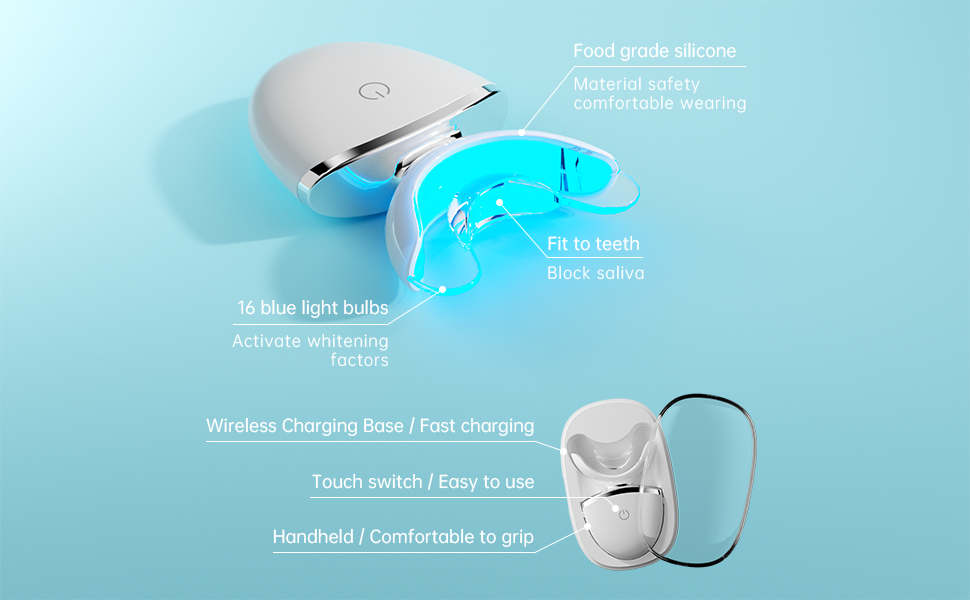
Blue light on teeth has become a popular method for enhancing the effectiveness of whitening gels. The light activates whitening agents such as hydrogen peroxide or carbamide peroxide, helping to break down surface stains and brighten the enamel. However, while blue light technology enhances results, understanding teeth whitening duration and blue led safety is essential—especially for oral care brands developing new whitening devices.
As an OEM manufacturer, having deep knowledge of light wavelength, exposure time, and material compatibility ensures both efficacy and consumer safety.
The Ideal Teeth Whitening Duration
So, how long should you leave blue light on your teeth?
Most professional and home-use devices recommend sessions between 10 to 30 minutes, depending on the whitening formula’s concentration and LED power. Exceeding this time does not necessarily improve results—in fact, overexposure can cause tooth sensitivity or gum irritation.
For OEM partners, it’s crucial to collaborate with R&D teams that can test and calibrate optimal exposure times. This ensures your whitening device delivers visible results without compromising comfort or safety.
Blue Light Safety: What Brands Should Know
When developing blue light teeth whitening devices, blue led safety must be a top priority. The light used in dental whitening typically operates at wavelengths between 420–490 nm, which are considered safe for oral tissues when used correctly.
An experienced OEM manufacturer should:
- Use FDA-approved LED chips or CE-certified components.
- Implement automatic timers to prevent overuse.
- Design ergonomic mouthpieces that ensure even light distribution.
By integrating these safety features into your whitening device, your brand builds trust and compliance with international health standards.
How OEM Manufacturers Optimize Whitening Performance
A reliable OEM manufacturer guide for blue light whitening devices includes more than just assembly—it involves scientific testing and performance optimization.
Key considerations include:
- Gel formulation compatibility – ensuring the gel and light work synergistically.
- Heat management systems – preventing excessive temperature rise during operation.
- Light intensity testing – maintaining consistent output across multiple uses.
These engineering details significantly influence user satisfaction and product longevity.
Collaboration Between Brands and OEMs
For oral care brands entering or scaling in the whitening market, partnering with an OEM manufacturer experienced in blue led on teeth applications is a strategic move. A qualified partner can provide full-service solutions—covering concept design, prototype development, quality assurance, and regulatory documentation.
Choosing a manufacturer who understands teeth whitening duration and blue light safety standards ensures that your final product performs effectively and safely for consumers worldwide.
Conclusion: A Balanced Approach to Whitening Innovation
Knowing how long to leave blue light on teeth is not just a consumer question—it’s a crucial part of the design and testing process for oral care brands.
With the right OEM manufacturer guide, your brand can confidently develop safe, efficient, and market-ready blue light whitening devices that meet both aesthetic and regulatory demands.
Whether you’re launching a new whitening kit or upgrading your current lineup, partnering with an experienced blue light OEM manufacturer ensures your product stands out in performance, safety, and innovation.
.jpg)
