.jpg)
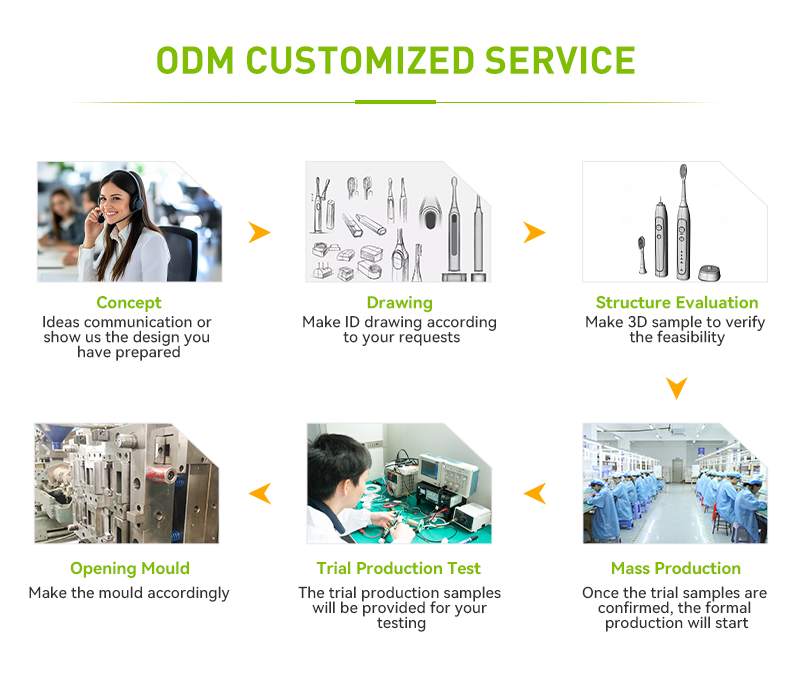
An advanced electric toothbrush product development OEM service is essential for brands aiming to create innovative and competitive products. As the oral care market evolves, consumers are seeking more advanced features and better user experiences. Therefore, product development has become a key factor in achieving market success. In addition, OEM development services allow brands to leverage technical expertise without investing heavily in research and development. As a result, companies can bring new products to market more efficiently. Product Development Process and Innovation Product development typically begins with concept design and market analysis. Manufacturers collaborate with clients to define product positioning, target users, and functional requirements. Consequently, the final product is aligned with market demand. Moreover, engineering development focuses on optimizing motor performance, battery efficiency, and waterproof structure. In addition, smart features such as timers, LED indicators, and multiple modes can be integrated into the design. Furthermore, prototype testing ensures that the product meets performance and usability standards before mass production. Therefore, development risks are minimized. Manufacturing Capabilities and Technical Expertise When selecting an electric toothbrush product development OEM, technical capability is crucial. Experienced manufacturers provide: Industrial design and 3D modeling Prototype development and functional testing Engineering optimization and tooling Mass…
A reliable electric toothbrush export supplier plays a crucial role in connecting manufacturers with global markets. As international demand for oral care products continues to increase, efficient export services have become essential for distributors and brands worldwide. Therefore, selecting a supplier with strong export capabilities is critical for business success. In addition, export suppliers must ensure compliance with international regulations and maintain stable product quality. As a result, experienced suppliers are preferred for long-term cooperation. Global Export Capabilities and Logistics Exporting electric toothbrushes requires a well-established logistics system. Firstly, suppliers must coordinate production schedules with shipping timelines. Secondly, they must ensure proper packaging to prevent damage during transportation. Moreover, experienced suppliers work with reliable logistics partners to provide flexible shipping options. Consequently, products can be delivered efficiently to different regions. In addition, export documentation such as invoices, packing lists, and certificates must be handled accurately. Therefore, professional export management is essential. Manufacturing Support and OEM Services When working with an electric toothbrush export supplier, manufacturing capability remains a key factor. Suppliers typically offer: OEM and ODM product development Private label branding and packaging Large-scale production and order management Quality inspection before shipment Furthermore, suppliers ensure that products meet the specific…

Introduction A Phase-Change Thermal Material enhances temperature stability in advanced devices. A Luxury Concierge Refill Service delivers premium, seamless user experiences. Combining both elevates product performance and service value. This blog explains why this pairing is strategically important. Understanding Phase-Change Thermal Material A Phase-Change Thermal Material absorbs and releases heat during phase transitions. It maintains stable temperatures without active cooling systems. This improves device efficiency and protects sensitive components. What is a Luxury Concierge Refill Service? A Luxury Concierge Refill Service provides personalized, on-demand consumable replenishment. It focuses on convenience, exclusivity, and premium user experience. This model is common in high-end personal care devices. Ensuring Consistent Device Performance A Phase-Change Thermal stabilizes operating temperatures during use. This ensures consistent performance across refill cycles. A Luxury Concierge Refill Service benefits from reliable product outcomes. Enhancing User Comfort and Experience Temperature control improves comfort in personal care applications. A Phase-Change Thermal prevents overheating or sudden temperature changes. This aligns with the expectations of a Luxury Concierge Refill Service. Supporting Premium Product Positioning High-end devices require advanced material integration. A Phase-Change Thermal adds technical differentiation. Combined with a Luxury Concierge Refill Service, it strengthens premium brand perception. Optimizing Lifecycle and Refill Efficiency Thermal stability reduces component…
Introduction Swarm Intelligence Motor Control coordinates multiple motor behaviors using decentralized logic. Anomaly Detection Firmware identifies abnormal patterns in real time. Combining both improves system reliability and performance. This blog explains how embedded intelligence enhances motor control systems. Understanding Swarm Intelligence Motor Control Swarm Intelligence Motor Control mimics collective behavior found in nature. Multiple motors operate based on shared rules and local feedback. This enables adaptive, efficient, and scalable motion control systems. What is Anomaly Detection Firmware? Anomaly Detection Firmware monitors system parameters continuously. It detects deviations from normal operating conditions. This firmware enables early fault identification and preventive maintenance. Enhancing System Stability Swarm Intelligence Motor relies on coordinated motor interactions. Anomaly Detection Firmware identifies unstable or failing nodes quickly. This prevents cascading failures across the system. Enabling Real-time Adaptive Responses Embedded Anomaly Detection Firmware provides immediate feedback. Swarm Intelligence Motor can adjust behavior dynamically. This ensures continuous optimal performance under varying conditions. Reducing Maintenance Costs Early detection reduces unexpected downtime and repair costs. Anomaly Detection Firmware enables predictive maintenance strategies. Combined with Swarm Intelligence Motor , system lifespan improves significantly. Supporting Scalable and Intelligent Systems As systems scale, monitoring complexity increases. Anomaly Detection Firmware ensures each unit operates correctly. Swarm Intelligence…
Introduction Circular Design-as-a-Service helps manufacturers design sustainable and resource-efficient products. An Environmental Product Declaration provides verified environmental impact data. Integrating both ensures transparency and compliance. This blog explains how they work together for sustainable product development. Understanding Circular Design-as-a-Service Circular Design-as-a-Service focuses on designing products for reuse, recycling, and longevity. It reduces waste and improves material efficiency. This approach supports sustainable manufacturing and lifecycle optimization. What is an Environmental Product Declaration? An Environmental Product Declaration is a standardized document reporting environmental impact. It is based on lifecycle assessment data. It provides transparent and comparable sustainability information for products. Why Integration is Important Combining Circular Design-as-a-Service with an Environmental Product Declaration ensures measurable outcomes. Design decisions can be validated with real environmental data. This strengthens credibility in sustainability claims. Supporting Lifecycle Assessment Processes Circular Design generates data across product lifecycle stages. This data feeds directly into an Environmental Product Declaration. It ensures accurate and consistent environmental reporting. Enhancing Market Competitiveness Products supported by an Environmental Product Declaration gain trust in global markets. Circular Design enables eco-friendly innovation. Together, they create strong differentiation for B2B manufacturers. Enabling Regulatory and Partner Alignment Many markets require transparent environmental disclosures. An Environmental Product Declaration supports compliance requirements.…
A professional electric toothbrush private label service is essential for brands aiming to establish a strong identity in the competitive oral care market. As consumer demand continues to grow, private label products have become a popular strategy for distributors, retailers, and e-commerce sellers. Therefore, selecting the right manufacturing partner is a key step toward building a successful brand. In addition, private label services allow businesses to create unique products without investing heavily in production facilities. As a result, companies can focus on marketing, sales, and brand positioning while relying on experienced manufacturers for production support. Private Label Branding and Customization Private label services go beyond simple logo printing. In fact, they include comprehensive branding solutions designed to differentiate products in the market. Firstly, manufacturers provide logo customization, packaging design, and product color selection. Secondly, they offer flexible options for materials, finishes, and accessories. Moreover, branding elements such as instruction manuals, retail boxes, and marketing materials can also be customized. Consequently, brands can create a consistent and professional image across all touchpoints. In addition, advanced customization options include functional adjustments such as brushing modes, LED indicators, and smart features. Therefore, private label products can meet both aesthetic and performance requirements. Manufacturing…
Introduction Federated Learning for Oral Health enables collaborative model training without sharing raw data. An Oral Health Digital Twin simulates individual oral conditions digitally. Combining both improves accuracy, privacy, and scalability. This blog explains how this integration enhances next-generation oral care solutions. Understanding Oral Health Digital Twin An Oral Health Digital Twin is a virtual model of a patient’s oral condition. It uses real-time and historical data for simulation. This model supports prediction, diagnosis, and personalized care planning. What is Federated Learning for Oral Health? Federated Learning for Oral Health trains AI models across decentralized data sources. Data remains locally stored and secure. Only model updates are shared and aggregated centrally. Enhancing Data Privacy and Compliance Federated Learning for Oral Health protects sensitive patient data effectively. It reduces risks related to centralized data storage. This strengthens trust in Oral Health Digital Twin systems. Improving Model Accuracy with Diverse Data Decentralized training enables access to diverse datasets. Federated Learning for Ora captures varied user behaviors and conditions. This improves the predictive power of Oral Health Digital models. Enabling Continuous Model Updates Models improve continuously through distributed learning cycles. Federated Learning for Oral Health allows frequent updates without data transfer. This keeps Oral Health…
Introduction Programmable Metamaterial Bristles introduce adaptive functionality into toothbrush design. Could this innovation enable classification as Software as a Medical Device? This blog explores how hardware and software convergence reshapes oral care devices. Understanding Programmable Metamaterial Bristles Programmable Metamaterial Bristles are engineered to change properties under control signals. They can adjust stiffness, motion, or response dynamically. This enables customized brushing performance based on user needs. What is Software as a Medical Device? Software as a Medical Device refers to software performing medical functions independently. It processes data, provides insights, and supports clinical decisions. It must meet regulatory standards for safety and effectiveness. Bridging Hardware and Software Intelligence Programmable Metamaterial generate real-time physical responses. Software algorithms interpret user data and adjust bristle behavior. This interaction supports the transition toward Software as a Medical Device functionality. Enabling Personalized Oral Care Treatment Software-driven control enables tailored brushing experiences. Programmable Metamaterial adapt to sensitivity, gum condition, and plaque levels. This aligns with personalized care principles in Software as a Medical Device systems. Data Collection and Clinical Feedback Loop Sensors and software collect brushing data continuously. This data feeds into analytics supporting Software as a Medical Device capabilities. Programmable Metamaterial respond based on these insights. Regulatory and Compliance…
Introduction A Behavioral Nudge Engine influences user actions through timely prompts and insights. A Predictive Supply Algorithm forecasts refill needs based on usage data. Combining both improves refill accuracy and user engagement. This blog explains how this integration drives smarter supply management. Understanding Behavioral Nudge Engine A Behavioral Nudge Engine uses data to guide user decisions subtly. It delivers reminders, alerts, and personalized suggestions. These nudges encourage timely actions without forcing user behavior. What is a Predictive Supply Algorithm? A Predictive Supply Algorithm estimates when consumables need replacement. It analyzes brushing frequency, duration, and wear patterns. This ensures brush head refills are supplied at the right time. Enhancing Prediction Accuracy with Behavioral Data A Behavioral Nudge Engine captures real user interaction patterns. This data refines the Predictive Supply Algorithm inputs. Improved data quality leads to more accurate refill predictions. Driving Timely User Action A Predictive Supply Algorithm identifies optimal refill timing. A Behavioral Nudge prompts users to act on these insights. This reduces delays and prevents product overuse. Supporting Subscription and Inventory Optimization Combining both systems enables automated refill subscriptions. The Predictive Supply Algorithm forecasts demand for inventory planning. The Behavioral Nudge ensures consistent user participation. Creating a Data-driven Ecosystem A Behavioral…
Introduction When products are shipped under Ex-works Terms, the responsibility for compliance with RoHS/REACH Compliance Audit can be unclear. Ex-works is an international trade term, meaning the buyer assumes responsibility once goods are made available for pick-up. However, compliance with RoHS (Restriction of Hazardous Substances) and REACH (Registration, Evaluation, Authorisation, and Restriction of Chemicals) still requires attention. This blog explores who manages these compliance audits in the context of Ex-works Terms. Understanding Ex-works Terms Under Ex-works Terms, the seller’s responsibility ends once the goods made available for pick-up at their premises. The buyer then assumes responsibility for transportation, insurance, and compliance. This means that the buyer handles the logistics and customs duties. However, questions arise regarding who oversees the compliance audits for RoHS and REACH. RoHS and REACH Compliance Overview RoHS and REACH European regulations designed to limit the presence of hazardous materials in products. RoHS focuses on the restriction of substances like lead, mercury, and cadmium in electrical and electronic equipment. REACH concerns the registration and safe use of chemicals in products. Manufacturers, importers, and distributors are required to comply with these regulations, ensuring products meet safety and environmental standards. Who Handles Compliance Audits Under Ex-works Terms? Under Ex-works…
Introduction In today’s manufacturing industry, Conflict Mineral Reporting and Carbon Neutral Manufacturing are increasingly important. Companies are being held accountable for the materials they use and the environmental impact they leave behind. These two concepts must be aligned to create a transparent and sustainable supply chain. This blog explores the connection between Conflict Mineral Reporting and Carbon Neutral Manufacturing, and why their alignment is essential for long-term success. Understanding Conflict Mineral Reporting Conflict Mineral Reporting refers to the disclosure of the origin of minerals used in manufacturing. This practice aims to prevent the use of minerals that fund armed conflicts, particularly in regions like the Democratic Republic of Congo (DRC). Companies must trace the supply chain and report the sources of tin, tungsten, tantalum, and gold, known as the "3TGs." By ensuring transparent sourcing, companies can contribute to peace and stability in affected regions. They also meet regulatory requirements and demonstrate their commitment to ethical practices. What is Carbon Neutral Manufacturing? Carbon Neutral Manufacturing involves balancing the amount of carbon dioxide emitted during production with an equivalent amount of offset or reduction. Companies achieve carbon neutrality by reducing emissions through energy efficiency, sustainable materials, and using renewable energy. They then…
Introduction In the development of a new motor, Finite Element Analysis (FEA) plays a critical role in ensuring the design's performance, durability, and efficiency. When engaging in a Joint Development Agreement (JDA), especially for complex projects like motor development, both parties need a clear understanding of the engineering challenges and how to overcome them. FEA provides a detailed, data-driven approach that supports the design and testing phases, making it an invaluable tool in a JDA. This blog explores how FEA is integrated into the motor development process through a Joint Development Agreement and why it is essential for a successful outcome. What is Finite Element Analysis (FEA)? Finite Element Analysis (FEA) is a computational method used to predict how a product will behave under various conditions. It breaks down a complex structure or system into smaller, manageable parts (elements) and analyzes them individually using mathematical models. These elements are then analyzed under different forces such as heat, pressure, vibration, and electrical current, among others. In motor development, FEA helps engineers simulate real-world conditions, identifying potential design flaws early in the process. By visualizing how different parts of the motor will interact under different stresses, FEA helps optimize the motor design…
Introduction In the fast-paced world of product development, Accelerated Life Testing (ALT) has become a critical component for ensuring the durability and reliability of technology. When entering into a Technology Licensing Agreement, it’s crucial for both parties to understand the long-term performance of the product being licensed. But should Accelerated Life Testing data be part of these agreements? This blog explores the importance of ALT data in a licensing agreement, highlighting the value it brings to both licensors and licensees, and why its inclusion can provide significant benefits for both parties. What is Accelerated Life Testing (ALT)? Accelerated Life Testing (ALT) is a process used to evaluate the lifespan of a product or component by subjecting it to extreme conditions. This testing simulates accelerated wear and tear through higher temperatures, pressures, or other stress factors to determine how long the product will last under typical usage conditions. ALT provides data that helps manufacturers predict product performance, estimate maintenance cycles, and improve design longevity. For example, in the case of electronic devices, ALT might expose a product to higher-than-normal temperatures to accelerate aging processes and measure how long the product can function before failure. ALT results give manufacturers and stakeholders invaluable…

Introduction In today’s competitive manufacturing landscape, companies are constantly seeking ways to improve efficiency while maintaining high-quality standards. Six Sigma Process Control has emerged as a leading methodology for reducing defects and optimizing production processes. But can Six Sigma also justify a transparent Cost-Plus Pricing Model? In this blog, we will explore the relationship between these two concepts and how Six Sigma's focus on quality and process improvement aligns with cost-plus pricing to benefit both manufacturers and clients. What is Six Sigma Process Control? Six Sigma is a data-driven methodology that focuses on improving the quality of processes by identifying and removing defects, minimizing variation, and ensuring that products meet customer expectations. It utilizes various tools and techniques, including statistical process control (SPC), to measure and analyze performance, with the ultimate goal of achieving near-perfect results. A process is considered to be at Six Sigma quality when it produces fewer than 3.4 defects per million opportunities, ensuring that the product is reliable and of high quality. By applying Six Sigma principles, manufacturers can streamline operations, improve product consistency, and significantly reduce waste, resulting in increased efficiency and lower operational costs. Understanding Cost-Plus Pricing Model The Cost-Plus Pricing Model is a…
Introduction In the world of manufacturing, ensuring high-quality products is essential for maintaining customer satisfaction and reducing costly defects. Automated Optical Inspection (AOI) is one of the most powerful tools in quality control, enabling manufacturers to detect defects early and improve product reliability. When combined with Failure Mode Analysis (FMA), AOI provides invaluable insights into potential failure points in products or components. This integration creates a proactive approach to identifying and addressing defects before they escalate into costly failures. In this blog, we will explore how Automated Optical Inspection feeds into Failure Mode Analysis to improve manufacturing processes and enhance product quality. What is Automated Optical Inspection (AOI)? Automated Optical Inspection (AOI) is an advanced technology that uses cameras, sensors, and specialized software to visually inspect components or assemblies for defects during the manufacturing process. AOI systems are designed to detect a wide range of issues, such as misalignment, component shortages, incorrect part placements, or surface defects, by comparing the image of the product with a reference model. This method significantly reduces human error and speeds up the inspection process, making it ideal for high-volume manufacturing. By automating the inspection process, AOI helps manufacturers identify defects at various stages of…
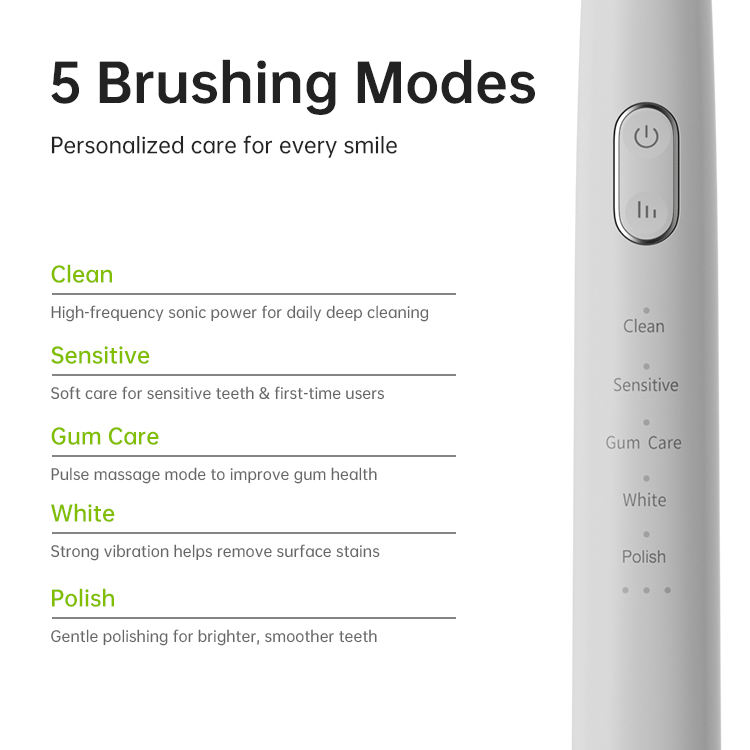
A long battery life electric toothbrush is essential for modern users who travel frequently or prefer low-maintenance devices. With extended battery life, users can enjoy uninterrupted oral care without frequent charging, which increases convenience and user satisfaction. Technology and Product Features High-capacity rechargeable batteries combined with energy-efficient sonic motors allow up to 30 days of brushing on a single charge. Fast Type-C charging, multiple brushing modes, and ergonomic handles enhance usability. Soft bristles and optimized brush head design ensure gentle yet effective plaque removal, while noise reduction technology improves comfort during use. Some models also include smart features such as pressure sensors, app connectivity, and timers to encourage proper brushing habits. Manufacturing Capabilities Experienced manufacturers provide end-to-end services: Product design, prototyping, and sampling Motor and battery integration for optimized energy efficiency Automated assembly lines with multi-stage quality testing Private label branding, custom packaging, and bulk order fulfillment These capabilities allow brands to launch high-quality products with consistent performance and distinct market positioning. Quality Control and Certification Strict quality control measures include: Battery capacity and charging efficiency testing Motor performance and vibration consistency checks Ergonomic and durability assessments Compliance with CE, FCC, RoHS, and ISO13485 Professional long battery life electric toothbrush…
A waterproof electric toothbrush with IPX8 rating provides peace of mind for consumers who want to use their devices safely in wet environments such as showers, sinks, or even bath tubs. With the rising demand for convenient and safe oral care products, IPX8 waterproofing has become an essential feature for modern electric toothbrushes. Technology and Product Features These toothbrushes integrate high-frequency sonic motors with soft, gentle bristles for effective plaque removal while protecting gums. The IPX8 rating ensures the device remains fully functional even after full immersion in water, safeguarding both motor and battery longevity. Advanced ergonomic designs improve comfort during brushing, while multiple modes—such as clean, soft, and massage—cater to different user preferences. Some models also include smart timers, pressure sensors, and replaceable brush heads to maximize dental care effectiveness. Manufacturing Capabilities Professional manufacturers provide full production services including: Product design, prototyping, and 3D modeling Motor assembly and battery integration with waterproof sealing Automated assembly and multi-point quality inspections Customized packaging and private label options This ensures consistent quality for bulk orders while allowing brands to stand out in competitive markets with branded packaging and unique features. Quality Control and Certification Thorough quality checks include: IPX8 waterproof testing and…
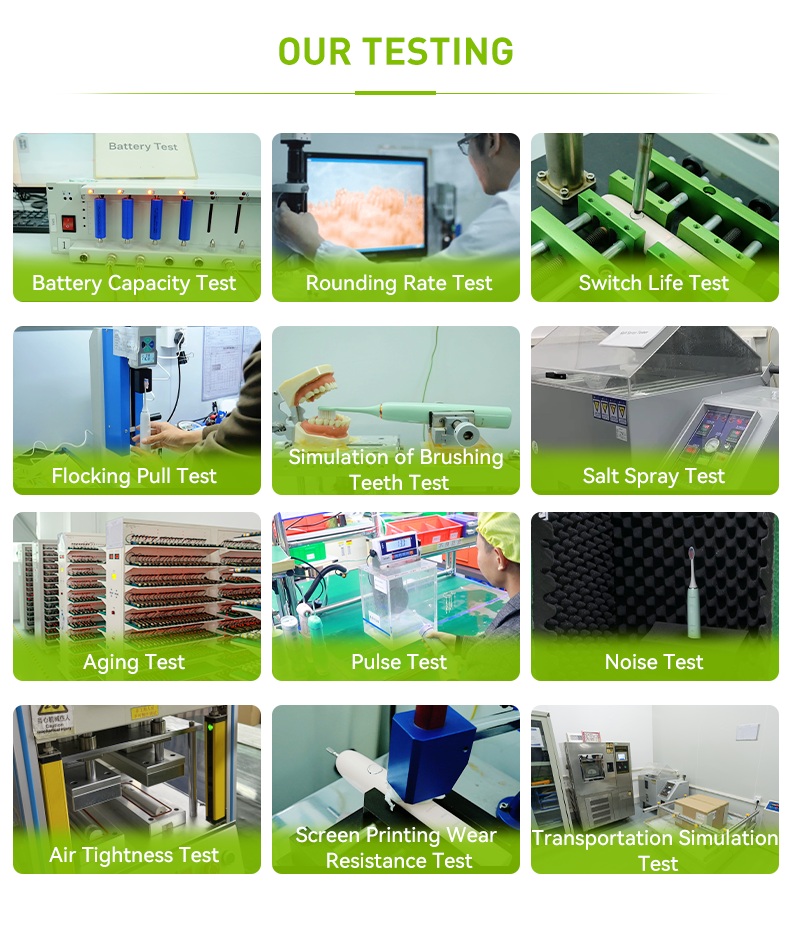
A professional OEM sonic electric toothbrush manufacturer plays a critical role for brands entering the global oral care market. With demand for advanced electric toothbrushes continuously rising, distributors and private label companies increasingly rely on experienced manufacturers to produce high-quality, customizable devices. Technology and Product Innovation Modern sonic toothbrushes integrate high-frequency vibration motors to efficiently remove plaque and promote oral health. A professional OEM manufacturer develops advanced circuit designs, brush head configurations, and ergonomic handles to optimize cleaning performance. Additionally, features like waterproofing, long battery life, multiple brushing modes, and energy-efficient motors are carefully engineered. Factories may also provide innovative solutions such as replaceable brush heads, quiet motors, and USB-C fast charging to enhance usability. Manufacturing Capabilities Experienced factories provide comprehensive end-to-end production services: Product design, prototyping, and sampling Motor assembly and battery integration Automated assembly lines and multi-stage quality testing Private label packaging and custom branding These capabilities ensure large-scale production with consistency, allowing brands to differentiate their products in competitive markets. Quality Control and Certification Quality assurance is essential. Factories perform rigorous multi-stage testing, including: Motor performance evaluation and vibration consistency Battery safety and charging efficiency tests Waterproofing, durability, and ergonomic assessments Compliance with CE, FCC, RoHS, and…
High frequency sonic toothbrush technology is at the heart of modern electric toothbrush design. By producing thousands of brush strokes per minute, this technology effectively removes plaque, stimulates gums, and improves overall oral health. Manufacturers that specialize in high-frequency sonic toothbrushes provide advanced motor systems, optimized brush heads, and efficient energy consumption, ensuring both performance and user comfort. Advantages of High-Frequency Technology High-frequency vibration enhances cleaning efficiency by generating fluid dynamics that penetrate between teeth and along the gumline. This provides superior plaque removal compared to standard electric toothbrushes. Moreover, the technology supports multiple brushing modes, long-lasting rechargeable batteries, and ergonomic designs. As a result, consumers enjoy effective and comfortable oral care routines. You can explore related electric toothbrush solutions here:https://www.powsmart.com/electric-toothbrush/ OEM Manufacturing with Advanced Technology Manufacturers specializing in high frequency sonic toothbrush technology often offer OEM services, allowing brands to: Customize brush heads, colors, and packaging Integrate smart features like timers and pressure sensors Maintain strict quality control for each batch This ensures that private label products meet both consumer expectations and international safety standards. Quality Assurance and Certification Reliable manufacturers conduct multi-stage testing, including: Motor stability and efficiency Battery safety Waterproof and durability checks Compliance with CE, FCC,…
Working with an electric toothbrush factory direct provides significant advantages for global distributors and retailers. Direct sourcing from factories in China reduces costs, ensures production reliability, and allows greater control over quality and customization. Consequently, brands can secure high-quality toothbrushes without intermediary markups, making factory-direct sourcing an attractive option for B2B buyers. Factory Capabilities and Technology Modern factories integrate high-frequency motors and ergonomic designs into sonic electric toothbrushes. Direct manufacturers often provide: Multiple brushing modes Long-lasting rechargeable batteries Waterproof designs Moreover, automated production lines and professional quality control ensure each unit meets international standards. You can explore electric toothbrush options here:https://www.powsmart.com/electric-toothbrush/ OEM and Private Label Services Electric toothbrush factory direct suppliers also support OEM and private label production. Services include: Customized packaging and branding Logo printing Color and material selection This allows brands to quickly launch differentiated products without investing in their own manufacturing infrastructure. Quality Control Factories implement multi-stage inspections, including motor testing, battery performance, and waterproof verification. Compliance with CE, FCC, and RoHS guarantees products meet international standards. Factories often follow professional oral health recommendations:https://www.ada.org This ensures safe and reliable products for consumers worldwide. Conclusion Sourcing from an electric toothbrush factory direct provides cost advantages, flexible customization, and…


.jpg)
.jpg)
.jpg)
.jpg)
.jpg)





.jpg)