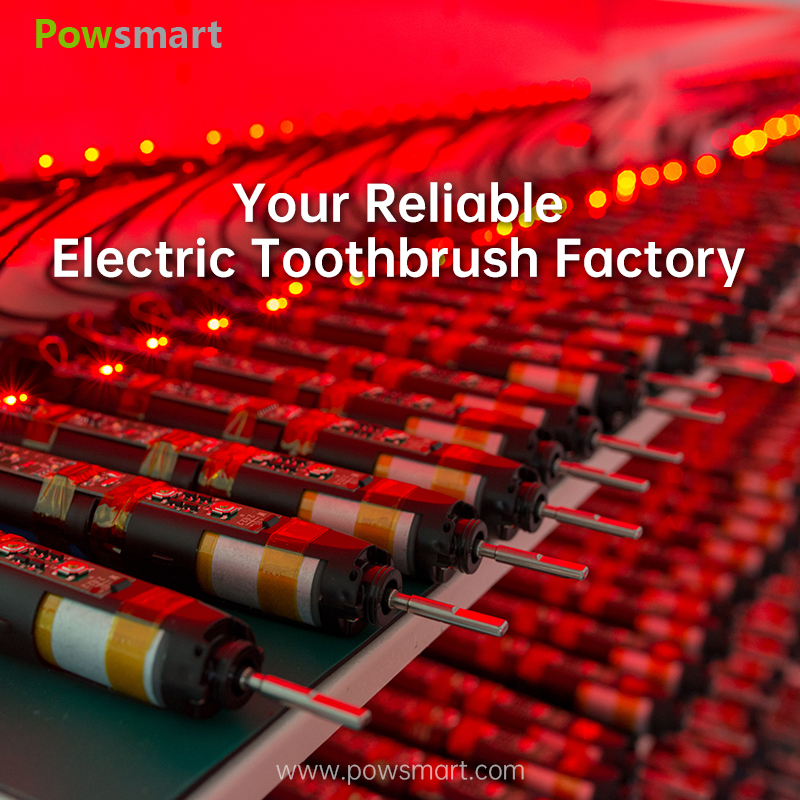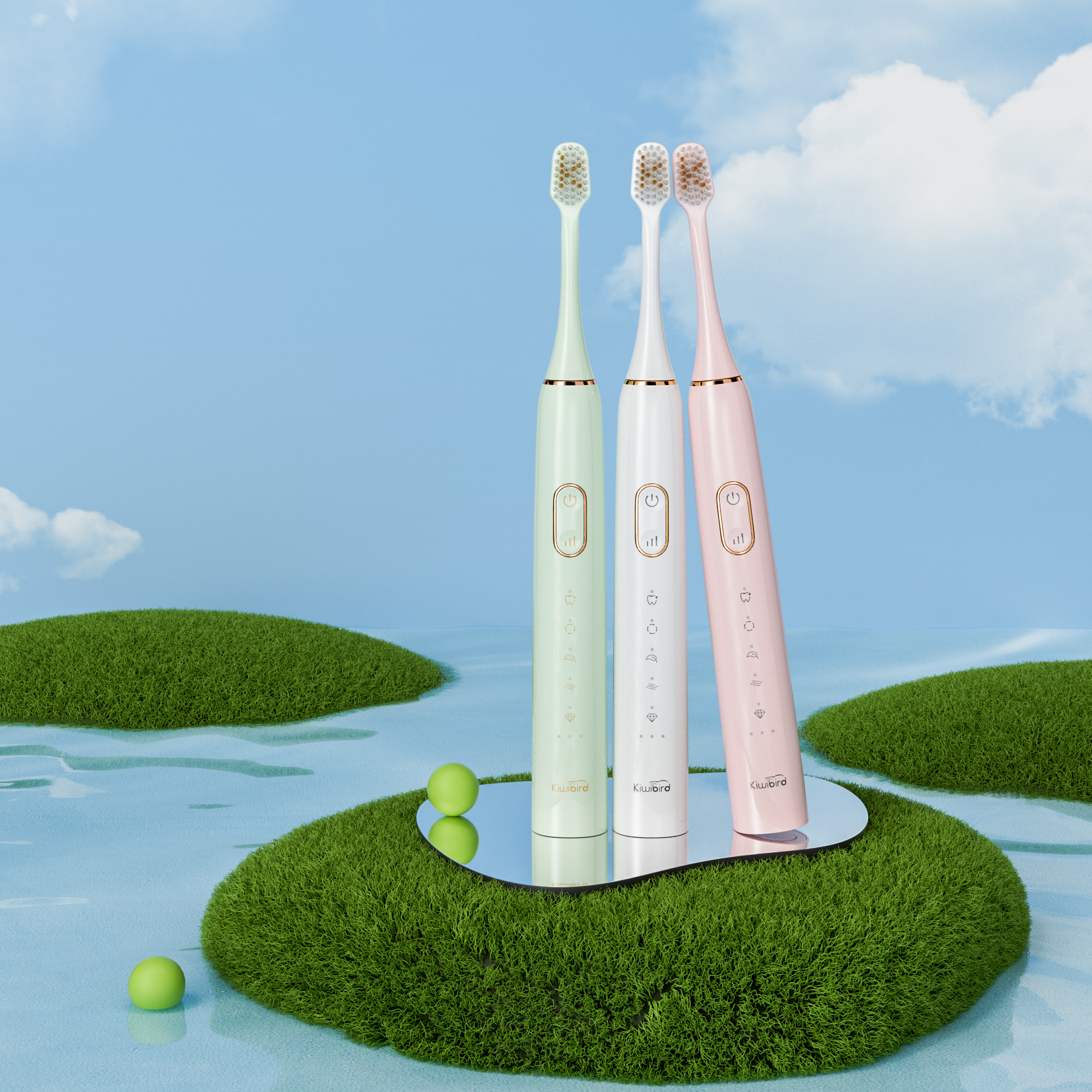
Designing an electric toothbrush for older adults is a systems problem: you must combine head geometry, drive tuning, sensing, ergonomics, and verification so the device cleans well without aggravating sensitive elderly gums. A purposeful Gentle senior brush does exactly that — it reduces tissue trauma, supports caregivers, and lowers warranty/support friction for suppliers and channels. Below are six manufacturer-ready dimensions that show what to build, how to test it, and how to take it to market. Head geometry & filament engineering — the first line of protection First, the head touches tissue every use, so its design is critical: Use ultra-soft, tapered, end-rounded filaments (engineered PBT/nylon blends) that minimize mechanical abrasion along the gingival margin. Prefer compact head footprints so users can maintain the recommended 45° approach to the gumline without overstretching their wrist. Control filament density and tuft layout to achieve fluid-shear cleaning rather than aggressive surface scrape. Consequently, a Gentle senior brush head should be optimized for low abrasivity while still removing plaque effectively when used correctly. Motion profile & motor control — efficacy with restraint Moreover, drive system choices decide whether energy is helpful or harmful: Provide a dedicated Senior / Sensitive mode with lower amplitude and…
Brands and OEMs often get asked whether a Herbal toothbrush India concept (heads or filaments treated with botanical extracts) or a Natural bristle toothbrush (animal-hair filaments) is the safer, more credible option — especially when those heads are paired with electric handles. The short answer for electric toothbrush programs is: synthetic filaments with well-engineered herbal finishes are usually the safer, more practical path; true natural bristles introduce hygiene, durability and regulatory risks. Below are six manufacturer-focused dimensions that explain why, and what to do if you want to bring herbal or “natural” cues to market responsibly. Hygiene & microbiology — what survives between uses First and foremost, hygiene matters. Natural bristles (animal hair) are porous, hold moisture, and can trap organic matter — conditions that increase bacterial retention and odor risk compared with modern synthetic filaments. Consequently, a Natural bristle toothbrush is harder to dry and sanitize, which is especially problematic for electric toothbrush heads that sit in humid bathrooms or travel cases. By contrast, synthetic filaments (PBT/nylon) are non-porous and rinse/dry quickly. If you want a Herbal toothbrush India story, it’s safer to apply a stable, non-leaching botanical finish to synthetic filaments and then validate that finish with microbiological…
For B2B manufacturers and brand teams launching electric toothbrushes in India, localization is not optional — it’s revenue protection. Including a clear Hindi brushing guide inside the box and in onboarding flows makes your first-time user guide accessible, reduces returns, raises refill attach, and increases trust with retail and clinical partners. Below are six manufacturer-focused reasons — with practical design and rollout suggestions — for why Hindi belongs in every first-time user package. Reduce friction at unboxing — faster time-to-first-use First, language is the single biggest barrier to getting a new user brushing correctly on day one. If your first-time user guide is only in English, large segments of India may struggle with setup, charging, or basic safe-use instructions. By contrast, a short Hindi brushing guide (simple step-by-step illustrations + one-line Hindi captions) lets users: identify charger and dock orientation instantly, attach and swap heads correctly, and start a 2-minute cycle without app pairing. Consequently, more successful first uses mean fewer support tickets and higher early NPS. Improve correct technique & product efficacy — protect brand claims Moreover, electric toothbrushes often deliver their promised benefit only when used correctly. Therefore your first-time user guide should teach technique in plain language.…
For B2B manufacturers and OEM/ODM partners, a demo store is not a vanity showpiece — it’s a fast-feedback lab that converts prototypes into sellable products. If you’re building a Seattle urban toothbrush, staging tests at a dedicated Seattle demo store gives you real-world data on ergonomics, acoustics, connectivity, messaging, and replenishment behavior before you scale. Below are six focused ways to run high-impact tests and what to learn from each. In-person usability & ergonomics — small bathrooms, big insights First, let shoppers actually hold and use the handle. In the Seattle demo store, set up a private usability booth that mimics narrow urban vanities and shared bathrooms. Then observe: Grip comfort for users with limited counter space. One-handed use (typical in small apartments) and head reach for molars. Button placement and feedback when users wear gloves or have wet hands. Consequently, small adjustments to handle diameter, head length, or button stiffness made after a demo-store session often reduce returns and increase conversion in urban retail. Acoustic & vibration testing — city neighbors care about quiet Next, measure NVH (noise, vibration, harshness) in a real urban acoustic setting. Use the demo store to: Run decibel and frequency sweeps while the brush…
Introduction — Travel-Ready Oral Care for Alaska If you source an electric toothbrush for travel aimed at Alaska, prioritize portable design and true cold-weather performance. Alaska trips combine long treks, remote lodges, and extreme temperatures. Therefore, your product brief must address sealing, battery behavior at low temperatures, and compact packing. Below we outline what brands need to ask manufacturers, test, and validate before launching travel-focused toothbrushes for Alaskan customers. Define Alaska Travel Use Cases Clearly First, list how customers will actually use the brush. Are they flying into Anchorage, camping in Denali, or staying at coastal lodges? Next, map stressors: cold starts, condensation, long layovers, and limited charging access. Then, convert those scenarios into product requirements. For example, multi-week battery life matters more than fast app features for remote trips. Product Specs That Matter for Travel in Alaska Next, require a compact, lightweight handle and a small head for tight washbasins. Also, demand USB-C quick top-ups and multi-week runtime. Furthermore, specify an IPX7 or better enclosure to survive rinses and splashes. In addition, ask for sealed magnetic or covered charging ports to avoid corrosion. Finally, include a sturdy travel case that doubles as a dryer and head storage. Company web:http://powsmart.com…
When a customer’s Chicago dental toothbrush fails—especially a powered model sold through clinics or retailers—speedy, reliable repair options protect brand trust and preserve lifetime value. For B2B manufacturers and retail partners, offering clear, fast Chicago downtown repair pathways (swap, depot, in-store, and on-site) reduces churn and warranty cost. Below are six practical dimensions—process, channels, diagnostics, inventory, economics, and KPIs—to design a fast-repair program that actually works in a dense urban market like downtown Chicago. Offer a tiered, friction-light repair policy (make the customer journey obvious) First, define an easy-to-understand promise at point of sale and online. For example: Instant swap (same-day): in participating downtown clinics/retailers if handle is DOA or clearly defective. Express depot repair (3–5 business days): pre-paid mail-in or courier pickup for functional defects. On-site/technician visit (same-day) : for high-value commercial fleets (dental practice kits, demo units) through scheduled downtown technician windows. Refurb & return: for units beyond economical repair, offer certified refurbished swaps. Transition words matter here: first define the tiers, then publish clear eligibility (warranty window, proof of purchase) and step-by-step claim flow on the product page and receipts so customers know exactly how a Chicago dental toothbrush problem gets resolved downtown. Create fast downtown touchpoints…
Introduction — App-Connected Brushing for Boston Users In Boston, busy schedules and dense apartments make oral-care habits hard to maintain. An electric toothbrush with app connectivity can help. Moreover, smart features like brushing reports and missed-area alerts improve technique. For brands, app-enabled brushes open new B2B opportunities with clinics, campus stores, and subscription programs. Why App Connectivity Matters for Boston Consumers First, Boston users value data and convenience. Students and professionals want feedback, not guesswork. Therefore, an app that gives a clear two-minute coach and quadrant scoring raises compliance. Also, caregivers and clinics appreciate objective brushing logs. Consequently, app features can turn one-time buyers into repeat customers. Smart Features That Actually Drive Better Brushing Next, choose high-impact features. Include pressure alerts and quadrant pacing. Add motion-based coverage maps and a brushing-report history. Also, provide goal-setting and gentle-mode reminders. Furthermore, gamification and family profiles boost engagement. Altogether, these elements change behavior more than a timer alone. Technical Specs Brands Must Require from OEMs Then, brief your OEM precisely. Ask for a BLE module certified by Bluetooth SIG. Demand low-power firmware and 30+ day average runtime. Require secure OTA updates and firmware signing. Also, request accurate IMU data and pressure sensor calibration.…
Retailers and OEM/ODM teams selling into island markets often blur two distinct promises: a Hawaii beach toothbrush designed for sand, splash, and sun, and a Hawaii waterproof toothbrush engineered for brief saltwater immersion. For customers packing gear for boat days and snorkel tours, those differences matter. Below are six B2B angles—use cases, sealing, materials, power, hygiene, and validation—to help you specify, price, and position the right electric toothbrush for Hawaiian snorkeling scenarios. Use-case framing — “by the water” vs. “in the water” First, clarify expectations. A Hawaii beach toothbrush covers seaside realities: sunscreened hands, sandy counters, rinse-offs under an outdoor tap, and humid bathrooms. By contrast, a Hawaii waterproof toothbrush is designed to tolerate accidental drops into saltwater, wet dry-bags, and deck spray. Importantly, we don’t recommend brushing while snorkeling; rather, the waterproof unit is built to survive immersion incidents that beach-only products are not validated for. Sealing targets — IP for immersion, not just splash Next, align sealing to the claim: Beach: prioritize dust/splash resistance (e.g., IP54–IPX5) with good gasket strategy at the head joint and buttons. Waterproof (snorkel-adjacent): aim for immersion-ready sealing (e.g., IPX7/IPX8) with pressure-equalized cavities and soft-start venting to avoid micro-leaks after dunking. Design notes: employ…
Introduction — Compact Comfort for Campus Life If you target students, a compact electric toothbrush beats bulky models. In Boston dorms, space and portability matter. Therefore, brands should design portable, quiet, and durable brushes. Moreover, manufacturers must support low MOQs and fast prototyping so campus SKUs can launch quickly. Dorm Realities: Why Size and Portability Matter First, dorm bathrooms and shared sinks offer little space. Consequently, students prefer slim handles and small chargers. Also, students travel between campus, libraries, and weekend trips. Thus, a portable toothbrush with a travel cap and slim case fits student life. In addition, quiet motors reduce complaints in shared rooms. Company web:http://powsmart.com Must-Have Features for College-Friendly Brushes Next, prioritize student-facing specs: Compact footprint: short head, slim handle, foldable or detachable cap. Portable charging: USB-C or magnetic sealed charger for quick top-ups. Long runtime: 10–30 days per charge to avoid frequent plugs. Low noise: under ~55 dB at 1 m for shared-wall settings. Simple UI: one-button control and clear battery indicator.Consequently, students get convenience and fewer returns. Hygiene, Durability, and Safety Requirements Moreover, dorm use is rough. Therefore, choose materials that clean easily and resist mildew. Consider antimicrobial coatings on caps and vents. Add sealed charge…
For travelers heading north, packing lists are ruthless about weight and reliability. As a manufacturer, the question isn’t just “should we market it?”—it’s whether an Alaska cold-resistant electric toothbrush meaningfully improves user outcomes, reduces RMAs, and fits retail and outfitter channels. Below are six evidence-driven angles showing when and why a cold-ready brush deserves a place in Alaska travel gear—and how to engineer it without overbuilding. Environment & use cases — what “Alaska cold-resistant” really needs to survive First, define the operating envelope. Travelers will store gear in unheated cabins, vehicles, or sled bags; mornings can start below freezing; water access may be limited; and condensation/fog cycles are common. Therefore, an Alaska cold-resistant toothbrush should: wake reliably after cold soak (e.g., -10 to -20 °C scenarios), keep seals flexible after repeated freeze–thaw, and deliver full cleaning cycles with gloved or numbed hands. When the product maps to these realities, it earns its spot in Alaska travel gear. Power system & battery chemistry — runtime without cold surprises Next, cold derates lithium cells. To maintain trustworthy runtime: Cell choice: favor LFP for thermal stability, or cold-screened NMC cells with conservative current limits. BMS & firmware: temperature-aware charge/discharge, soft-start at low temps,…
For manufacturers and OEM/ODM partners, “clinic recommended” is more than a marketing badge — it’s a promise of clinical suitability and repeatable outcomes. When targeting patients with Boston sensitive gums, electric toothbrushes that carry a Boston clinic recommended credential must combine gentleness, proven cleaning, and a service model that supports clinicians and end-users. Below are six manufacturer-focused dimensions that explain why clinic-recommended brushes matter for sensitive-gum patients and how to design, validate, and commercialize them. Market & clinical need — why Boston clinics recommend specific brushes First, quantify the clinical demand. Patients with Boston sensitive gums seek devices that remove plaque without harming delicate tissue. Therefore dental professionals prefer recommending brushes that: deliver measurable plaque reduction, minimize gingival trauma, and provide consistent, repeatable user behavior. Consequently, a Boston clinic recommended brush must align product specs with clinician expectations: gentler mechanical action, evidence of reduced bleeding/gingival indices, and tools (app reports, patient handouts) that help clinicians monitor adherence. In other words, clinic endorsement drives patient trust and refill attach when the product meets clinical needs. Head & filament design — the frontline for sensitive gums Next, head geometry and bristle construction are the first line of defense for Boston sensitive gums:…
Introduction — Built for Colorado Trails and Peaks In Colorado, hikers and climbers need gear that lasts. Therefore brands should design an electric toothbrush for outdoor enthusiasts with a true rugged design. Moreover, products must resist dust, cold, and rough handling. Consequently, the market rewards practical durability and clear OEM support. Define Outdoor Use Cases First First, map real user scenarios. Day hikes, multi-day backpacking, alpine camps, and ski trips differ. Next, list stressors: dust, mud, cold nights, and UV exposure. Then, translate these into product demands. For instance, a travel case matters as much as sealing. Core Specs That Really Matter Start with ingress protection. Aim for dust-tight and water resistance. Also, require wide operating temperatures for cold starts. Further, specify long battery life for multi-day trips. In addition, prefer USB-C or sealed magnetic charging. Finally, include replaceable heads and secure head latches. Company web:http://powsmart.com Rugged Design & Materials Choose materials that resist abrasion and cold. Use overmolded grips for wet hands. Choose corrosion-resistant contacts and reinforced seals. Also, add impact-damping structure inside the handle. Moreover, select bristle materials that stay flexible in low temperatures. Thus, durability meets comfort. OEM Testing and Validation Checklist Ask your OEM for real…
Introduction — The Challenge of Hard Water in Arizona and Colorado In Arizona and Colorado, residents often face challenges related to hard water. The mineral-rich water, common in these regions, can leave deposits that affect the performance of household appliances, including electric toothbrushes. For oral care products, hard water can lead to mineral buildup on bristles, charger contacts, and internal components. This raises the question: which electric toothbrush works best for users in these areas to combat the effects of hard water? How Hard Water Affects Electric Toothbrushes The minerals in hard water, such as calcium and magnesium, can build up on the electric toothbrush over time, reducing its efficiency. This buildup can clog the bristles, weaken the brushing action, and cause the toothbrush to wear out more quickly. In areas like Arizona and Colorado, where hard water is prevalent, users need a toothbrush designed to withstand these conditions without compromising performance. Therefore, choosing the right toothbrush with features that minimize mineral accumulation is essential for maintaining its functionality. Features of an Electric Toothbrush for Hard Water Areas To ensure long-term performance, electric toothbrushes for hard water areas should include features that reduce mineral buildup. One important feature is a…
Colorado’s stunning mountains and outdoor lifestyle attract adventurers year-round. For those always on the move, a Colorado electric toothbrush for outdoor enthusiasts combines portability, rugged design, and long-lasting performance. Why Outdoor Adventurers in Colorado Need Rugged Toothbrushes Outdoor activities often mean limited access to electricity and harsh environments. The ADA recommends consistent brushing even when traveling. Rugged toothbrushes ensure reliable oral care on the trail. Features of Outdoor-Ready Electric Toothbrushes When selecting toothbrushes for Colorado adventurers, check for: Shock-resistant casings to handle drops Extended battery life for multi-day hikes Waterproof design for camping and rafting trips Compact travel cases that fit backpacks Multiple cleaning modes for flexibility Where Colorado Residents Can Find Outdoor-Grade Brushes Sporting goods stores, outdoor supply shops, and online retailers stock rugged toothbrushes. Powsmart.com provides portable and durable electric toothbrushes perfect for Colorado outdoor lifestyles. Outdoor Tips for Oral Hygiene in Colorado Charge before leaving for long trips Carry solar or portable chargers Keep toothbrushes in waterproof bags Replace heads after exposure to dust or extreme conditions Final Thoughts A Colorado electric toothbrush for outdoor enthusiasts ensures reliable oral care during hikes, camping, and mountain adventures. Portable, rugged, and dependable, it’s the perfect tool for active Colorado…
Arizona is known for its mineral-rich hard water, which can cause buildup on appliances, pipes, and even oral care tools. A electric toothbrush for hard water areas Arizona is designed to resist mineral deposits and maintain cleaning performance over time. Why Hard Water Impacts Toothbrushes in Arizona Hard water leaves calcium and magnesium deposits that affect toothbrush heads and motor efficiency. The National Institutes of Health notes that while hard water is safe for consumption, it can shorten the lifespan of small devices. Choosing toothbrushes built for durability helps Arizona residents protect oral health. Features of Hard Water-Ready Toothbrushes When exploring durable toothbrushes for Arizona, look for: Anti-scaling coatings to prevent mineral buildup High-frequency vibrations for plaque removal Replaceable heads resistant to hard water residue Rechargeable batteries for long-term reliability Easy-clean surfaces for hassle-free maintenance Where Arizona Residents Can Buy Hard Water-Compatible Brushes Pharmacies and supermarkets stock a variety of toothbrushes, but many consumers prefer online retailers for advanced designs. Powsmart.com offers toothbrushes with coatings and designs that reduce mineral interference, ideal for Arizona households. Tips for Using Toothbrushes in Hard Water Areas Wipe toothbrushes dry after each use Rinse with filtered water to reduce deposits Replace brush heads more…
Seattle customers expect two things: strong sustainability credentials and forward-looking tech. For manufacturers, combining those demands into a single product — a Seattle sustainable toothbrush that also behaves like a modern Seattle tech toothbrush — is a systems challenge. Below are six practical dimensions (market, circular design, electronics & firmware, manufacturing & supply chain, consumer services, and measurement & certification) that explain how to engineer, validate, and commercialize a product that is both green and smart. Market positioning & product strategy Start by defining the promise. A true Seattle sustainable toothbrush emphasizes reduced lifecycle impact (materials, packaging, transport, and end-of-life) while a Seattle tech toothbrush emphasizes sensors, connectivity, and meaningful digital services. To reconcile both: position the product as a platform where sustainability is not cosmetic but structural — e.g., modular hardware that’s repairable, refillable heads sold in recycled packaging, and an app that reduces waste by optimizing replacement cadence. In short, make sustainability a feature of the tech stack (and vice-versa) so buyers don’t have to choose between green and smart. Design for circularity (hardware & materials) Next, design with disassembly and recyclability first. Practical engineering choices include: Mono-material shells or clearly separable subassemblies (e.g., PP or PC with…
Holiday windows are a chance to win share quickly—but promotions also compress margin and create downstream service demands. For B2B manufacturers of electric toothbrushes asking whether Chicago holiday deals make sense when you sell a Chicago subscription toothbrush, the answer is: they can be worth it — but only when the promotion is engineered end-to-end (pricing, fulfillment, subscriptions, and service). Below are six practical dimensions to evaluate, including an illustrative ROI scenario, operational risks, and a checklist for pilots. Define the goal: traffic vs. long-term value First, be explicit about what the holiday offer must achieve. Is the objective to: Acquire new subscribers (lift subscription attach rate)? Drive one-time gift purchases and harvest refill revenue later? Clear slow-moving SKUs or introduce a new handle? If your primary KPI is subscription growth for a Chicago subscription toothbrush, structure the deal to incentivize attach (e.g., deep first-order discount + easy subscription enrollment) rather than simply lowering the starter kit price. Economics at a glance — measure margin impact vs. incremental LTV Next, run the numbers before signing the circular. Here’s a short illustrative example (numbers are illustrative, not prescriptive): Starter kit price (AOV): $40 Gross margin before promo: 40% → $16 Holiday…
Introduction — Professional Trust Drives Purchases In Boston, a label like electric toothbrush dental office recommended builds instant credibility. Moreover, dentists promote products that support professional care and patient outcomes. Therefore, brands that earn these endorsements win shelf space, clinic referrals, and higher price tolerance. In short, a clinic-backed product converts better in this market. Why Dental Office Recommendations Matter in Boston First, Boston’s consumers trust local clinicians. Consequently, a dentist’s nod reduces purchase hesitation. Furthermore, dental recommendations open clinical channels such as offices, hospitals, and university health centers. As a result, brands gain a high-value entry route into professional and retail accounts. Features Clinicians Look For: Translate Clinical Needs into Specs Next, match product features to dental priorities. Clinicians favor soft bristles, pressure sensors, validated gum-care modes, and clear two-minute coaching. Also, they value low-noise motors and sealed enclosures for hygiene. Therefore, brief your OEM to deliver these attributes and to provide objective test data that supports each claim. Company web:http://powsmart.com How to Earn Dental Office Recommendations Then, run focused pilots. Send dentist kits with handles, heads, and clinical dossiers. Offer short in-office trials and collect plaque or comfort metrics under supervision. Moreover, provide patient flyers and sample refill…
For B2B manufacturers and OEM/ODM partners, the claim “durable” can win shelf space or invite returns — depending on whether it is engineered and validated. This post examines whether a Colorado mountain toothbrush truly performs as a Colorado durable toothbrush in rugged, high-altitude, and outdoor-use scenarios. Below are six focused dimensions — market fit, mechanical design, power & thermal, sealing & contamination resistance, validation & test matrix, and commercialization & serviceability — that show how to design, prove, and sell a toothbrush that survives the Colorado outdoors. Market & use-case clarity — define “mountain” durability First, be specific about the environments and customers you’re targeting. A Colorado mountain toothbrush is aimed at hikers, climbers, backcountry campers, ski guides, and outdoor workers who expose gear to: frequent drops and impacts (trail, campsite, packed backpacks); temperature swings (cold nights, warm days); humidity, snow melt, and dirt/sand ingress; long trips between charges where reliability matters. Consequently, if you want the product to be perceived as a Colorado durable toothbrush, design requirements must map to those real-world stresses — not just bathroom use cases. Mechanical design & materials — survive drops, knocks and abrasion Next, choose mechanical strategies that prevent brittle failure and repeated…
Introduction — Match Product to Campus Life If you target students, pick a college student electric toothbrush that fits Boston campus life. First, prioritize a compact design that fits into dorm sinks and backpacks. Moreover, choose low-noise motors and long battery life. Consequently, your product sells better in student channels. Understand the Boston Student Use Cases First, consider routines. Students brush in shared bathrooms and cranky mornings. Therefore, portability matters. Also, durability matters for busy schedules. In short, design for tight storage, fast charging, and simple controls. Meanwhile, cost sensitivity drives purchasing choices. Core Specs That Appeal to Students Next, define clear specs. Aim for a slim handle and short head. Include USB-C quick charge and multi-week runtime. Add quiet operation under 55 dB at 1 m. Provide one-button control and a visible battery indicator. Finally, offer a travel cap and compact case for dorm life. Company web:http://powsmart.com Feature Trade-offs: Performance vs. Price Moreover, balance performance and cost. Use efficient motors rather than high-cost premium drive systems. Offer two modes: Daily and Gentle. Include pressure feedback but avoid expensive app ecosystems for budget lines. Consequently, you keep BOM low while still delivering perceived value. Packaging, Bundles and Campus Retailing Then,…