-2-scaled.png)
In today’s competitive personal care market, small business oral care has emerged as a promising niche within the broader health & household products category. Consumers are increasingly aware of the importance of dental hygiene, driving demand for specialized, effective, and sustainable products. For small brands looking to enter or scale within this space, finding the right manufacturing partner is key to delivering the best oral care products to the market. This blog outlines the essential steps and strategies to help small oral care brands connect with capable manufacturers and offer high-quality, affordable oral care solutions. Understanding the Small Business Oral Care Landscape The oral care industry is evolving beyond basic toothbrushes and toothpaste. Today’s consumers expect more from health & household products, including features like sonic brushing, eco-friendly packaging, and multi-functional oral hygiene kits. For small businesses, this creates opportunities to innovate, differentiate, and fill market gaps not addressed by major brands. Whether you’re launching a new electric toothbrush line or a curated set of whitening and gum care kits, the market rewards those who focus on quality and targeted problem-solving. Identifying the Best Oral Care Products for Your Brand Before approaching manufacturers, it’s essential to define your product range. Consider including…
With the competitive dental care market growing rapidly, competition among oral care brands is fiercer than ever. To stand out, brands must understand which competitive oral care products are currently in demand and what consumers are looking for in their oral hygiene routines. From dental care market trends to oral hygiene innovations, this blog provides manufacturers and brand owners with a clear roadmap to product development and strategic sourcing. Understanding Dental Care Market Trends To succeed in today’s oral care industry, it’s critical to align with current dental care market trends. Key developments include: Increased awareness of preventative care Consumer demand for personalized and tech-enabled products Rising preference for eco-friendly and sustainable options Growth in at-home oral care routines, especially post-pandemic These trends are shaping the future of what qualifies as high-demand dental products, forcing manufacturers and brands to evolve beyond traditional brushes and pastes. Characteristics of Competitive Oral Care Products What makes a product truly competitive in this saturated market? Here are key characteristics: Functionality & Innovation: Products that integrate new technology or design for better results—think sonic vibration, pressure sensors, and AI feedback apps. User-centric design: Sleek, ergonomic, and easy-to-use products win user loyalty. Scientific validation: Backed by dental professionals…
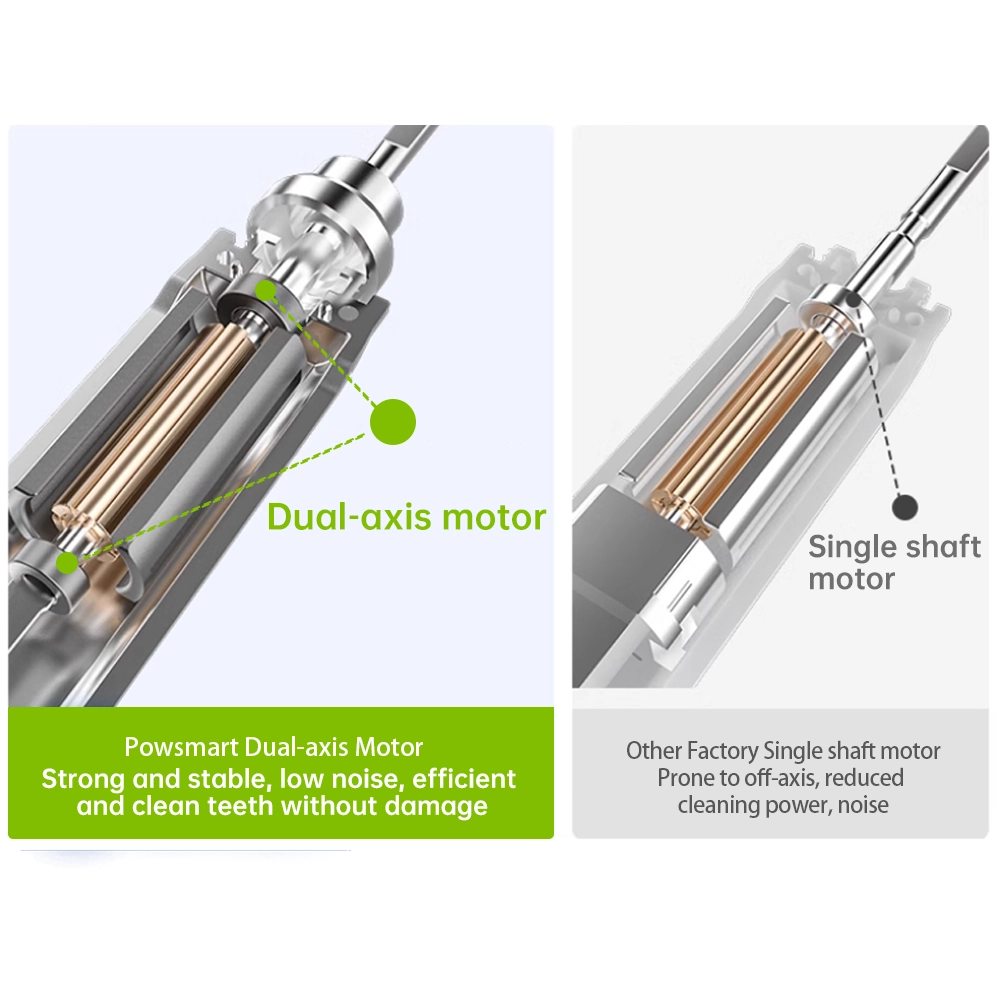
In today’s competitive oral care market, electric toothbrushes come in a wide range—from simple budget models to premium smart designs. For oral care brands seeking to source reliable manufacturers, understanding the core electric toothbrush differences is crucial for developing a product portfolio that aligns with consumer expectations and pricing strategies. This blog offers a toothbrush comparison between cheap electric toothbrushes and high-end electric toothbrushes, highlighting 5 key differences to guide your sourcing and product development decisions. Motor Technology & Performance One of the most fundamental differences lies in the motor system. Cheap electric toothbrushes typically use basic vibration motors with lower RPMs (around 6,000–12,000 strokes/min). These models provide basic plaque removal but limited deep-cleaning capabilities. High-end electric toothbrushes, on the other hand, feature high-frequency sonic or oscillating-rotating motors that can reach up to 40,000 strokes/min. These deliver superior plaque removal and gum stimulation. ? When selecting a manufacturing partner, assess their capability in producing motors with variable frequency or sonic technology—key aspects of oral care technology today. Battery & Charging Options Battery quality directly impacts product usability and consumer satisfaction. Budget models often use AA batteries or low-cost rechargeable cells with short lifespan and limited usage per charge. Premium models typically include long-lasting lithium-ion batteries, fast-charging…
.jpg)
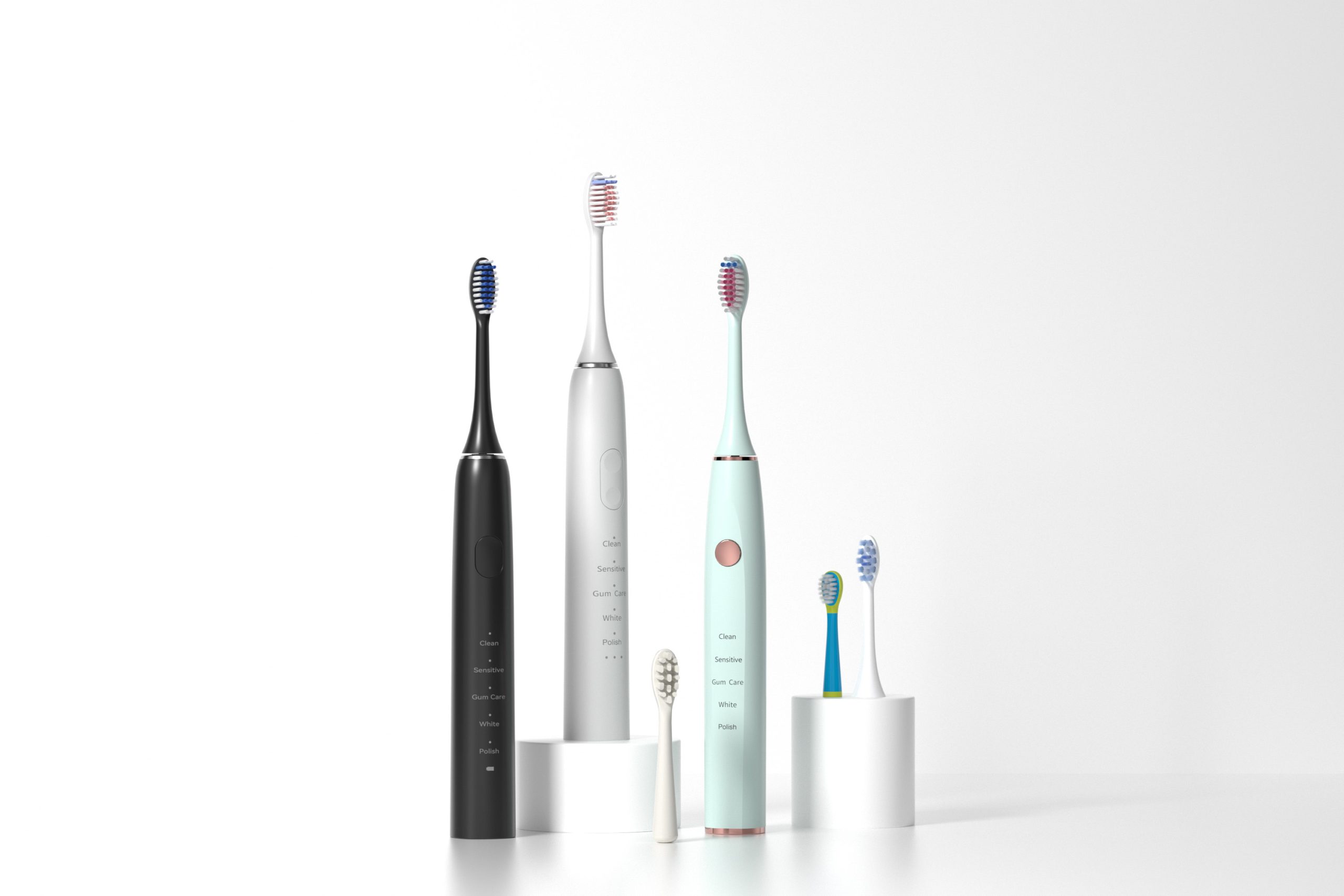
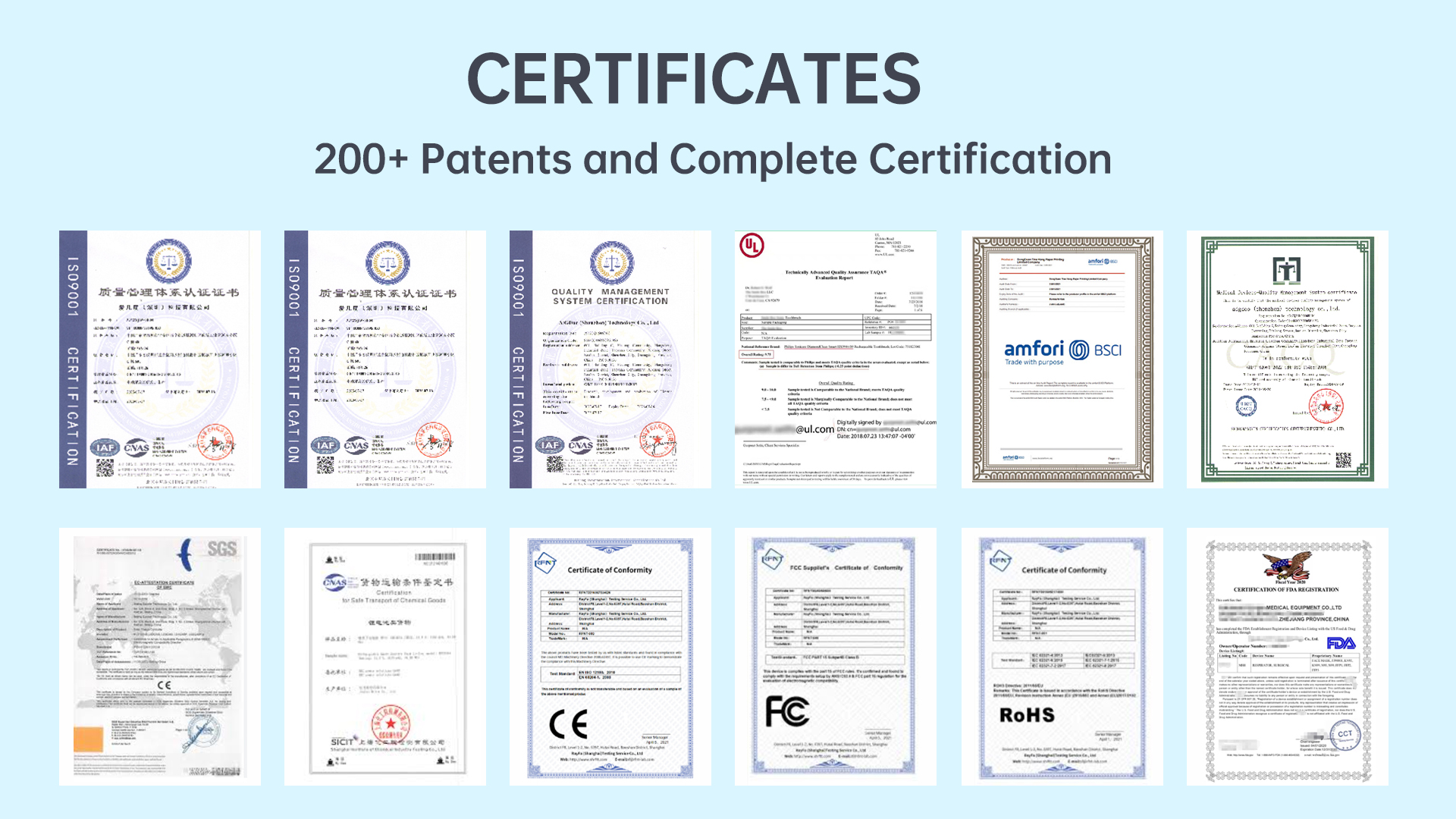
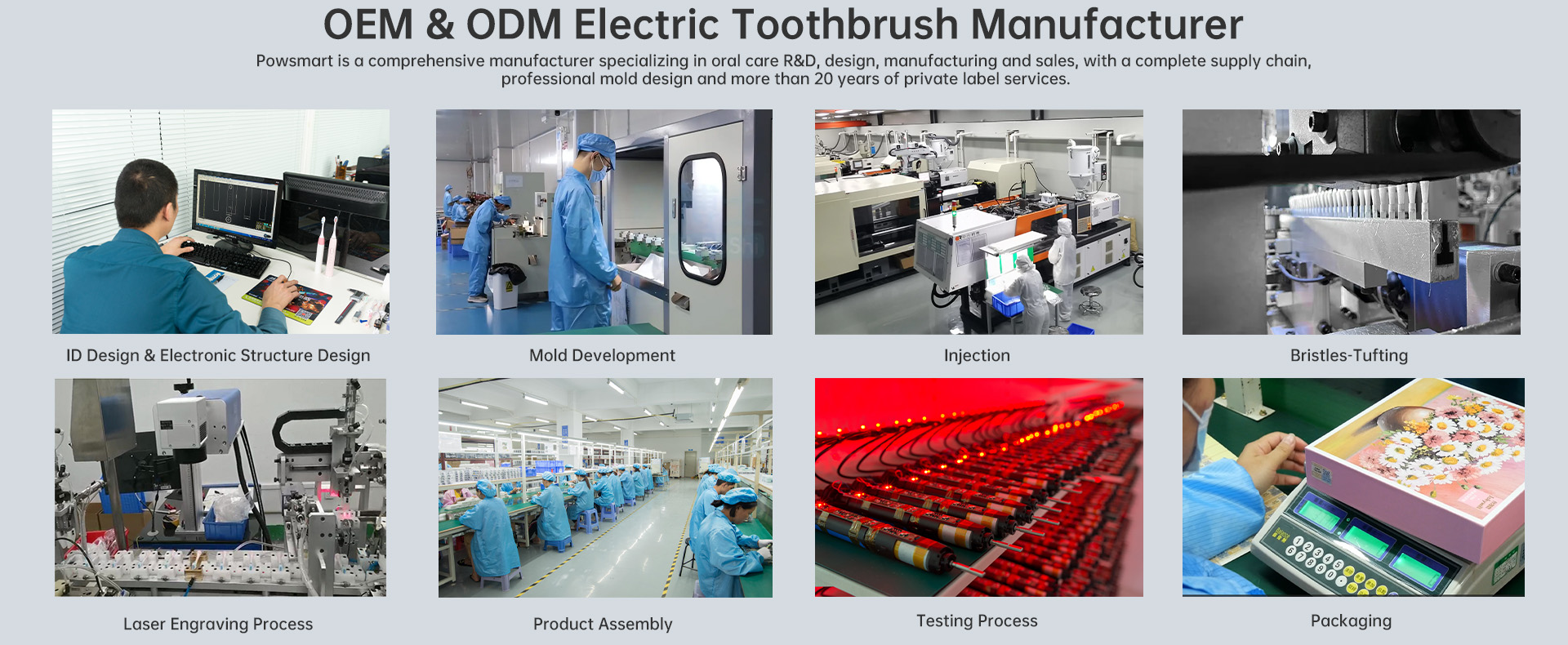
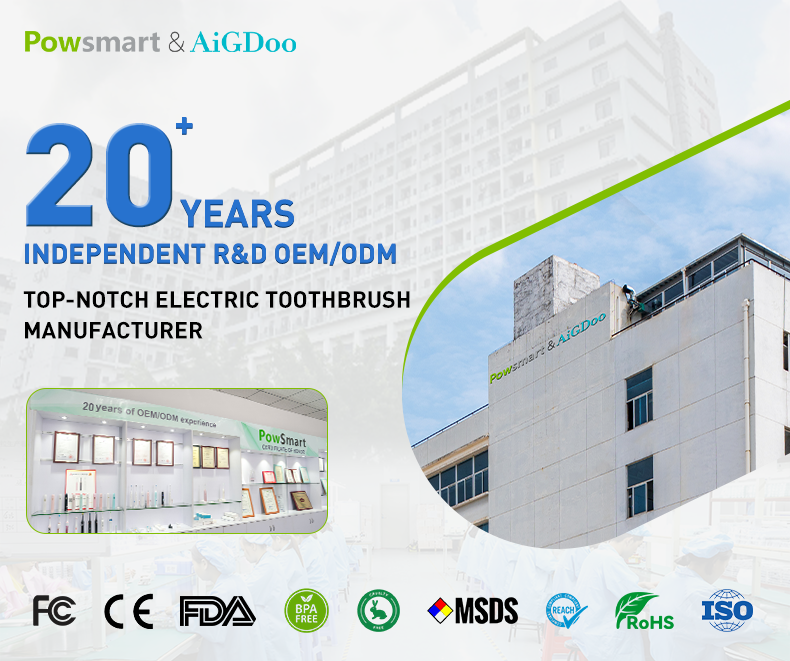
China Adult Electric Toothbrush Factory – Powsmart 1. Introduction Powsmart is a leading China adult electric toothbrush factory, specializing in the design, manufacturing, and export of high-quality electric toothbrushes for global markets. With advanced production technology, strict quality control, and competitive pricing, we provide OEM/ODM services to brands worldwide. 2. Product Overview Our factory produces a wide range of adult electric toothbrushes, including: Sonic electric toothbrushes (30,000-40,000 vibrations per minute) Rotating electric toothbrushes (3D oscillation technology) Smart toothbrushes (Bluetooth connectivity & app integration) Travel-friendly models (USB charging & compact designs) Key Features: ✔ Multiple brushing modes (Clean, Whitening, Sensitive, Gum Care) ✔ Long battery life (up to 30 days on a single charge) ✔ IPX7 waterproof rating ✔ Replaceable brush heads & eco-friendly materials 3. Why Choose Powsmart? ✅ Professional OEM/ODM Services – Custom designs, logos, and packaging ✅ High-Quality Materials – FDA, CE, RoHS certified ✅ Competitive Pricing – Direct factory prices with no middlemen ✅ Fast Production & Delivery – MOQ as low as 500 pieces, 15-25 days lead time ✅ Strict Quality Control – 100% testing before shipment 4. Manufacturing Capabilities In-house R&D team for innovative designs Automated production lines for efficiency Compliance with international standards (ISO 13485, FDA, CE) Custom packaging options (retail boxes, eco-friendly materials) 5. Target Markets We supply adult electric toothbrushes to: Wholesalers & Distributors E-commerce Sellers…
Electric toothbrushes have revolutionized modern oral hygiene. Among them, the rotating electric toothbrush stands out for its widespread use and affordability. However, behind its popularity lies a growing concern: the harm of rotating electric toothbrushes to the oral cavity. From an electric toothbrush factory’s perspective, understanding these risks is essential — not only for developing safer products but also for guiding oral care brands in selecting the right designs for their markets. This article explores the pros and cons of different types of electric toothbrushes, especially the rotating kind, and how brands can make more informed decisions. Understanding Rotating Electric Toothbrush Technology Rotating electric toothbrushes use a circular motion to mechanically remove plaque. Their mechanism is often simpler and more aggressive than sonic or ultrasonic alternatives. While they offer decent cleaning performance, they lack the finesse needed for sensitive gums and enamel. Common Characteristics: Bristle heads that rotate at a fixed speed Usually affordable and widely distributed Basic technology compared to high-frequency models While effective at plaque removal, they can be harsh on the oral cavity, especially when used improperly or for extended periods. The Harm of Rotating Electric Toothbrushes to the Oral Cavity Many dentists and dental researchers have raised…

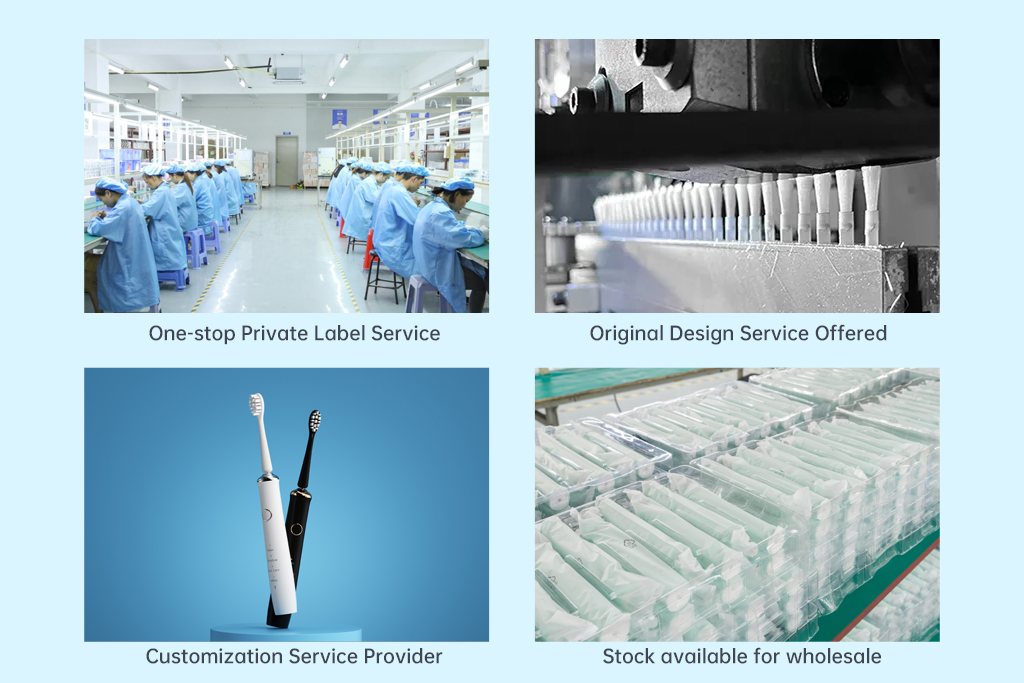
In the fast-growing oral care market, choosing the right electric toothbrush factory can be the difference between product success and failure. For brand owners and sourcing managers, understanding how to properly evaluate an electric toothbrush factory is essential to ensure product consistency, timely delivery, and long-term partnership success. This article outlines a six-part evaluation framework to help you assess a factory's comprehensive capabilities, including their OEM capabilities, manufacturing standards, and commitment to Electric Toothbrush Quality Manufacturing. Assessing the Factory’s Core Manufacturing Capabilities The first step in evaluating an electric toothbrush supplier is to investigate its core production competencies. A capable electric toothbrush factory should have: In-house facilities for plastic injection molding, PCB assembly, and motor integration. Experience with multiple product lines (oscillating, sonic, kids’ models). Scalable production capacity that aligns with your demand projections. This baseline assessment ensures the factory has the technical resources to meet your product specifications under various volumes. Reviewing OEM & ODM Capabilities Many oral care brands seek manufacturers that can provide OEM capabilities and even ODM (Original Design Manufacturing) services. During the evaluation, ask: Can the factory customize molds, packaging, and firmware? Do they offer product design support or only manufacturing? Are there R&D engineers on-site for product development or…
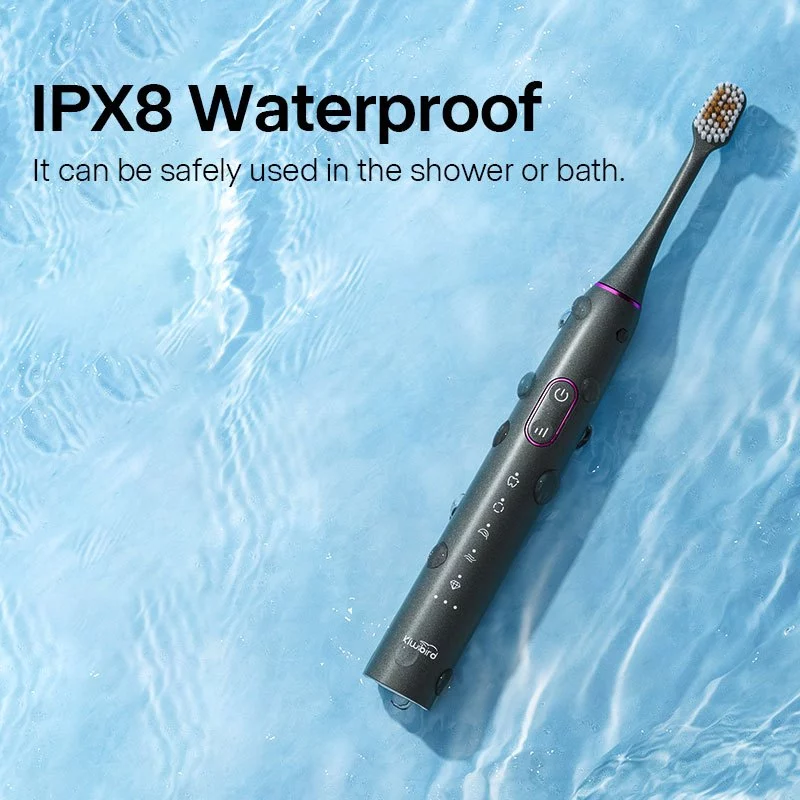
As electric toothbrushes become a standard in modern oral hygiene routines, quality control and product reliability have never been more critical. For oral care OEM partners, and especially for brands seeking factories, understanding common failure points and how to solve them is key to building strong, trustworthy products.This article offers a practical guide for brands & factories to troubleshooting electric toothbrush problems, helping improve production quality, reduce returns, and strengthen long-term customer satisfaction. Battery Life Issues: Why They Occur and How to Prevent Them One of the most frequent complaints in user feedback is related to battery life issues. Whether the toothbrush runs out of power too quickly or fails to hold a charge over time, battery reliability is critical for user retention. Key considerations for brands and factories: Use high-quality lithium-ion batteries from certified suppliers. Optimize PCB design for energy efficiency. Implement smart charging indicators and auto shutoff features to extend battery lifespan. Ensure your oral care OEM partner offers battery cycle testing during quality control. Waterproofing Standards: IP Rating is Not Optional Given the daily exposure to water and moisture, inadequate waterproofing can lead to product failures, electrical shorts, or even safety risks. Adherence to waterproofing standards—especially IPX7 or higher—is essential.…
.jpg)
In today's competitive oral care market, cleaning performance is a key differentiator for any electric toothbrush brand. Whether you’re launching a new line or improving your current offering, choosing the right electric toothbrush factory can make or break product performance. Key factors such as sonic technology, brush head design, and quality OEM manufacturing standards all influence the outcome. This blog explores how different factories vary and what to consider when selecting the right partner. The Role of Sonic Technology in Deep Cleaning Toothbrushes One of the primary factors impacting cleaning efficiency is the type of motor technology used. Advanced sonic technology enables toothbrushes to deliver up to 40,000 strokes per minute, creating microbubbles that reach deep between teeth and along the gum line. However, not all electric toothbrush factories implement this technology equally. Top-tier factories invest in high-frequency, stable sonic motors. Lower-end suppliers may compromise on vibration strength and consistency. When selecting a supplier, always evaluate their motor sourcing and engineering capabilities to ensure your brand offers a true deep cleaning toothbrush experience. Brush Head Design: The Unsung Hero of Cleaning Performance Another critical but often overlooked component is the brush head design. Factors such as bristle material, tufting density, and head shape directly impact how…
As the demand for smart and effective oral care devices grows, electric toothbrushes continue to dominate both consumer and professional markets. However, many brands face challenges due to recurring common electric toothbrush issues, often traced back to poor manufacturing practices. To build a trustworthy product line, it's essential for oral care brands to work with factories that understand common issues — and have systems in place to prevent them.This blog provides a detailed breakdown of the most frequent product issues and how top-tier manufacturers address them, ensuring long-term reliability and user satisfaction. Brush Head Durability: The First Line of Defense One of the most common complaints from users is premature wear or breakage of the brush head. Brush head durability is critical for performance and safety. Factory solution: Use of high-quality, FDA-compliant bristle materials. Precision injection molding to ensure consistent density and alignment. Rigorous fatigue testing to simulate real-world use cycles. By optimizing brush head design and materials, factories help brands deliver a more resilient and comfortable brushing experience. Motor Failure: Silent Killer of Product Lifespan Another frequent issue in electric toothbrushes is motor failure. Overheating, vibration inconsistencies, or complete breakdowns can severely impact a brand’s reputation. Factory solution: Partner with…
In the rapidly growing oral care industry, the demand for electric toothbrushes is at an all-time high. For brands aiming to enter or expand in this competitive market, partnering with the right electric toothbrush factory is essential—not just for product quality, but also for ensuring long-term business success. But how do you evaluate factories and identify those that can deliver superior electric toothbrush cleaning power, innovation, and scalable production? This article outlines six critical factors to help you choose the ideal manufacturing partner for your OEM electric toothbrush project. Define Your Cleaning Performance Standards Before you begin the search, it’s important to clearly define what “superior electric toothbrush cleaning power” means for your target market. Do you want high-frequency sonic vibration? Do you need multiple cleaning modes or intelligent pressure sensors? Top-tier oral care manufacturing begins with clear technical specifications. Look for a factory that can meet or exceed industry standards for plaque removal, battery efficiency, motor durability, and ergonomic design. Ask for performance test reports or existing client case studies that demonstrate their product capabilities. Evaluate R&D and Innovation Capabilities A reliable electric toothbrush factory should have strong R&D capacity. Innovation is key in a market where user expectations evolve quickly. Investigate: How…
As the global demand for electric toothbrushes continues to grow, selecting the right technology for your brand’s product line is more critical than ever. Whether you are launching a new oral care brand or expanding your existing portfolio, understanding the differences between sonic vibration and rotary vibration technology is essential for aligning with both market trends and user expectations. This technology comparison will explore the performance, user experience, and manufacturing implications of both electric toothbrush vibration technologies, helping brand owners make informed sourcing decisions. https://www.powsmart.com/product/electric-toothbrush/ Overview of Electric Toothbrush Vibration Technologies In the electric toothbrush market, two main types of vibration mechanisms dominate: comparison of sonic vibration and rotary vibration technology. Sonic Vibration uses high-frequency side-to-side movements—usually at 20,000 to 40,000 strokes per minute. This technology relies on fluid dynamics to clean beyond direct contact, reaching between teeth and along the gumline. Rotary Vibration Technology involves oscillating or rotating brush heads, typically at a lower frequency (around 5,000 to 10,000 rotations per minute). These brushes often clean by direct mechanical action and are particularly effective at polishing tooth surfaces. Understanding these foundational differences is the first step in evaluating product strategy and manufacturing options. Cleaning Efficiency and User Experience From a consumer perspective, both technologies offer…
.jpg)
In today’s increasingly competitive personal care market, consumers' preferences of electric toothbrushes are becoming more discerning, not only about the features of the product but also the price point. For brands and suppliers aiming to remain competitive and relevant, it is essential to understand how consumers weigh functions and prices of electric toothbrushes in their purchasing decisions. This blog provides a strategic look at demand preference and analysis, helping brands align with the right electric toothbrush manufacturer who can meet evolving market expectations. Core Consumer Expectations: Smart, Efficient, and Affordable Modern consumers prioritize electric toothbrushes that are not just effective, but also intelligent and user-friendly. Based on recent consumer research, the most requested features include: Multiple brushing modes (sensitive, whitening, gum care) Smart timers and pressure sensors Long battery life and fast charging Quiet operation and compact design However, while many users desire advanced features, a large portion of consumers' preferences of electric toothbrushes remain price-sensitive. This is where the balance between functionality and affordability becomes crucial in product planning and sourcing. Demand Preference and Analysis: Features vs. Cost Demand preference and analysis reveal three major consumer segments: Premium Users: Willing to pay over $80 for AI-enabled brushes, Bluetooth connectivity, and ultra-sonic vibration technology. Mid-Market Consumers:…
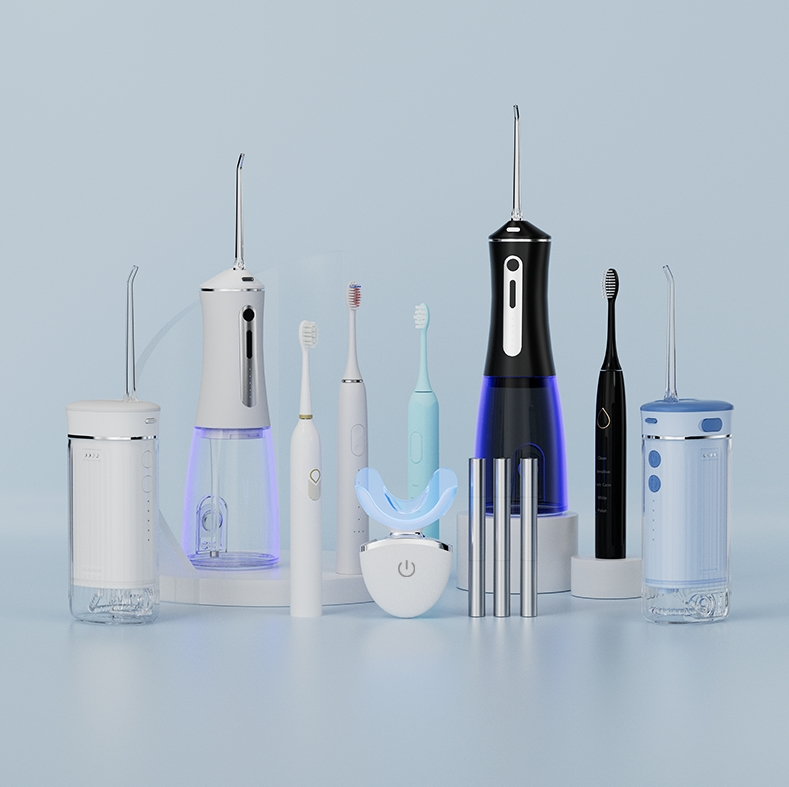
In the highly competitive oral care market, finding the right Oral Care Product Manufacturer is critical for any brand seeking to deliver safe, effective, and market-ready products. Whether you’re launching a new line of electric toothbrushes, oral irrigators, or whitening solutions, the choice of manufacturing partner can determine your product’s success—or failure. To streamline your decision-making process, we’ve created the ultimate checklist for evaluating a manufacturer, helping you identify quality dental suppliers who can act as your reliable OEM partner. Certification and Compliance: Look for an FDA-Certified Factory The first item on your checklist should be regulatory compliance. A reputable manufacturer should operate an FDA-certified factory and adhere to ISO standards relevant to medical or oral care devices (e.g., ISO 13485 for medical-grade production). What to check: FDA registration or certification documentation ISO certifications (especially ISO 13485 or ISO 9001) CE, RoHS, or other region-specific compliance (if targeting global markets) These certifications ensure that the manufacturer meets the legal and hygiene standards required to produce oral care products safely. Manufacturing Capabilities and Specialization Not every factory that makes beauty or healthcare products is optimized for oral care. You need a manufacturer that specializes in producing oral care devices such as electric toothbrushes or oral…
In the fast-evolving personal care market, standing out with a differentiated product is critical—especially in the electric oral care category. Whether you're launching a new brand or upgrading your existing product line, understanding what defines truly innovative electric toothbrush features is key to creating a product that resonates with today’s tech-savvy consumers. In this blog, we’ll explore six Electric Toothbrush Innovative Features that can make your electric toothbrush stand out, while helping you choose the right sonic toothbrush factory partner to bring your vision to life. Smart Brushing Tech for Personalized Oral Care Today’s users expect more than just vibration—they expect intelligence. Integrating smart brushing tech is one of the most effective ways to elevate your product’s value. Features such as: Pressure sensors to prevent overbrushing, AI-based brushing feedback via mobile apps, Real-time brushing coverage tracking,are not only technologically impressive but also reinforce oral hygiene habits. These features represent the new standard in oral care innovation, appealing to both health-conscious users and gadget lovers alike. Sonic Technology with Advanced Motion Control Partnering with a reliable sonic toothbrush factory ensures your product offers not just powerful but also precise cleaning. Advanced sonic motors deliver up to 40,000 vibrations per minute, but that’s only part of the…
In today’s highly competitive market, find the right electric toothbrush manufacturers is critical for oral care brands aiming to scale efficiently. Whether you are a startup entering the market or an established company seeking product diversification, partnering with a trustworthy oral care supplier is the foundation of quality, innovation, and long-term brand influence. This article offers a comprehensive roadmap for selecting a manufacturer that aligns with your business goals, supports OEM electric toothbrush production, and drives your oral care brand expansion strategy. Define Your Product and Brand Requirements First Before contacting any factory or supplier, clearly define your product specifications and brand positioning. Ask yourself: What type of branded toothbrush production do you require (e.g., sonic, oscillating, kids’ brushes)? Do you need full OEM electric toothbrush solutions or white-label production? What certifications (e.g., CE, FDA, ISO) must the products comply with? What are your expected order quantities, price range, and delivery timelines? Having a solid product brief helps you find suitable electric toothbrush manufacturers early and avoid costly mismatches. Where and How to Source Reliable Manufacturers Finding a reliable oral care supplier goes beyond a simple online search. Here are proven sourcing strategies: Trade shows: Events like IDS (Germany), Dental South China, and Cosmoprof Asia are great for…
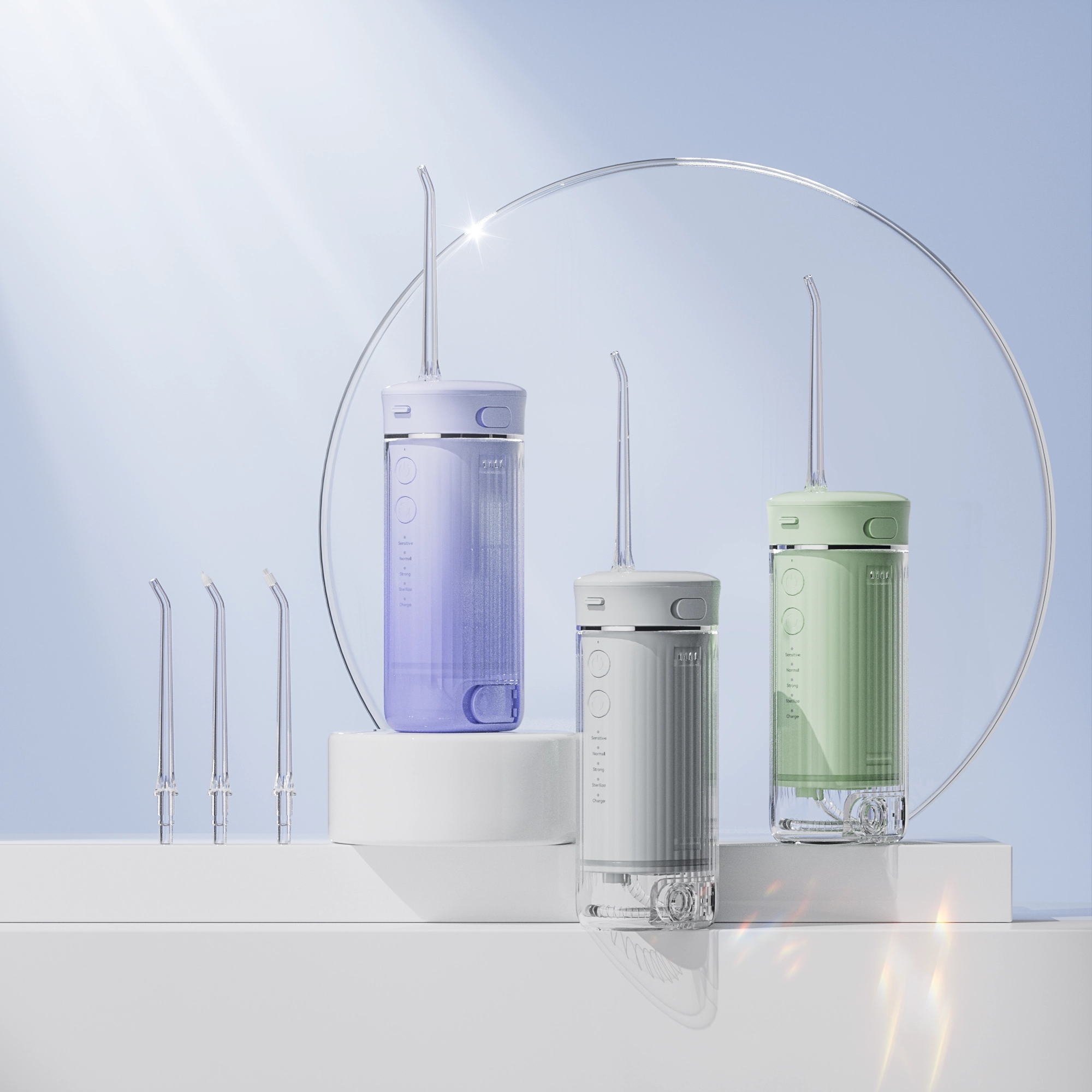
For any oral hygiene product manufacturer or distributor, educating your customers about water flosser maintenance is more than just value-add content—it’s a key step in enhancing product lifespan, performance, and brand loyalty. While water flossers are known for their effective plaque removal and gum health benefits, few users realize that regular care is essential. Without proper maintenance, even the best-engineered water flosser can suffer from performance drops, mold buildup, and early failure. Why Maintenance is Critical for Water Flossers First and foremost, water flossers operate with pressurized water and micro-tubing systems—environments where mineral buildup, bacterial contamination, and mechanical wear can develop silently. Over time, neglected flossers may: Lose water pressure Develop unpleasant odors Exhibit nozzle clogging or motor strain Create a breeding ground for mold and bacteria For OEMs, this reinforces the need to provide clear aftercare guidance with every unit shipped. Key Maintenance Zones: Where and Why to Clean There are several components of a water flosser that require periodic cleaning: Water Reservoir: Standing water breeds bacteria. Rinse daily and deep-clean weekly. Nozzle Tips: These come in contact with oral fluids. They should be rinsed after each use and replaced every 3–6 months. Pump System: Mineral deposits can build…
In today’s rapidly evolving market, consumers are no longer satisfied with “basic” functionality in personal care products. The personal care industry upgrade is evident, with consumers demanding smarter, safer, and more aesthetically pleasing solutions. At the same time, inflationary pressures and competitive markets push brands to pay close attention to Consumption Upgrade and Cost control. The question becomes: How can oral care product brands deliver upgraded products while still maintaining healthy margins? This blog explores practical strategies from an Oral Care Products Factory Perspective to help brands navigate this dual objective. The Rise of Consumption Upgrade in the Oral Care Market The consumption of oral care is upgrading. Consumers now prioritize features such as: Sonic and ultrasonic cleaning technologies in electric toothbrushes Water pressure customization in oral irrigators Smart connectivity (Bluetooth tracking, AI brushing guidance) Eco-friendly and sustainable materials This consumption upgrade is not limited to high-end markets—mid-range and even entry-level consumers are showing willingness to pay for better value. For brands, this creates both opportunity and pressure to evolve their oral care product options. The Cost Control Dilemma While investing in better features and materials is critical to meeting upgraded demand, it also brings higher production costs. Brands need to manage: R&D…

In today's image-driven society, oral care is no longer just about hygiene—it's about personal confidence enhancement. A bright, healthy smile improves not only dental health but also how we carry ourselves in professional and social settings. From a factory perspective, oral care product manufacturers must understand that users are now seeking both functional effectiveness and emotional satisfaction—especially in home teeth whitening devices and everyday oral tools. The Psychological Power of a Bright Smile A radiant smile often serves as an instant confidence booster. The teeth whitening effect is not just cosmetic—it supports the idea of being your best self. In fact, many consumers embrace whitening as part of a broader lifestyle trend tied to the idea of being kind to oneself. Offering reliable whitening results can significantly enhance product value and brand reputation. For brands, choosing a manufacturer that specializes in effective whitening technology—whether through LED-based devices, safe peroxide formulas, or sonic-powered toothbrushes—can make or break product success. High-Level Appearance Design as a Strategic Differentiator Today’s consumers judge a product first by its look and feel. High-level appearance design is no longer a luxury—it's a necessity. The design of oral care products, from sleek electric toothbrush handles to premium packaging for whitening kits,…
The global personal care industry is undergoing a shift. Consumers are no longer just looking for functional products—they are investing in experiences that reflect a lifestyle of self-respect and elevated standards. This consumption mindset, often described as the business idea of “Treating Yourself Well,” is rapidly influencing the oral care consumption upgrade trend. From smart electric toothbrushes to spa-like oral irrigators, oral care is becoming a premium and personalized wellness category.But how can oral care brands turn this shift into a competitive advantage? The answer lies in working closely with a manufacturing partner who understands both the emotional appeal of High-premium oral care products and the practicalities of product development. Here's how to bring this vision to life. Understand the Essence of “Treating Yourself Well” in Oral Care At its core, the business idea of Treating Yourself Well means designing oral care products that go beyond hygiene—they must offer comfort, personalization, and a sense of luxury. High-end packaging, smart features, skin-safe materials, and ergonomic design are all part of the user experience that supports this philosophy. These aren't just toothbrushes or flossers—they're lifestyle accessories. From an oral care products factory perspective, this requires a deep understanding of consumer psychology and the ability to align…
When users complain of whitening unevenness, many manufacturers focus solely on bleaching formulations and overlook how improper frequency settings can lead to motor overheating and undermine product durability. In fact, incorrect vibration frequencies not only reduce activation efficiency but also accelerate enamel fatigue in localized areas, resulting in uneven whitening and increased wear. The Link Between Frequency Settings and Whitening Uniformity First, the frequency of cold-light or sonic activation directly dictates the speed and depth of free-radical generation: Low-Frequency Modes (<20 kHz) lack sufficient energy to break down deeper stains, causing superficial whitening. High-Frequency Modes (>30 kHz) improve penetration but concentrate energy and risk over-oxidation “hot spots.” Frequency Fluctuations: Without proper firmware compensation for voltage drops, load-dependent frequency jumps amplify whitening unevenness. Achieving precise and stable frequency output is therefore fundamental to consistent whitening. How Improper Frequencies Stress Enamel Next, mismatched frequencies impose cyclic stresses on the enamel surface: Micro-fatigue: High-frequency oscillations propagate micro-cracks, diminishing enamel hardness. Chemical-Mechanical Synergy: Vibration accelerates peroxide erosion, increasing surface porosity where stains can re-adhere. Localized Overheating: Excessive frequency settings can lead to motor overheating, transferring heat to tooth surfaces and intensifying chemical attack. Altogether, improper frequency settings are a key driver of both enamel…


.jpg)
.jpg)
.jpg)
.jpg)
.jpg)






.jpg)
.jpg)
.jpg)