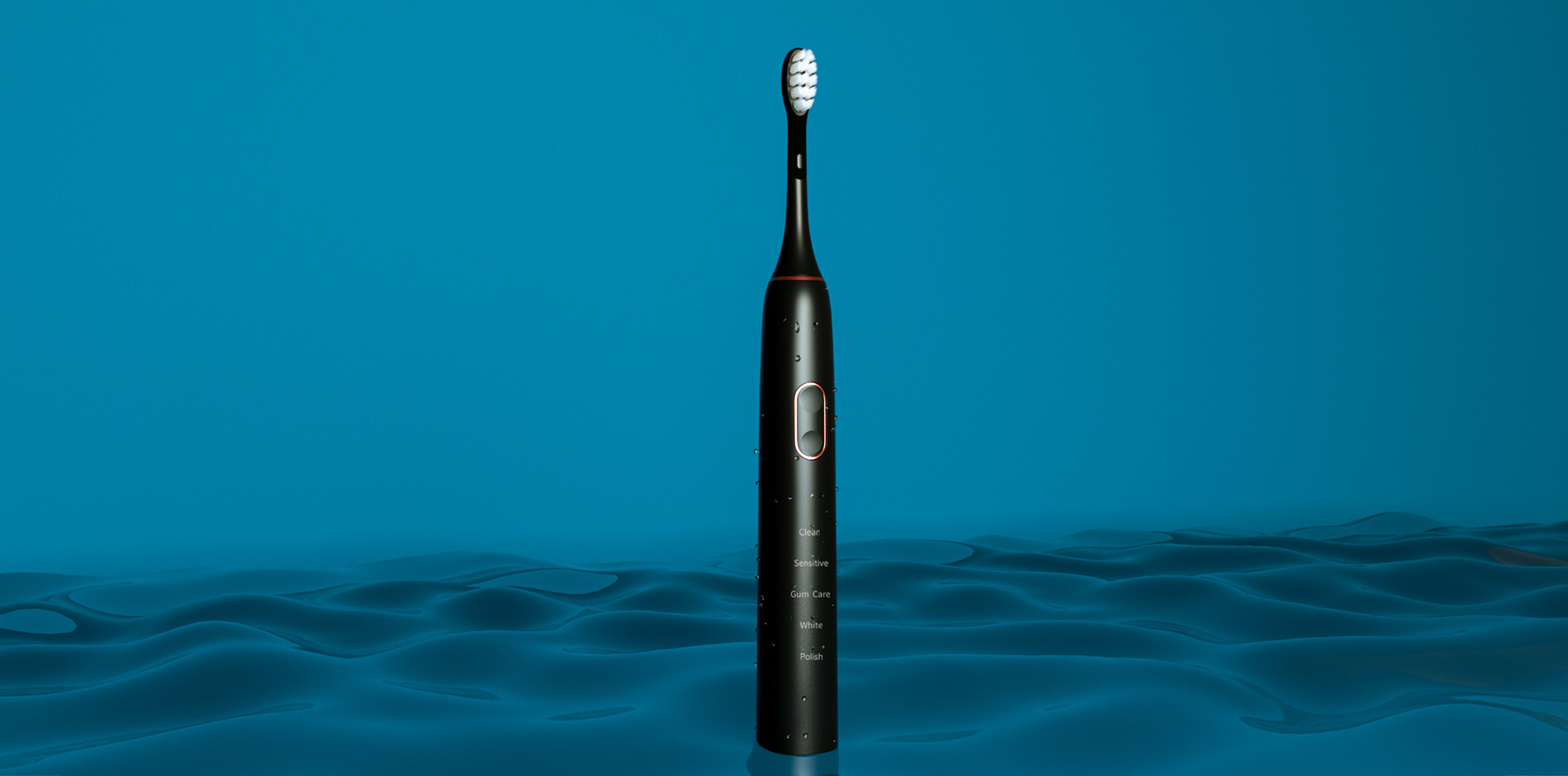
Manufacturers often position a Polish Mode as a premium, cosmetic feature. However, when designed as a system—motion profile, head geometry, compatible chemistry, sensing and validation—it can deliver visible surface brightening while preserving Enamel Protection. Below are six engineering- and commercialization-focused pillars that explain how to build a Polish Mode that’s both effective and safe for everyday use.
First, recognize the difference: safe polishing removes or reorients surface pellicle and chromogens (stains) through gentle micro-streaming and low-contact shear, whereas abrasion removes mineralized enamel. Therefore, a responsible Polish Mode increases surface shear and dwell on stained areas without raising contact force or abrasive point loads. In short, design for fluid-driven stain lift, not mechanical scraping, to preserve Enamel Protection.
Next, motion is the primary control knob. A well-engineered Polish Mode uses:
Moreover, the head translates motion into tissue interaction. Effective designs combine:
Furthermore, the toothpaste matters. Pair Polish Mode guidance with toothpaste recommendations that have moderate polishing agents and proven low abrasivity numbers (ask your chemistry partners for validated RDA-equivalent data). Conversely, disallow or warn against high-abrasivity powders or pastes that, when used with an active Polish Mode, could accelerate enamel wear. Clear packaging and IFU guidance prevent misuse and protect Enamel Protection claims.
Additionally, implement active protection:
Finally, validate thoroughly and keep claims conservative:
Conclusion:
A thoughtfully engineered Polish Mode can deliver visible surface brightening while maintaining strong Enamel Protection—but only when motion, head design, chemistry, sensing and validation are handled as an integrated product system. If you’d like, I can draft a one-page technical appendix (recommended waveform envelopes, head cross-section sketches, acceptable toothpaste abrasivity range, and a validation test matrix) to accelerate R&D and go-to-market planning. Contact us
.jpg)
.jpg)
Can Cavitation Cleaning Technology Achieve Optimal Results with a Micro-perforated Brush Head Design?
Looking for a Lithium Battery Pack Suited for Eco-friendly Material Products?
Why Use a Ceramic Bearing Motor with a Submersible Solenoid Valve in a Flosser?
.jpg)
Seal Degradation Causing Tissue Trauma?
Electric Toothbrush Recycling Seattle
USB Fast-Charging Toothbrush Wholesale – Modern Solutions for B2B Buyers
Comparison of Sonic Vibration and Rotary Electric Toothbrush Technology
Vibration Decay with Timer Malfunction – Time to Retire?
.jpg)
Is There a Promising Future for the Beauty Equipment Brand to Expand into Oral Care Products?
Electric Toothbrush Durability Testing Factory: Ensuring Long-Term Product Reliability
Why can’t the electric toothbrush be charged?
The Importance of Electric Toothbrushes in Oral Care
Waterproof Electric Toothbrush – OEM Manufacturing & Bulk Supply for Global Partners

Oral Care in Cosmetics: The Next Frontier for Beauty Brands & OEMs
Struggling with Mold Errors? Flosser Anti-Misoperation & Mold Maintenance: Your Solution?
Low Quantity Electric Toothbrush Manufacturing


.jpg)
.jpg)
.jpg)
.jpg)
.jpg)