In the competitive oral care market, electric toothbrush manufacturers must deliver consistent product quality while managing potential risks effectively. One of the most crucial ways to ensure product reliability is through a robust traceability of electric toothbrushes. Especially for key components like motors and the waterproof casing, strict control through motor calibration standards and a detailed waterproof test process is vital. Together with proper quality inspection record archiving, these measures help maintain brand reputation and significantly contribute to product recall prevention. Motor Calibration: Setting and Managing High Standards The motor is the heart of any electric toothbrush, directly impacting performance, user experience, and product life. Adhering to precise motor calibration standards ensures that each unit operates within specified parameters, including: Rotational speed (RPM) consistency Vibration strength within optimal ranges Noise level control to enhance comfort During production, every motor undergoes calibration using specialized testing equipment. Detailed calibration data are recorded in the production traceability system, linking each motor to its corresponding toothbrush serial number. This practice guarantees that any deviation can be traced back instantly. Waterproof Testing: Safeguarding Daily Use Reliability Daily exposure to water makes the waterproof test process critical for electric toothbrushes. The standard testing procedures typically include: IPX7 or IPX8 level testing (depending on product…
With consumer expectations rising, the demand for higher safety and quality in oral care devices like electric toothbrushes is stronger than ever. In this blog, Powsmart will explain how electric toothbrush manufacturers align with medical device production standards to achieve ISO 13485 electric toothbrush and deliver products trusted by both dental professionals and consumers.https://www.powsmart.com/about-powsmart/ What is ISO 13485 and Why is it Important for Electric Toothbrushes? ISO 13485 is an internationally recognized standard specifically for medical device quality management systems. While electric toothbrushes are often classified as consumer electronics, premium models, especially those used in clinical or specialized dental care, are increasingly expected to meet medical device production standards. Compliance with ISO 13485 electric toothbrush guidelines ensures: Safer product design and manufacturing Consistent quality control across batches Enhanced credibility in both consumer and professional markets Manufacturers adopting this system stand out with superior reliability and performance. Implementing a Rigorous Quality Management System (QMS) Meeting ISO 13485 starts with establishing a comprehensive quality management system.Key components include: Detailed documentation at every production stage Traceability for all components and processes Risk assessment and corrective action plans Continuous training for quality and production teams By building a robust QMS, manufacturers ensure that each electric toothbrush meets strict international…
.jpg)
As manufacturers innovate with high-speed brush head rotation, questions arise about its impact on long-term tooth health—specifically, whether aggressive motion might accelerate enamel erosion. In this article, we’ll examine the mechanics behind rotational brushing, explore how design and user behavior interplay, and offer evidence-based guidelines to minimize enamel wear while maximizing cleaning efficacy. Mechanics of Brush Head Rotation First, it’s essential to understand how rotational systems work: Angular Velocity: Many oscillating-rotating brushes spin at 5,000–10,000 RPM, converting motor torque into rapid bristle movement. Oscillation Amplitude: Small arc angles (e.g., ±15°) translate into effective sweep across tooth surfaces without excessive lateral force. Contact Dynamics: Bristles contact enamel at varying angles, creating both shear and normal forces that dislodge plaque. Thus, the combination of speed and amplitude defines the fundamental cleaning action—and its potential to stress enamel. Rotational Forces vs. Enamel Wear Moreover, enamel wear isn’t solely a function of speed: Shear Stress: High-speed rotation increases tangential force, potentially abrading enamel prisms if pressure is uncontrolled. Micro-pitting: Repeated contact at high frequency can create microscopic pits on the enamel surface, which over time contribute to erosion. Frictional Heat: Although minimal, frictional heating at bristle–enamel interfaces may soften tooth minerals, making them more…
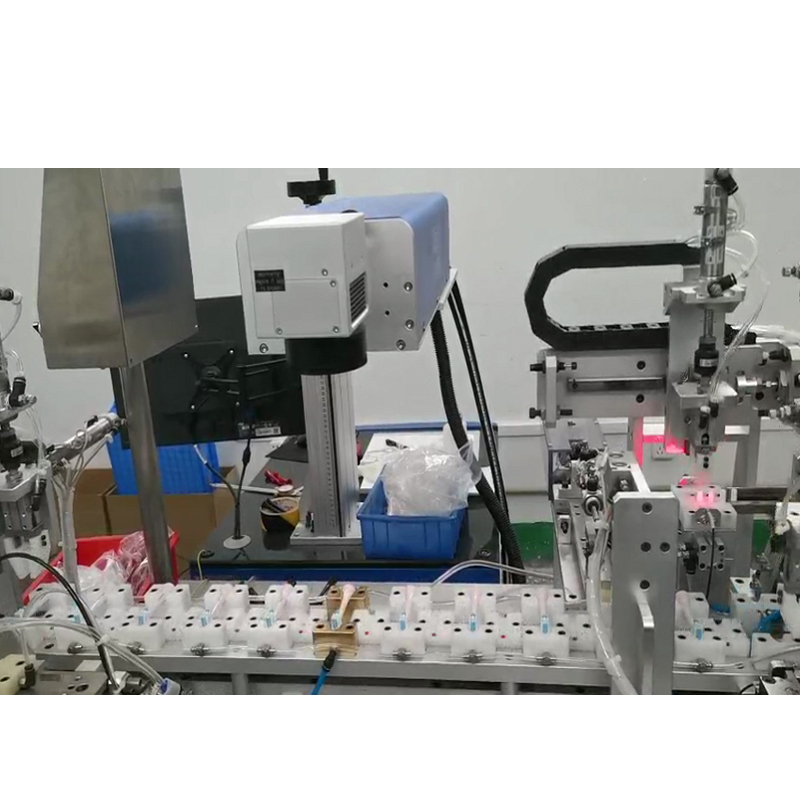
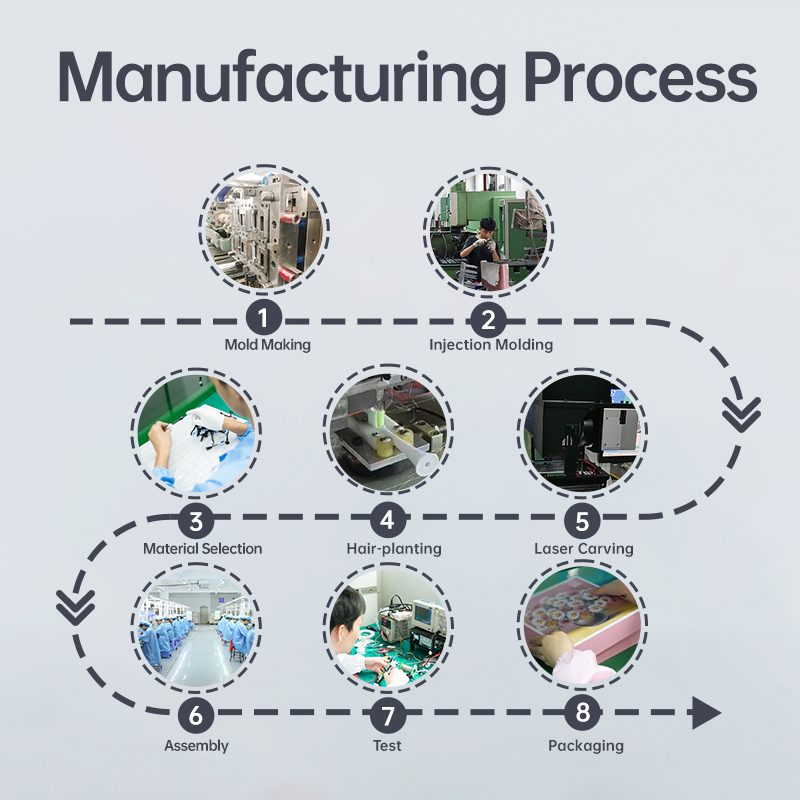
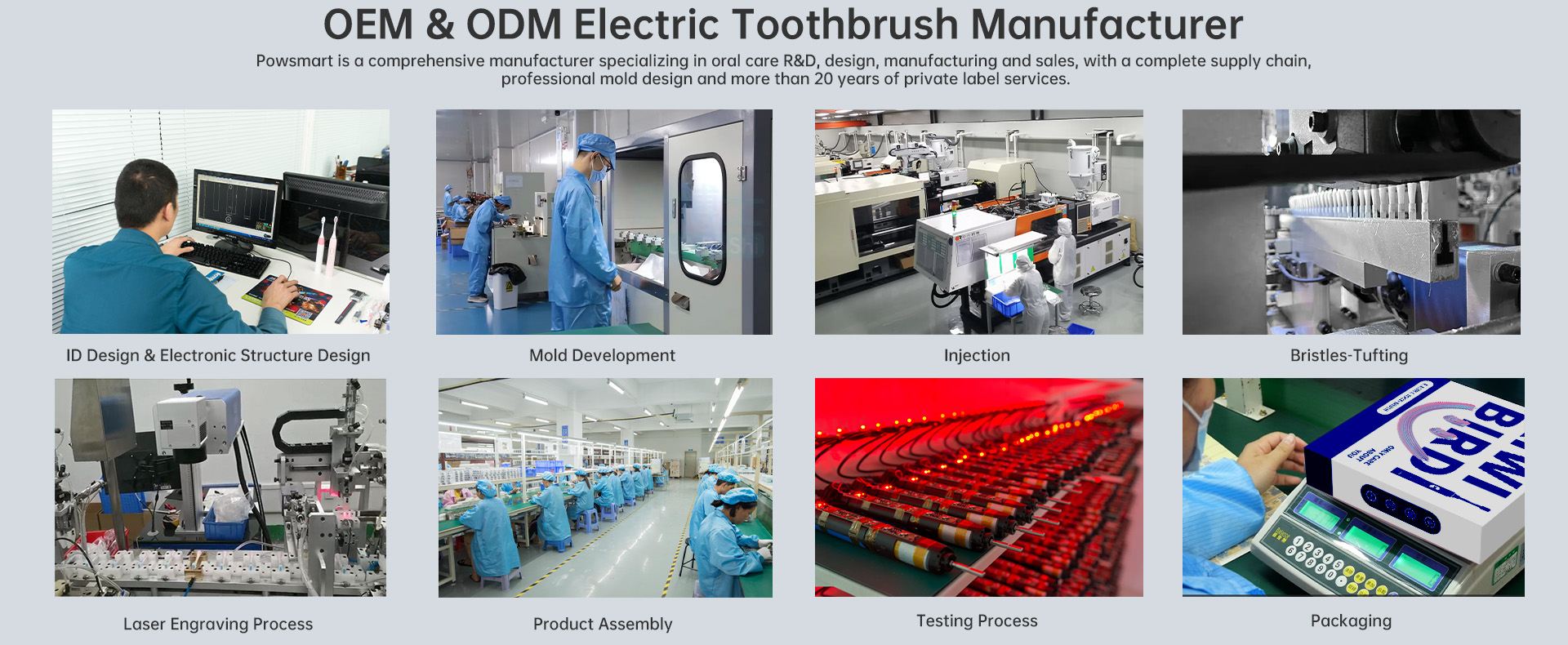
In today’s competitive oral care market, manufacturers must ensure that every electric toothbrush production process is standardized, efficient, and meets high-quality requirements. This article presents a full overview of the production process diagram, from injection molding to final assembly, highlighting injection molding process standards, assembly process specifications, and the key points for quality inspection necessary to guarantee superior product performance. Injection Molding – The Foundation of Precision The first critical step in the electric toothbrush production process is injection molding. High-quality shell and component manufacturing rely on strict injection molding process standards, including: Precise temperature and pressure control to prevent defects like shrinkage or warping Material selection (commonly medical-grade ABS, PP, or TPE) for durability and aesthetics Mold maintenance and polishing to ensure smooth finishes Adhering to consistent injection molding process standards is vital for ensuring a strong and attractive product base. Component Preparation – Quality Starts from Parts After molding, key components including motor units, battery packs, PCBs, and sealing gaskets. Every component must: Pass functional pre-tests (e.g., battery charging cycles, motor rotation tests) Be cleaned and anti-static protected before entering the assembly area Match design tolerances exactly to fit into the production line seamlessly Meticulous preparation at this stage helps maintain consistency throughout…
When toothbrush battery life dwindles, brush performance can become inconsistent—and consequently users may press harder or scrub longer, inadvertently increasing gum recession risk. In this article, we explore how declining battery power affects cleaning efficacy, user behavior, and ultimately soft-tissue health, and we offer actionable recommendations for B2B partners designing the next generation of oral-care devices. Consistent Power and Bristle Amplitude First and foremost, a full battery ensures the motor delivers its rated amplitude and frequency throughout each brushing session. Stable bristle motion is critical to: Effective plaque removal: Sufficient oscillation breaks up biofilm without excessive force. Uniform cleaning: Consistent torque prevents stalling in high-resistance areas (e.g., back molars). User confidence: Knowing the brush will perform at full power encourages proper technique. By contrast, voltage sag towards end-of-charge can reduce bristle amplitude, undermining these benefits. User Compensation and Technique Drift Moreover, when users sense a drop in vibration—due to low battery—they often compensate by increasing pressure or brushing time. This behavior leads to: Excessive force application: To “feel” the brush working, users press harder against their gums. Extended sessions: Trying to make up for weaker scrubbing, users brush longer, fatiguing soft tissue. Irregular motion patterns: Inconsistent feedback can disrupt the…
In the era of intelligent oral care, users expect more than just mechanical brushing—the core measures of a truly smart plaque-fighting brush are Cavity Prevention features and seamless Smart App Integration. In the following six sections, we’ll dive into how an advanced electric toothbrush combines hardware, software, and data to deliver precise, efficient plaque removal. Intelligent Drive: Precision Plaque Removal via Multi-Sensor Feedback Traditional brushing patterns can miss “blind spots,” but an intelligent drive system uses multiple sensors to guide cleaning: Pressure Sensors monitor bristle force against teeth, preventing enamel damage from over-brushing. Angle Sensors detect brush-head tilt to ensure consistent coverage of interdental and posterior surfaces. Acoustic Sensors analyze vibration frequencies and dynamically adjust pulse intensity for more effective plaque disruption. This multi-sensor feedback ensures the brush targets and removes plaque “pinpointedly,” boosting overall cleaning performance. Smart Connectivity: Engaging Users with Smart App Integration Next, Smart App Integration bridges the brush and mobile device for an enhanced experience: Real-Time Brushing Data: Duration, pressure, and coverage metrics are synced to the app in visual reports. Personalized Alerts: If you brush too long in one spot or skip an area, the app issues haptic or audio reminders. Remote Coaching: Dental professionals…
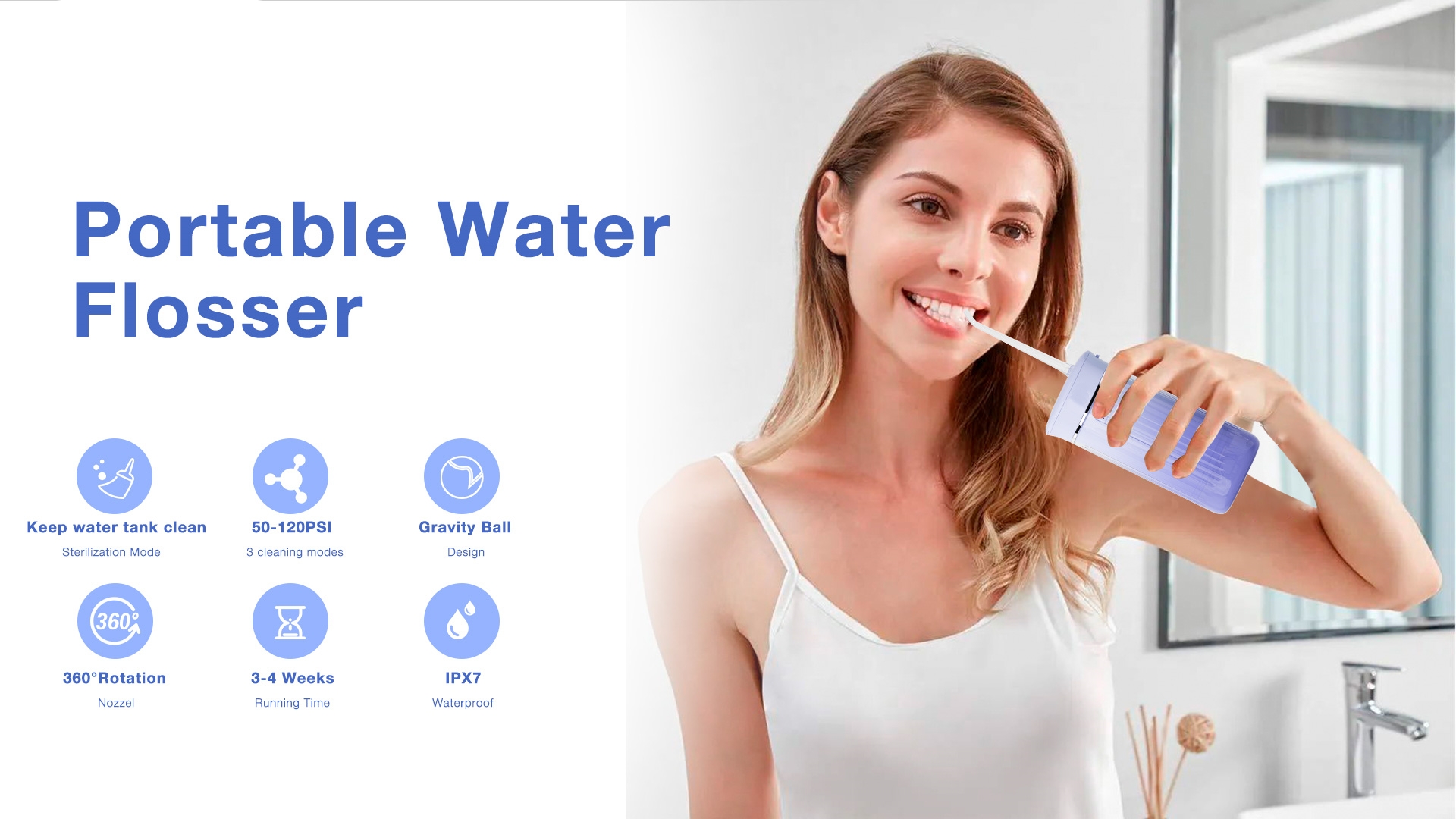
Oral irrigators are increasingly favored for their ability to clean hard-to-reach areas between teeth and along the gum line. However, one common issue reported by users is that the oral irrigator makes abnormal noise after being used for a while.This article explores the reasons why oral irrigators make abnormal noise, and how professional oral irrigator manufacturing can address these issues to ensure long-term device stability and user satisfaction. Water Pump Wear and Tear: The Most Common Cause At the heart of every oral irrigator is a high-frequency pump that generates the water pressure needed for cleaning. Over time, this pump can degrade due to: Continuous usage without proper cleaning Water residue causing internal rust or mineral buildup Mechanical fatigue from cheap or sub-standard components This deterioration leads to louder or irregular sounds during operation — the most frequent reason an oral irrigator makes abnormal noise. Air Blockage or Water Pathway Obstruction Another common cause of abnormal sound is an obstruction in the water flow system. Blockages caused by: Hard water scaling inside tubes Debris or foreign particles in the reservoir Air bubbles trapped in the water line These problems can create sputtering, vibrating, or buzzing sounds. Regular cleaning and proper usage are key,…
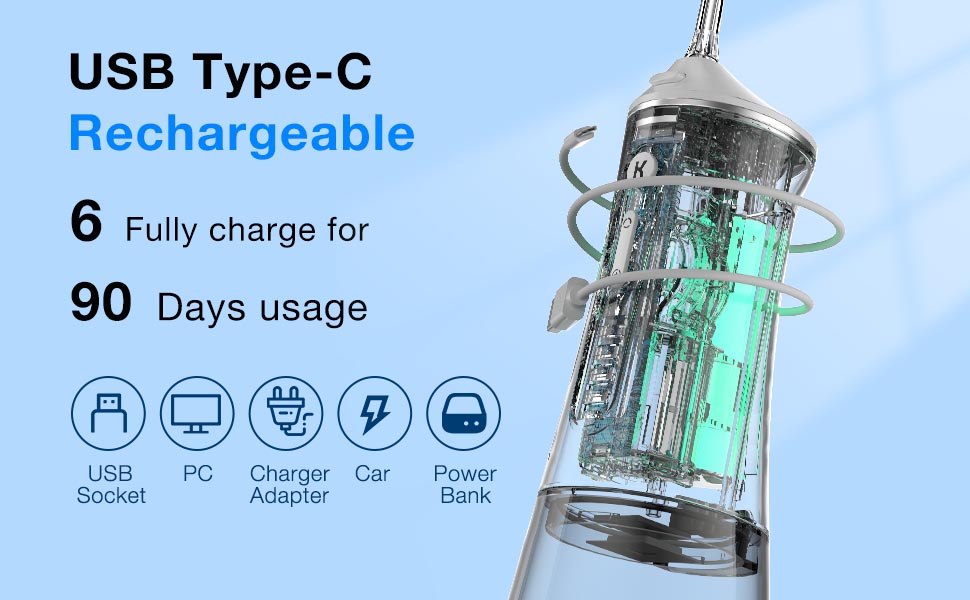
Water flossers have revolutionized oral hygiene by offering a more comfortable and effective alternative to traditional string floss. However, many users—especially first-time buyers—are often overwhelmed by the multiple flossing options of the water flosser. For dental product distributors, retailers, and OEM clients, understanding these water flosser flossing options is essential to educate consumers and recommend the best solution for their needs. This blog provides a clear guide on how to choose a suitable flossing mode, based on user profiles and oral care needs.https://www.powsmart.com/about-powsmart/ What Are the Common Flossing Modes? Most advanced water flossers today are equipped with 3–5 different flossing modes to accommodate various dental conditions and preferences. The most common include: Normal Mode: A powerful, steady stream for thorough cleaning Soft Mode: Gentler water pressure for sensitive gums Pulse Mode: Rhythmic pulses that massage gums while cleaning Point Mode / Manual Control: Focused cleaning of specific areas DIY Mode: Customizable pressure settings for experienced users These water flosser flossing options are designed to improve user comfort and cleaning efficiency—but knowing when and how to use them is the key. Matching Flossing Modes with User Needs Understanding how to choose a suitable flossing mode begins with identifying the user's oral condition: First-time users…
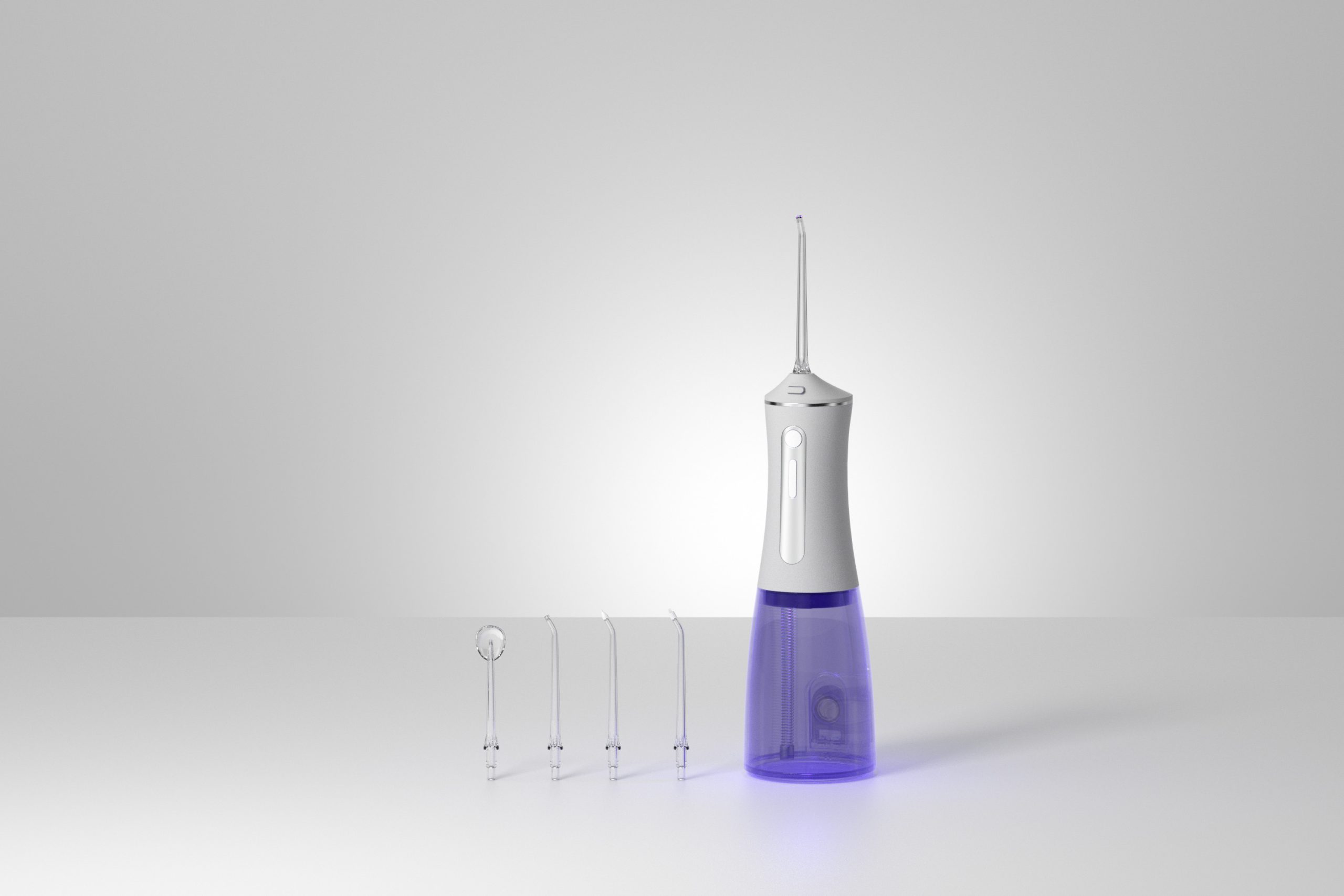
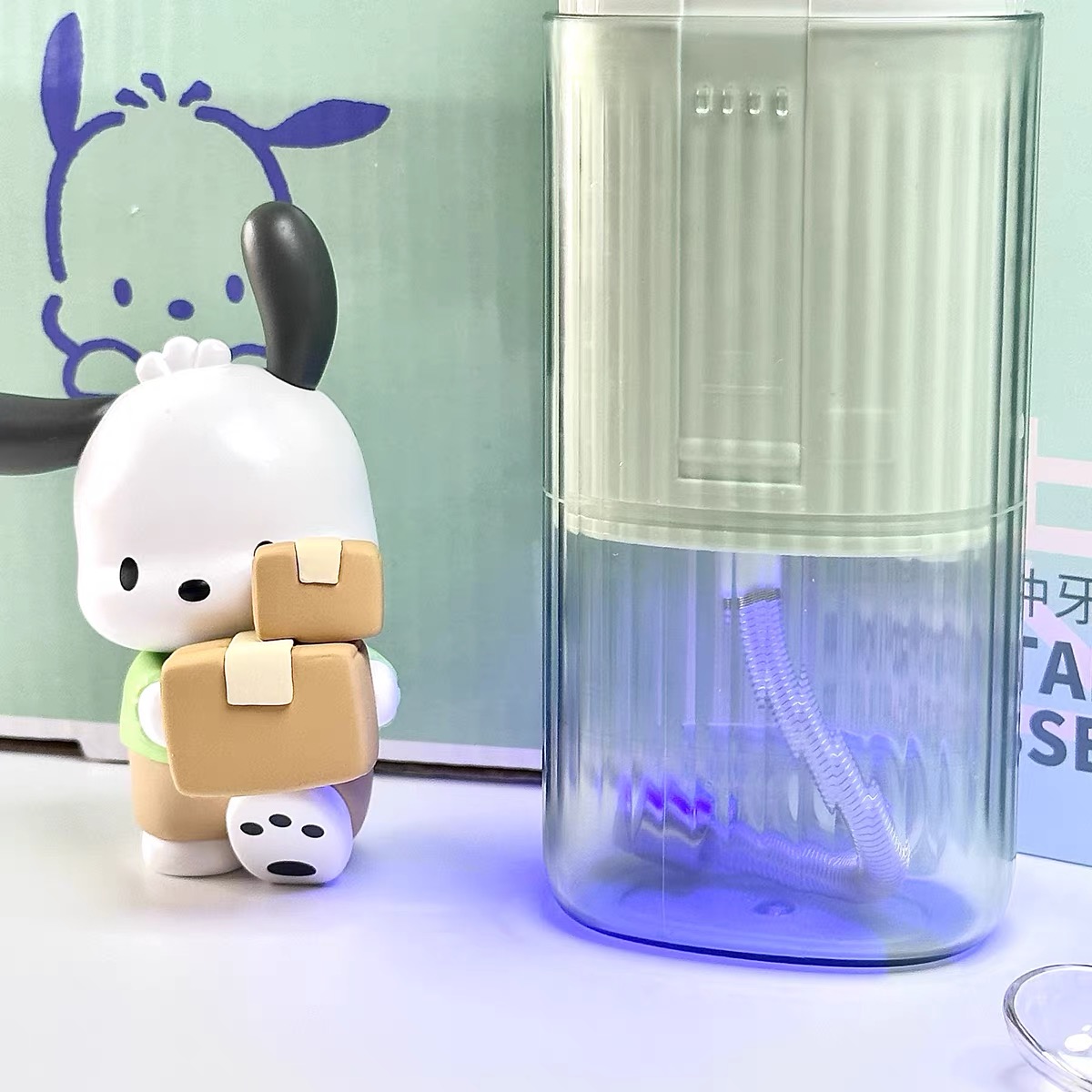
As oral hygiene products become more advanced, consumers and dental professionals alike are increasingly relying on water flossers (oral irrigators) for deep interdental cleaning. However, one recurring issue is that the water flosser is prone to mold or odor, especially in the water tank after extended use.This blog explores practical and manufacturing-level solutions for preventing mold, with a focus on material choice, structural design improvements, and the integration of technologies such as oral irrigator UVC sterilization. Understanding the Cause: Why Water Flosser Tanks Develop Mold or Odors The water tank of a flosser is a moist, enclosed space—ideal conditions for mold growth and bacterial accumulation if not regularly cleaned or dried. Common causes include: Residual water left in the tank Poor ventilation in the tank design Material surfaces that retain moisture User negligence in maintenance If left unaddressed, these issues can lead to hygiene concerns and product returns, ultimately damaging brand reputation in the B2B market. Material Innovation: Anti-Microbial and Easy-Clean Surfaces One of the first solutions for preventing mold lies in material choice. Manufacturers can reduce the risk of mold and odor by using: Anti-microbial ABS or PP materials with mold-resistant additives Food-grade, BPA-free polymers that resist bacterial attachment Smooth, non-porous finishes that are easy to rinse…
If you neglect proper Hygiene Monitoring and let your device run long enough to risk Motor Overheating, your brush can quickly become a breeding ground for bacteria and mold. Below, we dive into six key areas that explain why brushes harbor germs—and how you can design and manage your products to eliminate that risk once and for all. How Brush-Head Geometry Traps Microbes At the tip of every brush head, tiny gaps and overlapping filaments create perfect hiding spots for pathogens: Stagnant water droplets cling to bristle tips and base crevices. Saliva and toothpaste residues provide nutrients that fuel biofilm formation. Dense tuft patterns make thorough rinsing difficult, leaving pockets of moisture. Together, these features can turn a seemingly clean brush into a microbial reservoir overnight. The Danger of Skipping Hygiene Monitoring Without built-in hygiene alerts, both users and service teams remain unaware of a brush’s true cleanliness: No end-of-life indicators mean brushes stay in use long past their sanitary threshold. Lack of contamination warnings leaves users prone to reusing heavily colonized heads. Data vacuum prevents tracking of usage frequency and cleaning habits essential for maintenance planning. In short, without smart hygiene monitoring, dirty brushes go unnoticed until problems arise.Company…
In modern oral care, simply removing interdental debris isn’t enough—effective Tongue Cleaning combined with optimized Pulse Frequency can dramatically reduce volatile sulfur compounds and leave users with truly fresh breath. In this article, we’ll explore six critical factors that B2B partners should consider when specifying a water flosser designed to tackle halitosis and elevate daily oral hygiene. Addressing the Root Cause of Bad Breath Bad breath often originates on the tongue and between teeth, where bacteria flourish. Microbial Colonies on the Tongue: A rough dorsal surface traps food particles, fostering odor-causing microbes. Interdental Plaque: Leftover debris between teeth releases foul odors as bacteria break it down. Salivary Flow and pH: Stagnant or acidic saliva can exacerbate bacterial growth and malodor. By targeting both interdental spaces and the tongue’s surface, a well-engineered flosser lays the foundation for lasting breath freshness. The Power of Dedicated Tongue Cleaning Moreover, integrating a specialized tongue-cleaning tip transforms a standard flosser into a breath-refreshing tool: Angled Nozzle Design: Slim, flat-profile tips reach the posterior tongue without gagging. Gentle Bristle Inserts: Soft polymer bristles dislodge biofilm while conforming to tongue contours. Combined Water-Brush Action: Pulsed water jets flush away loosened debris and microbes. This multi-action approach ensures…
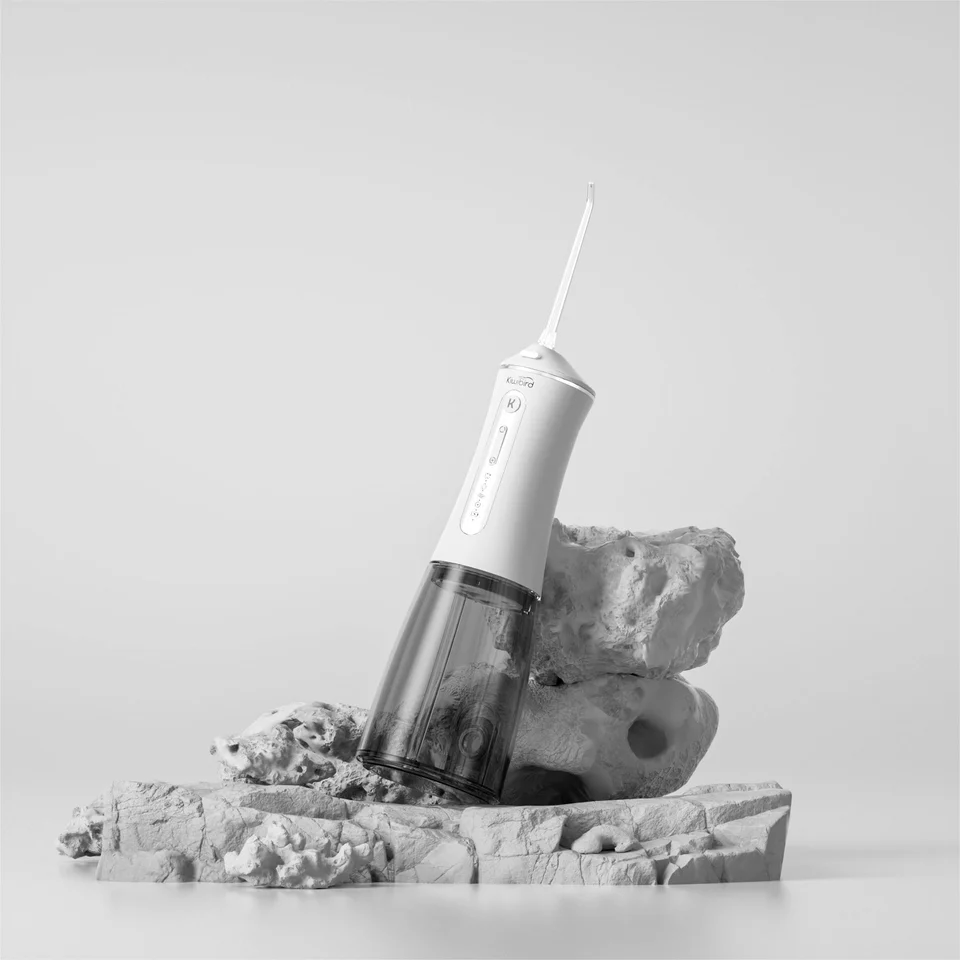
The Value of a Reliable Travel Companion Traveling can be stressful, especially when it comes to maintaining personal hygiene routines. For frequent flyers, digital nomads, or business travelers, a water flosser is a vital tool for on-the-go oral care. But what if your water flosser suddenly stopped working mid-trip? In this blog, we’ll explore common problems that happen during traveling, the causes behind water flosser malfunctions, and how a reliable oral irrigator manufacturer can help you or your brand prevent customer dissatisfaction and improve product design. Common Issues When the Water Flosser Suddenly Stops Working When a water flosser suddenly stops producing water, especially during travel, users often experience the following issues: No water output despite full tank and charged battery Weak water pressure or irregular jet bursts Device buzzing but no water movement Leaking or non-responsive buttons These malfunctions are not just inconvenient—they disrupt the user’s oral care routine and damage brand trust. Understanding what causes these problems is key to prevention. Key Causes: Why It Happens During Travel Several factors contribute to these happened problems during traveling: Air pressure changes in airplanes may affect internal valves or tank seals Blocked nozzles due to mineral build-up from hard water…
Charging Issues in Oral Irrigators—A Common Concern In the world of smart oral care, the oral irrigator has become an essential daily device. However, as usage increases, so do reports of technical issues—especially when a customer’s oral irrigator fails to charge. For brands and distributors, this presents not only a customer satisfaction challenge but also a post-sales service opportunity. As a professional oral irrigator manufacturer, we understand the common causes of these issues and how to address them efficiently. In this blog, we outline practical solutions for charge failure, helping B2B partners support their users and reduce returns. Step One: Confirm the Power Source and Adapter Compatibility When an oral irrigator fails to charge, the first and most basic check is external: Ensure the power outlet is functioning properly Use the original charging cable and adapter Check whether the device supports the correct voltage and current (e.g., 5V/1A) Often, incompatible or low-quality adapters are the root cause of failed charging. Offering a guide to end users about proper charging practices is a simple yet effective solution. Step Two: Inspect the Charging Port or Base for Damage One of the most overlooked solutions for charge failure is a physical inspection of…
As water flossers become increasingly popular for daily oral hygiene, one question frequently arises from users and distributors alike:“Why can’t the nozzle of the water flosser be disassembled and replaced like a toothbrush head?” understanding the technical and design reasons behind this decision is essential. In this blog, we dive into the factors that influence nozzle design and explore how water flosser manufacturers prioritize safety, hygiene, and product durability in their engineering choices. Structural Integration for Safety and Sealing Unlike toothbrush heads, the nozzle of the water flosser is not just an attachment—it is a pressure-sensitive component. Many nozzles are structurally integrated with the body or water channel to ensure: Leak-proof performance under high-pressure water pulses Consistent water flow rate and pressure balance Protection against backflow contamination Allowing users to disassembled and replace the water flosser nozzle without proper sealing mechanisms could result in water leakage, reduced device efficiency, or even user injury. Hygiene and Sterilization Considerations From a medical and hygiene standpoint, a fixed or semi-fixed nozzle design allows manufacturers to: Use biocompatible, sterilization-friendly materials Ensure internal cleanliness by reducing user tampering Prevent bacteria buildup inside the joint between the nozzle and the body Leading water flosser manufacturers conduct…
While a low sticker price may look attractive from a price-performance standpoint, cheap brush heads often suffer from premature bristle splaying, uneven wear, and diminished cleaning efficacy. In this blog, we’ll examine the hidden costs and trade-offs of budget brush heads, helping B2B buyers and product managers make informed decisions. Material Quality vs. Initial Cost Firstly, the raw materials used in brush heads directly impact both manufacturing cost and end-user performance: Monofilament Type: Premium nylon or PBT bristles hold their shape far longer than generic low-grade fibers. Stem & Tuft Base: Injection-molded polypropylene with reinforced ribs costs more upfront but resists cracking under stress. Adhesives & Bonding: High-strength epoxy bonding prevents tuft loss; cheaper glues can degrade in warm, humid environments. Thus, low initial cost often correlates with material compromises that manifest quickly in the field. The Mechanics of Bristle Splaying Moreover, bristle splaying is the most visible sign of wear—and a direct measure of cleaning performance: Early Flare: Cheap bristles tend to flare outward after just a few weeks, reducing contact force and scrubbing action. Micro-abrasion Impact: Over-splayed bristles can trap debris and scratch tooth enamel or soft tissue. Longevity Metrics: Industry standards measure splay width over time; premium…
In today’s market, patients—especially those requiring post-surgery usage—demand gentle yet effective oral care. Coupled with flexible mode customization, devices must adapt from routine cleaning to delicate postoperative needs. In the following six sections, we explore how to build—and validate—a truly gentle oral-care solution for B2B partners. Special Requirements for Post-Surgery Usage After dental surgery or gum flap procedures, soft tissues are still healing and often tender or swollen. A gentle water flosser or toothbrush should offer: Low-Impact Cleaning: Ultra-low water pressure or fine mist mode to avoid disturbing sutures or inflamed tissue. Antimicrobial Support: Ability to blend antiseptic rinses with a soft water stream to cleanse without irritation. Non-Contact Options: “Dry-brush” or aerosol modes that disinfect without direct bristle or jet contact during the most sensitive post-surgical phase. Meeting these criteria helps reduce complications and improve patient comfort. The Value of Mode Customization Different users and conditions require adaptable settings. Mode customization should include: Multiple Pressure Levels: From very gentle (e.g., 10–20 psi) up to standard cleaning (60–80 psi) or higher for stubborn debris. Adjustable Pulse Frequencies: Tuning between 500 and 1,500 pulses per minute to shift seamlessly from massaging to deep cleaning. User Memory & One-Touch Recall: Save individual…
In today’s on-the-go lifestyle, professionals and travelers alike demand a water flosser with true Cordless Efficiency and ample Reservoir Capacity so they can maintain optimal oral hygiene for a full week without constant recharging or refilling. But achieving that balance requires careful attention to power management, tank design, and user convenience—elements that B2B partners must prioritize when specifying a next-generation device. Meeting the Week-Long Usage Challenge First and foremost, end users expect a single charge and refill to last through seven days of twice-daily use. Consequently, B2B customers look for: Reliable Performance: Consistent pressure and pulse settings over dozens of uses. Minimal Downtime: Seamless operation without mid-week interruptions. User Confidence: Clear indicators of battery life and water level to avoid surprises. Understanding these expectations is the first step toward delivering a flosser that truly endures. Maximizing Cordless Efficiency Moreover, Cordless Efficiency isn’t just about a big battery—it’s about intelligent power management: Low-Power Pump Design: High-efficiency motors and optimized impeller geometries reduce current draw per burst. Adaptive Drive Modes: Automatic down-scaling of pulse frequency when reservoir nears empty extends runtime without user intervention. Standby Optimization: Ultra-low quiescent current in idle mode preserves battery between brushing sessions. Battery Chemistry: Selecting high-energy-density Li-ion…
Water flossers are an essential tool in daily oral care, offering effective removal of food particles and plaque between teeth. However, like any electronic device, water flossers may face certain issues over time. One of the most common complaints from users is water leakage problems of water flossers. This issue can affect product performance and customer satisfaction.In this blog, we will explore the causes of water leakage in water flossers and provide effective solutions to water leakage from the perspective of a water flosser manufacturer, ensuring both reliability and longevity of the product. Common Causes of Water Leakage in Water Flossers Water leakage in water flossers can arise from several factors, some of which are related to the design and others to improper use. Below are the primary causes: A. Damaged Seals or O-Rings The seals and O-rings inside the water flosser play a crucial role in preventing water from escaping. Over time, these components may wear down, crack, or become misaligned, leading to water leakage. B. Cracked or Defective Water Tank A damaged water tank, often resulting from impact or manufacturing defects, can lead to water leakage. If the tank is not securely sealed to the body of the flosser, water…
Water flossers have revolutionized oral care by providing a highly effective way to clean between teeth and along the gum line. However, some users experience unstable and intermittent water flow, which can hinder the effectiveness of the device and cause frustration. As a water flosser manufacturer, it’s important to understand the common causes of these issues and offer practical solutions for normal usage problems. In this blog, we’ll explore solutions for intermittent water flow problems and offer expert usage tips to ensure a seamless experience for your customers. Common Causes of Unstable and Intermittent Water Flow Before diving into solutions, it’s important to understand why intermittent water flow may occur. Several factors can cause this issue, including: Clogged nozzle or tip: Over time, mineral deposits, food debris, or mold can clog the water jet, leading to a disrupted flow. Air bubbles in the water tank: When the water tank isn’t completely filled or when the tank has air trapped inside, it can cause water flow to be inconsistent. Weak water pressure: A decrease in the pressure from the water pump can cause a lower and intermittent water flow. Improper assembly: If the water flosser is not assembled properly, the flow might not be…
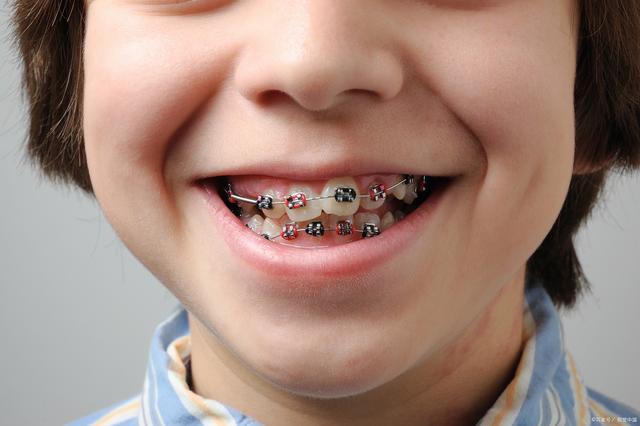
Water flossers are becoming increasingly popular for their ability to provide a deep and effective clean between teeth, offering a gentler alternative to traditional string flossing. However, for first-time users, it's not uncommon to experience some discomfort or even bleeding gums during the initial use.This blog aims to address whether this is a normal occurrence and offers insights when first using a water flosser can use a water flosser properly. We’ll also share usage tips from water flosser manufacturers to ensure the best possible experience. Why Do My Gums Bleed or Feel Uncomfortable When I First Use a Water Flosser? For individuals who are new to using a water flosser, gum discomfort or mild bleeding can occur, especially if the gums are not used to regular cleaning or if there is an underlying issue like gingivitis. Here are some reasons why this might happen: Sensitive Gums: If your gums are inflamed or not accustomed to daily flossing, the water pressure can cause temporary irritation, leading to bleeding gums. Buildup of Plaque: Over time, plaque accumulates along the gumline and between teeth. A water flosser can dislodge this buildup, and while this is beneficial for oral health, it may cause some initial discomfort or mild…


.jpg)
.jpg)
.jpg)
.jpg)
.jpg)




.jpg)
.jpg)
.jpg)