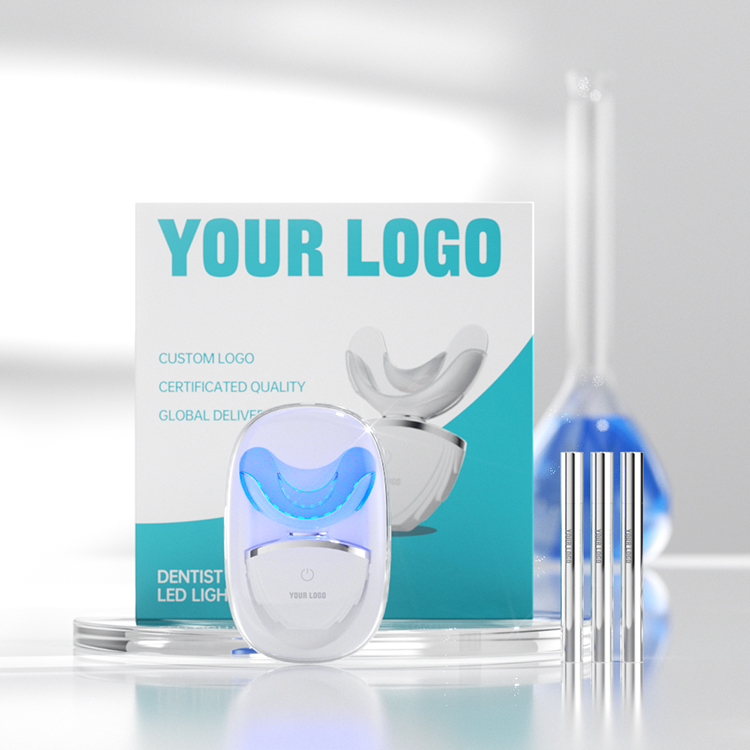
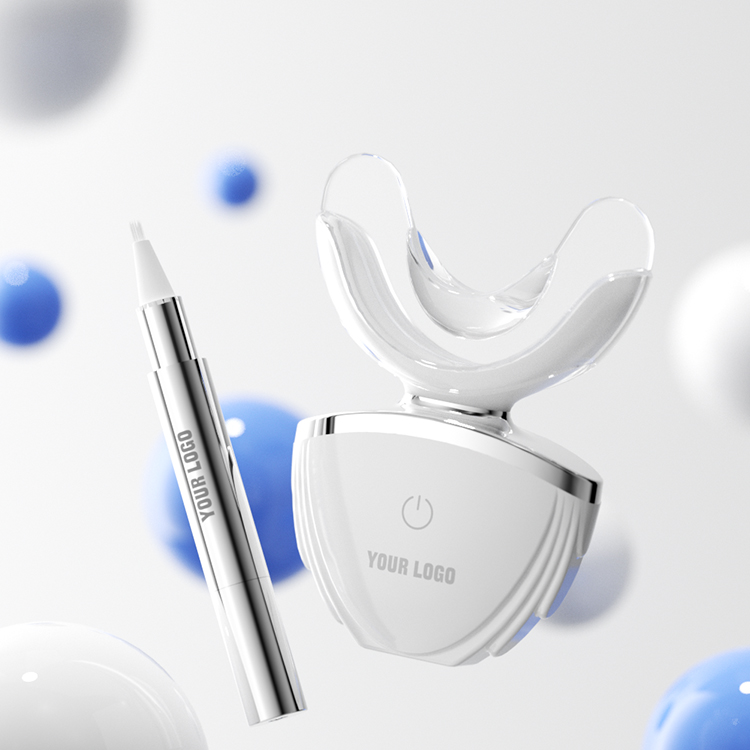
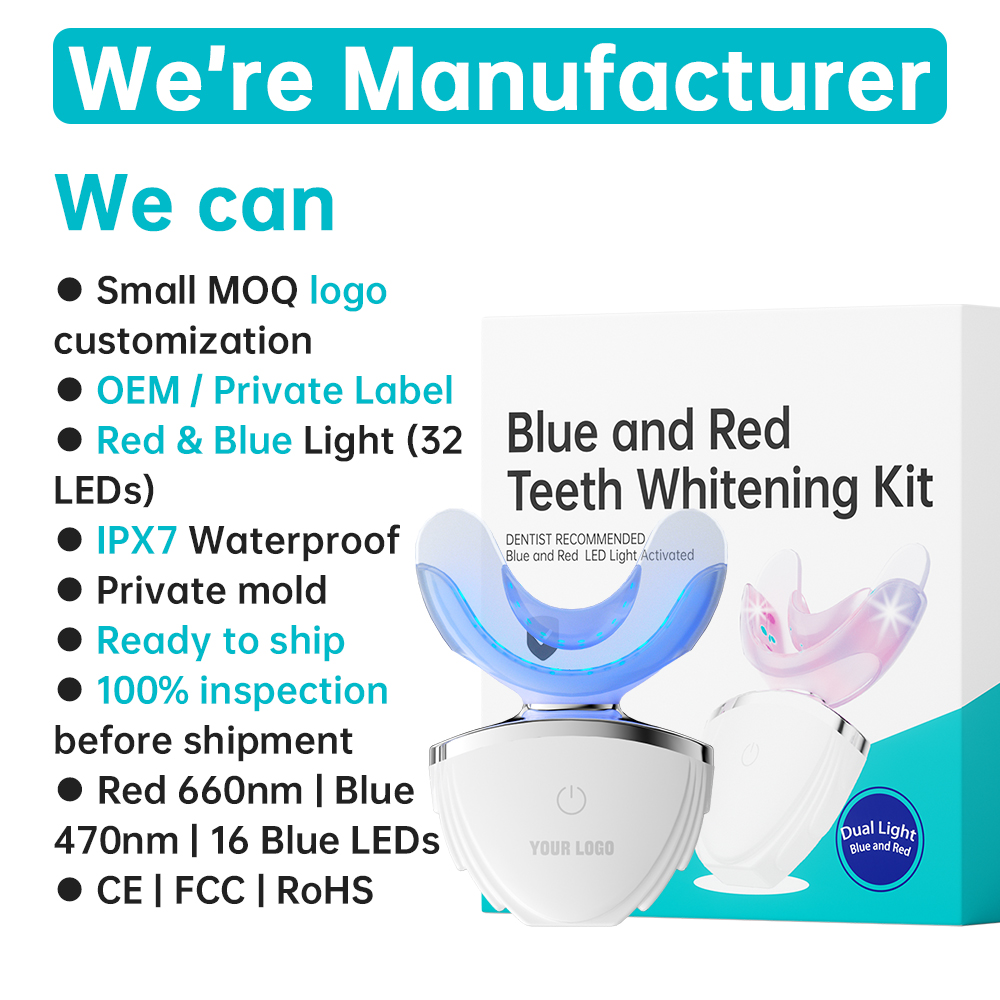
In professional and home-use teeth whitening systems, the interaction between the LED Whitening Lamp and the Whitening Gel Formulation plays a critical role in determining both efficacy and safety. For OEM/ODM manufacturers, understanding how light energy activates gel chemistry is essential for developing reliable, compliant, and market-ready whitening solutions.
Effective whitening begins with selecting an LED wavelength that aligns with the photo-reactive components of the Whitening Gel Formulation. A properly engineered LED Whitening Lamp ensures optimal light absorption, accelerating stain breakdown without unnecessary heat generation.
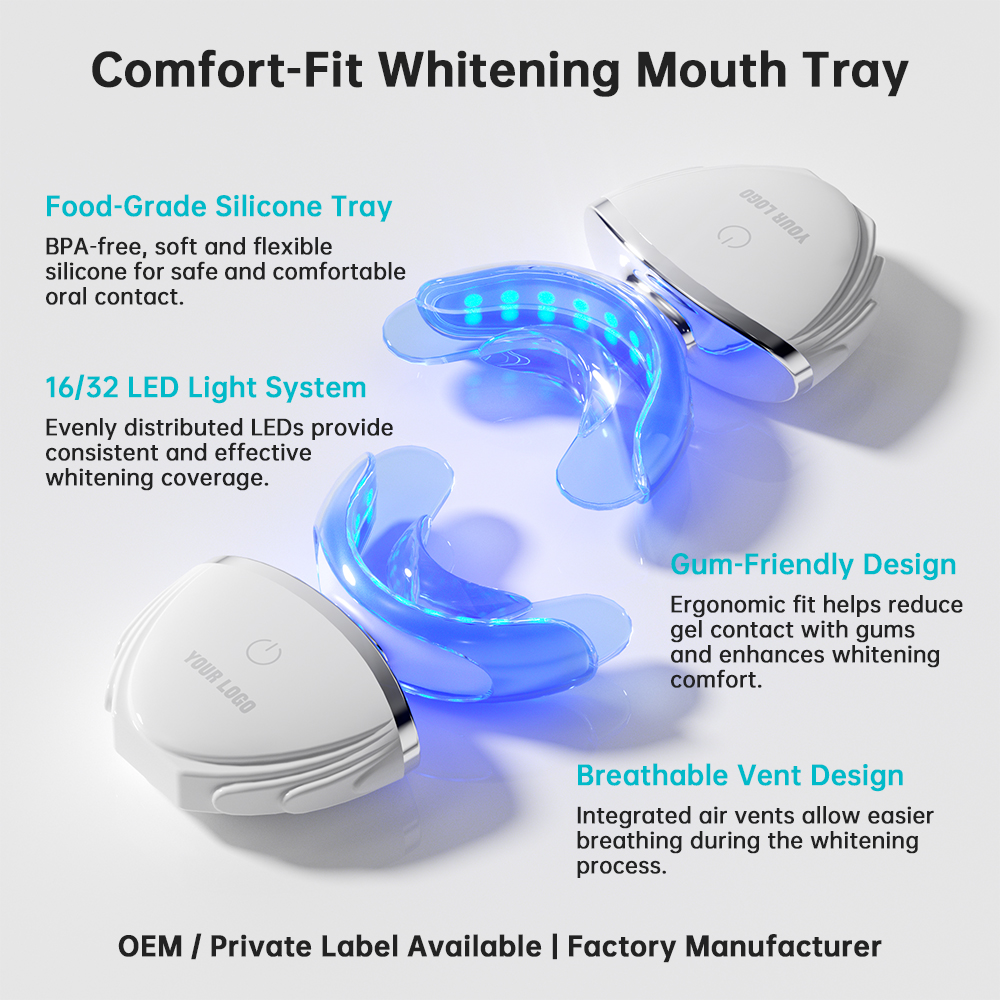
Uniform light output across the treatment area is essential for predictable whitening results. Precision-controlled LEDs help activate the Whitening Gel Formulation evenly, reducing the risk of inconsistent shade outcomes or localized overexposure.
Advanced LED Whitening Lamp designs incorporate thermal control to prevent excessive temperature rise. This protects the stability of the Whitening Gel Formulation while maintaining enamel safety and improving overall user comfort during treatment.
When combined with built-in timers or smart control modules, LED systems can deliver the exact exposure duration required for the Whitening Gel Formulation to perform effectively. This improves whitening efficiency while minimizing unnecessary gel degradation.
Different markets and regulatory regions require varying gel strengths. A well-designed LED Whitening Lamp supports a range of Whitening Gel Formulation concentrations, enabling OEMs to adapt products for professional, cosmetic, or home-use segments.
From a B2B perspective, the integration of LED optics and gel chemistry must align with global safety and cosmetic regulations. Manufacturers that engineer LED Whitening Lamp systems specifically around their Whitening Gel Formulation can streamline certification and support flexible OEM/ODM customization.
A well-matched LED Whitening Lamp does more than illuminate—it precisely activates the Whitening Gel Formulation to deliver safe, effective, and repeatable whitening results. For OEM and ODM partners, this synergy is a key foundation for developing high-performance whitening devices that meet both market expectations and regulatory standards. Contact us
.jpg)
Allergic Reactions and Taste Alteration – Whitening’s Hidden Cost?

Developing a Portable Water Flosser? Need a Quiet Flosser Motor?
How Can Oral Care Brands Enhance User Confidence Through Product Upgrades and Expansion?

Best Electric Toothbrush for Baby Teeth Protection – OEM Services
Bristle Hardening Inducing Gum Recession – Brushing or Destroying?
Does Noise Increase Signal Vibration Inconsistency?
Need a Custom Whitening Tray for a Gentle Sensitive Teeth Formula?
Four Core Factors Brand Owners Must Pay Attention to When Choosing Competitive Water Flossers
How does Pulse Water Technology enhance the effectiveness of an Orthodontic Jet Tip?
San Antonio Electric Toothbrush Wholesale
How does a Multi-pressure Setting Chip optimize the use of Filter Cartridge Supply in flossers?

Why Is Flow Rate Calibration Critical for a Precise Pressure Control System?
Can a Rechargeable Battery Solution power an LED Display Module efficiently in flossers?

How Does Pulse Water Technology Benefit from a Smart Multi-pressure Setting Chip?How Does Pulse Water Technology Benefit from a Smart Multi-pressure Setting Chip?How Does Pulse Water Technology Benefit from a Smart Multi-pressure Setting Chip?How Does Pulse Water Technology Benefit from a Smart Multi-pressure Setting Chip?How Does Pulse Water Technology Benefit from a Smart Multi-pressure Setting Chip?How Does Pulse Water Technology Benefit from a Smart Multi-pressure Setting Chip?How Does Pulse Water Technology Benefit from a Smart Multi-pressure Setting Chip?How Does Pulse Water Technology Benefit from a Smart Multi-pressure Setting Chip?
How to Fix Charging Failure Plus Handle Cracking?
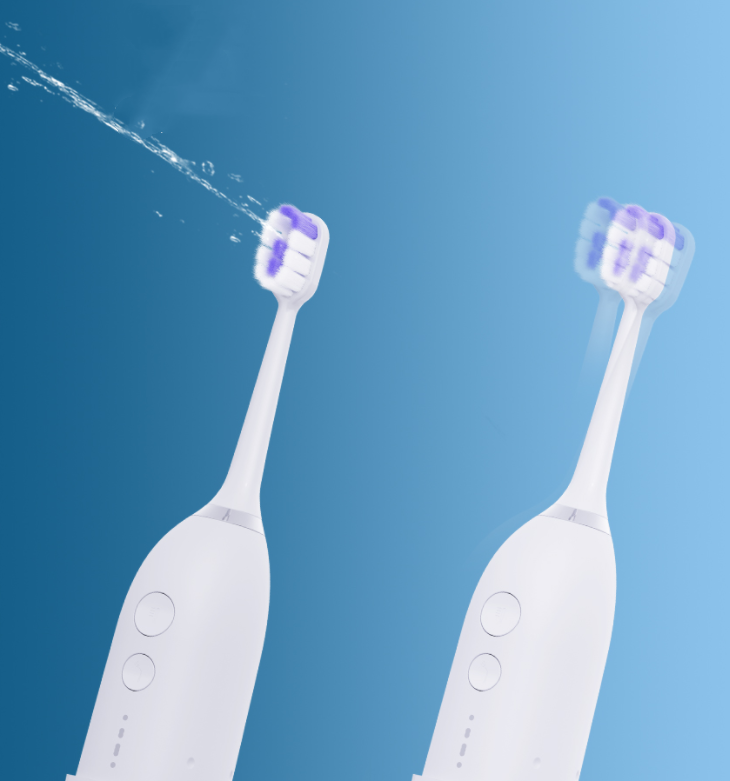
Water Flosser Toothbrush Combo: 2-in-1 Oral Care Solution


.jpg)
.jpg)
.jpg)
.jpg)
.jpg)