In professional oral care devices, grip fatigue combined with noise pollution isn’t just an inconvenience; it can be a clear signal that your design approach requires reevaluation. Many manufacturers focus on performance metrics—motor power, battery runtime, spray pressure—while overlooking how ergonomics and acoustics directly shape the user experience. Yet, when customers report hand strain and excessive operating noise, the consequences can include reduced compliance, negative reviews, and long-term brand erosion.
This article explores why these two issues often appear together, what underlying design choices contribute, and how you can address them effectively.
Grip fatigue refers to muscle strain in the hand and wrist during repeated use. In dental water flossers and electric toothbrushes, it often stems from:
Importantly, fatigue is not merely a comfort concern—it can also impact brushing consistency and adherence to oral hygiene routines.
Noise pollution in this context describes high-decibel motor sounds, vibration resonance, and intermittent whining. Common causes include:
While it may seem unrelated, excessive noise often correlates with mechanical imbalances that also require users to grip more firmly, compounding fatigue. Company web: https://www.powsmart.com/product/electric-toothbrush/
Although grip fatigue and noise pollution can each arise independently, they frequently share a root cause: flawed ergonomics and motor isolation. When the device generates intense vibration and acoustic energy:
In this way, a poorly balanced design creates a feedback loop of discomfort.
Determining whether these issues point to a true design flaw requires structured analysis:
When results consistently show excessive strain and noise, it’s a sign that your design requires intervention.
Fortunately, grip fatigue and noise pollution are highly addressable:
These improvements can be built into production workflows without major cost increases.
Beyond fixing current products, leading brands should proactively:
By committing to continuous improvement, you’ll not only eliminate grip fatigue and noise pollution but also strengthen your reputation as a manufacturer that truly understands customer needs.
Grip fatigue and noise pollution are often dismissed as minor frustrations. In reality, they are serious design signals that deserve attention. By acknowledging their impact and taking practical steps to address them, you demonstrate a commitment to safety, quality, and long-term customer satisfaction—values that set your brand apart in a competitive marketplace.
Does Dental Grade Whitening Necessitate the Use of Safe Whitening Ingredients?
Seeking Bio-compatible Housing Material with Non-slip Grip Texture for Your Toothbrush?
Microplastics-Free Electric Toothbrush Production for Safer OEM Products
.jpg)
Portable LED Teeth Whitening Device Supplier
Can Angular Momentum Control and a Harmonic Drive System Revolutionize Electric Toothbrush Performance?
Maximizing Profit Margins: How to Position Water Flossers as Premium Products
dual-action electric toothbrush OEM
1-scaled.jpg)
The Growing Demand for At-Home Teeth Whitening & What It Means for Brands
4 Common Electric Toothbrush Mistakes and the OEM Features That Fix Them
Key Advantages of Professional-Grade Home Teeth Whitening Devices
LED Flickering Plus Adapter Fires—A Hidden Safety Hazard?
.jpg)
Is Your Toothbrush Head Manufacturer Aligned with the Sustainable Toothbrush Movement?

Does Your Electric Toothbrush Factory Hold Stringent Quality Control Certification?
Tooth Chipping Alongside Root Darkening – Irreversible?
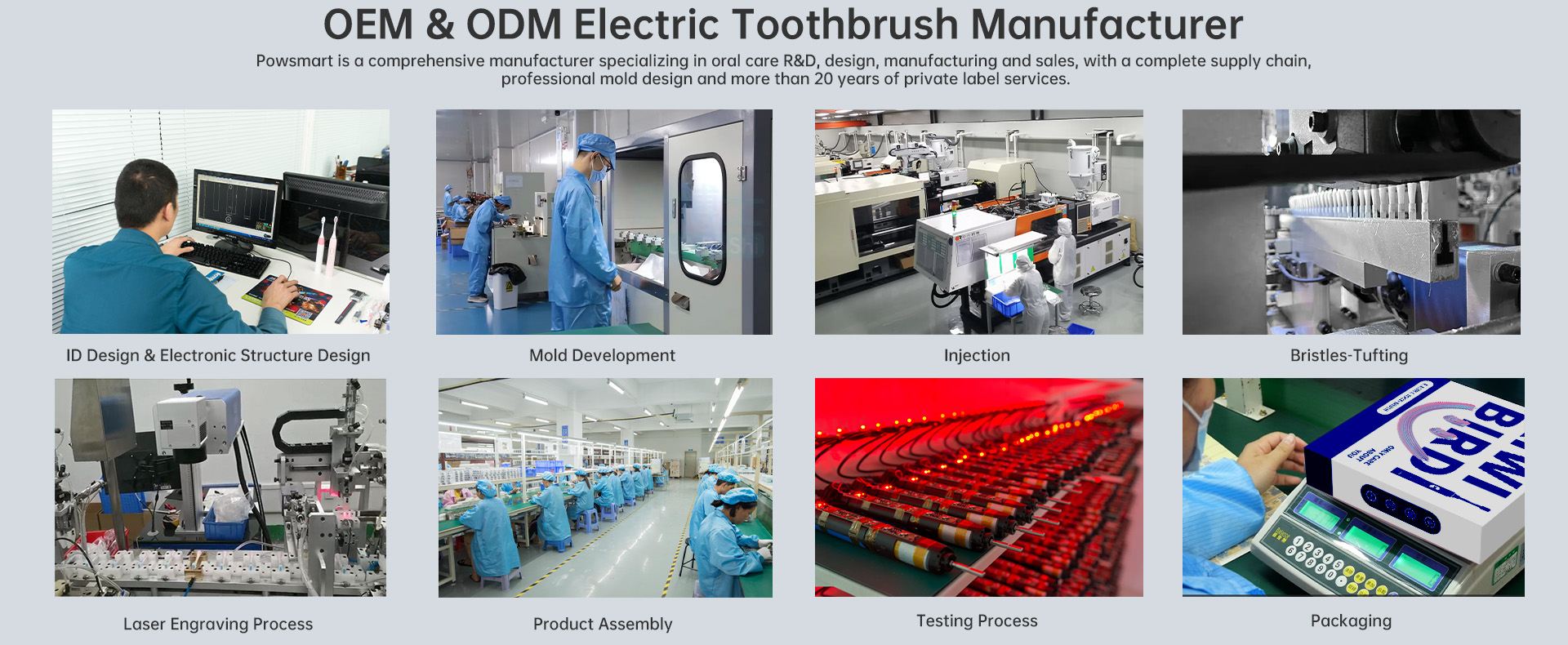
Essential Considerations for Electric Toothbrush OEM Projects
Mouth Ulcers After Allergic Rashes – Coincidence?


.jpg)
.jpg)
.jpg)
.jpg)
.jpg)