
electric toothbrush design customization is increasingly essential for brands seeking distinction in a competitive B2B oral care landscape. While core cleaning technology has matured, product design now plays a decisive role in brand perception, user experience, and channel success.
As a result, OEM customization is no longer limited to logos or colors—it has become a strategic process.
Design impacts not only aesthetics but also ergonomics, waterproof structure, and production efficiency. For distributors and brand owners, a well-designed product reduces return rates and improves end-user satisfaction.
Therefore, early-stage design collaboration between brand and manufacturer is strongly recommended.
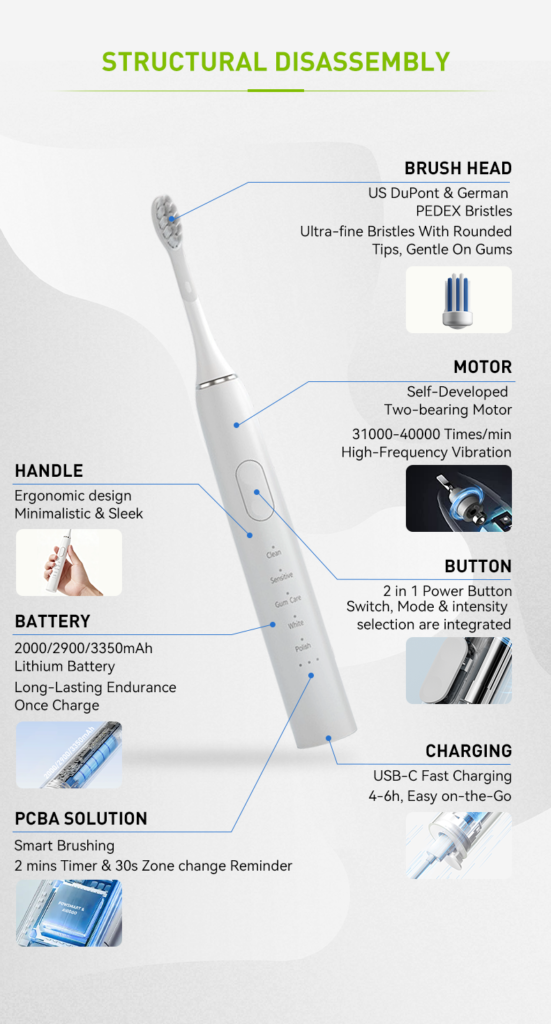
Design customization typically includes handle shape, surface texture, button layout, and LED indicators. Additionally, internal architecture must accommodate battery size, motor type, and sealing requirements.
By optimizing these elements together, OEM partners ensure that design concepts can be mass-produced without compromising durability.
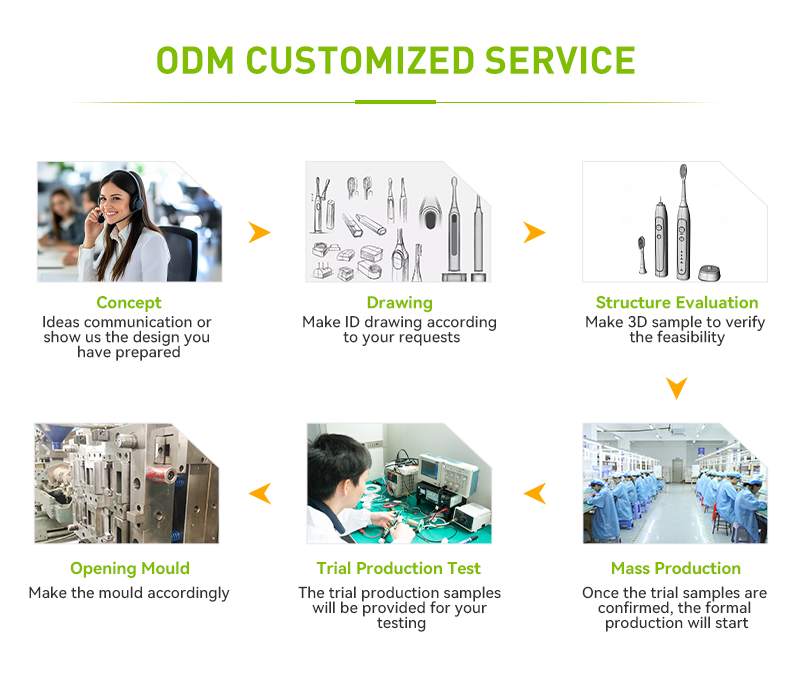
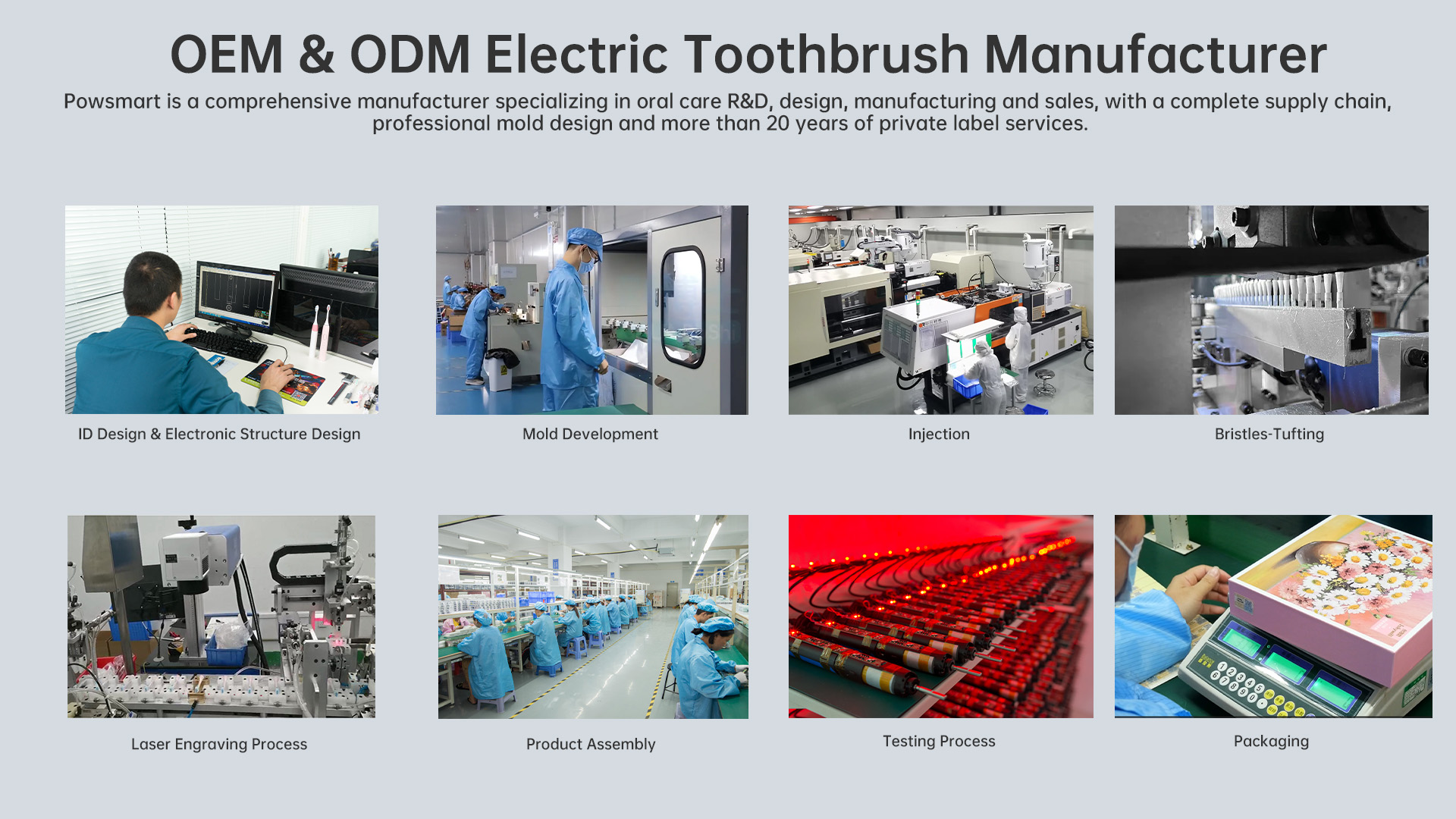
The customization process usually starts with industrial design sketches and 3D modeling. After that, prototypes are created using CNC or 3D printing. These steps allow brands to evaluate grip comfort and visual balance before tooling investment.
Once validated, designs move into mold development and pilot production.
While unique designs attract attention, cost efficiency remains critical in B2B sourcing. Experienced manufacturers guide brands toward design decisions that minimize mold complexity and assembly time.
Consequently, brands achieve visual differentiation without inflating unit costs.
Design must align with the factory’s production ecosystem. OEM partners offering integrated solutions—such as motor sourcing, battery integration, and assembly—can shorten development cycles.
Relevant customized product examples can be explored through powsmart.com, where OEM toothbrush platforms are adapted for multiple markets.
Design customization also considers regulatory and cultural factors. For example, waterproof ratings, charging interfaces, and color preferences vary by region. Adjusting these details supports smoother market entry.
Industry references such as ISO standards for personal care devices provide guidance during design validation.
Ultimately, electric toothbrush design customization empowers B2B brands to align product appearance, usability, and manufacturability. Through structured OEM collaboration, brands can launch distinctive oral care products with confidence and scalability.

.jpg)
PowSmart: Leading Electric Toothbrush Manufacturer in China for the US Market
Discover the Ultimate Oral Care Solution: PowSmart Electric Toothbrush Manufacturer from China
High-Performance Electric Toothbrush for Braces – Bulk Supply for Dental Clinics
Discover the Ultimate Oral Care Solutions with PowSmart Electric Toothbrush Manufacturer in China
Does Non-Toxic Kids Brush OEM Risk Child Safety?
Is a Leak-proof Valve a Critical Component in a Desktop Irrigator Design?
Discover the Perfect Electric Toothbrush from PowSmart: Your Ultimate Oral Care Solution
Unleash the Power of Oral Health: Discover PowSmart Electric Toothbrushes from China
Explore the Best Electric Toothbrushes from PowSmart: Your Ultimate Oral Care Solution
.jpg)
Is Your IPX8 Waterproof Toothbrush Designed for Safe Shower Use Product Labeling?
.jpg)
How Does a UV Sanitizing Component Complement an Anti-bacterial Hose in a Flosser?
PowSmart: Top Electric Toothbrush Manufacturer in China for the US Market
Discover the Power of PowSmart Electric Toothbrushes: Your Ultimate Oral Health Solution

Why Smart Electric Toothbrushes Are Oral Care Market Trends and in Demand
Meeting the Demand for Advanced Oral Hygiene – Points of view from Innovative Water Flosser Supplier
Electric Toothbrush Housing Material OEM Solutions for Durable Design


.jpg)
.jpg)
.jpg)
.jpg)
.jpg)






.jpg)