

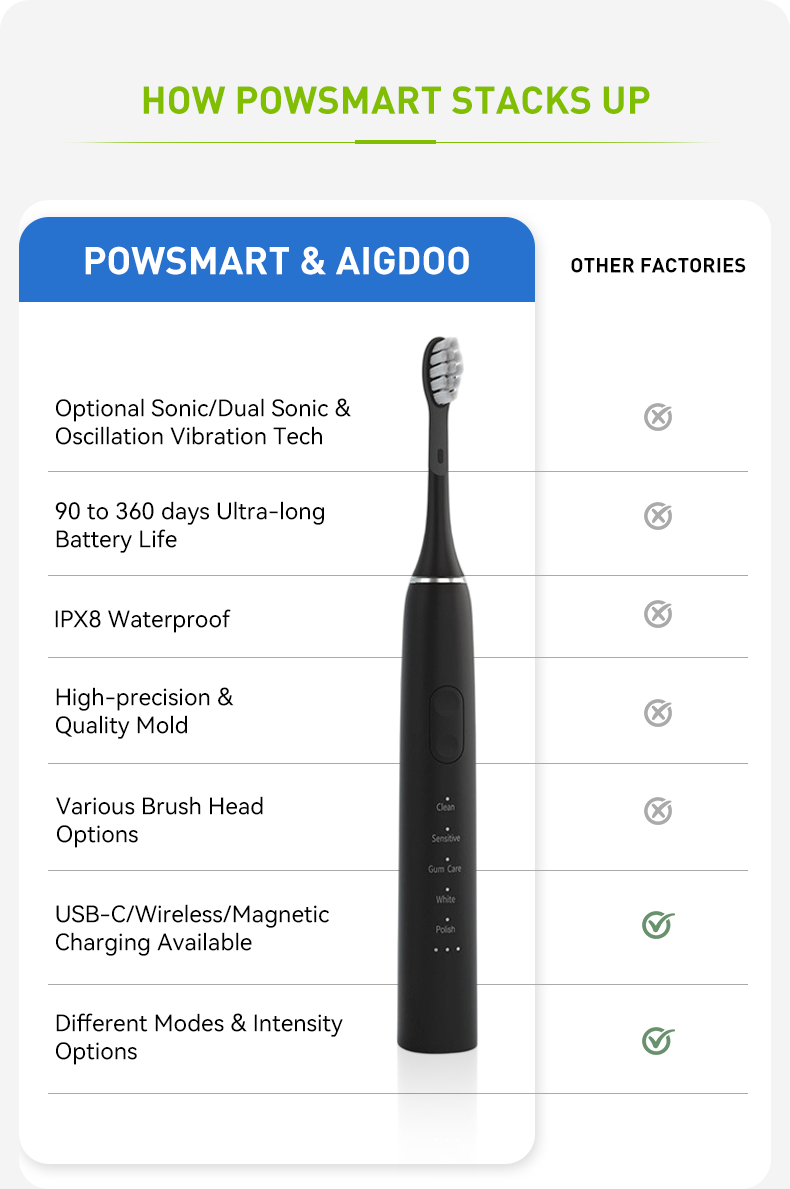
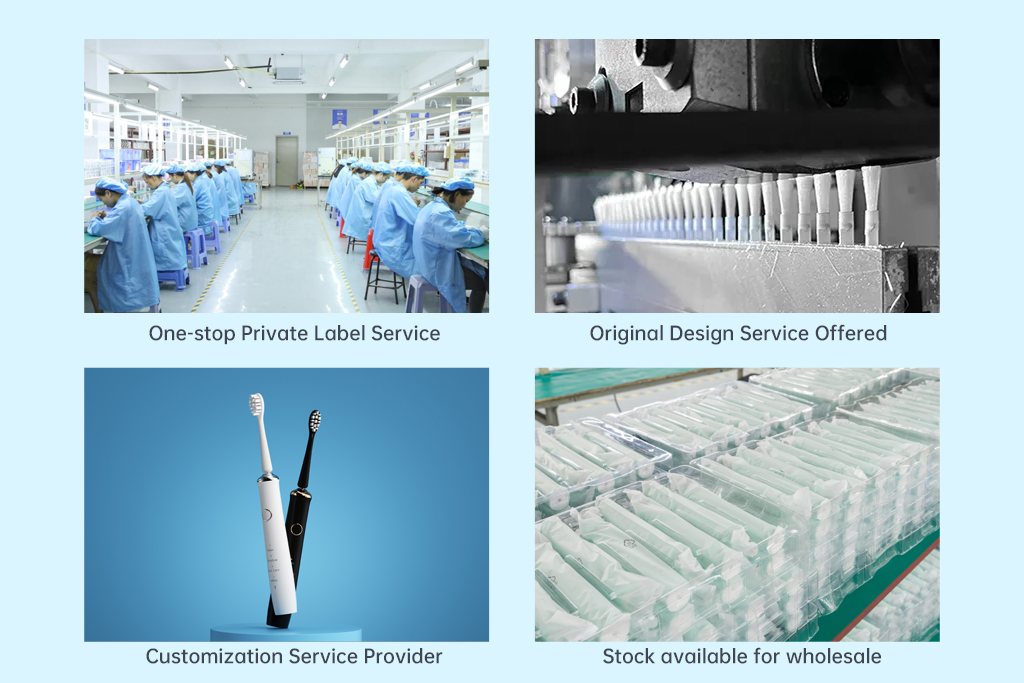
For American retailers, wellness brands, and distributors in cities like Los Angeles, New York, Miami, Chicago, and Seattle, sourcing reliable, high-performance electric toothbrushes is key to capturing the growing oral care market. Meet your strategic partner: PowSmart, a leading electric toothbrush manufacturer and OEM/ODM supplier based in China. We specialize in producing and supplying professional-grade electric toothbrushes that combine innovative technology with cost-effective manufacturing, directly to your business. 1. Your Expert Manufacturing Partner in China PowSmart operates as a factory-direct manufacturer and supplier from China. We want to be unequivocally clear: all PowSmart electric toothbrushes are designed, engineered, and manufactured in our facilities in China. This allows us to integrate stringent quality control with scalable production, offering unparalleled value. For businesses across the United States—from California to Texas, from Florida to Illinois—we serve as your dedicated offshore production hub, ensuring a seamless flow of premium products to your local markets. 2. Core OEM/ODM Services for US Brands We empower your brand through flexible service models: OEM (Original Equipment Manufacturing): Bring your electric toothbrush design to life. We provide precise manufacturing based on your specifications. ODM (Original Design Manufacturing): Leverage our expertise in design, prototyping, and production. We help develop market-ready products under your private label.…
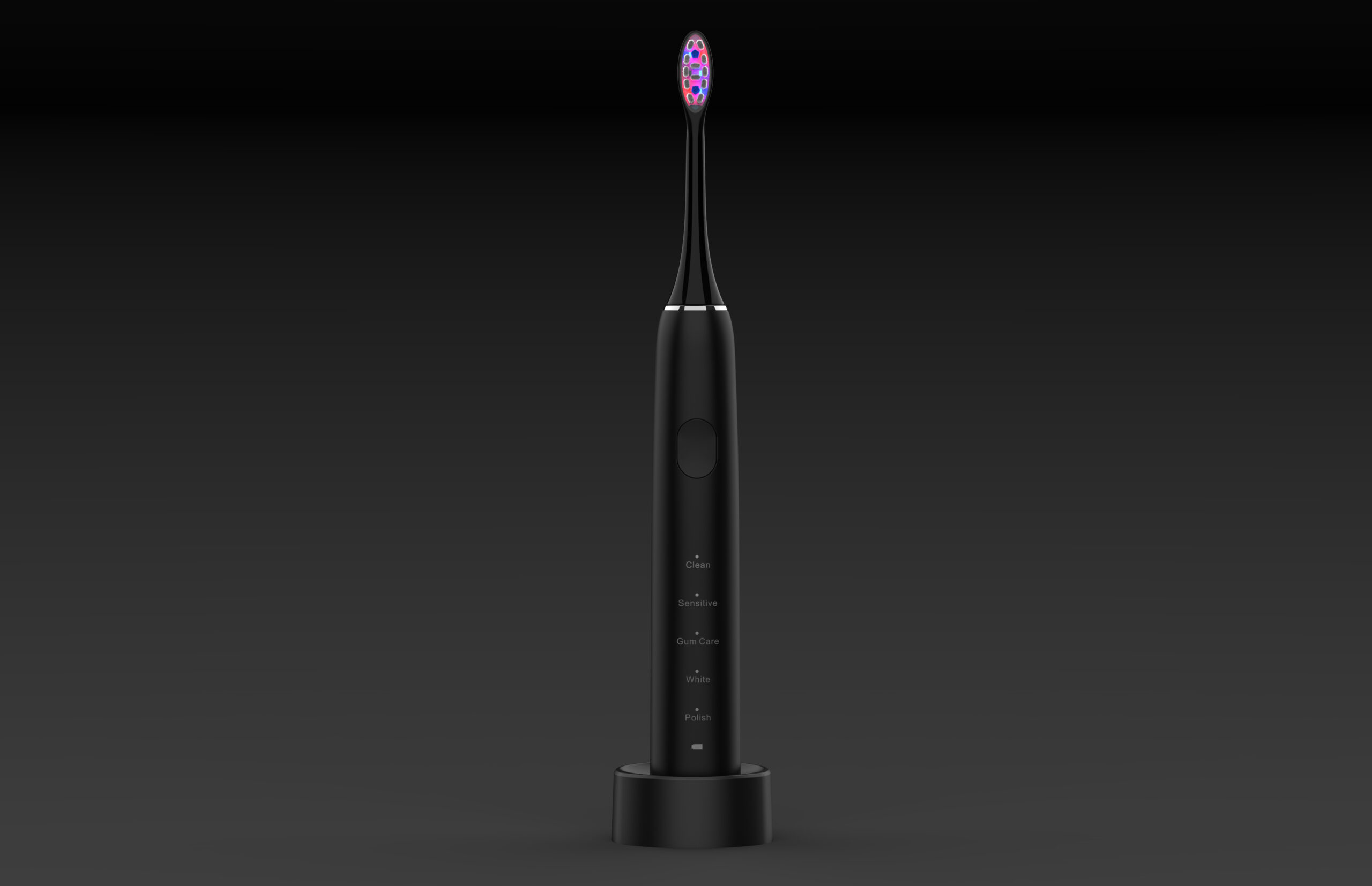
Introduction As user expectations shift toward both performance and comfort, manufacturers face the challenge of balancing advanced functionality with low noise output. Pulse Frequency Control is essential for optimizing cleaning effectiveness and operational precision, yet it must work in harmony with a Quiet Operation Motor to maintain a pleasant user experience. For B2B manufacturers and OEM partners, achieving this balance is a key engineering objective. Understanding the Relationship Between Frequency and Noise Pulse Frequency Control directly influences motor speed and load variations. Without careful design, rapid frequency changes can increase vibration and noise, making motor selection and tuning critical for Quiet Operation Motor performance. Leveraging Advanced Motor Control Algorithms Modern control algorithms allow precise Pulse Frequency Control while smoothing current transitions. These techniques reduce mechanical stress and acoustic output, enabling a Quiet Operation Motor to operate efficiently across multiple modes. Optimizing Motor and Drive Component Matching Matching the motor with compatible drivers and power electronics minimizes resonance. Proper system integration ensures Pulse Frequency Control does not introduce unwanted noise, preserving the benefits of a Quiet Operation Motor. Incorporating Structural and Acoustic Damping Mechanical design plays a major role in noise reduction. Strategic damping materials and housing design help isolate vibrations…

Introduction In water-based personal care devices, user satisfaction is shaped by both performance and convenience. Water Tank Capacity and Flow Rate Adjustment are two closely linked design factors that directly influence runtime, comfort, and overall usability. For B2B manufacturers and OEM partners, understanding how these elements interact is essential for delivering a balanced and user-friendly experience. Balancing Runtime and Refill Frequency Water Tank Capacity determines how long a device can operate before refilling. When paired with flexible Flow Rate Adjustment, users can extend usage time by selecting lower flow settings, improving convenience and reducing interruptions. Supporting Different User Preferences Not all users require the same water intensity. Flow Rate Adjustment allows customization, while appropriate Water Tank ensures sufficient supply across gentle, standard, and high-flow modes without compromising comfort. Maintaining Consistent Pressure and Performance A well-matched Water Tank Capacity helps stabilize water delivery during operation. Combined with precise Flow Rate Adjustment, it ensures consistent pressure output, enhancing the perceived quality of the user experience. Influencing Device Size and Ergonomics Increasing Water Tank Capacity impacts product dimensions and weight. Flow Rate Adjustment enables manufacturers to optimize tank size without sacrificing performance, supporting ergonomic and portable device designs. Enhancing Efficiency and Water Management…
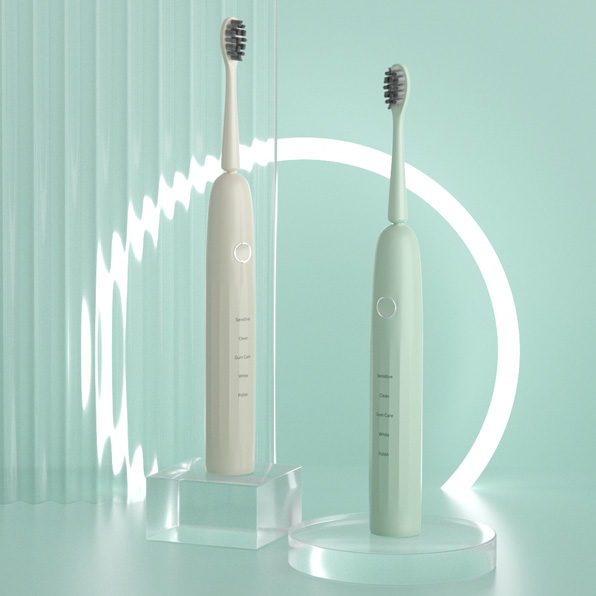
Introduction As consumer expectations evolve toward flexibility and mobility, device ecosystems must adapt accordingly. Pairing a Portable Charging Case with intelligent Multi-mode Settings creates a more versatile and user-centric solution. For B2B manufacturers and OEM partners, this combination delivers enhanced usability, energy efficiency, and competitive differentiation in modern personal care and electronic devices. Supporting On-the-Go Usage Scenarios A Portable Charging Case enables users to recharge devices anytime and anywhere. When combined with Multi-mode Settings, users can select the most appropriate operating mode based on time, environment, or battery availability. Optimizing Power Consumption and Charging Efficiency Multi-mode Settings allow devices to adjust power output dynamically. Integrated with a Portable Charging Case, this ensures energy is used efficiently, extending runtime and reducing unnecessary battery drain. Enhancing Personalized User Experience Different users have different preferences. Multi-mode Settings empower users to customize performance, while the Portable Charging Case ensures uninterrupted operation, delivering a tailored experience without compromising convenience. Improving Device Protection and Portability Beyond power supply, a Portable Charging Case provides physical protection during travel. Coupled with Multi-mode Settings, devices can be safely stored and activated only when needed, minimizing accidental operation or wear. Enabling Smarter Product Ecosystem Design From an OEM perspective, integrating…
.jpg)
Electric Toothbrush Packaging Compliance Overview Electric toothbrush packaging compliance is a critical requirement for OEM brands selling across borders. Packaging is not just a marketing element—it is a regulated component of the product. Failure to meet packaging standards can result in customs rejection, product recalls, or marketplace listing removal. Key Compliance Elements in Packaging Labeling Accuracy Mandatory information such as voltage, manufacturer details, country of origin, and safety warnings must be clearly displayed. Language requirements vary by market and must be strictly followed. Regulatory Marks Compliance marks like CE or recycling symbols must be printed according to official size and placement guidelines. Incorrect usage may be considered non-compliance. Market-Specific Packaging Rules Different regions impose different packaging obligations. The EU emphasizes environmental and recycling compliance, while North America focuses on safety labeling and traceability. Therefore, packaging artwork should be reviewed separately for each target market. Role of OEM Manufacturers Professional OEM suppliers review packaging files before mass production. This step reduces errors and ensures alignment with product certification documents. At Powsmart, packaging review is integrated into pre-production checks. You can explore compatible OEM packaging solutions here:👉 https://www.powsmart.com/private-label-electric-toothbrush/ Sustainability & Environmental Considerations Many markets now require compliance with packaging waste regulations. Reduced…
Toothbrush Export Documentation in International Trade Toothbrush export documentation is a core requirement for OEM manufacturers shipping products to overseas markets. Missing or incorrect paperwork often leads to customs delays, additional costs, or even shipment rejection. For B2B buyers, understanding document requirements improves supply chain reliability and planning accuracy. Core Documents Required for Export Commercial Invoice & Packing List These documents declare product value, HS codes, quantities, and shipment details. Accuracy is essential to avoid customs disputes. Certificate of Origin Depending on destination, a COO may be required to qualify for preferential tariffs or regulatory clearance. Compliance Declarations Electric toothbrushes usually require CE, FCC, or similar conformity declarations. These documents confirm that products meet safety and electromagnetic standards. Market-Specific Documentation Differences Export requirements vary across regions. EU markets emphasize CE compliance and technical files, while U.S. imports focus on FCC documentation and labeling accuracy. Therefore, toothbrush export documentation should always be prepared according to destination country rules rather than a one-size-fits-all approach. Manufacturer Support in Documentation Preparation Experienced OEM factories assist buyers by preparing standardized files, test reports, and shipment declarations. This support reduces buyer workload and minimizes clearance risks. At Powsmart, export documentation is managed together with logistics planning…
Electric Toothbrush Warranty Policy in OEM Cooperation An effective electric toothbrush warranty policy plays a critical role in B2B cooperation between brands and manufacturers. Unlike consumer-facing guarantees, OEM warranty terms focus on defect responsibility, batch consistency, and long-term risk control. For private label and ODM buyers, clarifying warranty conditions early helps prevent disputes once products enter the market. Why Warranty Policy Matters for B2B Buyers In OEM projects, after-sales issues often involve entire batches rather than individual units. Therefore, warranty terms must clearly define coverage scope, defect definitions, and claim procedures. Moreover, warranty responsibility directly impacts cost structure and customer satisfaction. A vague agreement may increase hidden risks after shipment. Key Elements in an OEM Warranty Framework Coverage Scope & Duration Most manufacturers offer 12–24 months of warranty for electric toothbrushes. Coverage usually includes functional defects related to motors, PCBA, or battery performance under normal use. However, wear parts such as brush heads are typically excluded due to their consumable nature. Defect Rate Threshold OEM contracts often define an acceptable defect rate (e.g. below 0.5%). Issues beyond this threshold may trigger compensation, replacement, or credit arrangements. Claim Handling Process Clear documentation requirements — including photos, videos, and batch numbers —…
Choosing the Right Toothbrush Supplier for Amazon Sellers Selecting a toothbrush supplier for Amazon sellers requires more than competitive pricing. Platform rules, customer reviews, and fulfillment standards demand consistent quality, reliable logistics, and fast response times. For Amazon-focused brands, supplier capability directly influences listing performance and long-term account stability. Key Requirements from Amazon-Oriented Brands Amazon sellers often operate under strict timelines and inventory limits. As a result, suppliers must support flexible order quantities, fast sampling, and repeatable production quality. Additionally, packaging, labeling, and barcode application must comply with FBA requirements to avoid inbound issues. OEM Capabilities That Matter Quality Control & Consistency Stable QC processes reduce return rates and negative reviews. Suppliers should perform functional tests, waterproof inspections, and aging simulations before shipment. Compliance Support Products sold on Amazon must meet regional regulations. A qualified toothbrush supplier should assist with CE, FCC, and RoHS documentation where applicable. Scalable Production As listings grow, production capacity must scale without sacrificing consistency. Reliable factories plan capacity in advance to support promotional spikes. Why Private Label Sellers Prefer Integrated Manufacturers Suppliers offering in-house assembly, testing, and packaging provide better control over timelines and quality. This integration simplifies communication and reduces coordination risks. At Powsmart,…
Electric Toothbrush Sample Lead Time in OEM Manufacturing Electric toothbrush sample lead time is one of the most common concerns for B2B buyers during early project discussions. Whether you are developing a private-label product or a fully customized design, sample timing directly impacts testing, certification, and market launch plans. Understanding what affects sampling schedules helps buyers set realistic expectations and avoid unnecessary delays. Typical Sample Lead Time Scenarios Sample timelines vary depending on project complexity. For existing models with logo customization only, samples can often be prepared within 7–14 days. However, projects involving structural changes, new molds, or upgraded components usually require longer preparation. In private mold or semi-custom projects, electric toothbrush sample lead time typically ranges from 25 to 45 days, including engineering validation and trial assembly. Factors That Influence Sampling Speed Product Customization Level The more changes required, the longer the sampling cycle. New housing designs, battery upgrades, or motor replacements all require additional verification steps. Tooling Availability Projects using existing molds move faster than those requiring new tooling. Mold fabrication alone can take several weeks before first trial samples are ready. Component Supply Chain Motor availability, battery lead times, and PCB programming can also affect sampling schedules.…
Toothbrush Private Mold Development for Brand Differentiation Toothbrush private mold development is a critical step for brands that want to stand out in the competitive electric toothbrush market. Instead of relying on shared or open tooling, private molds allow companies to fully control product design, structure, and intellectual property from the beginning. For OEM and ODM buyers, especially those targeting mid- to high-end markets, custom tooling is no longer optional. It directly affects brand value, product lifecycle, and long-term competitiveness. Why Private Mold Development Matters in OEM Projects Compared with public molds, private tooling offers clear strategic advantages. First, it ensures that your product appearance cannot be legally reused by competitors. Second, it enables better alignment between industrial design and internal structure, such as motor placement, battery capacity, and waterproof sealing. As a result, toothbrush private mold development supports not only differentiation but also performance optimization. Many Amazon-focused brands now choose this route to avoid price wars caused by identical product shells. Key Stages of Toothbrush Mold Development 1. Concept & Industrial Design Validation At the early stage, design feasibility must be evaluated from both aesthetic and engineering perspectives. Wall thickness, draft angles, and assembly tolerances are carefully reviewed to…
Introduction As orthodontic care becomes more specialized, product design must extend beyond performance to include hygiene and usability. Advanced Orthodontic Nozzle Design introduces unique structural and functional characteristics that directly influence how Nozzle Storage should be engineered. For B2B manufacturers and OEM partners, aligning nozzle design with appropriate storage solutions is essential for maintaining cleanliness, durability, and user convenience. Accommodating Complex Nozzle Geometry Orthodontic Nozzle Design often features angled tips, narrow channels, or precision outlets. These characteristics require Nozzle Storage systems that securely hold the nozzle without deforming or damaging delicate structures. Supporting Hygiene and Drying Requirements Due to frequent exposure to moisture and debris, orthodontic nozzles must dry thoroughly between uses. Well-designed Nozzle Storage allows airflow and drainage, ensuring that Orthodontic Nozzle Design maintains hygienic conditions over time. Preventing Cross-Contamination Specialized orthodontic applications may involve multiple users or multiple nozzle types. Nozzle Storage solutions should provide separation and clear organization, supporting hygienic use aligned with advanced Orthodontic Nozzle Design standards. Enhancing User Accessibility and Compliance Ease of access encourages consistent use. Nozzle Storage designed around Orthodontic Nozzle enables intuitive placement and removal, improving the overall user experience and compliance with daily care routines. Protecting Nozzle Integrity During Storage Precision…
Introduction In modern water-based oral care and cleaning devices, performance is defined not only by output power but also by system integrity. While a High-Pressure Water Pump delivers the force required for effective cleaning, its performance can be significantly compromised without a reliable Leak-Proof Valve. For B2B manufacturers and OEM partners, balancing pressure generation with leak prevention is essential to ensure safety, durability, and product reliability. Maintaining Stable Pressure Output A High-Pressure Water Pump relies on a sealed fluid path to maintain consistent pressure. Without a robust Leak-Proof Valve, pressure fluctuations can occur, reducing cleaning efficiency and overall system performance. Preventing Water Leakage and Component Damage Leakage can expose electronic components to moisture, leading to corrosion or failure. Integrating a high-quality Leak-Proof Valve protects internal systems, allowing the High-Pressure Water Pump to operate safely over time. Enhancing User Safety and Product Reliability Uncontrolled leaks pose safety risks in electrically powered devices. A dependable Leak-Proof Valve ensures controlled water flow, reinforcing the safe operation of High-Pressure Water Pump systems in consumer and professional applications. Extending Product Lifespan and Reducing Failure Rates Continuous leakage accelerates material wear and mechanical fatigue. By pairing a High-Pressure Water Pump with a durable Leak-Proof Valve, manufacturers…
Introduction In today’s portable electronic and oral care devices, energy efficiency is a core design priority. The performance of a Motor Controller IC plays a critical role in achieving effective Battery Life Optimization, especially in products that rely on compact power sources. For B2B manufacturers and OEM partners, understanding this relationship is essential to delivering longer-lasting, high-performance devices. Reducing Energy Loss Through Efficient Motor Control A high-efficiency Motor Controller IC minimizes power loss during motor startup and operation. By optimizing current flow and switching behavior, it directly contributes to Battery Life Optimization in battery-powered devices. Enabling Precise Speed and Torque Management Accurate control of motor speed and torque prevents unnecessary power consumption. An advanced Motor Controller IC ensures that energy usage is matched precisely to performance requirements, supporting consistent Battery Life Optimization. Improving Thermal Performance and Power Stability Inefficient motor control generates excess heat, which accelerates battery degradation. A well-designed Motor Controller IC enhances thermal management, indirectly extending battery health and improving Battery Life Optimization. Supporting Adaptive Power Management Strategies Modern Motor Controller solutions enable dynamic power adjustment based on load conditions. This adaptability allows devices to reduce power draw when full performance is not required, strengthening overall Battery Life…
Introduction As hygiene expectations rise in portable oral care products, integrating Brush Head Sterilization into Travel Case Manufacturing has become a strategic value driver rather than a premium add-on. For B2B manufacturers and OEM partners, built-in sterilization technology enhances product differentiation, user safety, and overall system performance in travel-oriented designs. Enhancing Hygiene Protection During Travel Travel environments expose brush heads to bacteria, moisture, and contamination. Integrating Brush Head Sterilization within travel cases ensures hygienic storage, elevating the functional value of Travel Case Manufacturing solutions. Supporting Compact and Integrated Product Design Modern Travel Case Manufacturing focuses on multifunctional integration. Built-in Brush Head Sterilization eliminates the need for separate accessories, enabling streamlined designs without increasing user complexity. Improving User Confidence and Daily Compliance Users are more likely to maintain consistent oral care routines when hygiene is visibly addressed. Brush Head Sterilization integrated into travel cases reinforces trust and encourages regular use of portable oral care devices. Increasing Product Differentiation for OEM Brands In a competitive market, added hygiene features matter. Travel Case Manufacturing that includes Brush Head provides OEM brands with a clear differentiator, supporting premium positioning and value-based pricing strategies. Aligning with Global Hygiene and Safety Expectations Integrated Brush Head supports…

Introduction As oral care and personal health devices become more intelligent, data-driven interaction is reshaping user experience. By combining Smart App Connectivity with accurate Pressure Sensor Calibration, manufacturers can transform raw sensor outputs into meaningful, actionable user feedback. For B2B device brands and OEM partners, this integration creates new opportunities to improve performance transparency, usability, and product differentiation. Translating Calibration Data into Actionable User Insights Pressure Sensor Calibration ensures precise force measurement, but its true value emerges when paired with Smart App Connectivity. Apps can convert calibration data into clear visual cues, alerts, or recommendations that users can easily understand. Improving Real-Time Feedback and Usage Behavior With Smart App Connectivity, calibrated pressure data can be transmitted instantly. This allows devices to provide real-time feedback, helping users adjust their behavior while reinforcing correct usage based on accurate Pressure Sensor Calibration. Supporting Personalized User Experience Design Every user applies pressure differently. By leveraging Pressure Sensor Calibration data through Smart App, manufacturers can enable personalized thresholds, coaching modes, and adaptive feedback tailored to individual habits. Enhancing Product Reliability and Performance Monitoring Calibrated sensor data sent through Smart App Connectivity enables long-term performance tracking. OEMs and brand owners can monitor sensor accuracy over time,…

Introduction In moisture-prone environments such as bathrooms and clinical settings, reliability and safety are non-negotiable. For any Charging Dock OEM product designed for daily use, integrating an IPX8 Waterproof Solution is a critical engineering requirement. From a B2B manufacturing perspective, advanced waterproofing not only protects electronic components but also strengthens product durability, compliance readiness, and long-term brand trust. Protection Against Water Ingress in High-Humidity Environments Charging docks are frequently exposed to splashes, condensation, and cleaning routines. An IPX8 Waterproof Solution ensures continuous protection even under prolonged water exposure, safeguarding internal circuitry in Charging Dock OEM applications. Electrical Safety and User Risk Reduction Water and electricity present inherent risks. By adopting an IPX8 Waterproof Solution, manufacturers significantly reduce the likelihood of short circuits or leakage, enhancing safety performance in Charging Dock OEM products. Long-Term Durability and Product Lifespan Repeated exposure to moisture can degrade connectors and contacts over time. An IPX8 Waterproof Solution helps maintain electrical integrity, extending the operational lifespan of Charging Dock OEM devices in real-world conditions. Support for Regulatory and Quality Expectations Many markets expect high waterproof ratings for bathroom-use electronics. Integrating an IPX8 Waterproof Solution supports compliance with applicable safety and quality standards, simplifying certification for Charging…
Electric toothbrush shipping solutions are a vital component of global OEM and wholesale operations. Because electric toothbrushes contain batteries and electronic components, shipping planning must address safety, compliance, and cost efficiency simultaneously. For B2B buyers, optimized logistics reduce delivery risk and support predictable supply chains. Challenges in Shipping Electric Toothbrush Products Electric toothbrushes are typically classified as battery-powered consumer electronics. A professional electric toothbrush shipping solutions strategy considers packaging integrity, regulatory documentation, and transport mode selection. Without proper planning, shipments may experience customs delays or additional inspection costs. Understanding these challenges early helps buyers avoid disruptions. Export Packaging and Product Protection Protective packaging plays a central role in shipping safety. Inner trays, cushioning inserts, and moisture barriers protect products from vibration and compression during transit. Additionally, outer cartons are designed to withstand stacking pressure during sea and air freight. Proper packaging reduces damage rates and improves delivery reliability. Battery Documentation and Regulatory Compliance Battery-powered products require specific documentation. MSDS reports, UN38.3 test summaries, and battery labels are commonly required for international shipping. Reliable manufacturers assist buyers with documentation preparation and verification to ensure smooth customs clearance. General guidance on lithium battery transport can be referenced through IATA standards:https://www.iata.org/ Logistics Coordination…
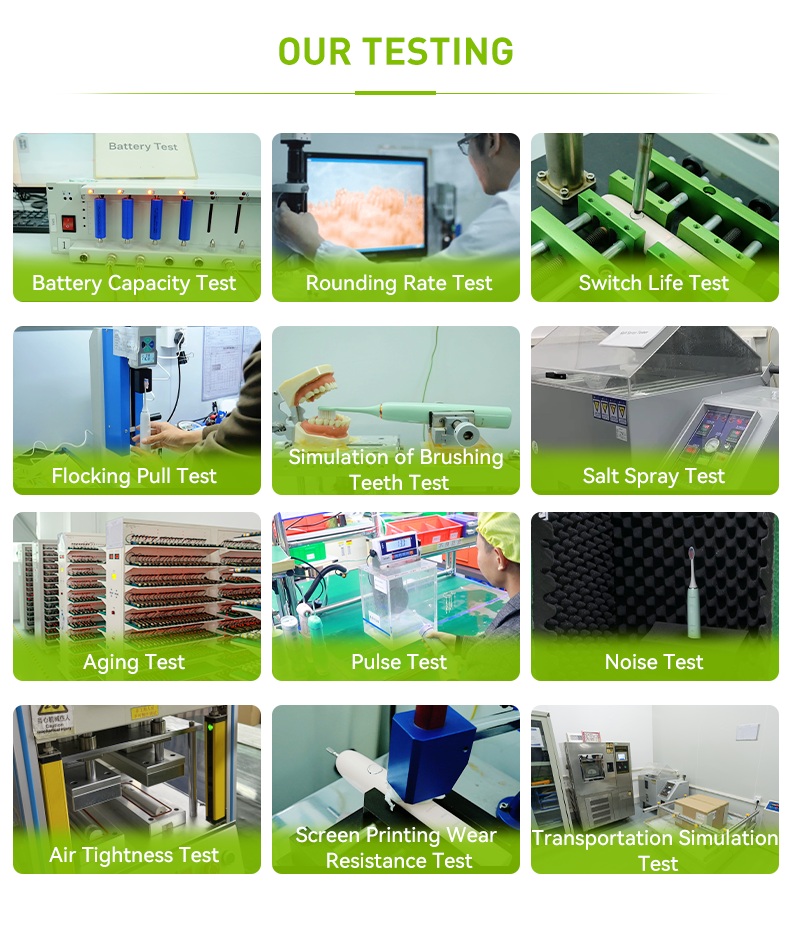
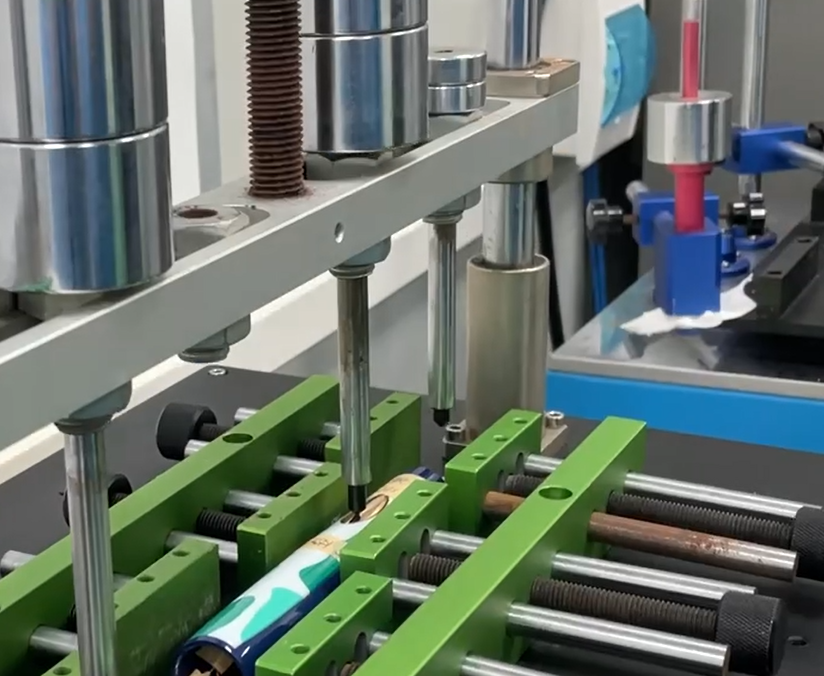
Toothbrush aging test manufacturer capability is a critical benchmark for brands evaluating OEM partners in the electric toothbrush industry. As global markets demand longer product lifecycles and lower failure rates, aging tests have become an essential part of professional manufacturing rather than an optional procedure. For B2B buyers, aging validation directly reduces post-sale risk and strengthens confidence when entering new markets. Purpose of Aging Tests in Toothbrush Manufacturing A professional toothbrush aging test manufacturer simulates long-term usage conditions within a shortened timeframe. These tests evaluate how motors, batteries, switches, and charging systems perform after repeated operation. Moreover, aging tests help identify hidden weaknesses that may not appear during short functional inspections. Early detection enables manufacturers to improve structural design, component selection, and assembly processes before mass production. As a result, aging validation protects both brand reputation and distributor relationships. Common Aging Test Methods for Electric Toothbrushes Typical aging tests include continuous vibration cycles, repeated power-on and power-off sequences, and extended charging and discharging simulations. These procedures verify that performance remains stable over time. In addition, environmental aging tests expose products to humidity and temperature variations. These conditions evaluate waterproof sealing and material durability under real-life bathroom environments. Manufacturers with in-house…
Electric toothbrush quality control process design is a core factor for brands sourcing OEM or ODM manufacturing partners. As electric toothbrushes integrate motors, batteries, and electronic systems, consistent quality control directly affects product reliability, compliance success, and brand reputation. For B2B buyers, quality control is not a final inspection step. Instead, it is a structured system covering the entire manufacturing lifecycle. Importance of a Structured Quality Control Process A professional electric toothbrush quality control process begins before production starts. Material sourcing, supplier qualification, and component inspection form the first defensive layer against defects. Moreover, early-stage quality management reduces rework, warranty claims, and shipment delays. For international buyers, this proactive approach protects both cost structure and market credibility. As global platforms tighten compliance requirements, documented quality systems become increasingly important. Incoming Material and Component Inspection Quality control starts with incoming inspection. Motors, batteries, PCBA, and plastic housings are checked against approved specifications. Furthermore, critical components undergo functional sampling to verify vibration output, voltage stability, and charging behavior. These checks ensure that substandard parts do not enter the assembly line. Manufacturers with strong supplier management programs maintain consistent quality even during volume expansion. In-Process Quality Control During Assembly During production, in-process inspections…
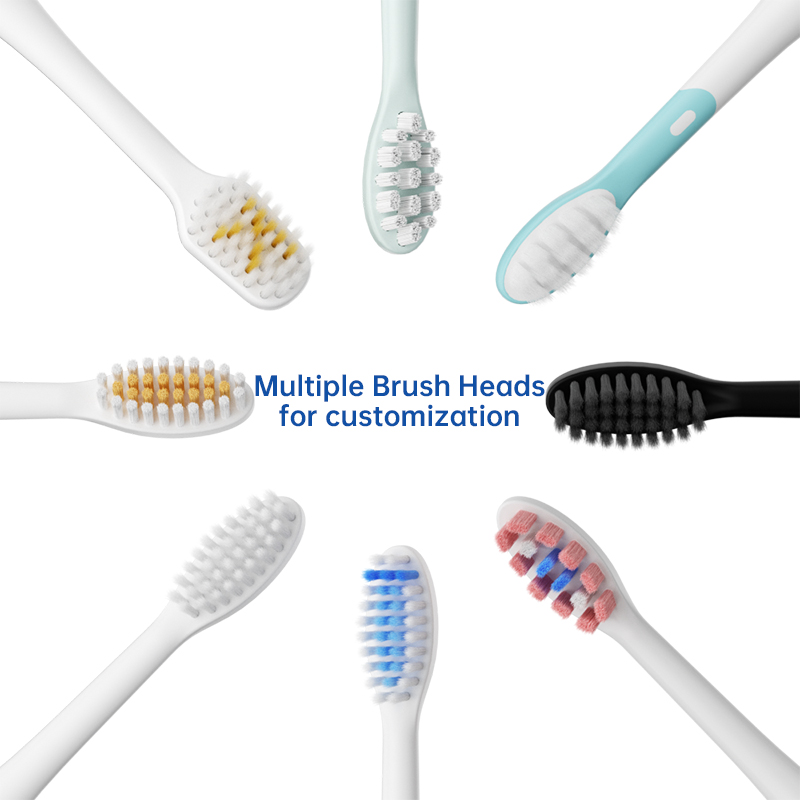
Electric toothbrush customization options have become a decisive factor for brands competing in global oral care markets. As electric toothbrush functionality becomes increasingly standardized, buyers now rely on customization to differentiate products, control pricing tiers, and build strong brand identity. For B2B buyers, customization is not about visual changes alone. Instead, it involves functional design choices, component selection, and scalable manufacturing strategies that support long-term growth. Core Electric Toothbrush Customization Capabilities Professional manufacturers offer structured electric toothbrush customization options across multiple technical layers. Functional customization typically includes vibration frequency ranges, brushing modes, battery capacity, and charging methods such as USB-C or wireless charging. Moreover, brush head compatibility plays a critical role. Different bristle materials, head shapes, and motion patterns allow brands to address various consumer segments, including sensitive gums or deep-clean users. These functional choices directly affect user experience and product positioning. Industrial Design and Branding Customization Beyond performance, industrial design strongly influences purchasing decisions. Housing shape, grip texture, surface finish, and color schemes can all be adapted to align with brand aesthetics. In addition, logo placement and finishing techniques such as laser engraving or silk printing reinforce brand recognition. Consistency across product lines helps brands establish a cohesive market…


.jpg)
.jpg)
.jpg)
.jpg)
.jpg)






.jpg)
.jpg)
.jpg)