Info Center
  • Private Label Electric Toothbrush Manufacturing with Low MOQ

    Many trading companies, importers, and e-commerce brands are now searching for private label electric toothbrush low MOQ options so they can enter the oral care category without committing to large inventory volumes. Because market testing and controlled cash flow are critical, a flexible manufacturing partner becomes the key to launching a new product line successfully. Therefore, our OEM/ODM program is designed to support brand owners from concept through delivery. How Low-MOQ Private Label Manufacturing Helps Brands With smaller production runs, companies reduce risk while validating product-market fit. Moreover, new brands can test multiple colorways, packaging formats, and price points simultaneously. This approach creates real-world sales data, rather than relying only on assumptions. As a result, marketing and purchasing teams gain confidence before ordering larger quantities. Brand Identity and Design Support When you build a private label product, brand consistency matters. Therefore, our engineering and design teams support logo application, color customization, packaging artwork, and label compliance. In addition, we help optimize inserts, manuals, and certifications needed for your target region. Meanwhile, the product itself maintains stability in performance so your after-sales workload remains low. 👉 Internal link: https://powsmart.com/ Furthermore, we can adjust feature sets according to your positioning. For example,…

    2025-12-30
  • Electric Toothbrush OEM/ODM Solutions for Small Batch Customization

    The demand for electric toothbrush small batch customization continues to grow as more brands look for flexible production options without taking on excessive inventory risk. Because the global oral care market is competitive, companies need reliable manufacturing partners who can support smaller runs while still maintaining high quality and compliance. Therefore, many start-ups and medium-sized brands now prefer low-risk pilot orders before scaling up. This approach also helps test new designs, packaging ideas, and pricing strategies in international markets. Why Small-Run Custom Toothbrush Production Matters Today’s distributors, retailers, and DTC brands often face uncertain demand. However, traditional factories usually require high MOQs, which prevents many companies from entering the market. With small-run customization, brands can launch faster while keeping cash flow stable. Moreover, small production batches allow faster iteration based on customer feedback. We work with global partners who want private label toothbrush solutions, flexible MOQ, and stable supply. More importantly, every step follows international regulations and quality standards. For example, materials comply with recognized safety guidelines, and every unit goes through testing before shipment. This gives importers and wholesalers confidence when working with dental professionals, e-commerce platforms, and retail chains. Flexible Branding and Packaging Options When brands choose small…

    2025-12-30
  • How Does a Linear Resonant Actuator Benefit from an IPX8 Waterproof Solution in Electric Toothbrushes?

    Introduction In high-performance electric toothbrushes, the Linear Resonant Actuator is a core component responsible for precise vibration control and consistent brushing motion. When paired with an IPX8 Waterproof Solution, this advanced motor technology delivers enhanced durability, safety, and long-term performance—key priorities for B2B manufacturers and OEM partners operating in global markets. Protecting Motor Components from Moisture Intrusion A Linear Resonant Actuator operates with tight mechanical tolerances. An IPX8 Waterproof Solution prevents water ingress during daily use, rinsing, or immersion, safeguarding internal components from corrosion and electrical failure. Maintaining Stable Vibration Performance Moisture exposure can alter friction and resonance behavior. By sealing the system with an IPX8 Waterproof Solution, the Linear Resonant Actuator maintains consistent vibration amplitude and frequency, ensuring reliable brushing performance over time. Supporting Safe Use in Wet Environments Electric toothbrushes are routinely used in wet bathrooms and under running water. An IPX8 Waterproof Solution allows the Linear Resonant Actuator to operate safely even under full submersion, reducing risk to users and improving product trust. Extending Product Lifespan and Reliability Water-related degradation is a common cause of device failure. Combining a Linear Resonant Actuator with robust IPX8 Waterproof Solution design significantly extends service life, lowering return rates and warranty…

    2025-12-29
  • Is a UV Free Whitening System Inherently More Enamel Safe?

    Introduction In recent years, demand for safer cosmetic whitening solutions has increased significantly. Many brands now promote UV Free systems as a gentler alternative, often associating them with being more Enamel Safe. But is the absence of UV light alone enough to guarantee enamel protection? For B2B manufacturers, understanding the full picture behind safety claims is essential for responsible product development. Understanding the Role of UV in Whitening Systems Traditional whitening systems sometimes use UV or light activation to accelerate chemical reactions. While UV Free designs eliminate light-related exposure concerns, enamel safety still depends on formulation, exposure time, and application control. Enamel Safety Depends More on Chemistry Than Light Source Being Enamel Safe is primarily influenced by gel concentration, pH balance, and ingredient stability. A UV Free system can still cause enamel stress if the whitening formula is overly aggressive or improperly applied. Heat and Dehydration Considerations UV-based systems may introduce heat, which can temporarily dehydrate enamel. A UV Free approach reduces this risk, but proper moisture retention and remineralization support are still required to maintain Enamel Safe performance. User Control and Application Precision Without UV activation, whitening often relies on longer contact time. Clear dosing and controlled delivery are…

    2025-12-29
  • How Does a Whitening Pen Embody the Ultimate Portable Design for On-the-Go Care?

    Introduction As consumer lifestyles become more mobile, compact whitening solutions are gaining traction across global markets. The Whitening Pen has emerged as a standout example of Portable Design, combining convenience, precision, and usability into a single, travel-friendly format. For B2B manufacturers and OEM brands, this format represents a strategic opportunity to meet demand for on-the-go oral care. Compact Form Factor and Travel Convenience The slim profile of a Whitening Pen is central to its Portable Design. It fits easily into pockets, handbags, or travel kits, enabling users to maintain whitening routines anytime and anywhere without bulky equipment. Precise Application with Minimal Accessories Unlike trays or larger systems, a Whitening Pen integrates its applicator directly into the device. This all-in-one Portable Design allows controlled gel delivery without the need for mirrors, power sources, or additional tools. Leak-Resistant and Durable Construction Portability requires reliability. A well-engineered Whitening Pen features secure sealing and robust materials to prevent leaks or damage during transport, reinforcing confidence in daily, on-the-go use. Fast-Drying Formulations for Immediate Use Many Whitening Pen systems are paired with quick-setting gels that complement their Portable Design. Rapid drying allows users to apply whitening treatment discreetly, without interrupting daily activities. User-Friendly Operation Across…

    2025-12-29
  • Does Optimal Flow Channel Design Reduce the Load on the Battery Management System?

    Introduction In battery-powered oral care and fluid-delivery devices, Flow Channel Design is often viewed as a purely mechanical consideration. However, it has a direct and measurable impact on electrical efficiency. By optimizing internal flow paths, manufacturers can indirectly reduce power demand and ease the workload on the Battery Management System, improving overall device reliability and runtime. Reducing Hydraulic Resistance and Energy Demand Well-engineered Flow Channel Design minimizes friction and turbulence within the system. Lower resistance allows pumps or motors to operate more efficiently, requiring less power and placing reduced strain on the Battery Management System. Supporting Stable Motor Operation Inconsistent flow can cause fluctuating motor loads. Optimized Flow Channel Design delivers smoother flow behavior, helping motors run at stable speeds and enabling the Battery Management System to regulate power more effectively. Limiting Heat Generation and Power Loss Excessive back pressure increases current draw and heat. By improving Flow Channel Design, thermal buildup is reduced, allowing the Battery Management System to operate within safer temperature and efficiency ranges. Extending Battery Life and Charge Cycles Lower average power consumption directly contributes to longer runtime per charge. When Flow Channel Design reduces mechanical load, the Battery Management System can better protect the battery…

    2025-12-29
  • Should Nozzle Material Always Be Medical-grade Material for Safety?

    Introduction In oral care devices and fluid-based hygiene equipment, Nozzle Material plays a direct role in user safety, hygiene, and long-term performance. Many buyers assume that using Medical-grade Material is always the safest option—but is it necessary in every application? For B2B manufacturers and OEM partners, material selection must balance safety, compliance, cost, and real-world use scenarios. Understanding Safety Requirements by Application Not all nozzles face the same exposure risks. Devices designed for direct oral contact, repeated use, or sensitive users often justify Medical-grade Material, while short-contact or disposable applications may meet safety needs with alternative compliant materials. Biocompatibility and Skin or Oral Contact Medical-grade Material is specifically tested for biocompatibility, making it suitable for prolonged or repeated contact. When Nozzle Material interacts frequently with soft tissue, these properties significantly reduce irritation and allergic response risks. Resistance to Chemical and Thermal Stress Nozzles may be exposed to cleaning agents, pressure changes, or warm liquids. Medical-grade Material typically offers higher resistance to deformation and chemical degradation, helping Nozzle Material maintain structural integrity over time. Hygiene, Sterilization, and Reusability For reusable systems, Medical-grade Material supports sterilization processes such as UV treatment or chemical rinsing. This makes it a preferred choice when Nozzle…

    2025-12-29
  • Why Should a Cosmetic Grade Whitening Gel Come with a Precision Gel Applicator?

    Introduction In the professional and consumer whitening market, a Cosmetic Grade whitening gel is valued for its balance between effectiveness and safety. However, the performance of the formula alone is not enough. Pairing the gel with a precision Gel Applicator is essential to ensure accurate dosing, controlled placement, and consistent results—key considerations for B2B manufacturers and OEM partners. Ensuring Accurate Dosage Control A precision Gel Applicator allows users to dispense the exact amount of Cosmetic Grade whitening gel required per application. This prevents overuse, reduces waste, and helps maintain predictable whitening outcomes across different users. Supporting Even Gel Distribution Uniform application is critical for consistent whitening. A well-designed Gel Applicator ensures the Cosmetic Grade formula spreads evenly across tooth surfaces, minimizing patchy results and enhancing overall treatment effectiveness. Reducing Gum Contact and Sensitivity Risks One of the main advantages of a precision Gel Applicator is controlled placement. By targeting only the tooth surface, it limits unnecessary gel contact with soft tissue, supporting safer use of Cosmetic Grade whitening products. Improving User Experience and Compliance From an end-user perspective, a precision Gel Applicator simplifies the application process. Clear control and ease of use encourage correct usage patterns, reducing misuse and increasing…

    2025-12-29
  • American Electric toothbrush manufacturer

    In the competitive world of oral care, securing a reliable, high-quality, and cost-effective supply is paramount. Powsmart stands out as a premier American electric toothbrush manufacturer and brand, overseeing every critical phase—from innovative design and precision engineering in our own facilities to efficient global distribution. Our integrated model as both the factory and the manufacturer for the Powsmart brand ensures unmatched control over quality, pricing, and supply chain agility, delivering exceptional value to our wholesale and B2B partners. Uncompromised Quality from Our Production Line At our state-of-the-art manufacturing facilities, we produce electric toothbrushes that blend advanced technology with durable construction. Our direct oversight guarantees that every unit bearing the Powsmart name meets rigorous standards. Superior Cleaning Performance: Utilizing advanced sonic technology, Powsmart toothbrushes generate thousands of micro-movements per minute to effectively disrupt plaque biofilm, promote gum health, and whiten teeth. Multiple cleaning modes (Clean, White, Soft, Massage) cater to individual needs. Premium Materials & Design: We use high-quality, safe materials including soft DuPont-style bristles that are gentle on enamel and gums, and waterproof, ergonomic handles designed for comfort and longevity. Our commitment to quality materials ensures a product that consumers trust. Enhanced User Experience: Key features such as long-lasting battery life (up to 30 days on a single charge for many models), smart…

    2025-12-29
  • American OEM electric toothbrush manufacturers

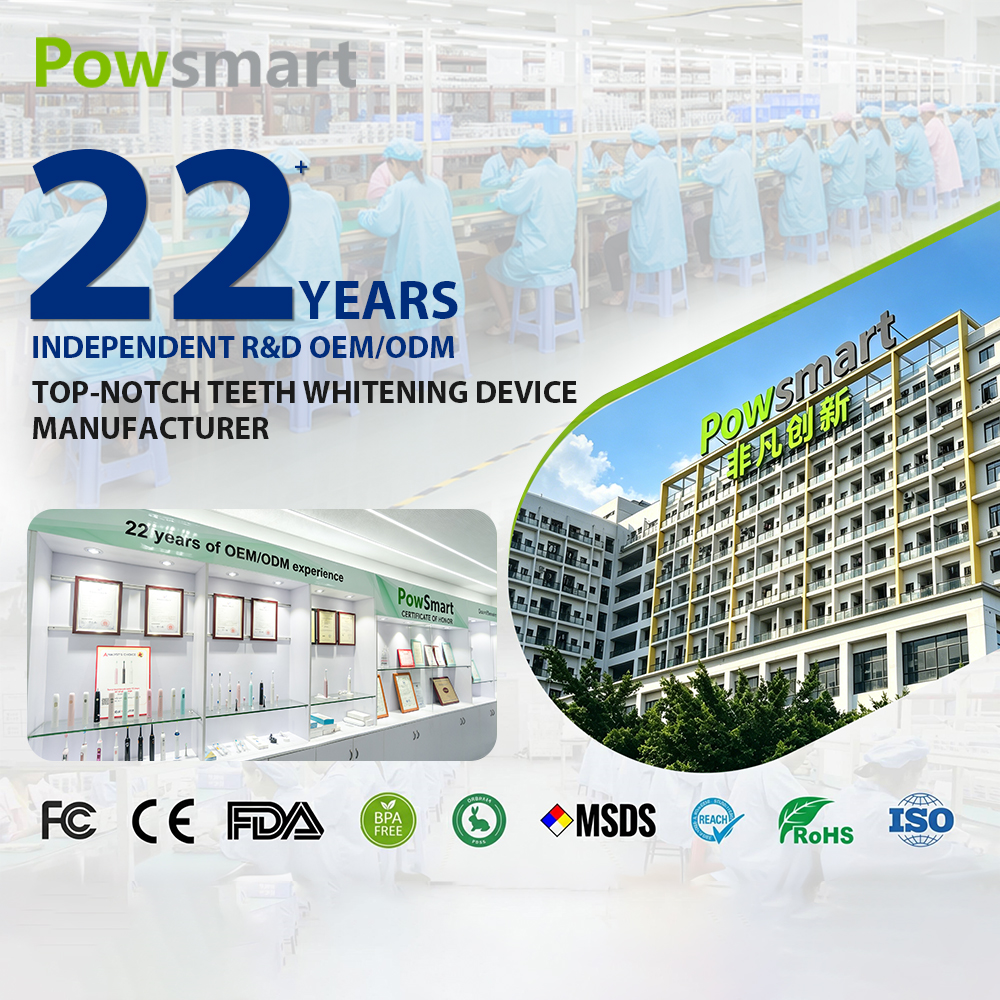
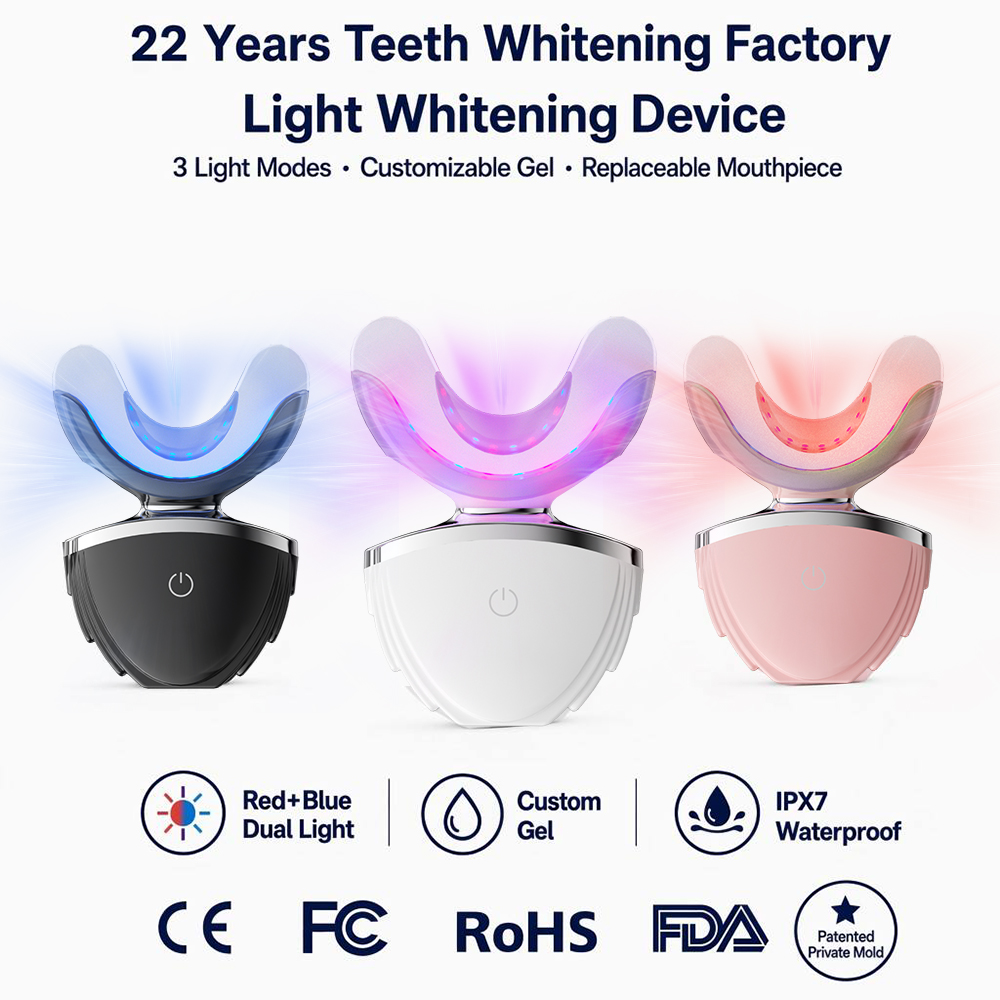
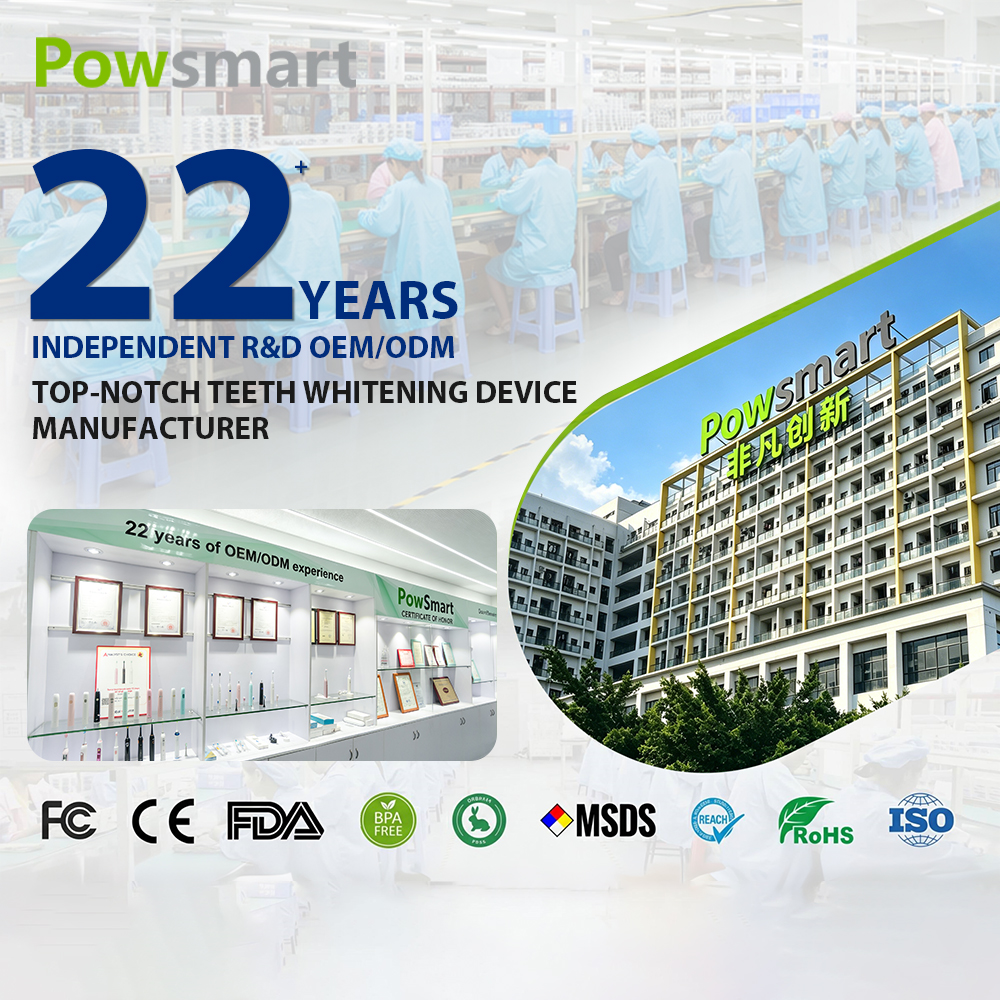
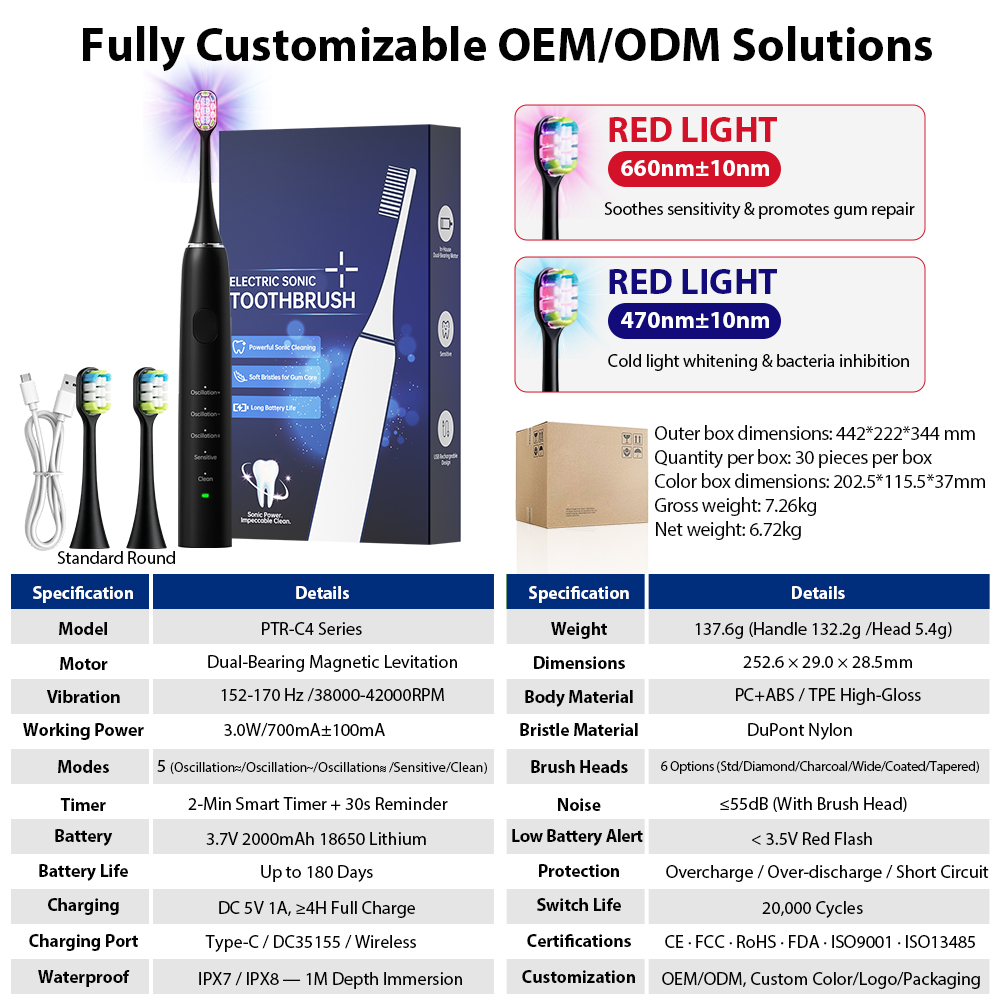
    Powsmart: Your Trusted American OEM Electric For American brands and retailers seeking a reliable, innovative, and quality-driven manufacturing partner for electric toothbrushes, look no further than Powsmart. Operating as both a high-tech manufacturer and a dedicated factory, Powsmart specializes in producing advanced oral care products tailored for the discerning U.S. market. Founded in 2004, our core philosophy is singular: to focus exclusively on the production of superior electric toothbrushes. We combine cutting-edge engineering with rigorous, 38-step quality control processes to ensure every product meets the highest international standards. As a trusted supplier to major global partners, Powsmart is the ideal Chinese factory and manufacturer dedicated to supplying American businesses with OEM and ODM solutions that drive success. Powsmart’s product line is built on technological innovation and user-centric design, offering compelling advantages for American distributors and private label clients. LED Sonic Electric Toothbrush with Phototherapy: This flagship product goes beyond basic cleaning. It features targeted red and blue LED light therapy—3 red lights to quickly repair gums and enhance anti-inflammatory effects, and 3 blue lights for effective teeth whitening. Combined with high-frequency sonic vibration, it offers a comprehensive oral care solution for the health-conscious American consumer. Advanced Wave Vibrating Sonic Toothbrush: Utilizing a new generation Duplex…

    2025-12-29
  • Understanding Water Flosser Compliance Certification for Global Markets

    water flosser compliance certification Any oral care device that enters international markets must satisfy a series of regulatory and safety expectations. Although classification varies by country, every importer remains responsible for ensuring that products meet the rules. Therefore, OEM buyers need a clear understanding of compliance pathways, documentation requirements, and supplier readiness. This is especially true for powered devices combining water flow and electrical components. Why Certification Protects Your Business Retailers and distributors increasingly screen suppliers for full documentation. Moreover, governments apply stricter controls on product safety. When certification gaps exist, shipments may face customs delays, relabeling requirements, or withdrawal from the market. As a result, strong compliance programs protect both revenue and brand credibility. Typical requirements include electrical safety approvals, EMC testing, material safety compliance like RoHS, and packaging labeling standards. In some regions, batteries and chargers require additional documentation. Therefore, your OEM partner must already understand these frameworks. Working With Factories That Support Certification Beyond price negotiation, supplier selection should include a compliance audit. Mature factories maintain internal labs or partnerships with external laboratories. Additionally, they generate test reports, risk assessments, and technical files. During development, they also recommend design improvements that simplify certification rather than causing repeated…

    2025-12-29
  • Why Water Flosser Pressure Calibration Matters for OEM Buyers

    water flosser pressure calibration For professional oral care brands, product performance is never random. Instead, every technical parameter should follow controlled engineering logic. Pressure output is one of the most critical performance indicators in a water flosser, because it directly affects user comfort, gum safety, and cleaning efficiency. Therefore, structured control of pressure settings becomes essential in OEM manufacturing. Why Stable Pressure Delivery Matters Consumers expect strong cleaning without discomfort. However, if water pressure fluctuates, the device may feel unpredictable or even irritating. Inconsistent output often results from pump variation, nozzle resistance, internal tube friction, and manufacturing tolerance. When calibration programs are weak, customer complaints and warranty claims usually increase. Consequently, brands need factory partners who understand validation testing. Moreover, stable pressure helps your marketing claims remain credible. Retail partners and distributors prefer measurable performance standards rather than subjective statements. This is why mature manufacturers design test benches to measure pressure curves across working modes. How OEM Factories Control Pressure Besides hardware engineering, calibration methods determine final consistency. Responsible suppliers set allowable tolerance windows and verify samples from each batch. Additionally, they monitor both peak output and long-term stability as components age. Because water minerals and internal vibration may influence…

    2025-12-29
  • Choosing a Reliable Water Flosser Nozzle Manufacturer for Your Brand

    water flosser nozzle manufacturer When oral care brands search for a dependable partner to supply key components, they quickly realize that the water flosser nozzle is not a simple plastic accessory. Instead, it plays a major role in user safety, water control, structural durability, and hygiene performance. Therefore, selecting the right OEM partner becomes a strategic sourcing decision rather than only a purchasing task. As competition increases in the oral care category, buyers look for suppliers who can consistently balance quality, price, and long-term technical stability. The Role of Precision Engineering in Nozzle Production Because the nozzle controls the final jet stream, precision manufacturing determines overall device comfort and cleaning efficiency. Moreover, material selection, mold consistency, and injection quality all influence daily performance. Many buyers underestimate how small dimensional deviations may affect pressure regulation, user experience, and leakage prevention. However, professional suppliers run tolerance control checkpoints across the full production cycle, which helps reduce returns. Additionally, brands need confidence that each batch will match previous shipments. A trustworthy OEM focuses on statistical process control, automated assembly, and traceability systems. As a result, your product performs more consistently in global markets and strengthens your brand reputation. Quality Systems and International Standards…

    2025-12-29
  • Teeth Whitening Device Reliability Test — What Importers Must Verify

    teeth whitening device reliability test procedures are essential for any importer or OEM brand that wants stable performance in the field. Because whitening devices combine electronics, batteries, plastics, and LED modules, every unit must remain safe and functional across its entire lifecycle. Therefore, structured reliability validation protects both the user and the brand. Why Reliability Testing Matters in B2B Supply Chains When a device fails after launch, warranty costs rise and brand trust declines. Moreover, channel partners lose confidence. As a result, forward-thinking brands treat reliability validation as a core engineering task rather than an optional activity. You can also review whitening devices similar to those on powsmart.com (for example: https://www.powsmart.com/products/whitening-led-device) to understand the types of components that require testing. Common Reliability Test Categories A professional program often includes: LED lifetime verification battery cycle durability charging port stress testing temperature and humidity exposure drop and vibration evaluation long-term storage simulation Additionally, software and driver stability should be confirmed where relevant. These activities help replicate real-world consumer use. Compliance and Industry Guidance Although whitening devices are typically consumer products, they still operate close to oral tissue. Therefore, testing must respect electrical safety, chemical safety, and consumer-health principles. Buyers often consult recognized…

    2025-12-29
  • How to Choose a Reliable Home-Use Whitening Device Supplier for Your Brand

    home-use whitening device supplier selection is one of the most critical decisions for any oral beauty brand entering the consumer market. When a device is used at home rather than in a clinic, safety standards become even more essential. Therefore, the supplier you choose must combine manufacturing capability, product design experience, and strong regulatory awareness. What Defines a Professional Whitening Device Manufacturer A capable producer does far more than assemble parts. Instead, they manage component sourcing, LED calibration, quality inspection, and long-term reliability validation. Moreover, the supplier should clearly document processes such as incoming quality control and final batch testing. When you review whitening device product lines like those available on powsmart.com (for example: https://www.powsmart.com/products/oral-beauty-device), you can better understand how professional production systems are structured. Certification Knowledge Is Essential Because these devices contact the mouth and soft tissue, regulatory awareness matters. Therefore, your partner should understand requirements such as CE, FCC, cosmetic rules, and electrical-safety standards. Additionally, familiarity with industry frameworks like ISO 13485 helps improve confidence. Buyers may also review external medical-dental organizations, such as the American Dental Association (https://www.ada.org), to stay aligned with responsible use guidance. OEM and Private Label Experience Brands often want private packaging, colors, accessories,…

    2025-12-29
  • Whitening Device Production MOQ — How Importers Plan Order Strategy

    whitening device production MOQ is one of the first topics serious importers ask about when sourcing oral beauty hardware. MOQ, or Minimum Order Quantity, directly shapes your inventory risk, unit price, and working capital strategy. For whitening devices, MOQ also connects to tooling planning, supply chain scheduling, and compliance preparation. Therefore, brands should fully understand how MOQ is defined by the manufacturer and what flexibility exists at different production stages. Why MOQ Exists in Whitening Device Manufacturing Manufacturers set MOQ because real production costs only make sense at scale. Tool changeovers, labor planning, LED calibration, plastic molding, battery assembly, and quality inspection all require setup time. Moreover, component suppliers often have their own minimum order levels. As a result, whitening device factories structure their order thresholds around both efficiency and risk. However, MOQ is not always fixed. When the device is already mass-produced, factories sometimes offer smaller production runs for OEM clients, especially if the brand plans long-term cooperation. But when the product requires custom tooling, custom LED layout, or firmware adjustments, MOQ will definitely increase. For reference, many buyers start discussions by reviewing the product family first. You can see typical whitening device offerings here on powsmart.com (for example:…

    2025-12-29
  • Understanding Teeth Whitening Device Tooling Cost for OEM Projects

    Teeth whitening device tooling cost often becomes one of the largest early investments in an OEM development program. Since injection molds define cosmetic quality, assembly accuracy, and production efficiency, their design and durability strongly influence total lifecycle cost. Therefore, B2B buyers should understand how tooling budgets are built, how they affect per-unit pricing, and how ownership or amortization negotiations impact long-term profitability. At the start, product managers and engineers translate the industrial design into manufacturable components. Consequently, parting lines, draft angles, and material choices begin to shape the tooling plan. Moreover, complex cosmetic shapes or tight tolerances increase the number of mold cavities and precision requirements, which naturally drives price higher. However, higher-quality molds also tend to extend lifespan and reduce defect rates, so the cheapest quotation rarely offers the best total value. Mid-project, suppliers estimate the teeth whitening device tooling cost based on steel grade, cavity count, hot-runner configuration, and expected output volumes. In addition, brands must decide whether to pay the full mold fee upfront or amortize it into the unit price. Therefore, finance teams should calculate how many units the program expects to sell and compare both scenarios. Moreover, ownership terms require attention. If the factory legally…

    2025-12-26
  • How to Build a Competitive Oral Beauty Device Private Label Brand

    Oral beauty device private label programs allow retailers, distributors, and digital brands to enter the fast-growing whitening and oral care technology segment without building their own factories. Moreover, partnering with an experienced OEM or ODM supplier enables faster market entry, controlled investment, and flexible customization. However, because the category touches both cosmetic and medical-adjacent regulation, B2B buyers must manage product, compliance, and marketing disciplines with care to avoid risk. To begin with, brand owners should define their target consumer group and preferred price band. Therefore, product specifications, material choices, and certification depth all align with that strategic decision. In addition, differentiation matters. For example, ergonomic mouth-tray design, battery life, or smart-app integration can help a new private label compete in crowded online channels. Moreover, packaging and unboxing experience strongly influence review quality and repeat purchase rates. Midway through the project, cooperation with the OEM partner shapes the technical foundation of the oral beauty device private label range. Engineering teams support LED configuration, optical output balancing, and safety testing, while quality managers build validation plans that meet EU and US expectations. In addition, documentation for regulatory filing must stay consistent and traceable. However, some factories still operate with informal processes, which…

    2025-12-26
  • Whitening Gel Compatibility Device Considerations for OEM Whitening Brands

    Whitening gel compatibility device planning has become a critical success factor for brands that want to deliver reliable performance and a comfortable user experience in the oral beauty market. Since whitening systems combine chemistry with electronics, poor compatibility can easily lead to irritation complaints, inconsistent results, or even product failure. Therefore, international OEM buyers should integrate compatibility thinking into the development process from the very beginning, not only during late-stage testing. First, product managers define consumer expectations and price positioning. In addition, engineering teams analyze gel viscosity, pH balance, peroxide levels, and flavoring ingredients. However, these elements interact with tray materials, temperature, and LED output. As a result, the design must stabilize the contact environment while still staying comfortable for the user. Moreover, factories that understand both device mechanics and gel properties can help accelerate validation and reduce market risk for B2B partners. During development, laboratory testing plays a central role. Therefore, prototypes undergo stability checks, leak detection, and thermal cycling while different gel suppliers remain under evaluation. In addition, bite-tray geometry and silicone hardness affect how evenly gel spreads during use. Moreover, communication with gel manufacturers helps clarify tolerances, storage limits, and shelf-life expectations. Retailers and regulators also expect…

    2025-12-26
  • Teeth Whitening Device Compliance in the EU Market: A Guide for OEM Buyers

    Teeth whitening device compliance EU requirements create a complex environment for B2B importers, private label brands, and distributors working in the European market. Since consumer safety remains the top priority for regulators, every device must meet strict documentation, labeling, and performance expectations before entering the region. Moreover, retailers increasingly demand full transparency from suppliers, therefore compliance is not only a legal duty but also a commercial necessity. To begin with, brands must first define whether the whitening system falls under cosmetic, medical, or general consumer product frameworks. This classification impacts testing, responsible person obligations, and documentation depth. In addition, chemical regulations may apply depending on gel concentration and ingredients. However, the device part itself must still follow electrical safety and EMC standards. Therefore, cross-functional coordination between legal, quality, and engineering teams becomes essential from the first concept meeting. Midway through the journey, technical files and risk assessments support teeth whitening device compliance EU audits. These files typically include circuit design records, material declarations, test reports, labeling proofs, and user instructions. Moreover, brands must ensure that translations match each target market within the EU. In addition, traceability systems should connect every product batch back to component suppliers and test results. Consequently,…

    2025-12-26
WeChat

whstapp

Email
Request a quote
whstapp
+86 18565657032

whstapp

National Toll-Free Service Hotline
+86 755 86238638

Top